
Yayoi Kusama built a visual language so distinctive that, eventually, it needed little introduction.
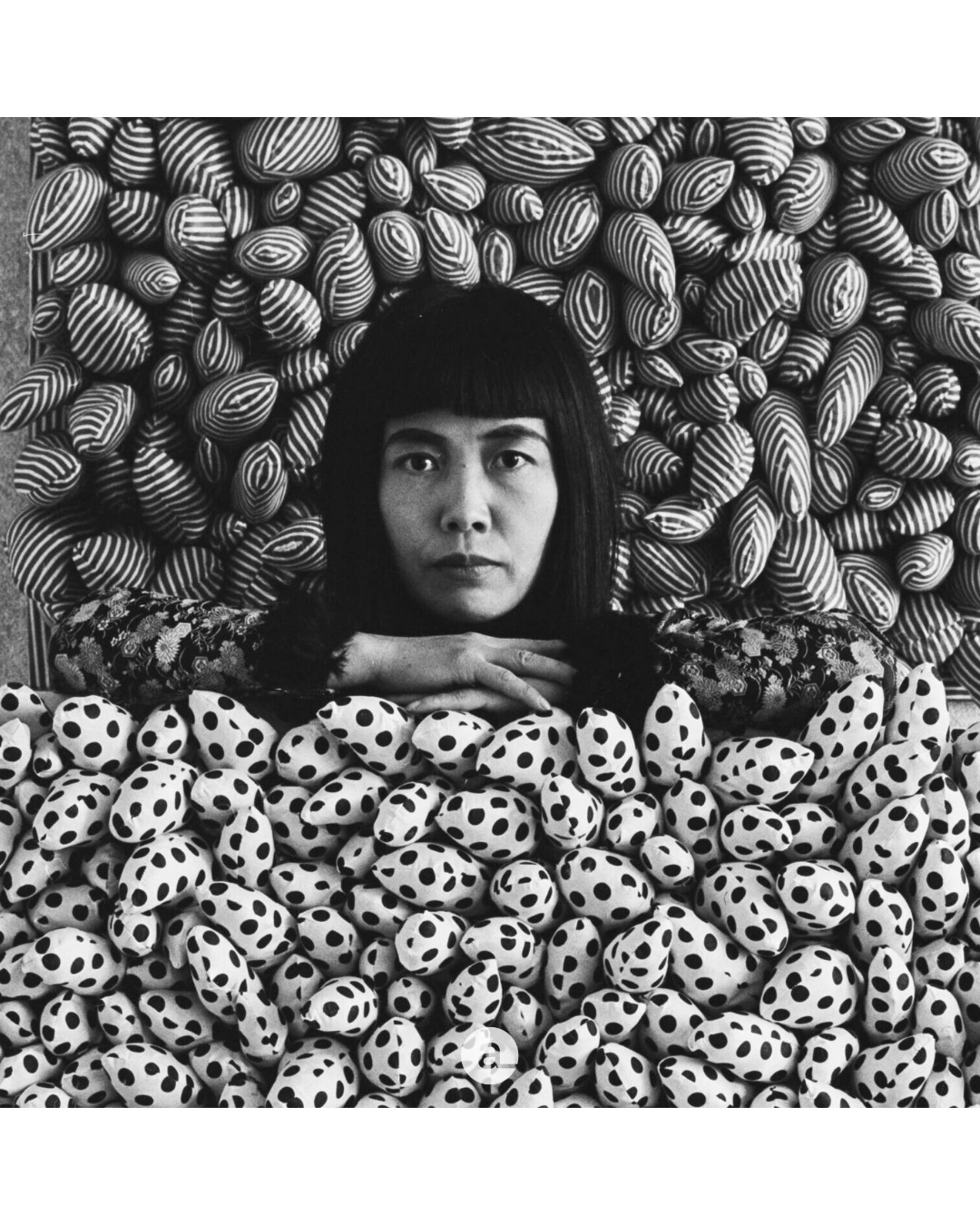
The polka dots, Infinity Nets, pumpkins, mirrors and obsessive repetition became recurring signatures of a practice that stretched across painting, sculpture, performance, film, writing and immersive installation.


Born in Matsumoto, Japan, in 1929, Kusama moved to New York in 1957 and quickly became part of the city’s avant-garde art scene. There, she produced the large-scale Infinity Nets, soft sculptures and experimental happenings that challenged the boundaries of what art could be.
Over the decades, repetition became more than a recurring aesthetic in her work. It became a way of exploring infinity, self-obliteration, space and perception.Her Infinity Mirror Rooms, in particular, transformed those ideas into environments audiences could physically enter, helping establish Kusama as one of the most recognisable figures in contemporary art.


Her influence, however, was never confined to museums and galleries.
Kusama’s visual language proved remarkably adaptable, finding new audiences through fashion, design, beauty, automobiles, food and popular culture.
Her collaborations with Issey Miyake, Coca-Cola, BMW MINI, UNIQLO, iida, Lancôme, X-girl, XLARGE, Veuve Clicquot, HEYTEA and Louis Vuitton translated her signature motifs into clothing, mobile phones, beauty products, cars, bottles, packaging, storefronts and immersive experiences.


Her collaborations with Louis Vuitton in 2012 and again in 2023 brought the dots, pumpkins and mirrored imagery into fashion and retail on a global scale, while later projects such as her work with HEYTEA showed how naturally her visual vocabulary could move into everyday consumer culture.
That ability to cross boundaries is central to understanding Kusama’s enduring influence.

The language she developed over decades could move from a canvas to a mirrored room, from a sculpture to a handbag, and from a gallery into the street without losing its unmistakable identity.
Few artists have created a visual language with that kind of cultural reach, and fewer still have made repetition feel endlessly new.