Nigerian singer-songwriter Sal Ly is bringing the musical story she began with OFFDAYS to its next chapter with Comforting Company, a five-track EP set for release on 20 November 2026.
Where OFFDAYS, released earlier this year, explored vulnerability, uncertainty and the need for rest, the new project turns towards the reassurance of love and the comfort of having someone who remains present through life’s changing seasons. Together, the two releases form a connected body of work, built around the sentiment: “In my OFFDAYS, you’re my COMFORTING COMPANY.”
Musically, Comforting Company draws on Sal Ly’s affection for classic R&B, bringing together laid-back grooves, soulful guitar melodies, layered harmonies and intimate songwriting. The project moves between brighter, feel-good rhythms and quieter moments of reflection, keeping its focus on love, consistency and companionship.
Three of its five tracks, “Joy”, “My Forever” and “Time and Time Again”, have already been released as singles. They are joined by “Easy” and the title track, “Comforting Company”, which complete the project. Across the five songs, Sal Ly brings her personal experiences, faith and love for R&B into a collection that places emotional connection at its centre.
With Comforting Company, Sal Ly does more than follow up an earlier release. She completes a musical conversation that began with OFFDAYS, offering a second perspective on the need for comfort, whether found in solitude or in the presence of someone who makes life feel a little steadier.
Comforting Company arrives on all major streaming platforms on 20 November 2026.
“If there’s one ailment that everybody, at least in this part of the world, cannot but catch one day, it is malaria. So I was just trying to express that helpless feeling of being caught in that circle of that thing you may have sworn never to fall into. So it was just me being lyrical or poetic, even of a true feeling or my reality at the time the song was written, cos yeah it is my real experience that I feel a good number of others can relate to.”— Ayo Maff
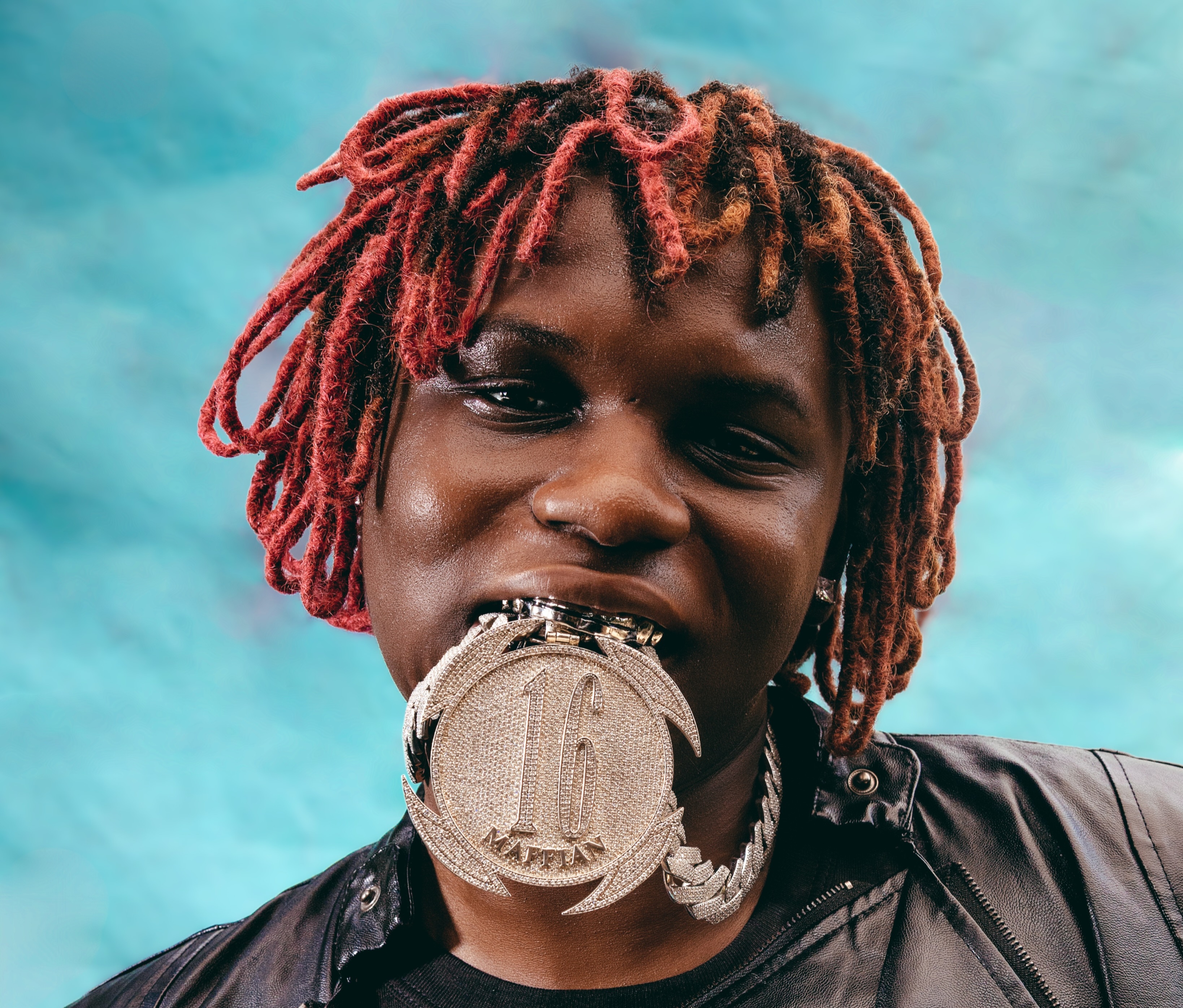
That feeling sits at the centre of his new single, and it’s why I wanted to sit with him after its release. Nigerian songwriter, singer, and vocalist Ayo Maff, born Ayorinde Mafoluku Ayodele, is a dancehall, Afrobeat, and Afropop artist. His latest single, “Malaria,” features Zinoleesky. We spoke about how it came together. I came to the conversation to find out his process as an artist, his storytelling, and his plans, and I got all of it at once. But hearing someone’s journey and experience from the person themselves is different from listening to it through the music.
Ayo Maff has a gift for making plain feeling sound clever, and he knows it.
“I have always been very good with wording my lyrics in ways that come off as interesting when all I am doing is merely being expressive,” he says.
I asked whether the metaphor began as a joke. His answer, the one that opens this piece, says it didn’t. It was a true feeling, his reality at the time he wrote the song.
From there, the conversation drifted to the other voice on the record. Ayo Maff and Zinoleesky both come out of street-pop, yet they sound nothing alike, and I wanted to know what each of them carried into the room. I asked him:
You and Zinoleesky both come from street-pop but sound very different. What did each of you bring to the record, and how did the session actually go?
He answered:
“With respect to what we both bring, I think the song already showcases it. Our difference in sound is because of our individual authenticity and style, and it is always a beautiful thing when such diversity does not hinder creativity. Actually, it was that diversity that I feel brought out the greatness of that record. And with regards to how the session went, big shout out to my big bro Kizz Daniel, cos I was at a session with him and Zinoleesky when I played him the song, and he suggested that Zinoleesky will be a great fit for the song, coincidentally, I had always also thought so, so he was there, we just made it happen.
There’s a quiet backdrop here, too. Zinoleesky left Marlian Music in April and started his own label, Zinodict Music, and days after “Malaria,” he announced Waziyung as its first signing. For Zino, this is one of his first major features as an independent executive. Neither of them raised that with me, but it sits just behind the record, two artists sharing a chorus while each is, in his own way, building something new. Humour runs through Ayo Maff’s songwriting, and “Malaria” is funny right up until the moment it isn’t. The joke turns, and what’s underneath is exposed. I wanted to know whether he steers that, or whether it steers him. So I asked:
Humour is a big part of your songwriting, but “Malaria” is also vulnerable. How do you decide when to be playful and when to be open?
He said:
“With this music thing, you don’t exactly decide; the music leads you where it wants to take you. I make music at times, not really knowing what I want to make from the instance, but as the making progresses, we arrive somewhere, and it becomes clear where the music has taken us. So it depends on the vibe when making the music, what matters is being authentic and following the spirit at the time you make the music.”
I am a street boy, that one thing that can never change about me.
That answer made me curious about the raw material. If the music leads, then where does the language come from? Ayo Maff writes in the voice of the street, in Yoruba and Pidgin and everyday speech, and I asked what makes the cut and what he keeps out: Street language and everyday experiences shape your writing. Which slang phrases or moments from real life end up in your songs, and what do you avoid?
He didn’t offer a formula:
“Like I mentioned earlier, with music you don’t decide; it just happens. It mostly depends on the mood and vibe one is in at the time actually. I am a street boy, that one thing that can never change about me. So it will always show in my music in some way, be it in lyrics or delivery or other ways, and I always say that I write about things I’ve been through and experienced, I no fit talk about things when I no know. But how I get to pick and choose, I doubt there’s a formula to that, it just comes as it comes.”
That honesty has run through his work since Bariga, the Lagos neighbourhood he comes from, where early records like “Jama Jama” turned daily struggle into song and carried a quiet fear that success might pull him away from home. “Malaria” is lighter in tone, but it follows the same rule. He writes what he knows. It also made me want to ask how far that road has taken him. Ayo Maff is a different artist now than he was when he made Prince of the Street, in profile and in reach, so I asked what had shifted underneath:
Since Prince of the Street, how have you changed as a storyteller and as an artist, both in sound and in the way you build a project?
He pushed back on the word “changed”:
“I wouldn’t say change, I doubt I’ve changed. Grown though, yes, that has happened exponentially. I always say that I’ve never recorded as much and as intentionally as I have since my last album, and in the build-up to my next album. I would always be a storyteller, na just so we be from where I come, and I see my music as an outlet to say how I feel or talk about my experiences in ways that people who have been through what I’ve been through can relate and maybe it can also help them release those feelings and emotions as I do when I make my music.”
A song like “Malaria” never reaches people as sound alone. It arrives with a look, a mood, a world built around it, and I was curious about the people behind that world. Ayo Maff talks about growth as something he’s done alongside others, so I asked who stands next to him when a release takes shape:
Creatively, what does the world around “Malaria” look like, from the visuals to the rollout, and who shapes that direction with you?
He started with gratitude:
“Gratefully, I have a team that is perfectly in sync with me with regard to how to visually portray my music. We have for a while understood each other and know what the visual representation of my releases are, I feel that if you follow me, you’d reckon that there’s been consistency with how I go about my visuals. So with that level of understanding, we always collaborate to trade ideas and create visual concepts that depict the idea of the record in a way that fits well with how I like it. So yeah, we always find ways to work with the right photographer or videographer to achieve the ideas we put out or set out to achieve. So the world around it is me and my team steadily putting in work.”
By the end, the talk turned to the thing every listener wants to know: where he goes from here. With “Malaria” out and the conversation around it growing, I asked him straight: What’s next: is there a project or EP on the way, and what should we expect from it? Any tour plans, and which countries or regions do you want to tap into, and why now?
He kept the details close:
“What’s next? A lot, I promise you, there is a lot, but I would rather you sit and watch the space as it all unfolds. With regards to a project, it is no secret that my album “HIGHSTAR” is on the way, it will be my second studio album, and it drops soon. Tours, what region or countries… just stay tuned, they will all be rolling out soon and in due time, I promise. Why now? Why not now? HIGHSTAR is coming, so it all has to start happening now so that everyone will get the full experience of what HIGHSTAR is all about.”
Then I asked who would be on the project, and who he’d most like to work with:
Who would you most like to work with on the next project, whether artists, producers, or creatives outside music, and what would you want to create together?
“I will need a long sheet of paper to make this list cos there are so many people I would love to work with, so it will be quite a lot to start to list them. But the good thing is that I have some of them on my upcoming album, so soon enough you’d get to know them, and for those who won’t be there, in due time too, God willing, I will work with them and you’d know those ones as well.”
I left the conversation with one thought: Ayo Maff isn’t selling a persona or a polished origin story. He’s a young man from Bariga who still writes about what he’s lived, credits the people beside him, and treats growth as something earned slowly. The story behind “Malaria,” and his voice alone, tell you this is an artist who cares about the message. That’s what to expect from his second album, HIGHSTAR, dropping soon, especially with the new names and collaborations he’s adding to the list. It’s one to watch out for.
Created with RNI Films app. Profile ‘Agfa Optima 200 v.3’
Over a Google Meet call slated for an hour, the leader of the Outlaws joins us at exactly 1:30 p.m. sharp, sounding remarkably relaxed. There is no sense of ceremony to it. No stiff introductions or carefully rehearsed answers. Within minutes, what was meant to be an interview begins to feel more like a conversation between people catching up.
And, gracefully, we let it.
By the time we really get into it, Victony has already settled into the room.
Starlife has been out for a few days now, which means the wait is finally over. The songs are no longer just his. They’re being played in cars, at parties, through headphones, onstage and, inevitably, debated across charts and timelines. After months of anticipation, the album has left the safety of his hands and entered the world.
So, naturally, we start there.
How is he feeling? He laughs, thinks for a moment, and the conversation begins to open up. Soon, we’re talking about the album, but also everything that came before it: Outlaw, Stubborn, Very Stubborn, the accident that became an indelible part of his story, the people who helped shape this new chapter, and the freedom he seems to be finding in it.
For our first Loook Issue, powered by LSTVWW, London, Victony sat with us to talk through that evolution, what it took to get here, and what it feels like to finally enjoy the life he spent years fighting for.
He has spent his whole career chasing one thing, and he’ll tell you himself if you ask him plainly enough. Not excellence, not a lane, not even a sound. Freedom. From Outlaw’s early defiance through the open wounds of Stubborn and Very Stubborn, each era has been another version of that pursuit, a young artist finding new and increasingly honest ways to express himself.
Starlife feels different. The fighting has quietened a little. The trauma isn’t gone, but it no longer has to take centre stage. Instead, Victony is choosing to look around, take in the view and enjoy the life he spent years fighting to reach.
Maybe that’s the easiest place to begin: not with where he is now, but with everything it took to get here. Because Starlife doesn’t exist in isolation. It carries traces of every version of Victony that came before it, even as he seems increasingly comfortable leaving some of them behind.
Starlife is out now, but I want to rewind a little. When you look at the journey from Outlaw to Stubborn, Very Stubborn and now STARLIFE, what has that transition actually felt like for you
It’s me just growing right as a person, learning and learning, and I feel like there’s been so much real life reflection in the music, right from Stubborn to Very Stubborn, and to star life, it kind of just shows you where my head space is at, but overall it’s just been me, it just felt like growth, to be honest, through this different process, so yeah.
Starlife feels very different in spirit. There’s a looseness to it, almost like you’re allowing yourself to enjoy the view a little more. Was that something you consciously felt while making it, or did you only recognise it when the album was finished?
Yeah, I think it came from the song, Starlife.
You know, when we made the song Starlife, it somehow just happened to be, like, the core of everything that I was making, you know, very unintentional. But long story short, we wanted to do an EP first, and we decided to call the EP Starlife, I don’t know why to be honest. I guess it just connected and resonated with us at the time, the way the song was and with a couple songs at the time, you could feel all the elements of other songs in Starlife, so it just became the core of everything we were trying to build and then we transitioned into a mixtape it was still going to be called Starlife and finally transitioned into an album, it didn’t change the name.
Seems like you made Starlife before Slick and Fresh was that the case?
Yes, Slick was the last song we made and that’s what made me decide, you know what, let me turn this into an album. Because to be honest, till June, July, it was supposed to be a mixtape.
I feel like you could still get that mixtape energy from the rollout and how quick we went to put out the album.
I decided to turn it into an album because I wanted people to take the music very serious, because time and effort had gone into production, writing and making sure, like, everything sounds good. And I felt like, yeah, this is above mixtape, feels like an album, but everything else around the energy surrounding the release of this project has been very, very mixtape, I won’t lie.
How long did it take you to get the full album, the 15th track?
I’d say about 7 months, yeah.
That took a while. Interesting.
If you zoom out and look at the journey, there’s a pretty striking progression: Outlaw, Stubborn, Very Stubborn, and now STARLIFE. Each title feels like it captures a different version of you. When you look back at those eras, what do you see?
I mean the goal has always been the same, I felt like all I have always wanted for myself in this life is to be really free, and so every version of myself that I look at is just me making an attempt to be free, it’s just been in that chase for freedom.
So, when you look at Stubborn, it’s like the same thing, and the process for putting out Stubborn is very, very similar to STARLIFE, actually. It started up the same way. It was meant to be an EP and then it turned into an album.
It’s just like, I don’t care, these are the best songs that I have, I’m going to put them together and put out an album regardless of what is expected.
[He pauses for a moment.]
So, to be honest, I just see different versions of myself that just really wanted to be free.
But, obviously, in these three eras of my career, I’ve been in different situations. I’ve fought different battles, I’ve survived different things and I’ve been in different headspace, but it’s still the same kid, just growing, it couldn’t have been any different, based on the people in my life and then the car accident that I dealt with, I mean it’s just me, it’s just freedom, you know.
Yeah I mean, anyone that pays attention will see the artistic journey and I think yours is very evident.
You mentioned Slick, was the last song you made on the album. While making, did you think it was going to be this massive?
No, no, no. I didn’t, to be honest. I mean, I knew it was a good song, right from making it, I remember I was so excited.
I had doubts, just little doubts.
I mean, Slick, Slick, the way the chorus was repetitive, I didn’t know if Nigerians were going to fuck with it. It was just very new. Even when I sent it to my Manager at the time, he was already fed up, because I would do this every week where I’d send new songs.
And it’s like, oh, we have to figure out the thing again. And that’s why we kept moving, like, from EP to mixtape to album.
So when I sent him Slick, It just felt like too much at the time, for him to process. And I was like, you know, let me just actually chill on this record a little bit. So I think I was planning the shoot for “who this”, and then I played some songs for my videographer and he’s like, “yeah, this is the one, these songs are crazy, it just really puts you, like, in your own lane.”
And once I heard that, it sparked something in me again. Because that’s really what I wanted to do with this project. To show people what, Victony is capable of and do things, only Victony can do. So once I heard that, I started, like, getting into that zone again.
I just started playing the record again. I fell in love with it again and I became excited. I say this to say that I didn’t really have the chance to think about what it was going to do.
It was just that battle of, oh, am I going to put this out? Am I not going to put this out? Just based on everything that was going on at the time. Until I got to a place where I was excited enough to think about the visual, shoot and just put it out, that’s where it stops, but enough in terms of what is it going to do or not, to be honest I didn’t know, I just liked it.
You just said “ you want people to know what Victony is capable of” and I came across a video of you recently rapping, you used to be a rapper, also found out that you drew the cover art for outlaw, that just shows that there’s a lot to the name Victony, are we going to see a Victony rap song?
I think I know the video you’re talking about.I was cringing at that video.
[Laughs]
No, I doubt, I doubt I’m ever going to be rapping again. I think I found what I’m good at and I’ll just stick to it. But, I mean, you can always just hear, like, the hip-hop influence in my music, one way or the other.
Like on Starlife, even with the intro song, you hear some, some rap influences, same thing with Slick, right on the hook, and same thing with, Typo and 2Fresh.
So, I think with Starlife, I try to just show that side of me, which I’m always going to do, in my music, even though I’m a singer, but you’ll be able to tell with, like, certain cadences or, just rhythm or my flow choice or what not, that it is slightly different from, a regular Afrobeat artists.
So, but in terms of, like, rapping, rapping for real, I don’t know. I’m not sure.
[We both laugh]
STUBBORN, had international footprints with features with Teezo Touchdown & SAINt JHN. On STARLIFE you came back home why was it important for you to feature more Nigerian artists on this?
To be honest, I think it was from me trying to just do this quickly. Because Starlife is a very short phase. It’s not something that I wanted to overemphasize. And that meant doing music with the people that I have genuine relationships with. I got the verses from everybody, really quick. I also knew, these guys would really kill this. I could hear them in that soundscape.
I also wanted it to be genuine, because I wasn’t going to text anybody or wait for my label to reach out to anybody. Personally, I didn’t care about that in this process. I just believed in the music so much. And I wanted people that I could talk to and people that I can get real time feedback from.
And that’s what, really, really empowered that decision to just bring it home. It’s just wanting to be really authentic.
Like I said, Starlife is me, really, really, stepping into myself and doing the things that really makes me happy as a person, and the things that I have easy access to that make me happy.
And that’s the thing about my relationship with Baby Boy AV. That’s somebody I spend time with every day, same thing with YKB, YKB will come to my house and stay for a week or something. I go to Blaqbonez’ house every other day, and then, if I want something from Bnxn, he’s one text away.
I had, multiple sessions with Young Jonn at the start of the year. So, these were verses that I could just stretch out my hands to get, and I knew, they would also put in effort because of their level of respect from me.
But it wasn’t an intentional thing for it to be, like, oh, just only Nigerian features. It just worked out that way because of where I was and how I was just thinking about the process.
This sounds like Starlife is more like a family thing.
Exactly
Hmmm…What does the era Starlife really mean to Victony currently?
“Starlife” is me talking about the life I’m living right now, but at the same time, it’s also me manifesting the life that I desire. It’s still me fighting for myself, in a sense. Like, in this life, I’m going to be happy. I’m going to get all the good things in life. In contrast to my previous project, Stubborn. It was really personal, and that was also a step in that direction of wanting the best for myself, wanting to step in a very, very positive direction, wanting to step into the light.
And with Very Stubborn, it was trauma dumping on those records, like, being very open and vulnerable to the fans. And just releasing everything that I’ve held in for so long.
Starlife is a very different project from that, but it’s still a step in that direction. It’s, like, I’m not going to focus on the negative side of my life now, even if I still battle with those things, every now and then. Starlife is still a fight for my life, to be honest, but in a very, very different direction, it’s me saying, I’m going to step into my happy place.
This year, I have recorded over a hundred songs, to be honest, all just talking about the same thing, and if I put out a hundred of them, it wouldn’t sound any different from what is on Starlife.
And that’s how much energy I put into it, just making sure, like, I’m focused on the positive things, I’m not talking about anything negative.
This era is less about excellence or trying to prove, being the best artist or what, or trying to have the album of the year.
But it’s really about what I want for myself and that’s why I made these records, just to have fun with my friends, with my fans. You know, I made these records for my shows also.
Interesting….Your relationship with Ozedikus seems to have become a big part of the Starlife story. You both have worked on a series of songs about 13 or more? You made “FRE$H,” then “SLICK,”. What do you remember about making these two records? And at the time, did you have any idea you were sitting on something that would become this big?
Actually, I didn’t. This year, making music, One thing I wanted was to allow the music lead, and that’s why I hit up so many producers at the start of the year. I didn’t have a particular direction, I was just making music out of curiosity, I let myself just be in those sessions. I really wanted to tap into different people’s worlds. And with Ozedikus that was the case, I hit him up and I’m like, “bro, let’s have a session”, and to be honest, I didn’t even know what to expect.
Like, my friend at the time, he was just helping me, reminding me of producers in the game. He’s like, oh, you should work with this person, you should work with this person. So at the time, he was like, okay, let’s work with Ozedikus now.
Then I hit him up and, you know, Fresh was the first beat I heard when I went to the studio that day. And yeah, we made the song, we made three songs that night.
I just tried to do a session with him every week. Because, one thing I also wanted to do was to be musically sound.I have as many songs with Ozedikus as I have with PPrime, & Rage.
I know I have at least ten songs with almost every producer that I’ve worked with this year. So music to me was, similar to ,attending the gym, but, I mean, as much as it was I had to keep recording.
I also have something special with Ozedikus, with the way he records me, the way he works my vocal stack. He could immediately see the idea or see the end, from the beginning during sessions, and I think that’s what stood out, with Ozedikus. That’s what happened with Fresh, and that’s what gave me the confidence to keep working on more unique ideas with him. Because he knows how to get it done, and just start tailoring it to what you have in mind.
So with Slick, it was unique, because he sent me a different beat and went to the studio, we tore it down, I did the reference, and had the girls come in and another day, we did the second verse.
I mean, Slick is one song that, you know, we took time to produce, and that’s so funny because the song is very short compared to the time we used to produce it.
Quickly, I want to take a step back and appreciate the team behind STARLIFE, from the management team to the creative team (the stylist to the photographers etc), & producers and everyone that worked hard to portray this version of you.
Ten years from now, when people talk about Victony, what do you hope they remember beyond the songs?
I want them to remember me for my authenticity, I want them to be inspired by how much of myself I was. I want them to look at me and not care about what people think about them.
[A brief pause. We sit with that for a moment before circling back to Starlife.]
Back to Starlife, you made mention that Starlife is a short phase. What should we expect from Victony after Starlife?
I mean, it’s just going to be growth still. I feel like I’m learning faster and I’m growing faster and that’s why I’m quick to realize what I want for myself. I think you should expect a more matured version of me, a grown version. And that’s what you’re always going to keep getting.
QUICKFIRE QUESTIONS
Lagos or London?
Lagos.
Starlife Album Art or Stubborn Album Art?
Starlife Album Art.
I hope you ain’t picking STARLIFE because it’s out
No, no, no, no.
I feel like the album art is the deepest part of the whole thing. In it you see me as a kid with accessories like that, the big chain and the big hats, something that’s meant for, an adult. It just passes a message, what I carry inside me is bigger than I am. So, to me, like, every time I look at that cover, it reminds me of something deep.
Rapping or Singing?
Singing.
Morning or Night?
It depends, though. Okay, let’s just go with morning, because of how I’m feeling today.
Naija Babes or Yankee Babes?
Naija Babes oo
Gamer or Movie Fan?
Movie.
Movies or Football?
I don’t watch football.
You don’t watch football?
[Smiles]
No, I don’t.
Oh, gosh! Outlaws need to know this one.
[we both laugh]
What’s your favorite country to stay asides Nigeria.
U.S
Is the album going on the road? Are you going on tour?
Definitely, definitely, definitely. Next year.
Would Africa be experiencing it? Because there’s a rise in more artists coming home to do more shows in Africa with their album.
Yeah, of course. Benin, Lagos, Abuja, Ghana, Possibly Uganda, Kenya.
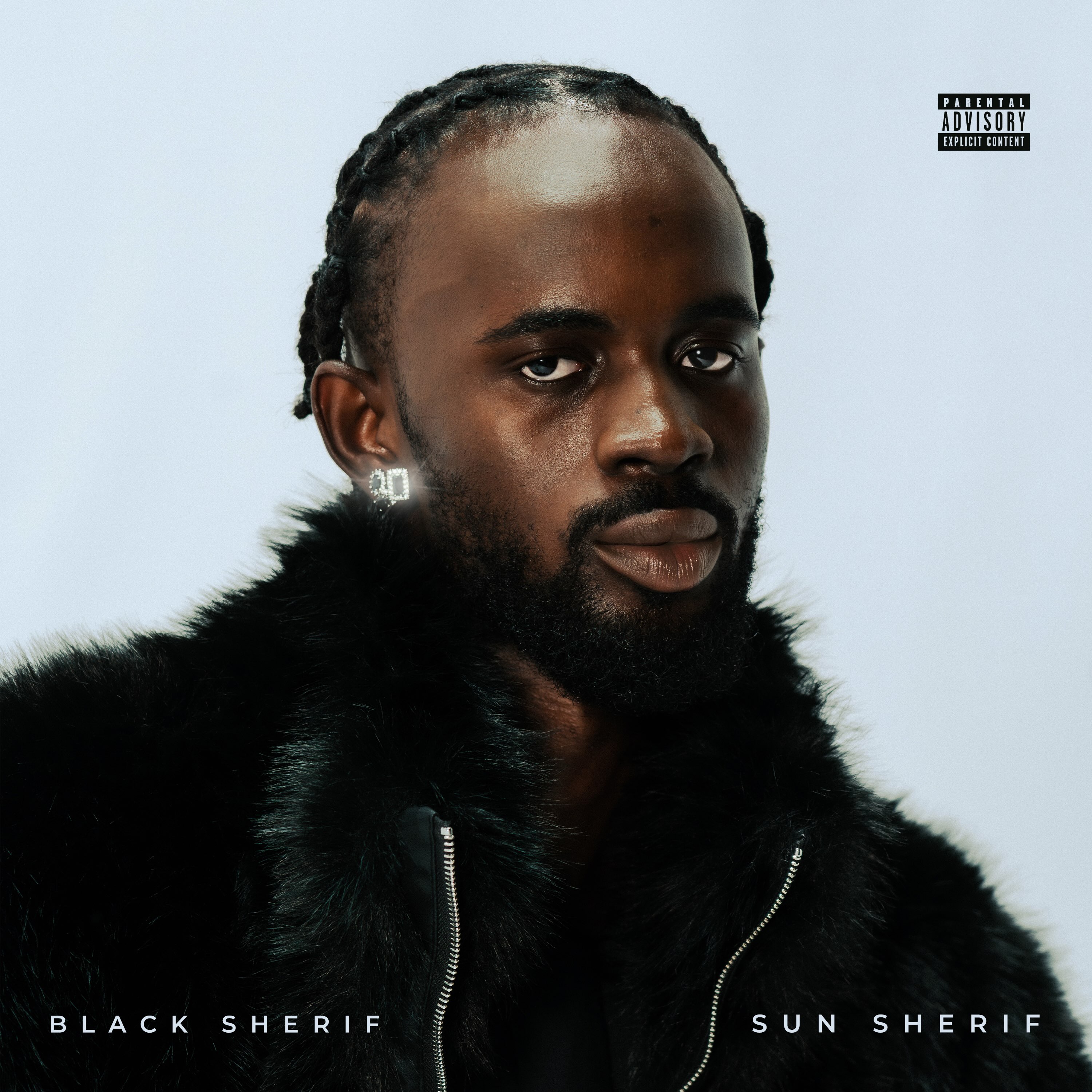
Six tracks, and not one of them sounds like an artist still processing pain out loud. This is Sherif comfortable enough to talk about ease, love, and ….
Blacko opens like a man who has made peace with his own weight. More confident, steadier in the pocket, and maybe that peace comes loaded with a run that has been building quietly, a feature on Davido’s “Amazing Grace,” then “Cry” with Llona, both moments where he showed up in someone else’s world and still left fingerprints behind. Sun Sherif Vol. 1 feels like where that momentum lands. Six tracks, one title that tells you everything before you press play. Not hiding from the light this time. Stepping into it.
Espresso opens things on admission rather than apology. Sometimes he spends more than he makes just to feel something these days, he says, and it is the kind of line the old Sherif might have buried under guilt. Here it just sits there, honest, unbothered by its own honesty, the grind and the loneliness that comes with it laid out plainly.
Run Around slows the pace down, piano leading the way into something more guarded emotionally. This is Sherif working through the walls he puts up in romance rather than the walls he puts up against the world, a quieter kind of vulnerable.
Forever with AratheJay picks the energy back up, dynamic and rewarding, a man enjoying the fruits of the work rather than questioning it. It also marks the first time Sherif has brought a Ghanaian artist onto one of his own projects, after years of either going solo or leaning on Nigerian collaborators, a small but deliberate widening of his circle.
Jolie is the early favorite on this first listen. Calm, introspective, the sound of someone genuinely settled rather than performing settlement. It carries the project’s emotional center without straining for it. Frontline is where he reaches back into his Nigerian bag, a subtle Lagos reference and a sharp “omo iya mi” dropped into the track. Fierce, assertive, proof the calm has not softened the edge.
Love Again closes with Full Blown, the Trinidadian duo bringing funky, melodic instrumentation that gives the record a different texture from everything before it, warm and slightly island-leaning, the perfect backdrop for a song about finally letting acceptance in. Shoutout to Full Blown, they understood the assignment.
Six tracks, and not one of them sounds like an artist still processing pain out loud. This is Sherif comfortable enough to talk about ease, love, and what fame has actually cost and given him. He is not just surviving anymore. He is glowing, and for the first time in a while, he knows it.
The talent has never been the argument. His songwriting, his melodic instinct, his ability to make something feel genuinely personal without losing its broad appeal…
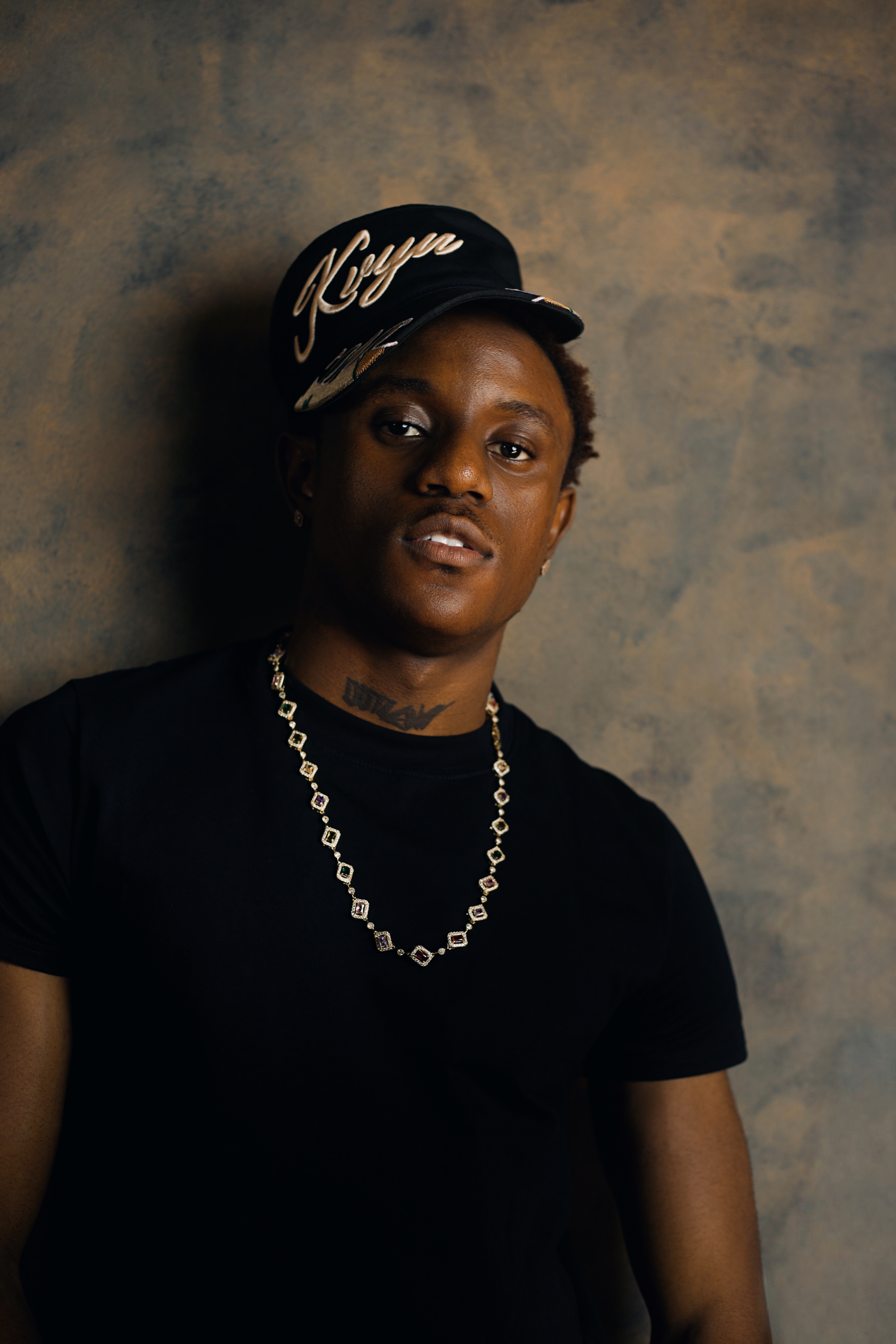
Two years ago, a video stopped my scroll. A guy in a corporate shirt, singing. Not performing, not trying. Just singing, with the kind of ease that makes you suspicious. Like he already knew something you did not. I did not know his name yet. I just knew I was going to find out.
Then Folake dropped and the suspicion became a certainty.
Fast forward to now, the question Popstar – Side A is quietly answering in 2026 is a different one. Not “who is this,” but who is this becoming, and is it happening fast enough?
The talent has never been the argument. His songwriting, his melodic instinct, his ability to make something feel genuinely personal without losing its broad appeal, all of that is intact and visible on this project. What has been harder to name is why someone with his level of ability, his styling thanks to Fadil, his creative direction courtesy of Anike, and his ear for a song, has not yet seized the room in the inescapable way his talent suggests he should. Popstar – Side A is him responding to that question by refusing to wait for permission. The title is a declaration. Everyone does not have to agree. He knows who he is, and there’s still so much more to him than what we heard on this project. Which is exactly why I’m already waiting for Side B.
The project opens with Chaos, and it is a fitting starting point. He is singing about a rollercoaster life he is not driving, asking the people around him to understand his inconsistencies while he figures things out. It is not the strongest narrative hook, but it sets the emotional register correctly. This is an artist in the middle of becoming, and he is choosing to document that rather than perform the finished version.
Isn’t It Beautiful carries soulful choral vocals over a funk-inspired beat. The writing is warm if not particularly revelatory. Simone reaches for something more western in production, almost Weeknd adjacent, and it is the project’s most uncomfortable stretch. You can hear him on unfamiliar terrain, and it shows. But Deliver Me pulls things back immediately, mid tempo Afropop with shakers and an acoustic guitar, and on the second verse he is entirely in his element.
Multiple thoughts woven together, love, aspiration, a little flexing, all delivered with the cadence of someone who genuinely enjoys the craft and I definitely enjoyed this one. That song deserves more than it will probably get.
Then Uche Jombo arrives and it is the record that holds the project together in the public imagination for good reason. Sampling Wizkid’s Don’t Dull was not an obvious move. Nobody had touched that record in the years since it helped reshape Nigerian pop, and the way Taves approached it tells you something about his taste. He does not replicate Wizkid’s looseness. He brings his own energy and lets the sample breathe underneath it. The result is a song that honours the lineage it is borrowing from while sounding entirely like him. That is harder to do than it looks.
The back half of the project moves through Preaching, which is introspective without being particularly urgent, Space, which is old school earnest RnB that rewards his day ones, and Take Me Away, which closes things with soft piano and drum rolls and a gospel-tinged quality that gives the project an ending that feels considered rather than tacked on.
Production across the board is neat. Spax, OG Sterling, Arie, and Synx bring enough variety to keep the project from feeling monotonous, and the Samklef sample on Uche Jombo shows the kind of instinct for sonic heritage that sets confident artists apart. He also wrote every single song on this project himself, which is not a flex for its own sake but a statement about what these songs are and where they come from.
Here is where the honest criticism lives. Popstar – Side A does not fully do what its title promises. The songs are solid, occasionally excellent, but rarely startling. Compared to some of what he has released previously, this does not feel like an escalation. It feels like a holding pattern dressed in confident branding. The rollout was arguably stronger than the project, with listening parties in Lagos and Ibadan and a visual identity that finally matched the artist he has been presenting himself as. Side A suggests Side B is coming. That is either the right move or a way of managing expectations. Time will settle which.
What is undeniable is that the foundation is real. The talent is real. And Taves is one compelling project away from the moment that makes his self-given title feel inevitable rather than aspirational.