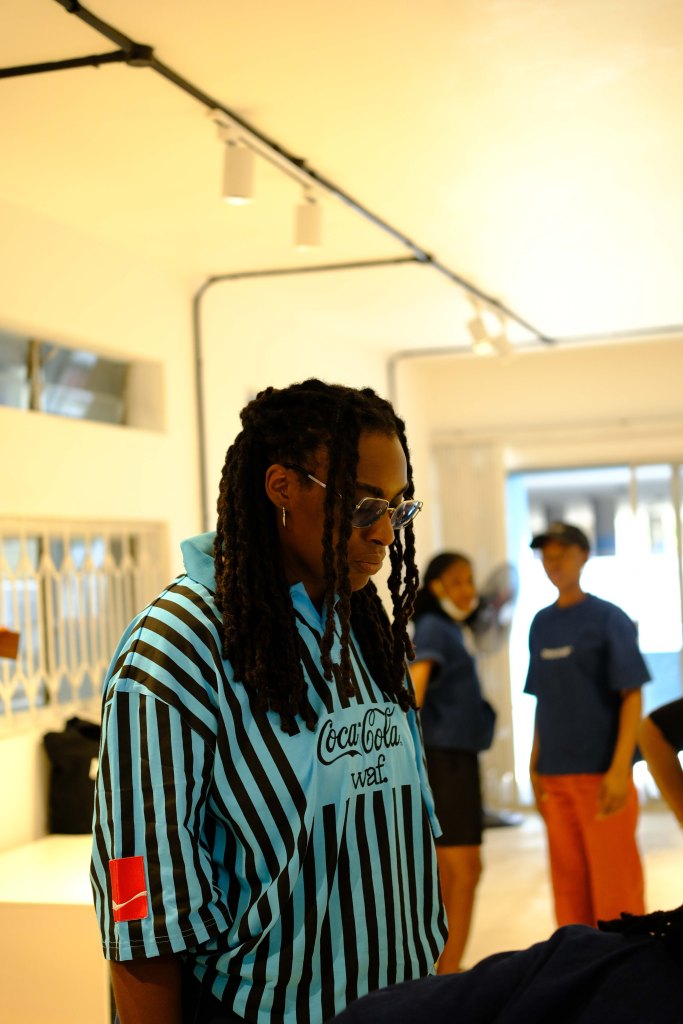
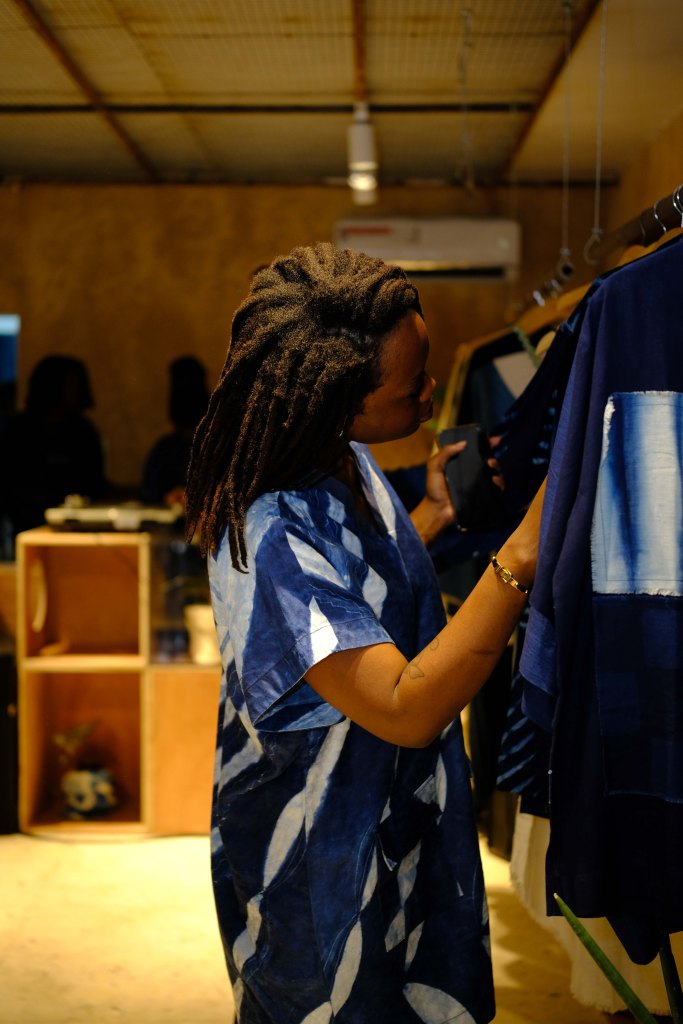
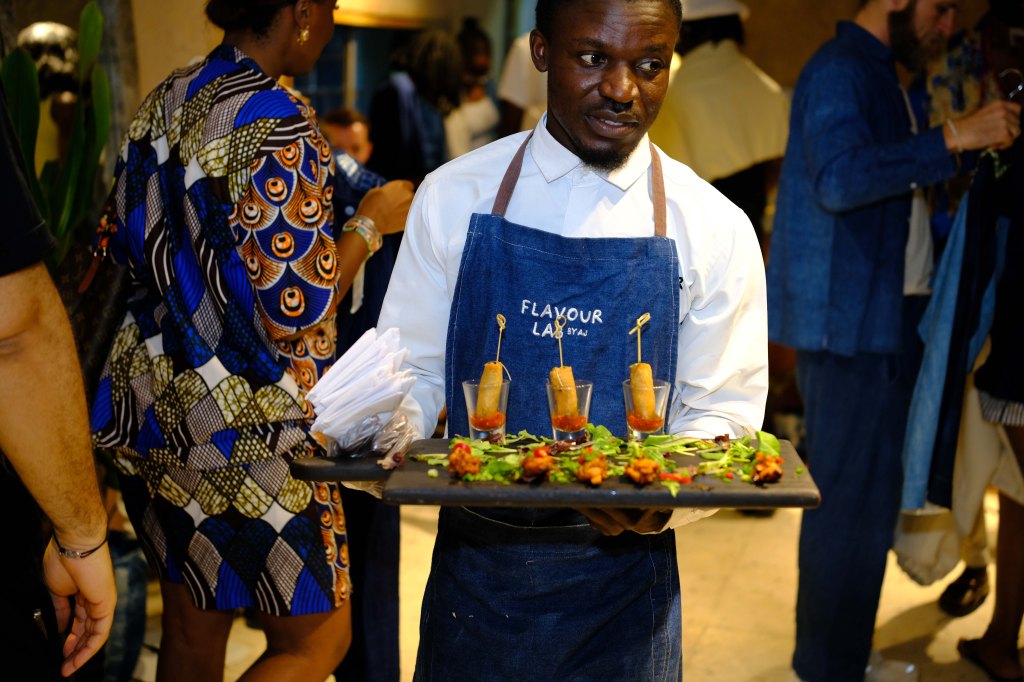
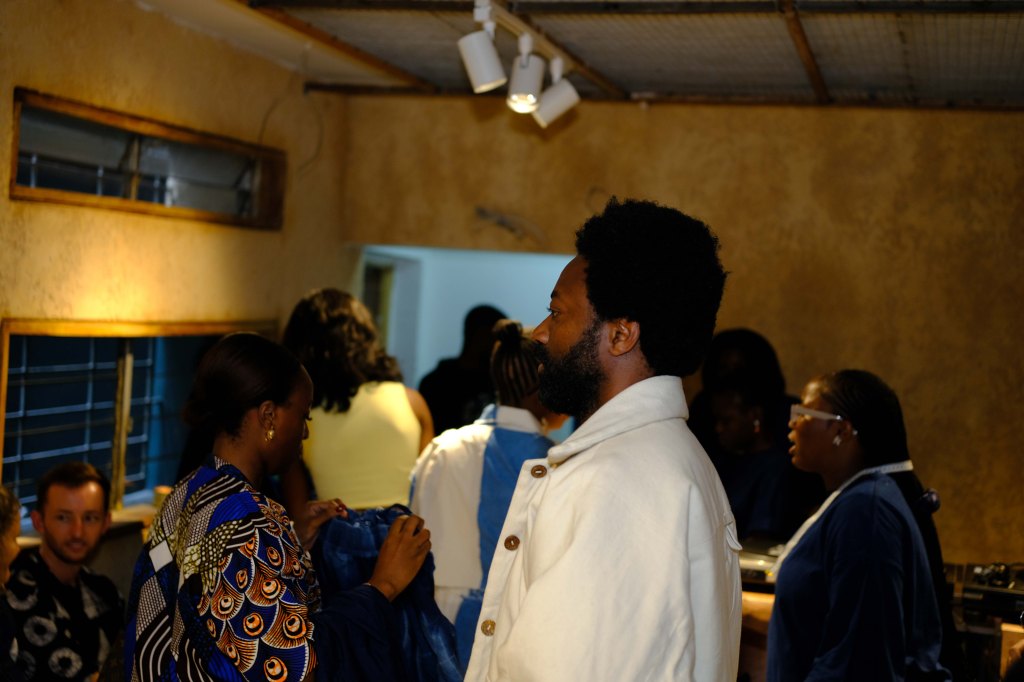
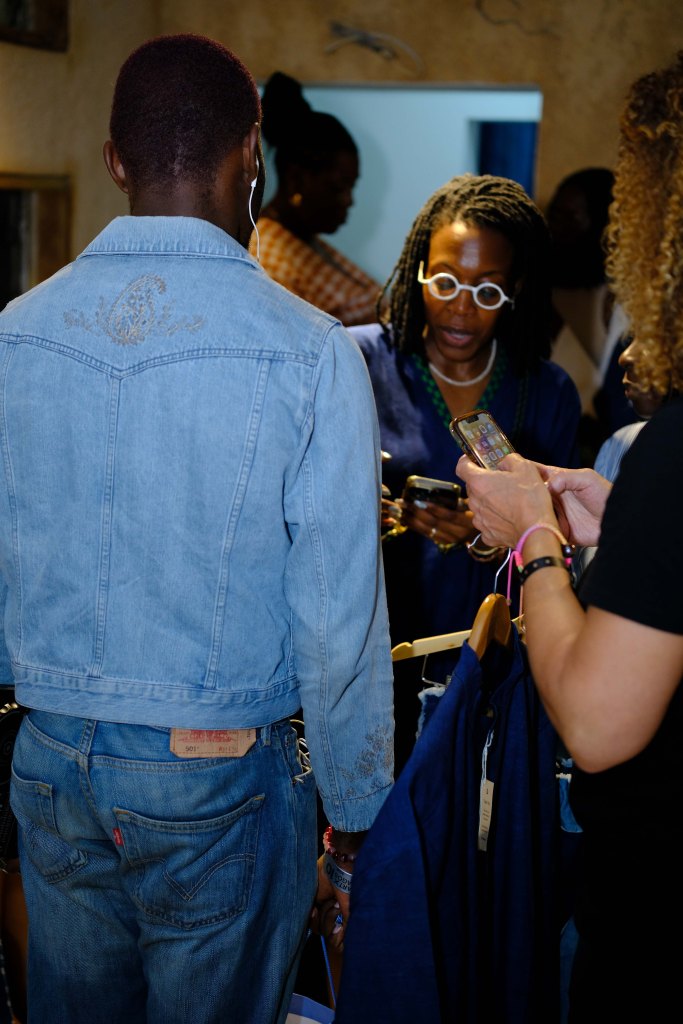
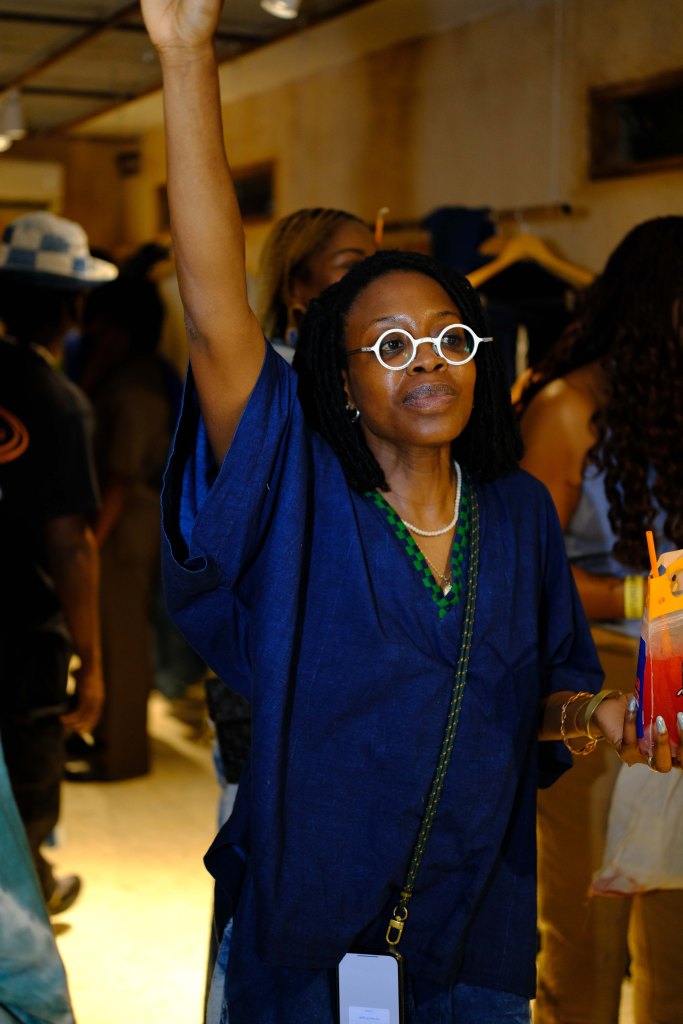
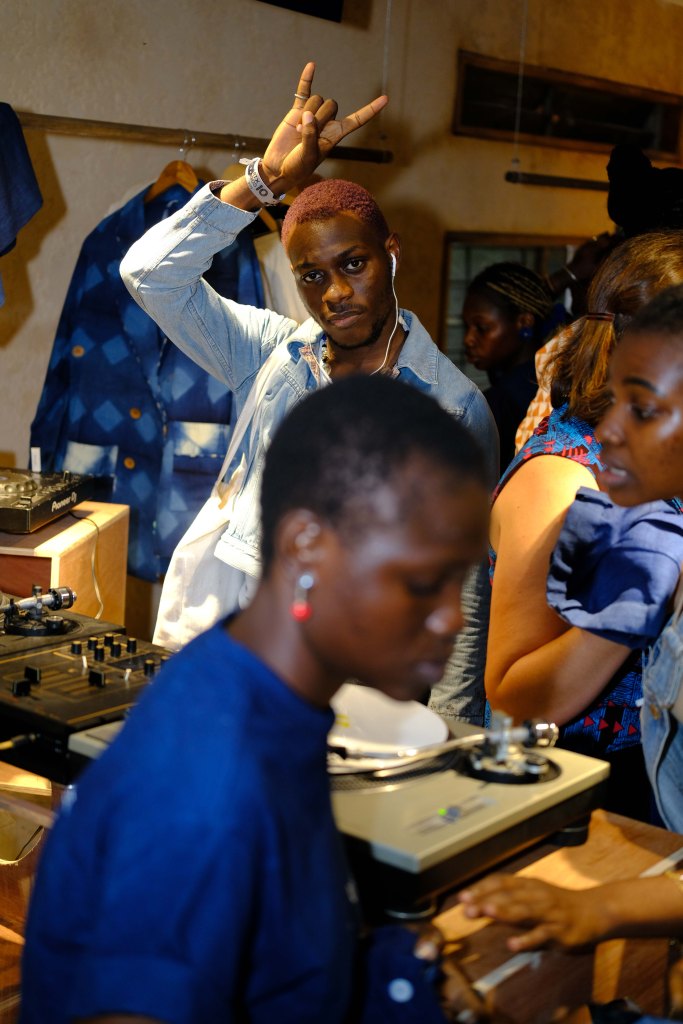
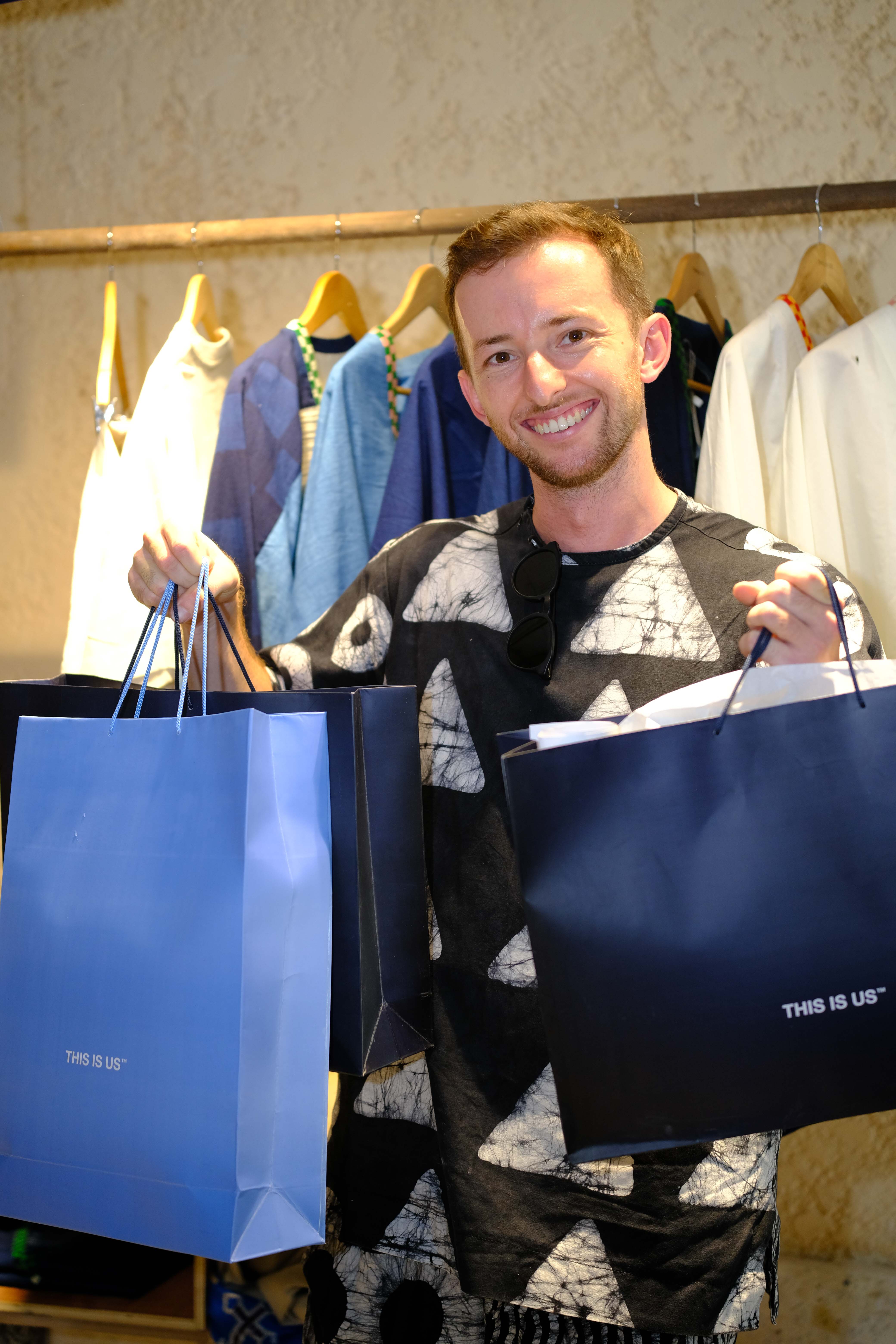
THIS IS US™ has officially opened its flagship store in Onikan, Lagos Island, marking a defining moment for one of Nigeria’s most respected homegrown design brands. The opening preview took place during Art Week on November 8th, bringing together friends of the brand, collaborators, loyal customers, and members of the international art community for a first look.
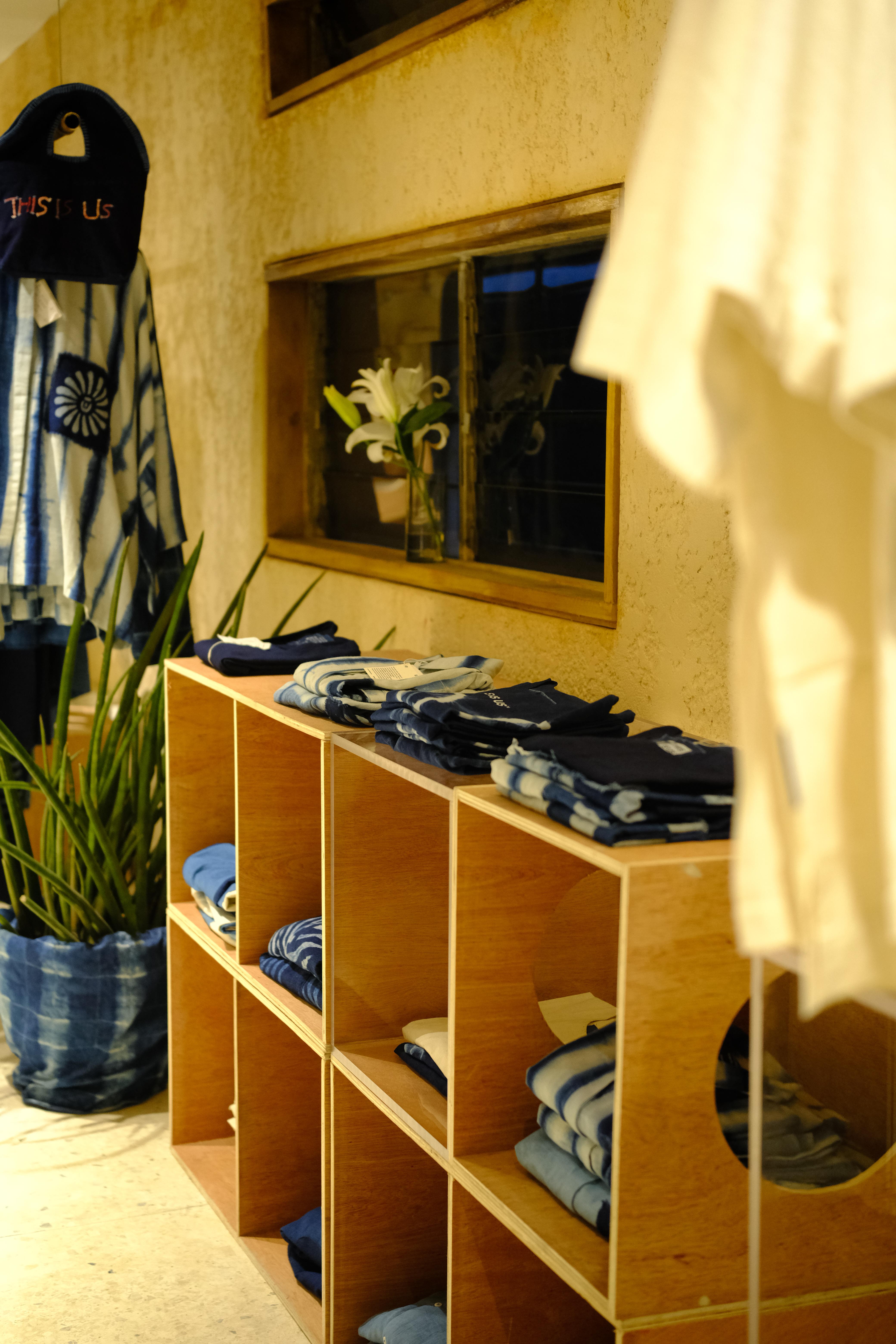
Set inside a newly restored three-story tropical modernist building, the space reflects the brand’s ethos Live Work Wear for the Conscious Creative through thoughtful architecture, craftsmanship, and a deep sense of community. Just steps from the John Randle Centre for Yoruba Culture & History and sitting behind the brand’s manufacturing studio, the flagship lives at the heart of a growing creative district alongside IAMISIGO and Plan B Lagos.
Originally designed in the 1970s by architect Akintunde Tejuoso, the building has been reinvented in collaboration with Papa Omotayo and the MOE+ Art Architecture team. The result is a multifunctional home for design that feels rooted in heritage yet firmly pointed toward the future.
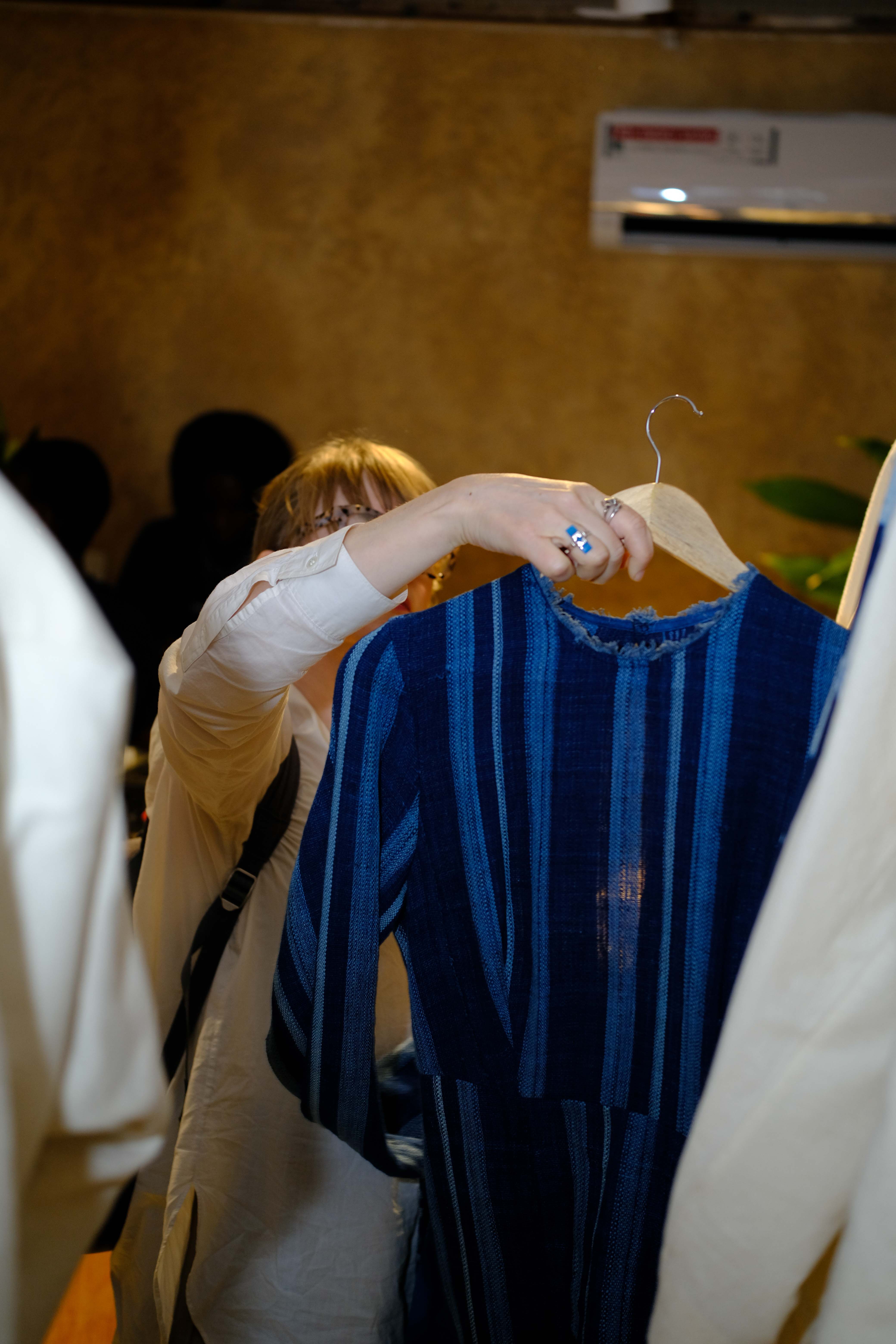
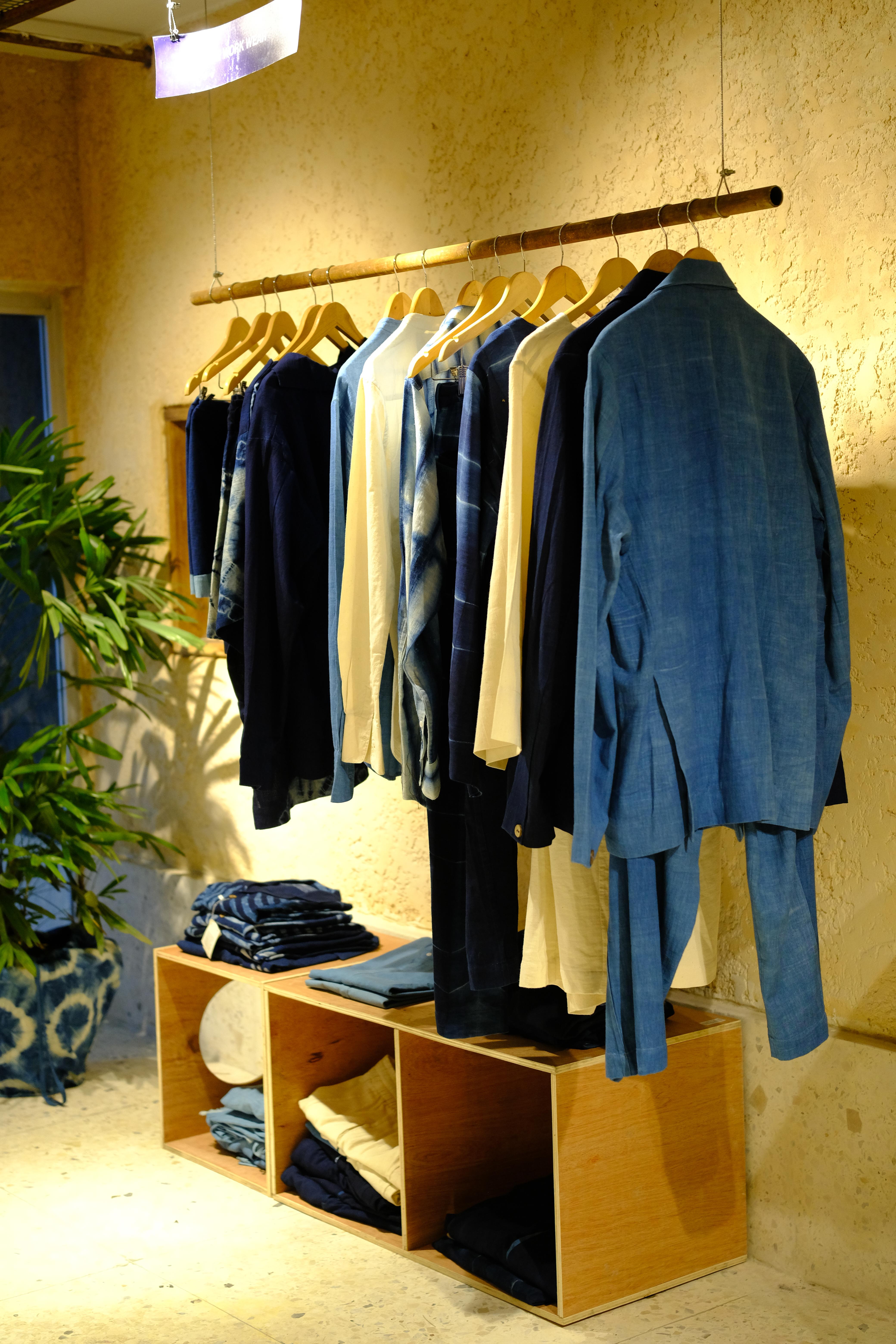
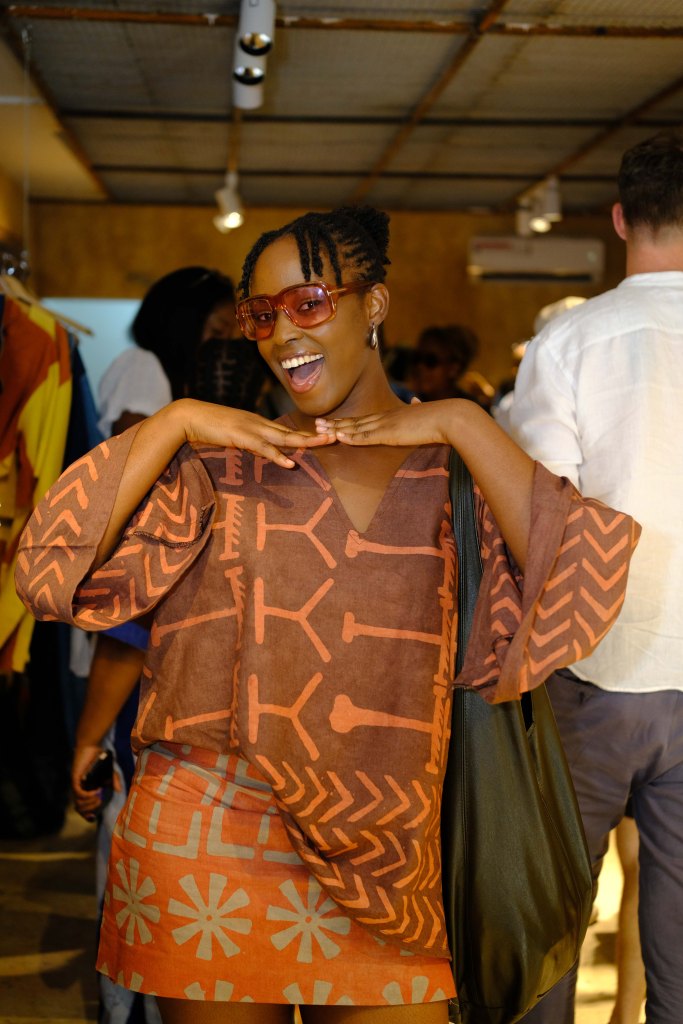
Inside, the flagship unfolds across three key spaces: a retail floor showcasing THIS IS US pieces alongside carefully selected homegrown design brands, a Maker Studio centred on craft and textile experimentation, and a Creative Residence set to open in March 2026.
Throughout the building, visitors encounter design and art pieces from some of the brand’s closest creative collaborators including Omi Collective, Nmbello Studios, Butlers Archive, Fantastic Plastic, IAMISIGO Home, and visual artists Sola Olulode and Fiyin Koko. Photographer Daniel Uwaga captures every detail with intimate clarity, documenting the textures and atmosphere that define the space.
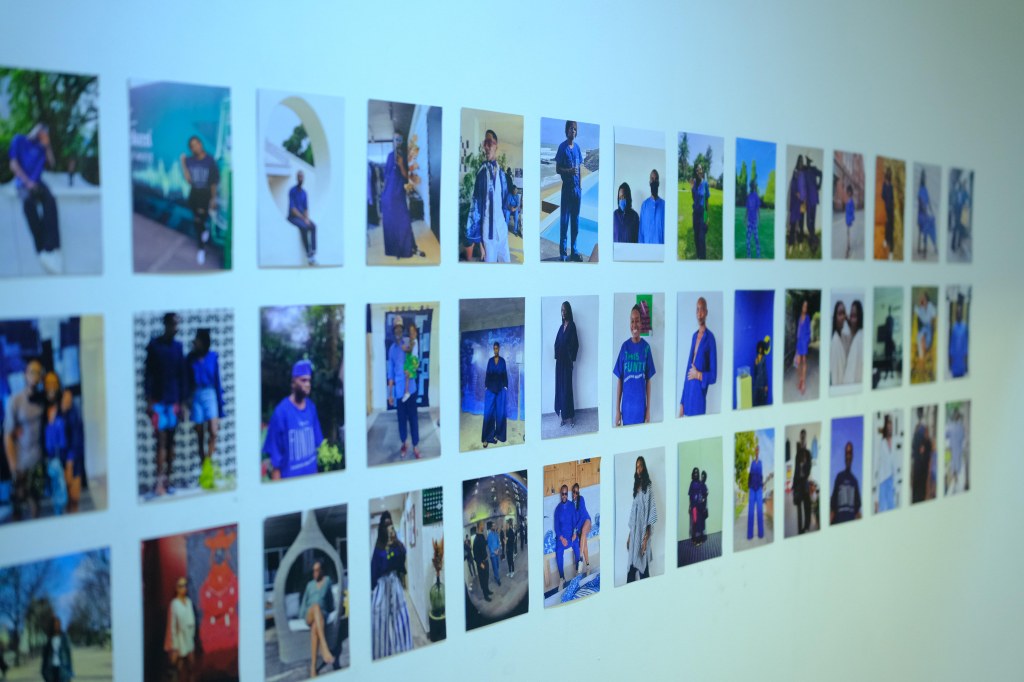
A highlight is the THIS IS US Wall of Fame, an ongoing installation featuring photographs of the community that has shaped the brand over the years. It stands as a tribute to the people who live with the clothes, grow with the brand, and continue to inspire its evolution.
“We wanted to create a space that feels like home, a place where people can linger, have fun, and take it all in,” say founders Oroma and Osione Itegboje. “This building represents where we started, who we’ve become, and the people who made it possible.”
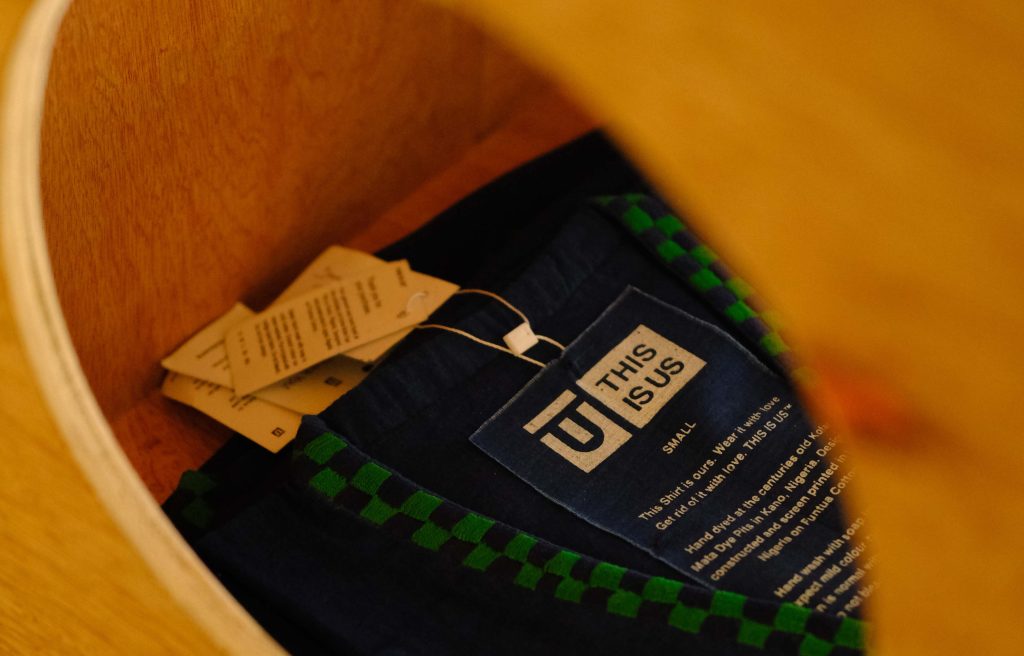
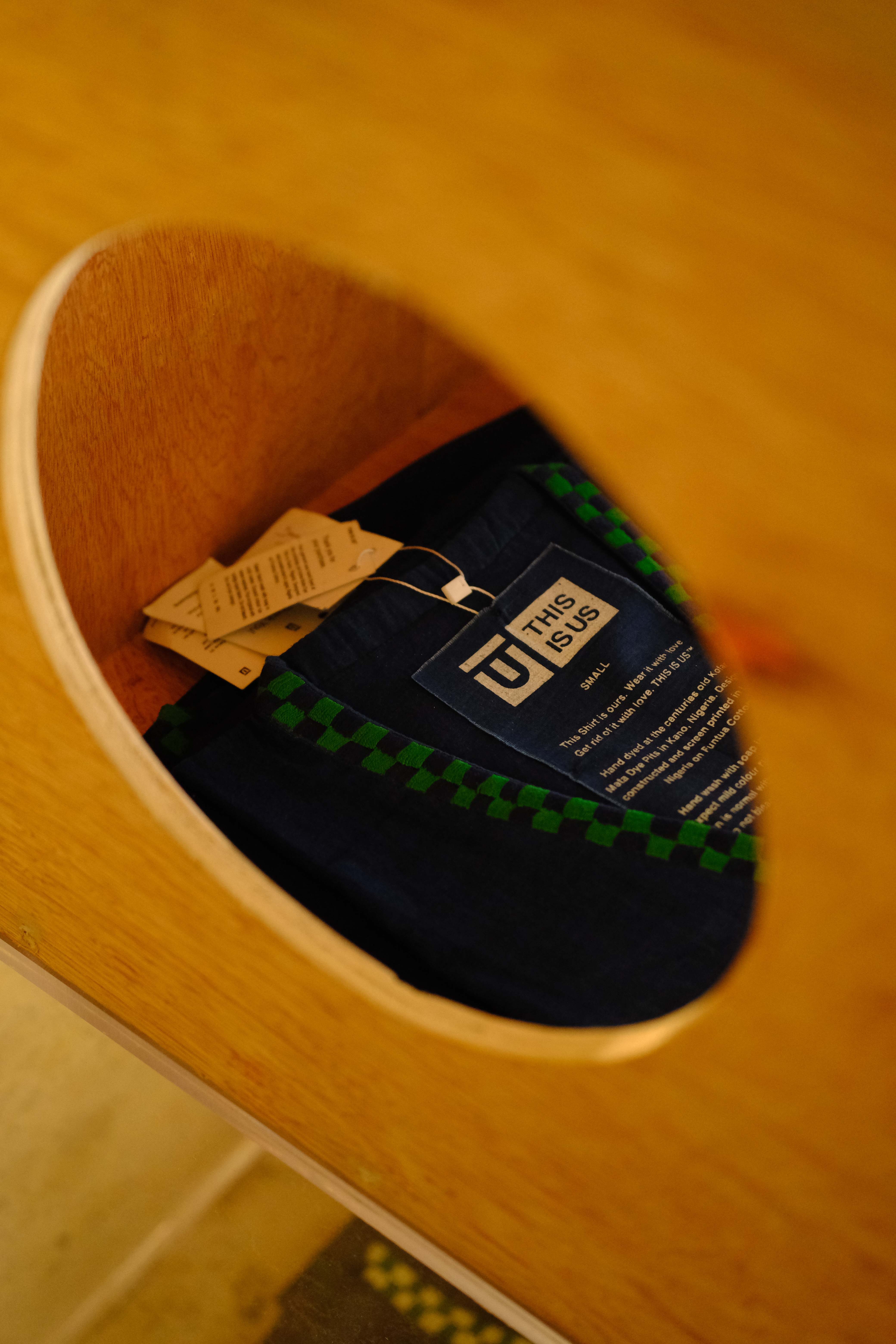
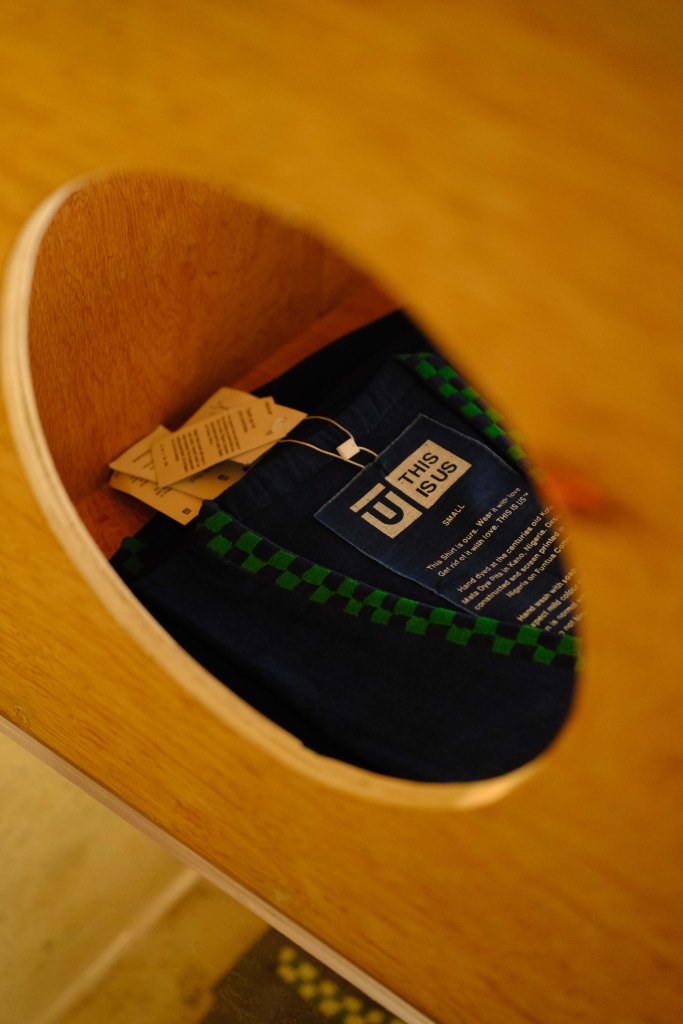
Founded in 2016 after a journey across Northern Nigeria, THIS IS US has remained rooted in process, people, and place. Their signature textiles are woven from Nigerian cotton and hand-dyed in the ancient indigo pits of Kofar Mata, linking farmers, dyers, tailors, and designers across generations.
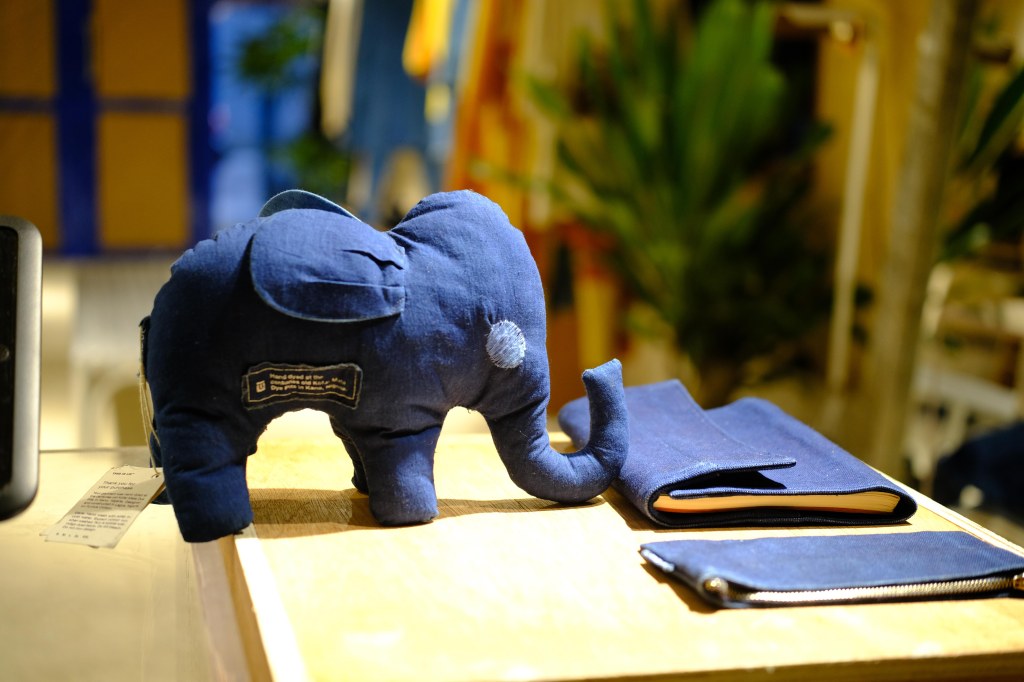
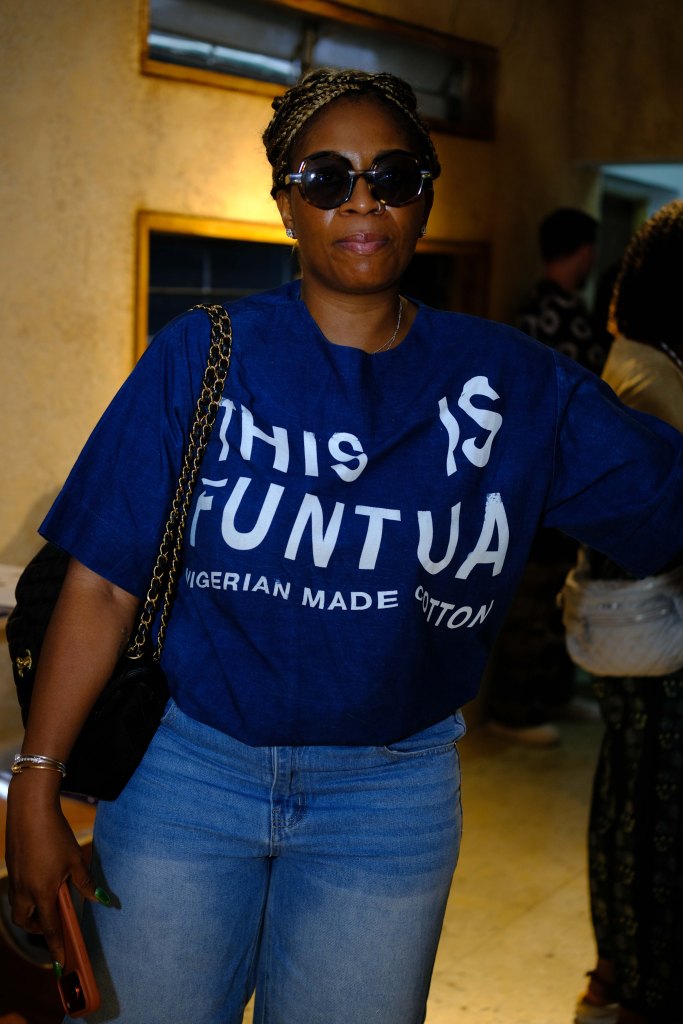
The flagship extends this chain of craft, offering visitors a full experience of the brand: the beloved Funtua tees, uniform wear inspired by dye-pit and workshop artisans, cross-disciplinary collaborations with IAMISIGO, Waf, PITH, and Dye Lab, and home accessories that widen the brand’s design language.
Through this new home, THIS IS US reinforces its commitment to longevity, zero-waste design, re-dye services, and creative exchange. The flagship invites guests to step into their world, slow down, and experience Nigerian design at its most intentional.
THIS IS US House 19A Military Street, Onikan, Lagos Island Tuesday to Saturday: 10am to 6pm Sunday: 12pm to 6pm
Burner accounts are anonymous or fake social media profiles used to share opinions, spread gossip, or leak private information without revealing the person behind them. Unlike official artist pages, they operate in the shadows, often dropping “receipts,” screenshots, or unverified claims that fuel speculation. In fan cultures worldwide, from K-pop to hip-hop, burners have become a powerful tool to shape narratives. In Afrobeats, they’re now central to how drama unfolds, bypassing labels, PR teams, and sometimes even the artists themselves.
The Afrobeats industry has always thrived on whispers. Rumors of collaborations, secret studio sessions, and private fallouts often travel faster than the songs themselves. But in today’s digital era, whispers don’t stay whispers for long, they morph into screenshots, burner accounts, and viral threads. This new rumor economy is reshaping the culture in real time.
The recent controversies involving Omah Lay and Rema, and the never-ending Burna Boy and Wizkid rivalry, are prime examples of how a culture of anonymous leaks and unverified revelations is reshaping not only fan conversations but also the reputations of some of Afrobeats’ biggest stars.
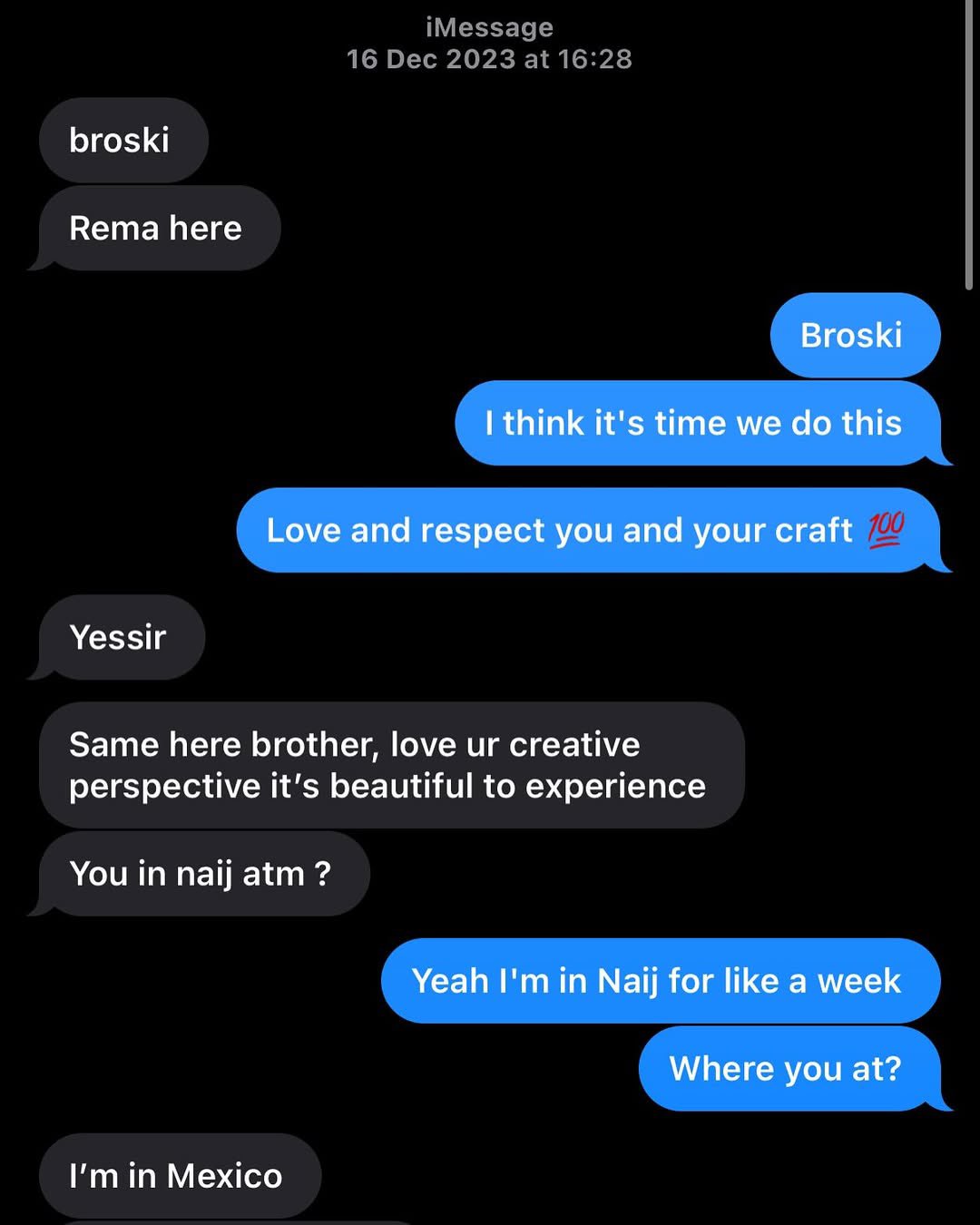
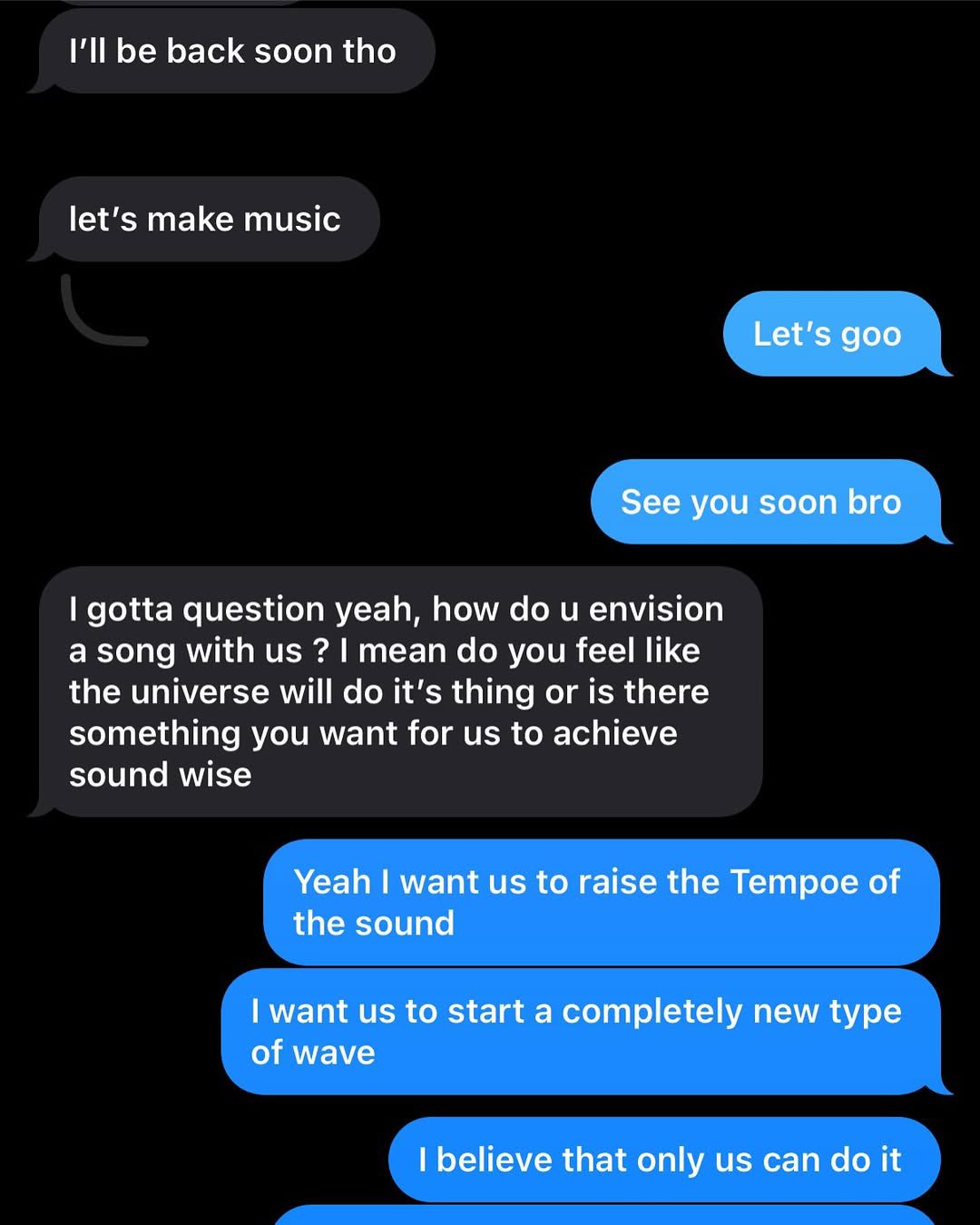
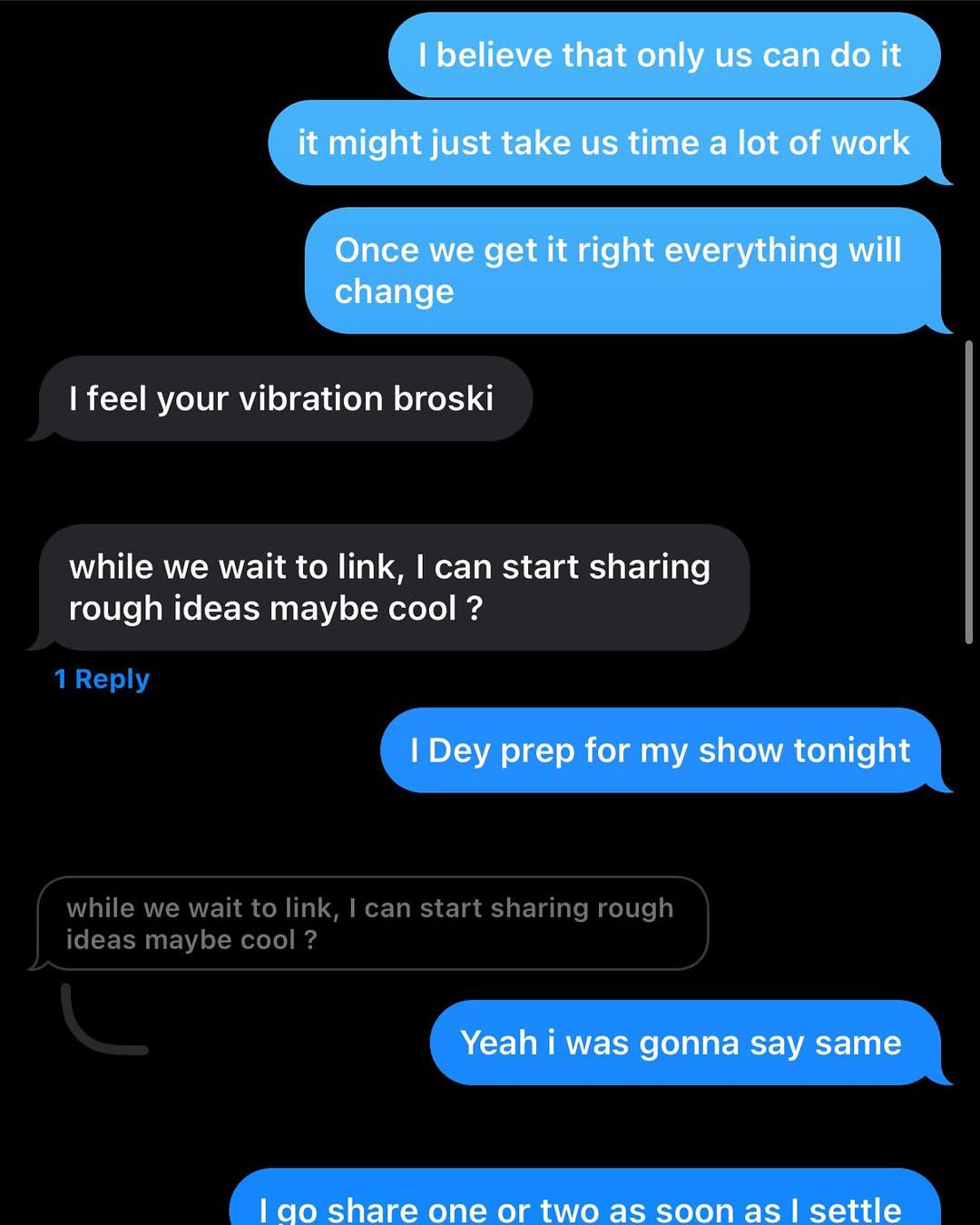
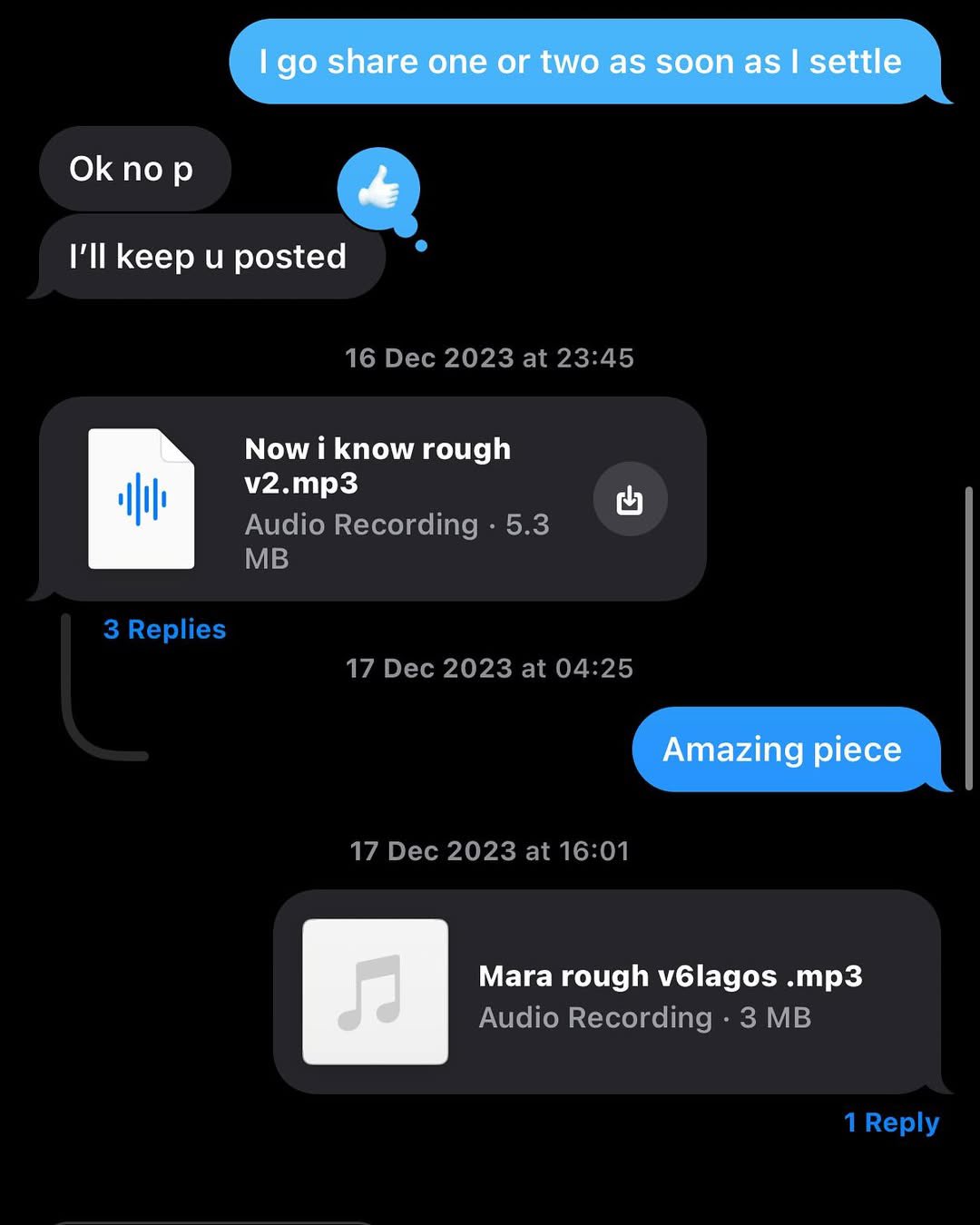
Earlier this month, screenshots allegedly from a burner account linked to Omah Lay began circulating online. The account, which had operated under the handle “Story of an Angel,” posted iMessage chats that appeared to show Omah Lay sharing an album concept with Rema back in 2023, an idea that, months later, seemed to resurface in Rema’s own project. What made fans believe this anonymous account was connected to Omah Lay were subtle clues: the account’s intimate knowledge of his creative process, posting patterns that aligned with his public statements, and a writing style that mirrored his previous social media presence. The validity of the chats has not been confirmed, and neither artist has publicly addressed them. Yet that hasn’t stopped the story from dominating headlines, fueling debates about creativity, trust, and betrayal in the music industry.
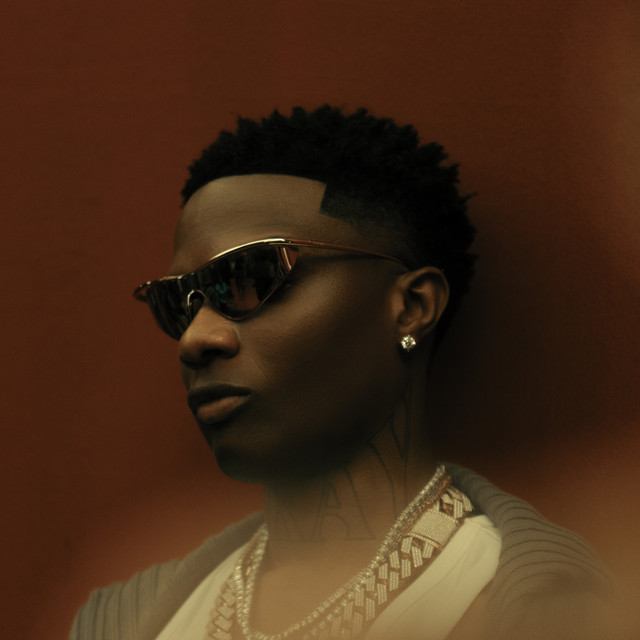
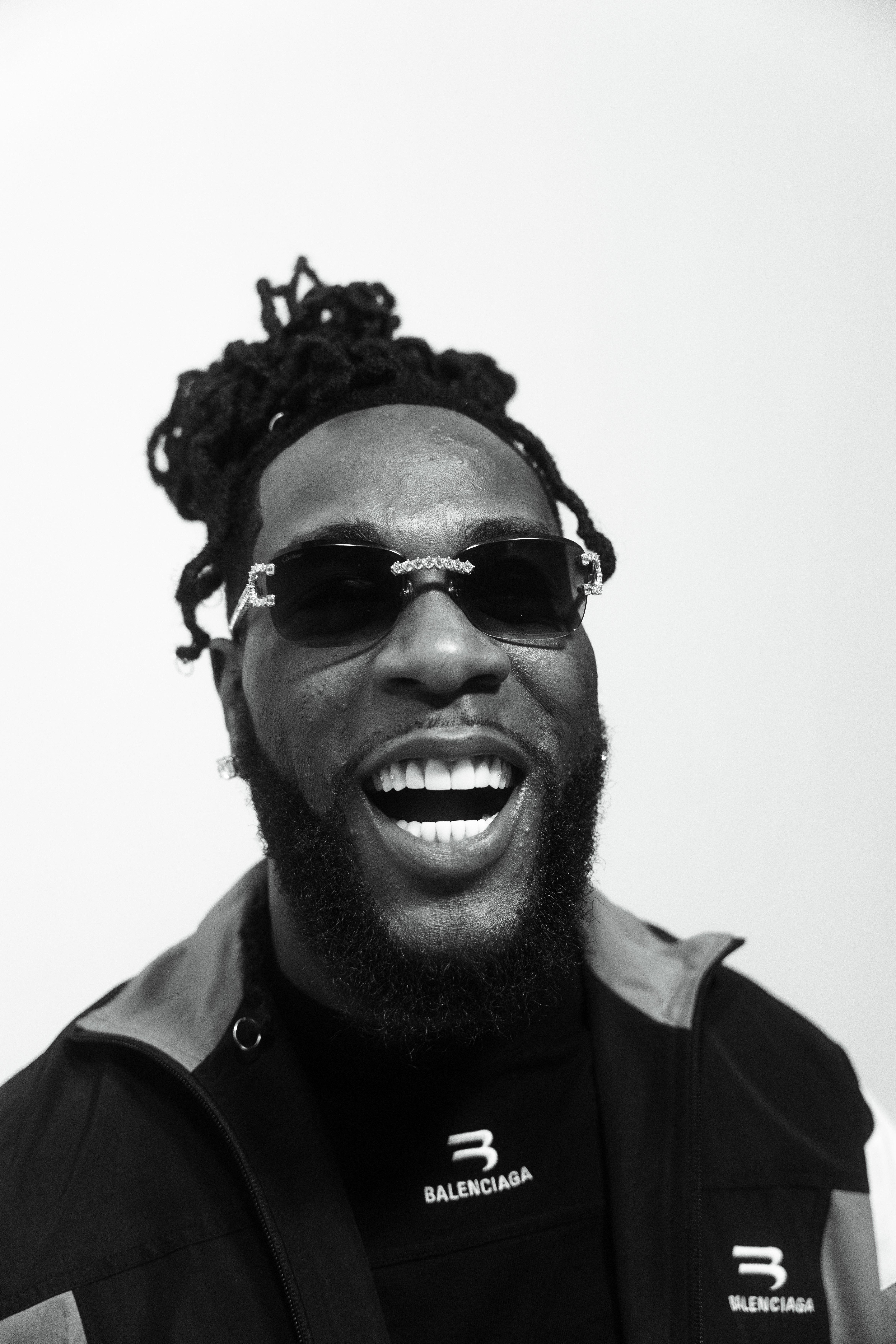
Similarly, the Burna Boy and Wizkid dynamic has long been amplified by anonymous accounts and whispered claims. From subtweets to alleged burner accounts dropping “receipts,” their rivalry thrives on ambiguity. Even when neither artist speaks directly, “stans” and blogs seize on fragments, turning them into narratives that dominate timelines. The absence of confirmation only deepens speculation, as silence is reinterpreted as strategy.
This is the peculiar power of burner accounts: they bypass traditional gatekeepers i.e the labels, PR teams, even the artists themselves and deliver raw claims straight into the bloodstream of fan culture. With one post, they can tilt the narrative, turning speculation into per deceived truth. And because these accounts are anonymous, there is little accountability if the claims turn out to be false. The court of public opinion moves faster than facts.
The stakes extend far beyond hurt feelings. In an industry where global streaming numbers, international collaborations, and brand endorsements can make or break careers, reputation damage can translate into real financial losses. When whispers suggest an artist has stolen concepts or betrayed collaborators, it doesn’t just affect fan perception, it can influence label executives, booking agents, and potential collaborators making decisions worth millions of dollars. This raises a difficult question: how much weight should we give to revelations that emerge in this way? On one hand, burner accounts and leaked screenshots can sometimes expose real injustices whether unpaid royalties, broken promises, or unacknowledged collaborations. They provide fans with an insider’s view of an industry that often operates behind closed doors. On the other hand, they also create fertile ground for misinformation, where private tensions are amplified into public scandals before anyone has had a chance to verify the details.
The result is an environment where reputation is increasingly fragile. An artist can wake up to find years of work overshadowed by a screenshot, with no way of proving or disproving its authenticity. Even silence becomes risky. If Omah Lay and Rema remain quiet, fans will interpret that silence as confirmation. If Burna Boy or Wizkid ignore burner chatter, their fanbases fill the vacuum with competing interpretations. In a culture dominated by leaks, the narrative is rarely controlled by the people at the center of it.
Burner culture also changes the relationship between fans and artists. Afrobeats audiences are no longer passive listeners; they are detectives, piecing together timelines from tweets, interviews, and leaked messages. The fandom becomes a whisper network of its own, feeding on half-truths and speculations, sometimes with more energy than the music itself. This dynamic can be exciting, creating a sense of insider knowledge and community among fans. But it can also be corrosive. When gossip outpaces art, the focus shifts from creativity to controversy.
This pattern isn’t entirely unique to Afrobeats, hip-hop has long featured diss tracks and public feuds. But where traditional rap beefs played out through official releases and public statements, Afrobeats drama increasingly unfolds through anonymous accounts and unverified leaks, making it harder to separate performance from genuine conflict, strategy from spontaneous emotion.
The irony is that Afrobeats is entering its most professional era yet, artists are signing global deals, filling stadiums, and charting internationally. But beneath this polished surface, the machinery of gossip is more chaotic than ever. In many ways, burner accounts represent the growing pains of an industry that is both local and global, informal yet professional. They expose the gaps between how the industry is managed publicly and how it operates privately.
Finding Balance in the Noise
What is needed now is balance. Fans should be cautious in how much they elevate unverified claims, understanding that screenshots can be fabricated and anonymous accounts may have ulterior motives. Media outlets must resist the temptation to treat every screenshot as gospel, remembering that the pursuit of clicks cannot come at the cost of fairness. And artists themselves need to adapt, understanding that in an era of leaks, transparency and proactive communication may be the only way to stay ahead of the rumor mill.
At its best, the whisper network surrounding Afrobeats reflects the passion of its community. It shows how deeply fans care about not just the music but the stories behind it. But left unchecked, it risks becoming a culture that thrives more on suspicion than celebration.
Burner accounts will not disappear; anonymity has always been a powerful tool for those seeking to share sensitive information without facing direct consequences. What matters is how we, as fans, media, and artists, engage with them. Do we treat them as starting points for discussion, or as final verdicts? The difference may determine whether Afrobeats continues to grow on the strength of its music or becomes trapped in the noise of its own whispers. As the genre reaches new global heights, the industry must decide whether it wants to be defined by its art or its rumors. The whispers will always be there. The question is: are we listening to the right voices?
Some artists find their sound. Others build it — layer by layer, language by language, experience by experience. For June Freedom, music is not a place you arrive at. It’s something you return to. Again and again.
His latest album, Casa Mìra Mar, is more than a record. It’s a homecoming. A love letter to Cape Verde. A passport stamped with rhythm and memory. And perhaps most importantly, it’s a mirror reflecting the life of an artist whose identity was never meant to fit into one culture, one genre, or one lane.
A Cape Verdean Soul, Raised in Motion
“I was born in the U.S.,” June tells me, “but from the age of three to fifteen, I lived in Cape Verde. That’s where everything started.”
His mother, a restaurant owner on the island, gave him more than a roof — she gave him a stage. “From age ten, every weekend, I’d be at my mom’s restaurant watching live bands perform. I was obsessed,” he recalls. “It’s literally where my career began. I’d just stand there watching how they did it, learning, feeling. That was my music school.”
But Cape Verde wasn’t just about music. It was about culture, community, and presence. “My island was calm. People went inside by 8 p.m. I’d spend days riding horses in the countryside with my cousins, surfing at the beach, listening to traditional music. I didn’t even know who Prince was. I only knew Bob Marley.”
When he moved back to Boston at 15, it was like landing in another world. “The West changed everything,” he says. “The hustle was different. The music, the language, the lifestyle — it was fast. Aggressive. Intense. I discovered DMX, Usher, 50 Cent, Linkin Park. I was being hit with all these new sounds and I didn’t know how to process it.”
That transition sparked a creative crisis — and eventually, a creative revolution. “It took me a decade to understand my sound,” he says. “I didn’t have an identity for a long time. I had to live life, make mistakes, and feel things before I could create from a real place.”
From Student to Storyteller
The turning point came in Los Angeles, where June spent five years in quiet development. While others rushed to release, he focused on learning.
“LA was my experimental phase. I wasn’t just creating for myself — I was learning how to write for others, how to play instruments, how to listen professionally. I worked on songs for artists like Swae Lee and The Weeknd. I had to sit in sessions and be a fly on the wall. That taught me everything.”
Eventually, the desire to create his own voice grew louder.
“After a while, I said, ‘I’m ready for my own shit.’ And I went back to the essence.”
That essence is Casa Mìra Mar , a project that bridges continents and connects past and present.
“My grandfather had a store back home called Casa Mira Mar,” he explains. “You could see the ocean from there. You could see another island. It was peaceful. This album is that store — a place of calm, of connection, of perspective.”
He continues, “There’s a lot going on in the world right now. I wanted this album to feel like an escape. Like a slow ride by the ocean. Like peace.”
Building a Sonic Diaspora
Across 12 songs, Casa Mira Mar fuses Afrobeat, R&B, Latin, Cape Verdean folk, and subtle rock influences into a seamless body of work. There’s “Spiritual”, a hypnotic anthem with militant drums and Afro-fusion bounce. There’s “Girls Like Shade” with Ghanaian-Dutch artist Nana Fofie, and “Oh My Lady”, a standout Afro-pop duet featuring Nigerian talent Abolaji Collins, whom June jokes he “stole from L.A.X.”
“He did the guitar, wrote the hook — I just re-sang it and added my verses. He’s my brother. A real one,” June says. “That one has a real Nigerian vibe, but I made it my own. You can feel the influence, but it’s still me.”
What makes the album even more special is the organic way it came together. “It was supposed to be a six-song EP,” he admits. “Then it turned into 12. It took a year and a half. Nothing was forced. Every feature, every verse happened naturally.”
One of the album’s most magical collaborations came by chance. “There’s a track called Dorama. I met a girl named Lua de Santana at my show in Spain. Her friend brought her. Six months later, I saw a video on Instagram, and I’m like, ‘Who is singing this?’ She goes, ‘That’s me.’ I was like, ‘Bitch, you didn’t even tell me you make music!’ So I sent her a track. She killed the verse. Now she’s part of the album.”
This kind of serendipity defines June’s creative process. “It never happens the same way twice,” he says. “I don’t chase formulas. I chase feeling.”
“You Hear Everything in Me”
Trying to box June Freedom into a single genre is a losing game. “Editors always ask me, ‘Is it R&B? Is it Afrobeats? Is it Latin?’ I’m like, ‘Yes.’ I grew up with African drums. We were colonized by the Portuguese. I live in America. I speak Creole, Portuguese, Spanish, and English. You’re going to hear all of it.”
His core collaborators, Ergin and Eric, Dutch producers based in Rotterdam, have helped him shape that blended identity. “Their textures are like fine wine. It just works with my tone. I’ve tried working with other producers and it’s never the same. These are my ninjas. I keep them tucked.”
Still, he’s been expanding — working with BlaiseBeats, Kel P and others. “The next project’s going to have a lot of Nigerians,” he hints. “I just sent something to BNXN.”
Presence Is the Point
The emotional core of Casa Mira Mar is rooted in memory — of home, family, and simplicity. “I remember my grandfather. He was that guy. He’d drive through the countryside and honk at every single house. Everyone knew him. This album is for him. For that version of peace.”
Even the album’s outro, “Leban Ku Bo”, sung in Cape Verdean Creole, is poetic closure. “It means ‘Take me with you.’ It’s about love, longing, and letting go. It’s the most personal one. It just felt right to end there.”
When asked what he wants listeners to feel, June doesn’t hesitate: “I want you to feel present. I want you to feel peace. I want you to feel love. I want you to feel connected to yourself.”
The Road Ahead
Following a sold-out listening party in Paris and growing buzz across Europe, June is planning a tour with dates in the Netherlands and London. “You better come see this shit live,” he grins. “I’m bringing the ocean with me.”
He’s also using his platform to shine light on lesser-known artists from Cape Verde and beyond. “Look out for Maida Andrade, Dino Santiago, Ellie Delmeda. Cesária Évora opened the doors for us — we have to keep it going.”
June Freedom isn’t here to follow trends. He’s here to document the diaspora. His music is memory. His voice is migration. And his albums — especially Casa Mira Mar — are sacred spaces where tradition, evolution, and rhythm can all exist in harmony.
“I’m not trying to be anyone else,” he says. “I just want to be present. And I want my music to help people feel that, too.”
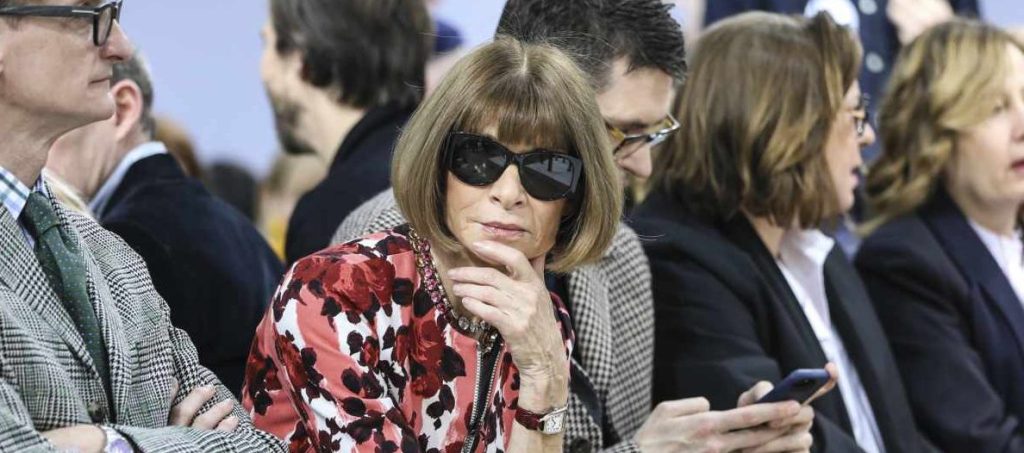
What’s next for the queen of fashion and fashion at large? Oh my goodness, what’s next for Vogue?
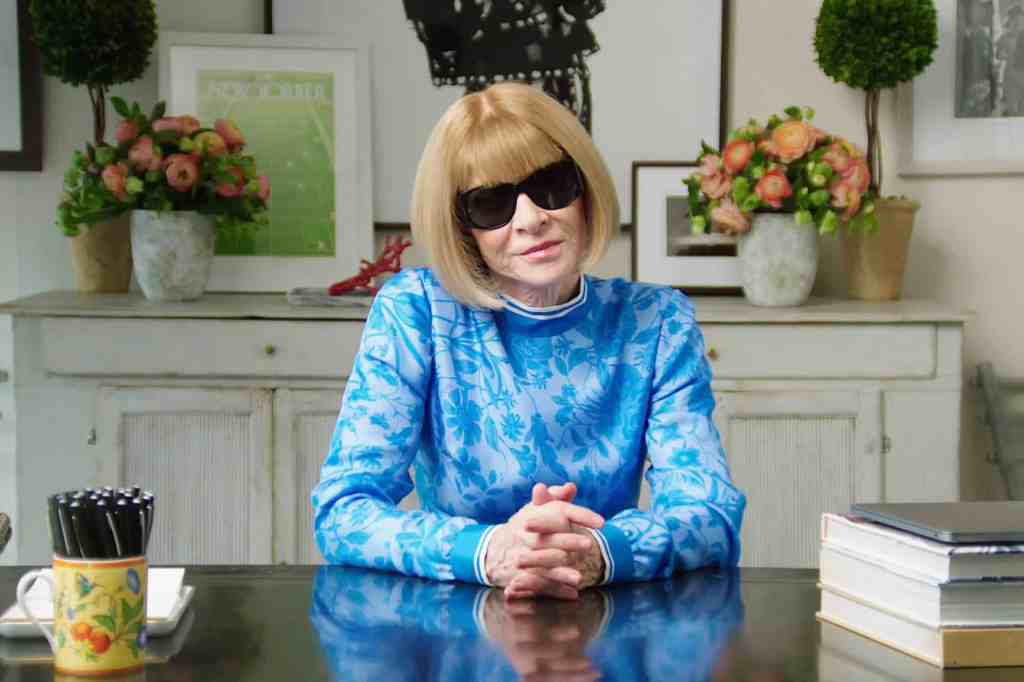
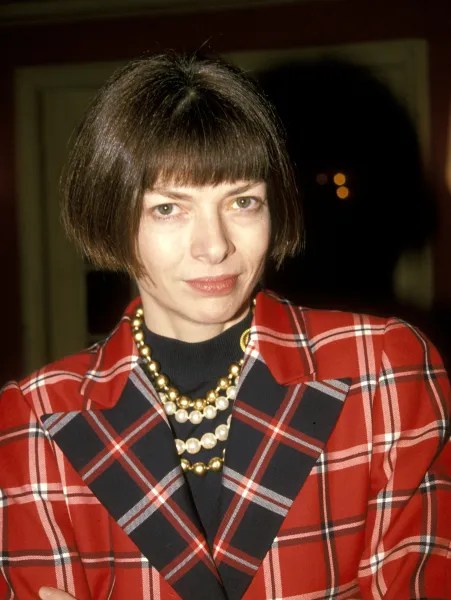
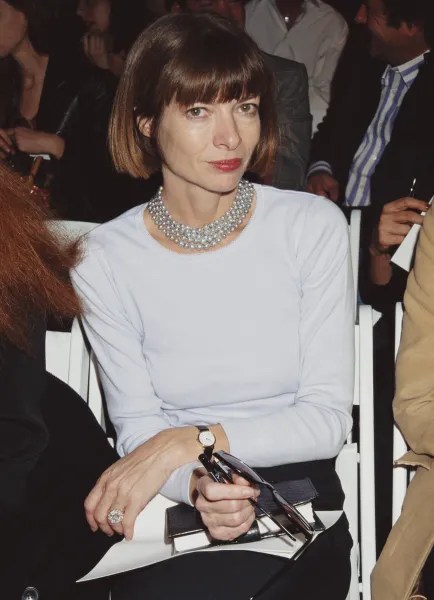
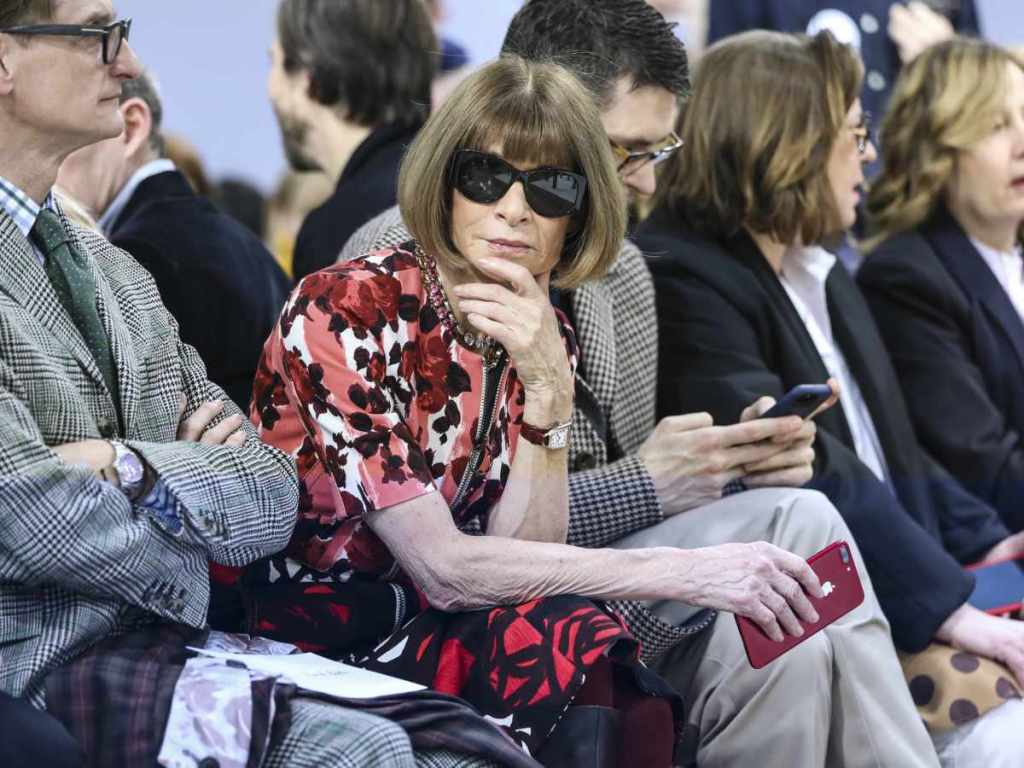
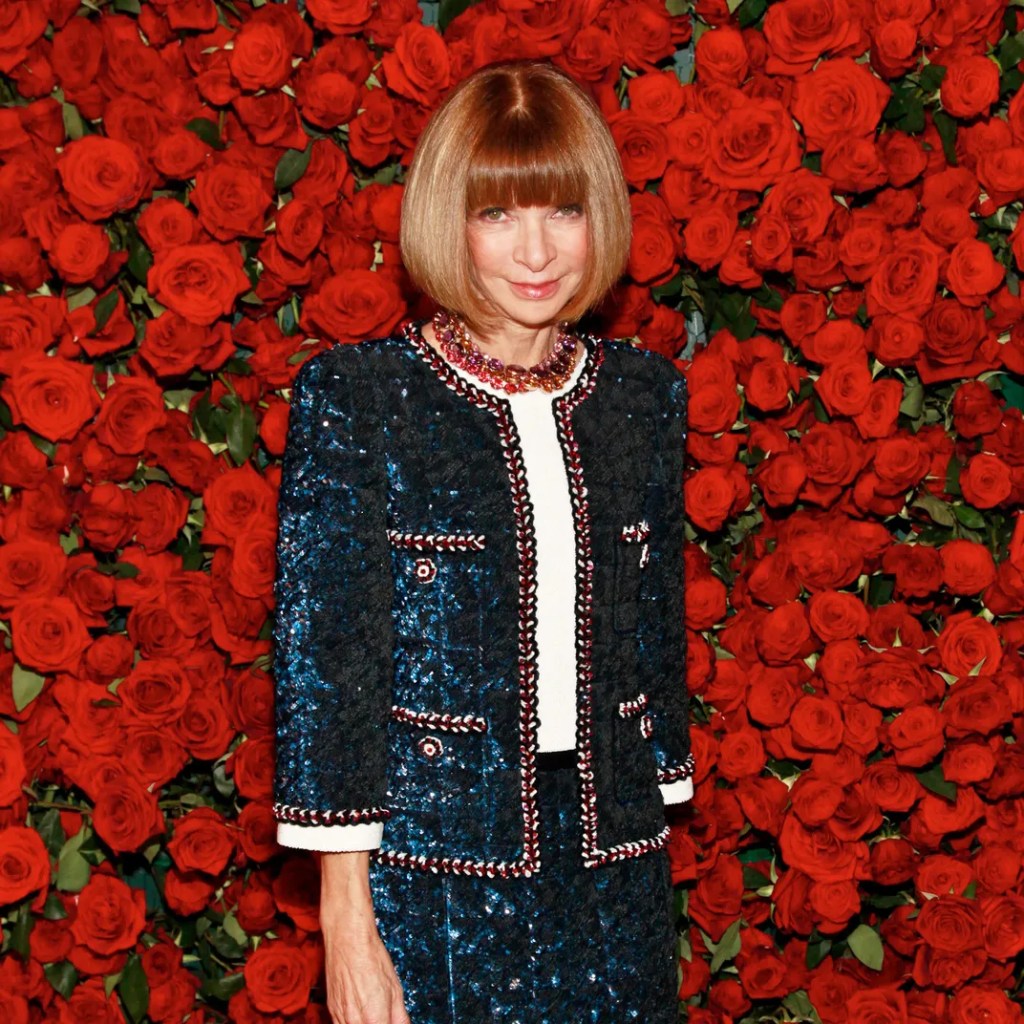
It’s official. After three decades and some change, the legendary Anna Wintour has stepped down as Editor-in-Chief of Vogue Global. Yes — the same Anna who made the bob and shades a global trademark, the same Anna who didn’t just run Vogue, but ran fashion.
Wintour’s journey with Vogue started in 1985, when she relocated to New York. After a brief stint back in London to lead British Vogue, she returned in 1988 to take the global reins. Her mission was clear: make Vogue the number one fashion magazine in the world. At the time, Elle Magazine held the crown, but Anna was about to shake the table.
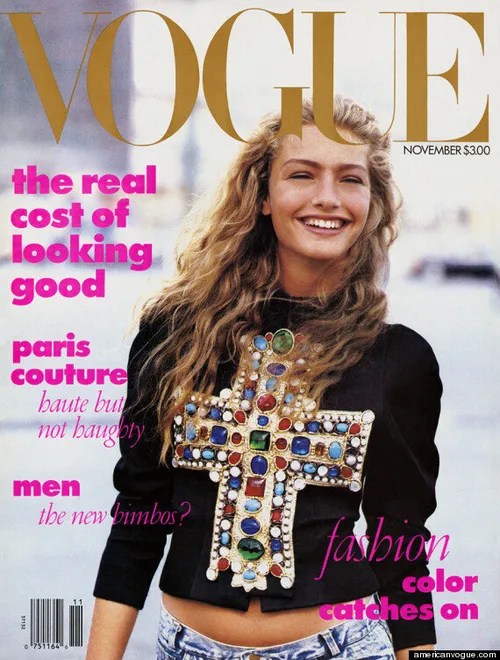
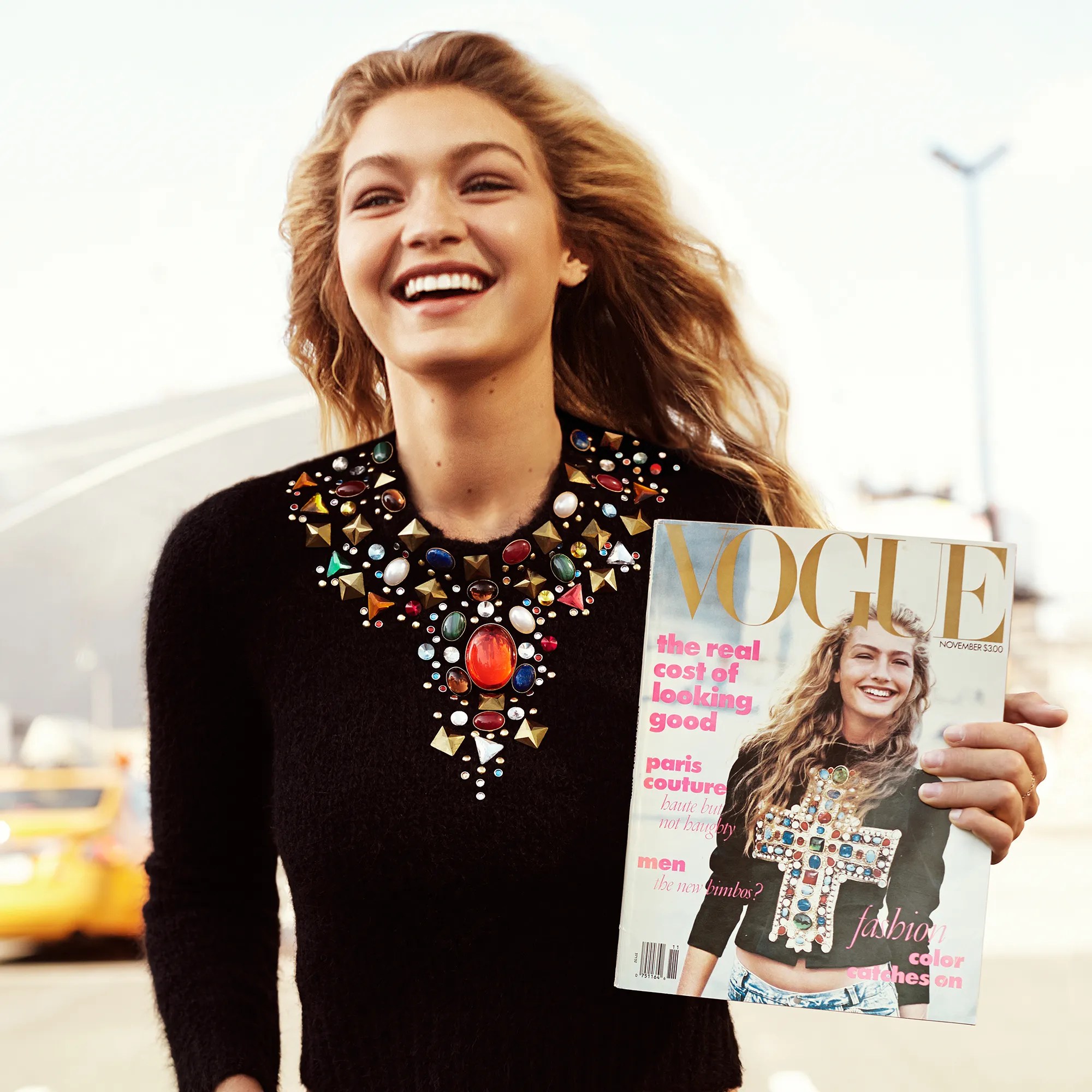
Her first U.S. Vogue cover said it all — Israeli model Michaela Bercu in a $10,000 Christian Lacroix sweater and $50 Guess jeans. It was bold. Unconventional. Controversial. And it worked. That single image sparked a creative revolution and reshaped how fashion was perceived globally.
Anna didn’t just run a magazine — she reshaped an industry. Under her rule, Vogue became the global fashion bible. She opened doors for designers, gave rising talent like Victoria Beckham their first runway platforms, and played gatekeeper to the highest level of fashion validation.
Her work ethic? Ruthless. Her vision? Unmatched. Her influence? Untouchable.
Let’s not forget, she’s also the chair of the Met Gala — the most exclusive fashion event on the planet. Wintour transformed it from a fundraiser into fashion’s Super Bowl.
Though she’s stepping down from her editorial throne, Anna isn’t leaving fashion entirely. She’ll now serve as Chief Content Officer at Condé Nast, Vogue’s parent company.
But one question remains — Who’s filling those size-37-year-old shoes? Who’s next in line to carry the Vogue legacy forward?
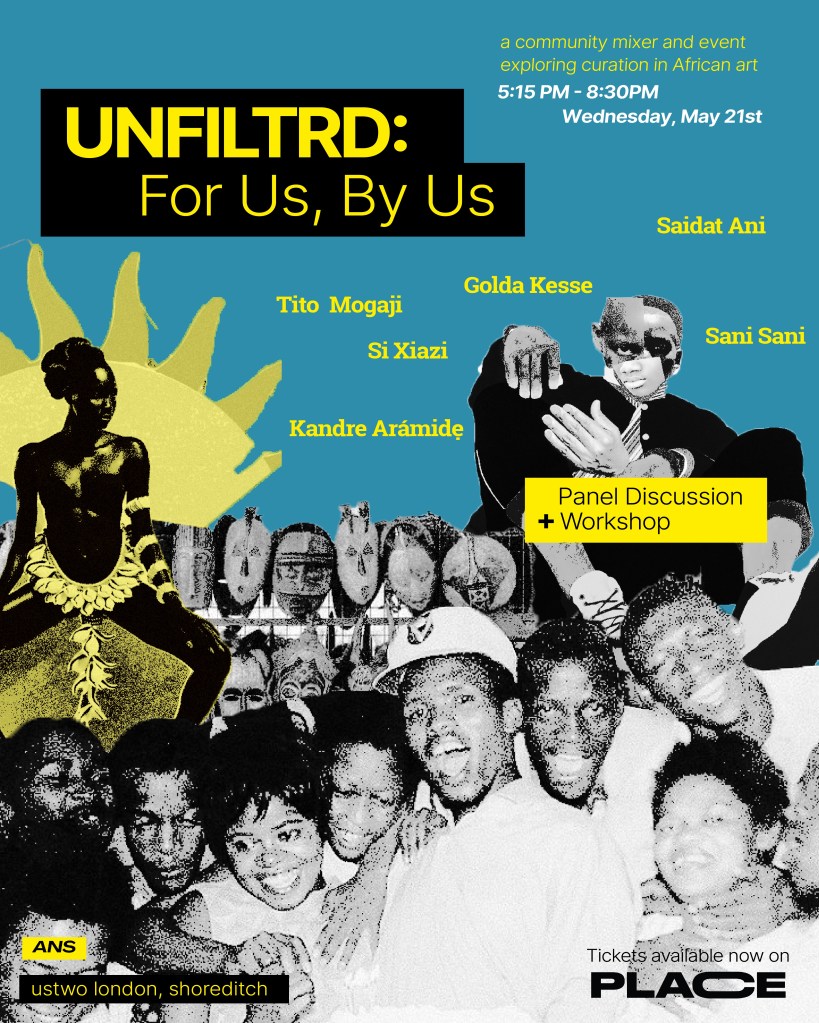
On May 21st, 2025, The Afroniche Society [@theafronichesociety] returns with its second event of the year — hosted at the iconic @ustwo space in Shoreditch.
This edition is themed CURATION (in African art and culture) — a necessary and urgent conversation on what it means to curate culture in today’s world, especially through the lens of African and Black creatives.
Expect a vibrant evening featuring:
Panel discussions
Interactive debates
A hands-on curation workshop
A community mixer to build meaningful connections
This isn’t just another event — it’s a space to challenge narratives, share ideas, and imagine new cultural futures.
Don’t miss this moment of reflection, resistance and reconnection.
In conversation with The Orange Nerd ( Adebayo Oke Lawal) of Orange Culture
This year, the MET Gala had Africa shining through its lens — from homegrown designers and stylists to A-list African artists ( Tems, Ayra Starr, Tyla and Burna Boy) on the red carpet, showing the world what true dandyism looks like through innovative designs, bold silhouettes, and undeniable elegance. Africa was boldly represented.
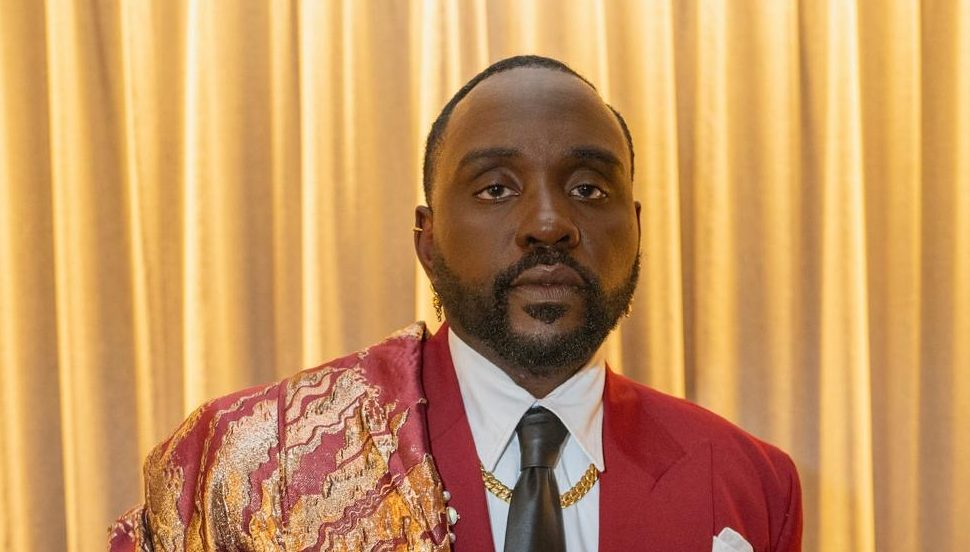
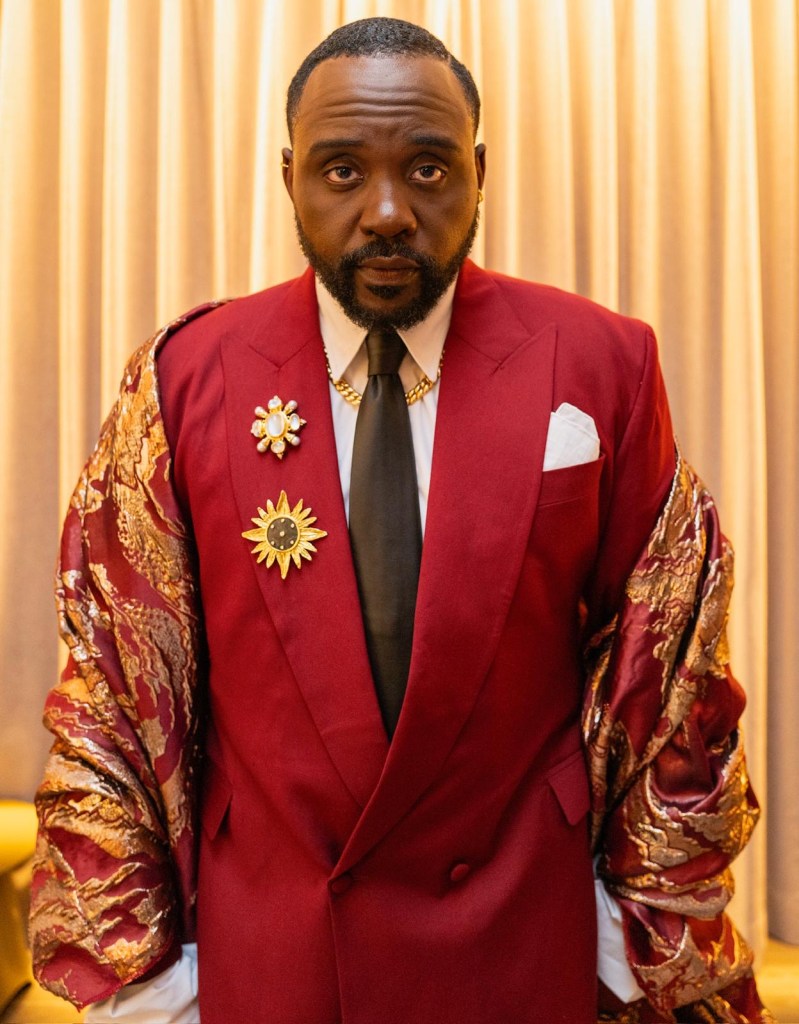
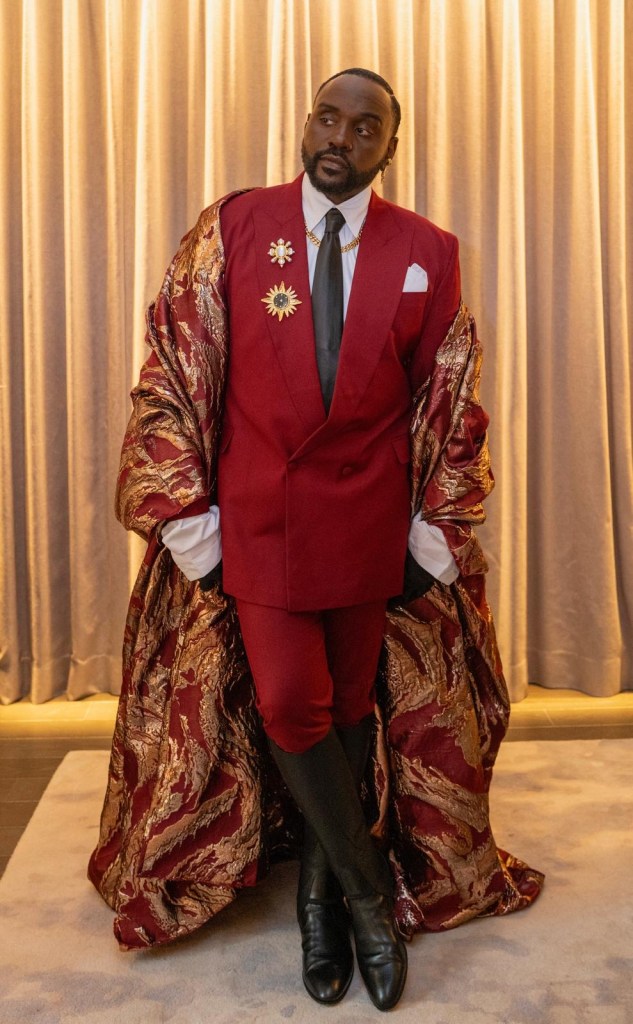
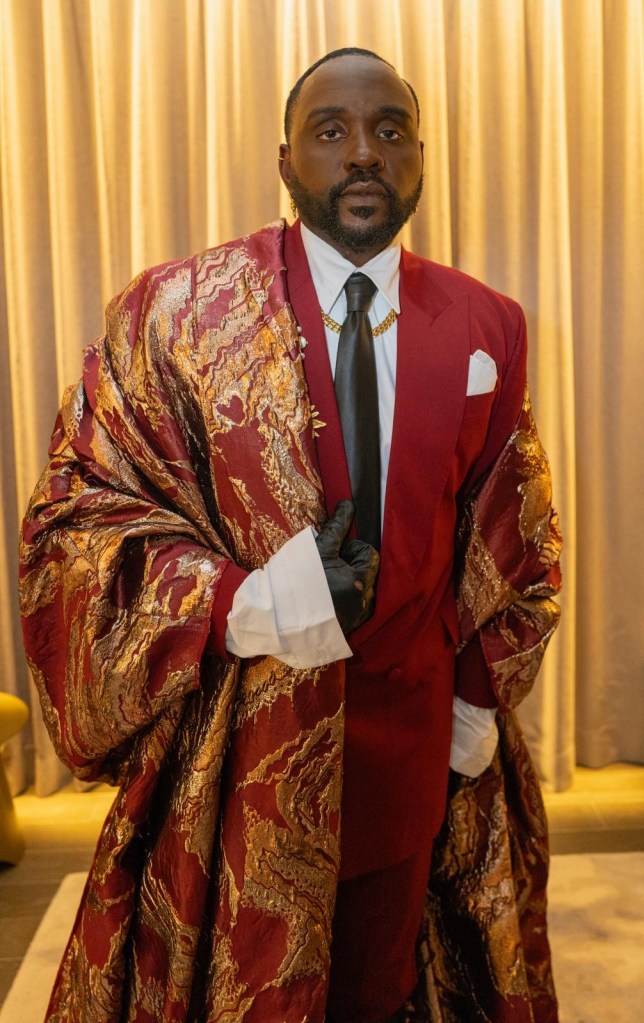
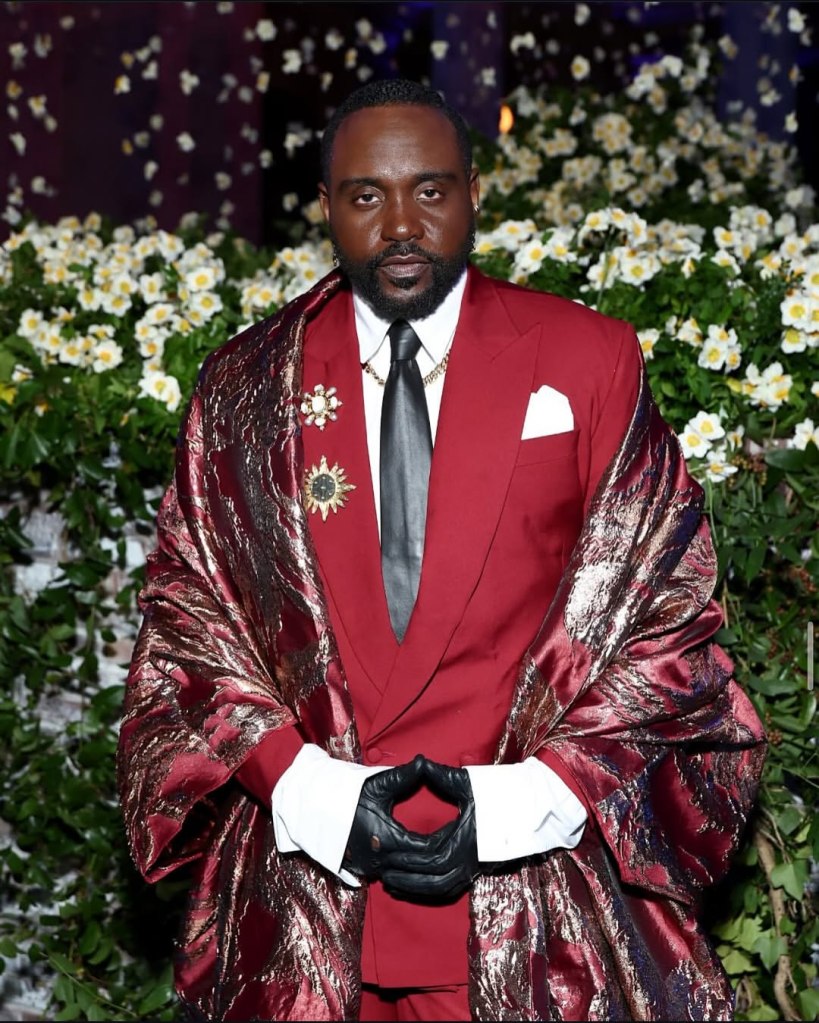
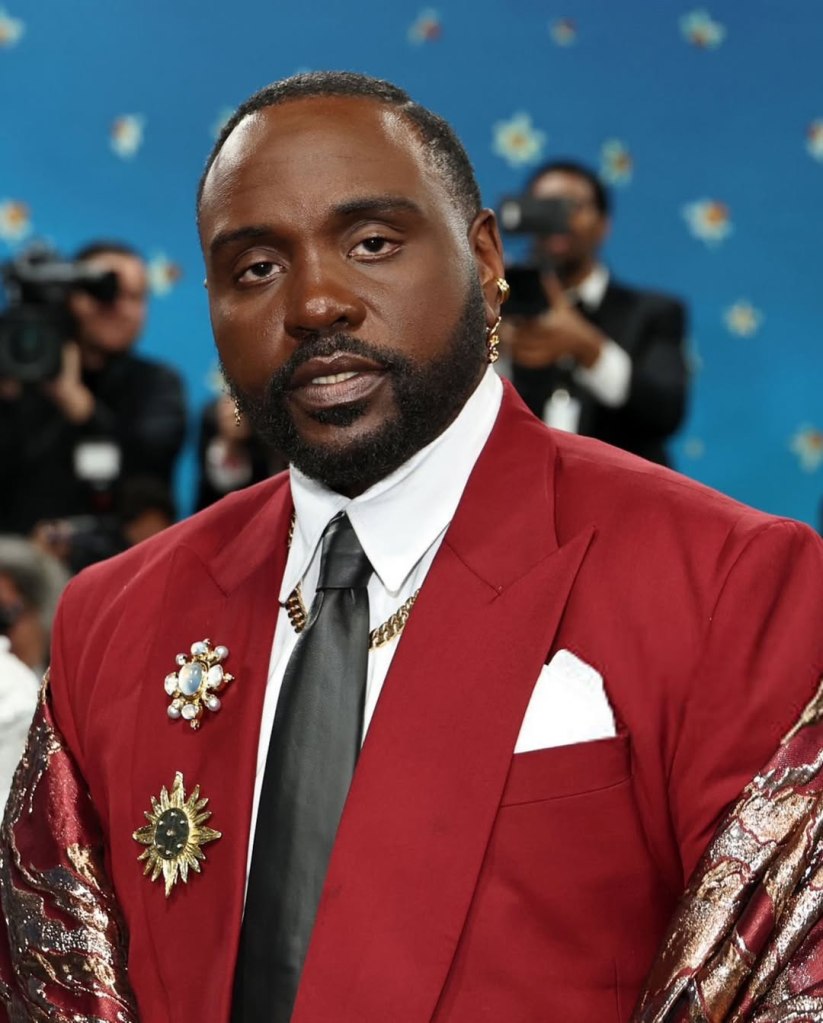
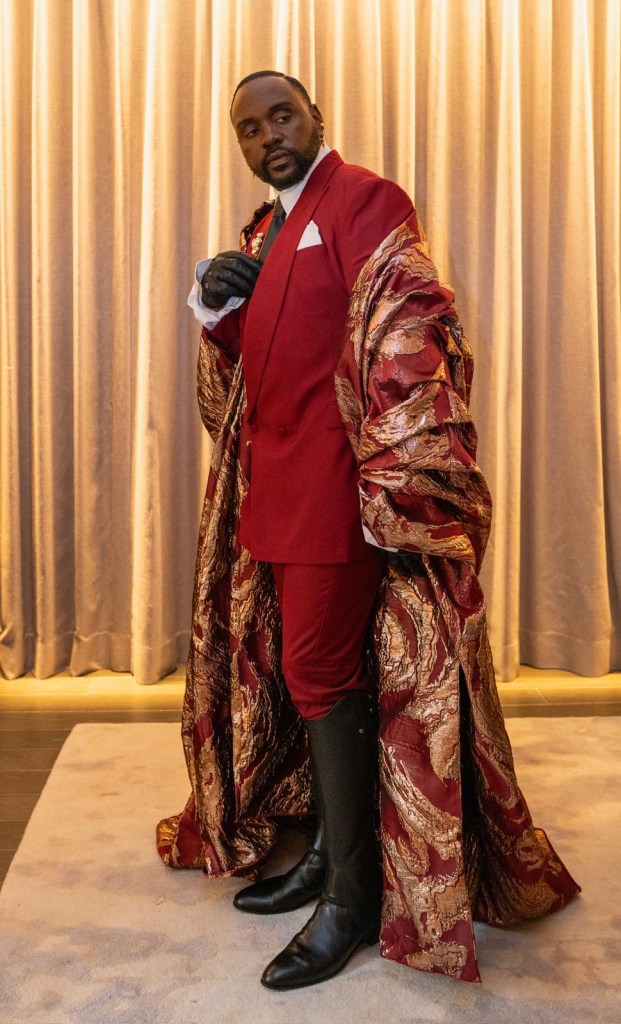
One major highlight of the night? Nigerian-based couture fashion house Orange Culture, led by Adebayo Oke-Lawal (aka The Orange Nerd), styling Oscar nominated Hollywood star Brian Tyree Henry in a regal homage that celebrated both the brand’s African roots and André Leon Talley’s fearless love of Blackness and fashion. The result? A fan favourite and, not gonna lie, one of my favourite looks of the night.
In this conversation, The Orange Nerd gives us a deep dive into the creative process behind the piece, connecting it to Orange Culture’s brand ethos and this year’s MET Gala theme: Superfine: Tailoring Black Style.
LSTV – How did this all come about? Orange Culture boldly represented at the 2025 Met Gala.
It was a surreal and deeply meaningful moment for Orange Culture. The opportunity to dress Brian Tyree Henry came through his team who reached out via the amazing team at Vogue. They had been following our work and felt that our aesthetic aligned with this year’s Met Gala theme. We were incredibly intentional about the creative direction, and as we developed the look, André Leon Talley became a central reference in our moodboard. His legacy, his regal presence, and his fearless celebration of Black identity and fashion were guiding lights throughout the process. We wanted the piece to reflect that same grandeur while incorporating Nigerian elements such as our signature Agbada draped robe, textile that reminded you of Lagos in this case the brocade , and a sense of poetic but clean tailoring. It was a true meeting point of shared values—style as expression, identity as power.
“André Leon Talley became a central reference in our moodboard. His legacy, his regal presence, and his fearless celebration of Black identity and fashion were guiding lights throughout the process“
LSTV: I mean, Lagos is no stranger to these idea. As a Lagos boy myself , going to any ceremony without your àṣọ ẹbí? Taboo. From street-side tailors crafting sharp fits with authentic raw African fabrics like ankára, lèsè, or even àṣọ òkè — Africa has always been at the center of dandyism. That’s exactly why the team at Vogue, alongside Barry’s crew, tapped the couture house to bring this vision
LSTV: How did it connect to the theme of the Gala and let Africa shine through?
The theme, “Superfine: Tailoring Black Style,” celebrates Black dandyism and self-expression. Our design for Brian Tyree Henry was a homage to this, intertwining traditional African references with contemporary tailoring. It was a celebration of African elegance, resilience, and the enduring spirit of Black identity, aligning seamlessly with the Gala’s exploration of Black sartorial excellence
LSTV: What does this mean for Orange Culture, being at the 2025 Met Gala?
For Orange Culture , this moment signifies a milestone . Being part of the Met Gala, especially with a theme that celebrates Black style and dandyism, reinforces our commitment to telling authentic African stories through fashion. It’s a testament to our journey from Lagos to the global stage, showcasing that African brands can lead in redefining narratives and aesthetics in the fashion world.
LSTV: What does this mean for African fashion?
Our presence at the Met Gala as well as the presence of my amazing colleagues underscores the global recognition of African fashion’s depth and diversity. It highlights how African designers are not just participants but are shaping global fashion dialogues. This event amplifies the voices of African creatives, emphasizing that our heritage and innovation are integral to the global fashion narrative. I think there is space for more of us and I truly hope this opens that door!
.
LSTV: What would you say to young designers and fashion entrepreneurs looking at opportunities like this in doubt
Believe in the power of your narrative. Authenticity is your strength. The journey may be challenging, but moments like this affirm that staying true to your vision can lead to open doors. Embrace your heritage, innovate fearlessly, and remember that your unique perspective is invaluable in enriching the global fashion landscape.
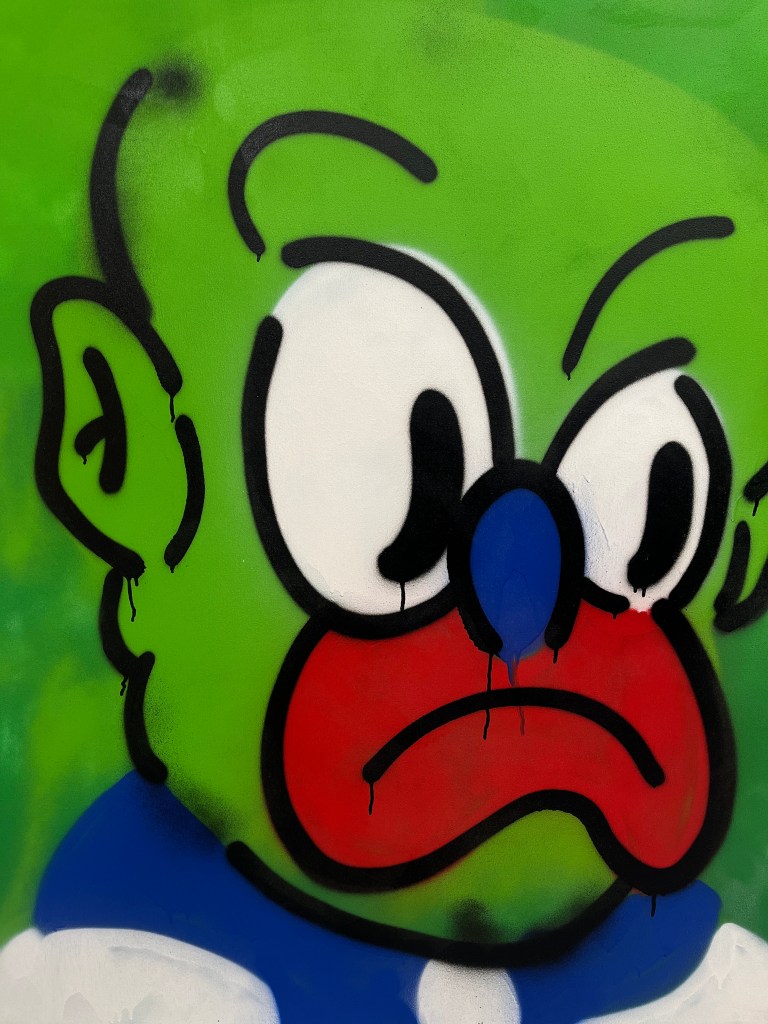
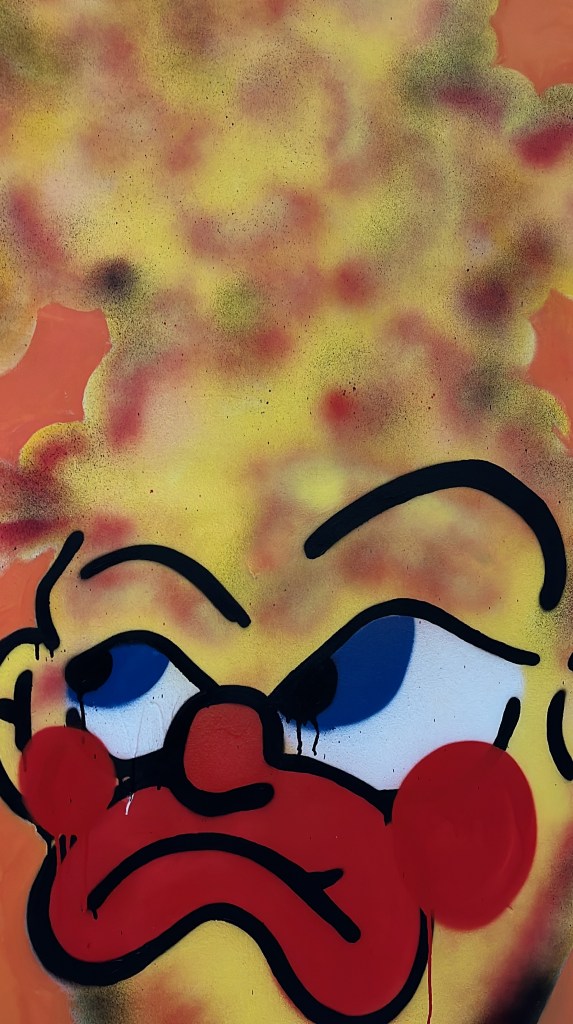
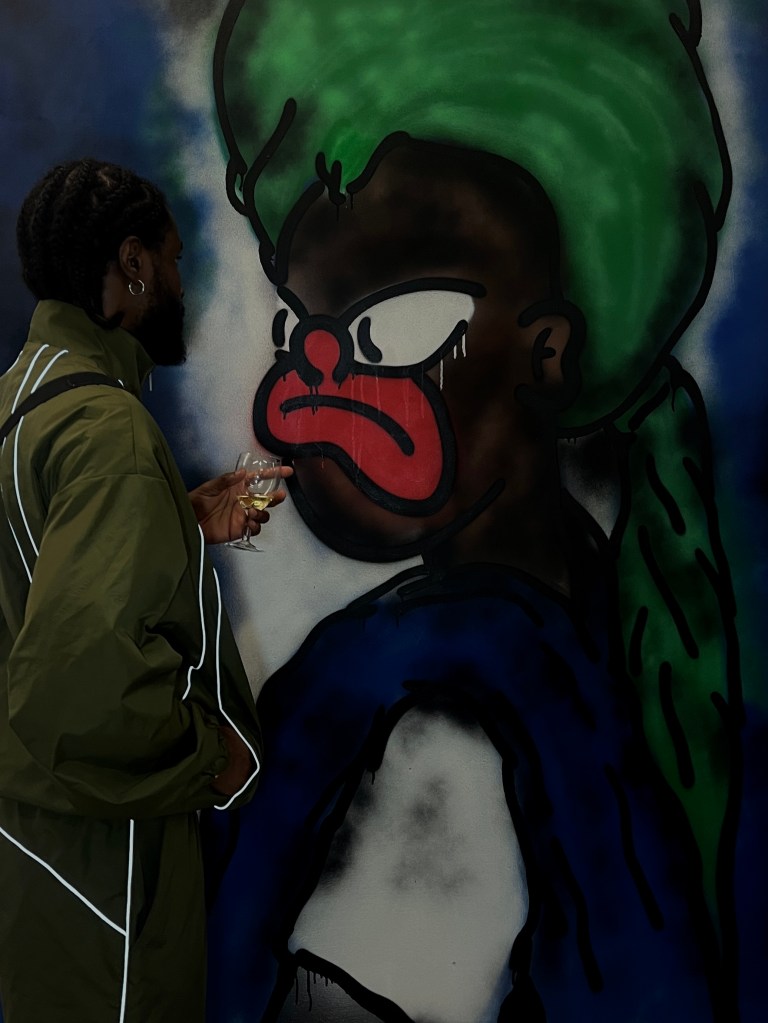
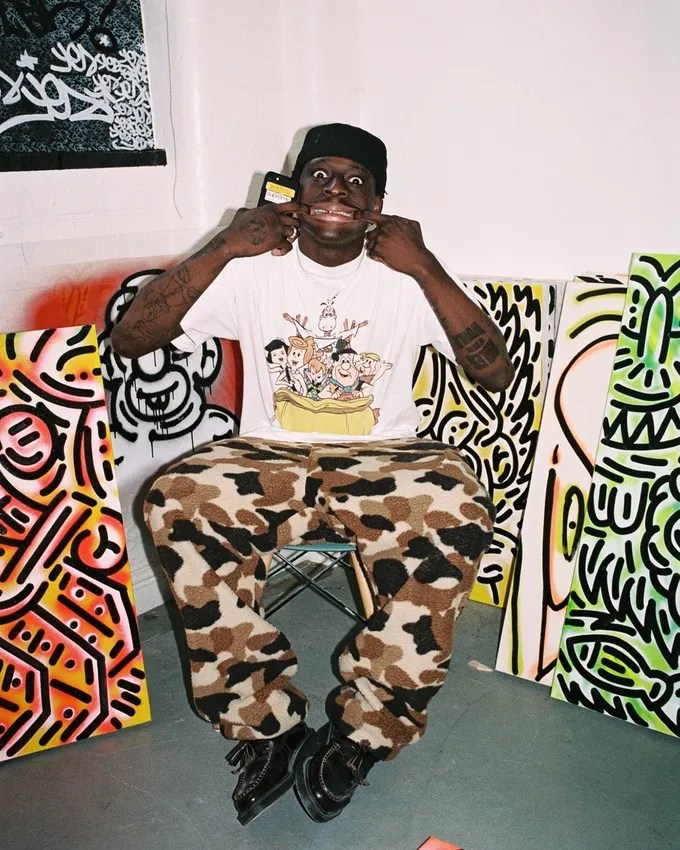
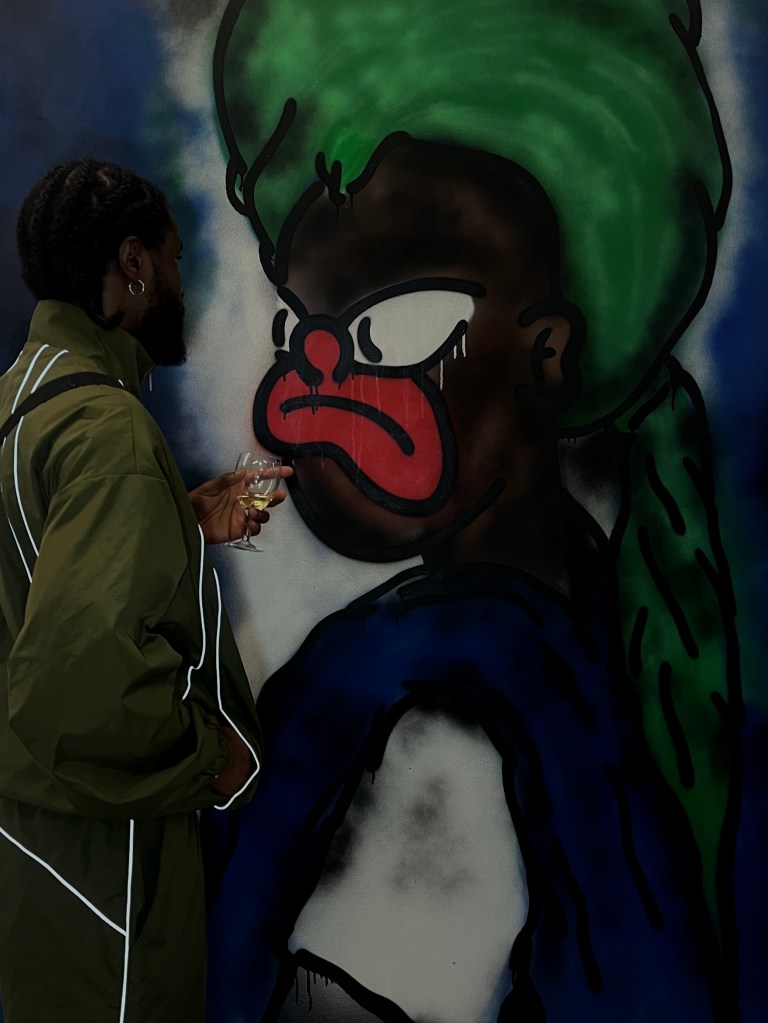
Let’s talk about Slawn—Olaolu Slawn, the London-based Nigerian artist who’s flipping the art world upside down and making it look easy. Yesterday, the man had his biggest show yet at Saatchi Yates, and to say it was a monumental moment feels like an understatement. It was more than just an exhibition; it was a cultural event. People flocked to the gallery, rubbing shoulders with creatives, collectors, and casual onlookers alike, all eager to witness history in the making.
On his X bio, he claims “my paintings are shit,” and on Instagram, he writes, “I’m not an artist, I paint like a 6-year-old.” And honestly? That’s a damn lie.
But let’s cut to the chase: Slawn is a liar. Bold statement, right? But don’t take it from me, he says it himself. On his X bio, he claims “my paintings are shit,” and on Instagram, he writes, “I’m not an artist, I paint like a 6-year-old.” And honestly? That’s a damn lie. A big one. In fact, it’s the most outrageous lie ever told in the art world. Slawn, you’re lying to us—and you’re doing it with a sly grin on your face because deep down, you know the truth: you’re a genius.
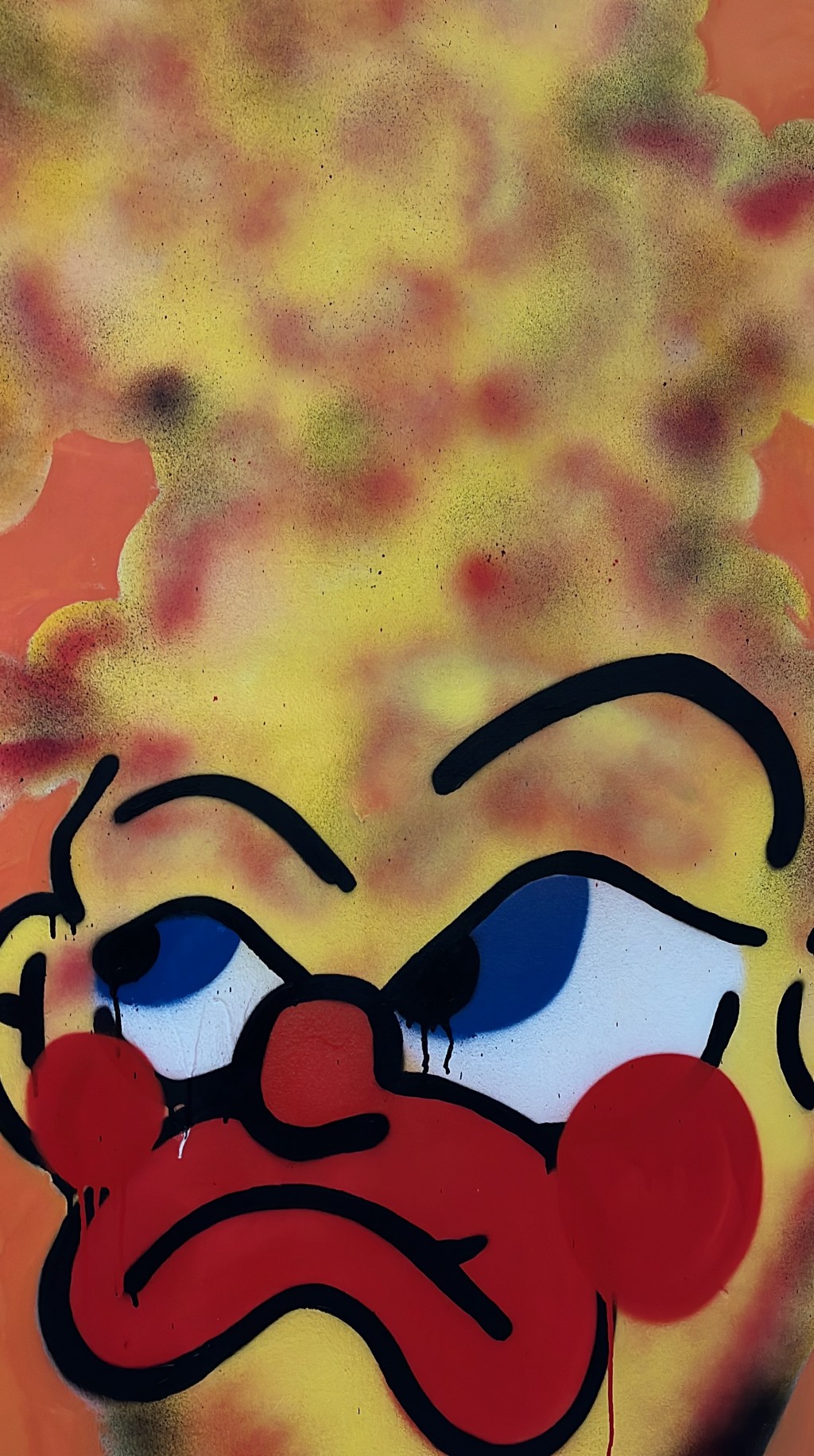
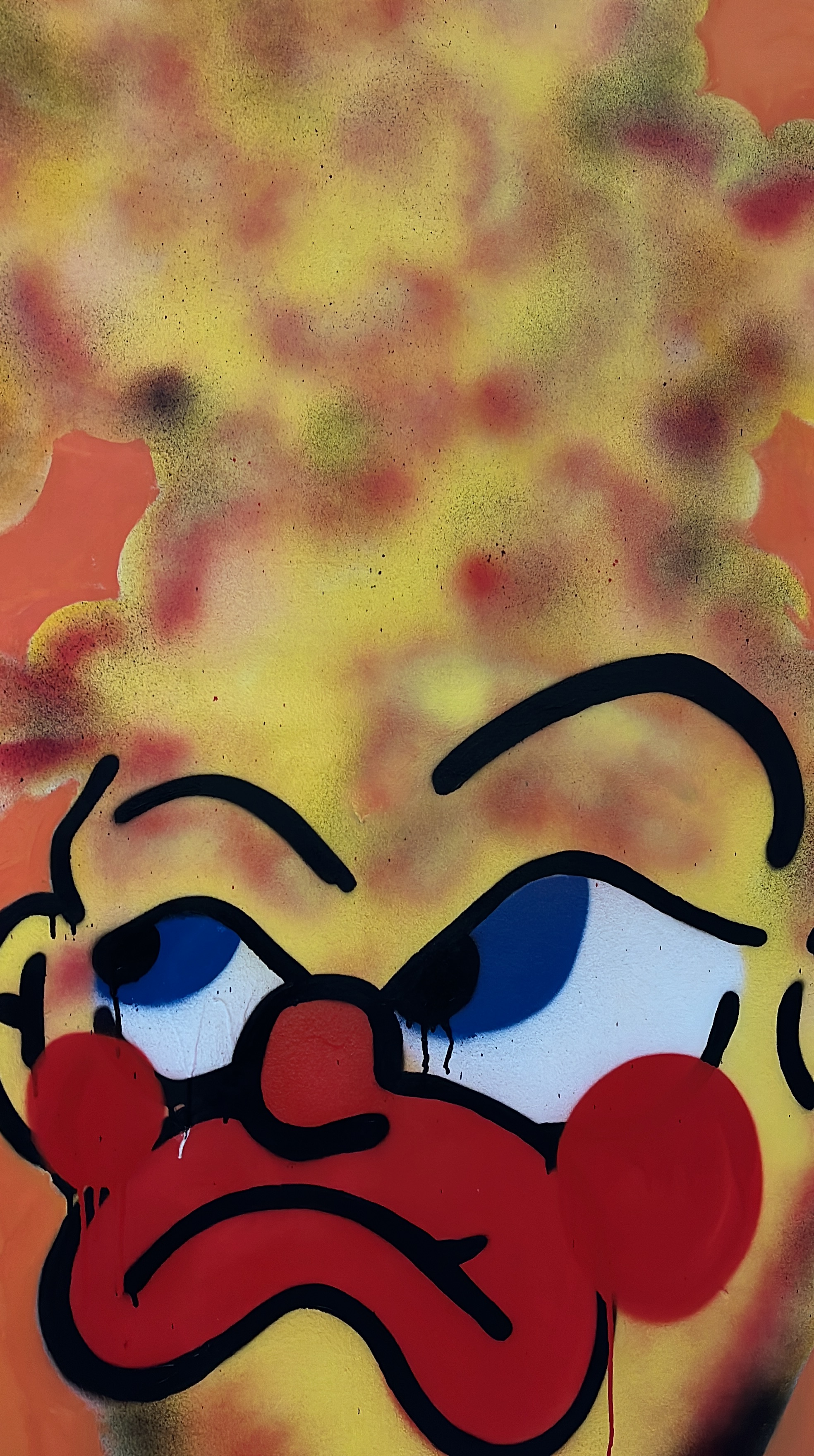
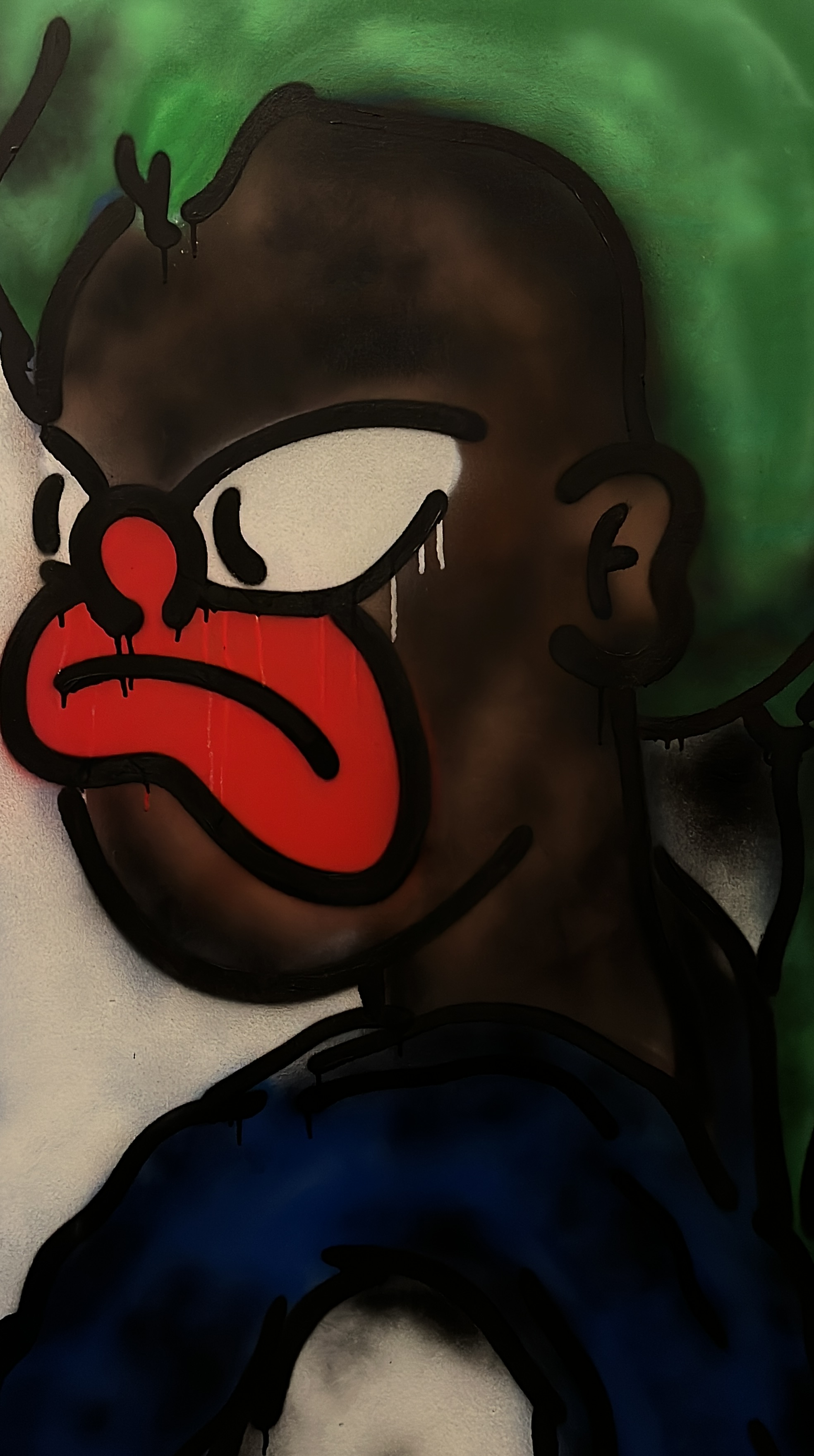
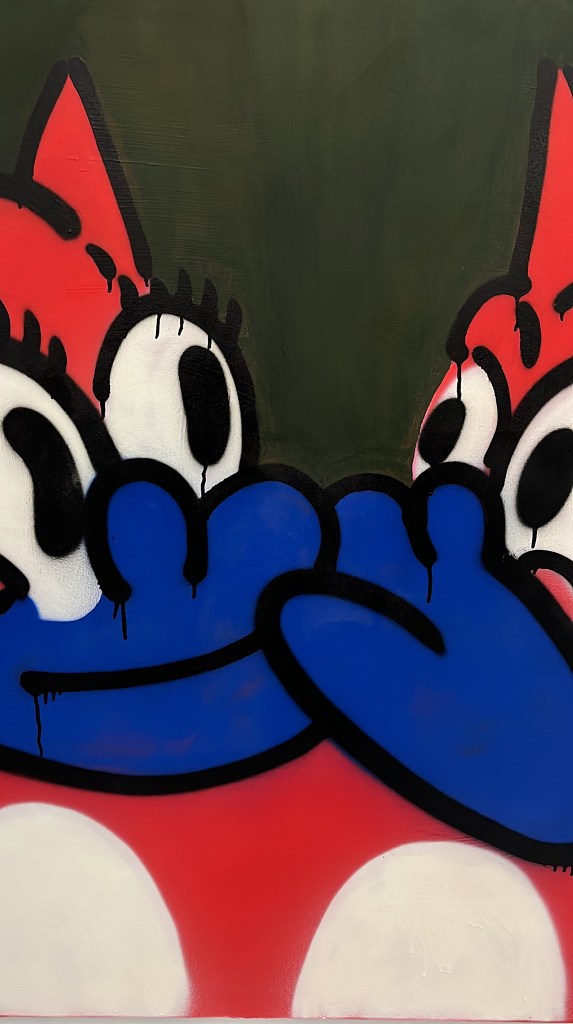
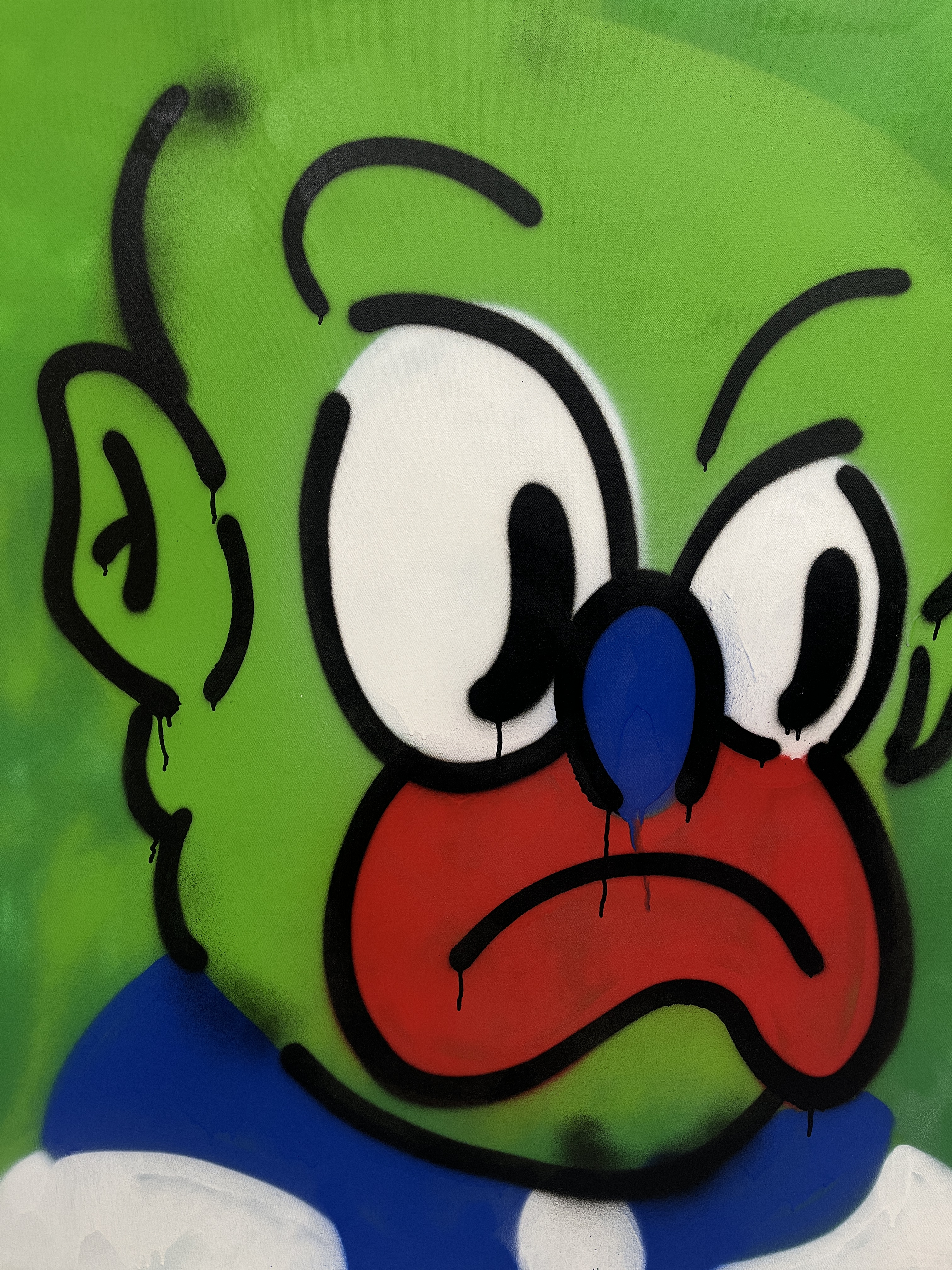
You see, Slawn’s art isn’t the work of someone stumbling through the creative process. His canvases aren’t just random splashes of color thrown together for shock value. No, his art is a calculated storm—a blend of chaos and precision that takes true mastery to pull off. Every brushstroke feels like it’s fighting for space on the canvas, yet somehow it all works together. His use of form, shape, and texture invites you into a world where disorder is actually the language of order. His pieces are layered with meaning, and you feel it as soon as you stand in front of them.
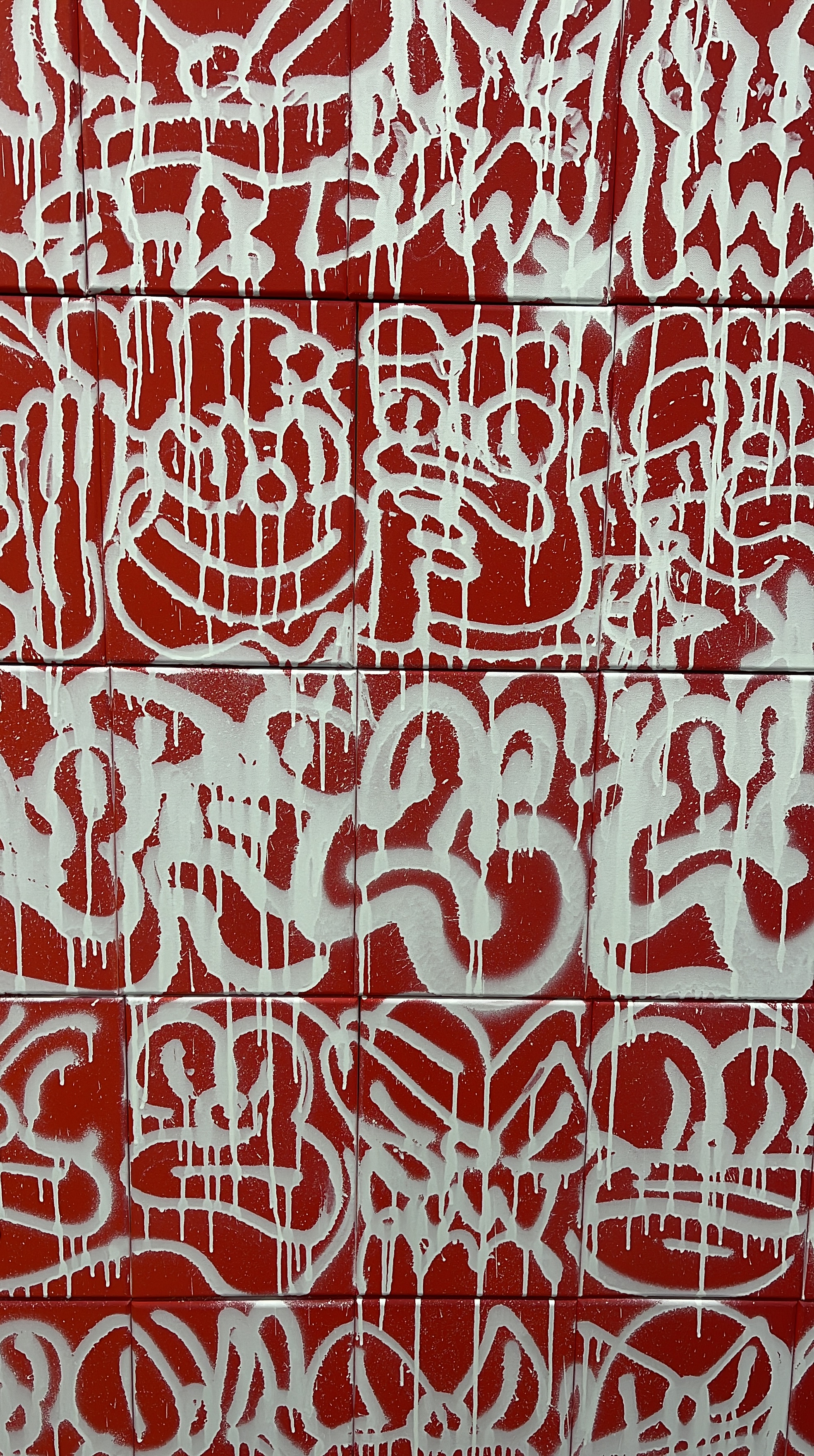
Take, for instance, his self-proclaimed Nigerian Aunty series—a collection that commands attention with bold strokes and larger-than-life figures. It demands a canvas as massive as its cultural relevance. Then there’s the audacity of his “1000 Canvas” piece—where he lets small canvases converge to form something colossal, like individual brushstrokes creating an entire universe. This is intentional art; this is the kind of creative engineering that doesn’t come from a so-called “6-year-old.”
And let’s talk about his technique for a second. Slawn’s work may appear erratic, almost whimsical at first glance, but every detail has purpose. He’s obsessed with perfection. Faces emerge from what seems like randomness, objects are reimagined and distorted in ways that challenge our perception of reality. Even his choice of canvas sizes isn’t arbitrary—it’s about creating visual dynamics that make you stop, look closer, and think harder. You’re not just viewing art; you’re entering a dialogue with it.
But what makes Slawn even more fascinating is his role as an icon for the next generation. At his exhibition, you could spot kids in the crowd, eyes wide and filled with dreams, looking at him like a living legend. It’s not just about the art he’s creating—it’s about the movement he’s inspiring. These young, hungry minds see themselves in Slawn, a Nigerian-born artist making it big in the world’s most elite galleries. You can practically feel the birth of a new creative movement brewing, one where Slawn stands as the blueprint.
And yet, despite all of this—despite the genius, despite the iconic work, despite the inspiration he’s sparking—Slawn still finds time to be a family man. Behind all the paint and the madness is a husband and father, a man who somehow balances creating mind-bending art with raising a family. This isn’t just some dude tossing paint on a canvas for Instagram likes; this is a fully-rounded human being who embodies what it means to thrive in both personal and professional realms. And if that weren’t enough, Slawn is a sharp businessman too. His art may speak in abstract, but his business game? Crystal clear.
” I would like to say at this point i was only admiring the art and it’s okay to admit this was my fave piece cos i kept coming back to it. ”
So, here’s my message to Slawn: keep lying. Keep telling us you’re not an artist, that your paintings are “shit,” because each lie is a masterstroke. With every self-deprecating comment, you’re quietly rewriting the rules of what it means to be a creator in today’s world. You’re showing us that art doesn’t have to be about pretension—it can be about raw, unfiltered expression. You’re proving that you don’t have to fit into a neat little box to be great.
Keep lying, Slawn, because the world needs more liars like you—artists who dare to challenge conventions, inspire new generations, and redefine what’s possible. The future is bright for you, and if anyone’s still doubting that, they’re not paying attention. We’re witnessing history with every stroke of your brush. And trust me, we’re all here for it.



 LSTVWW