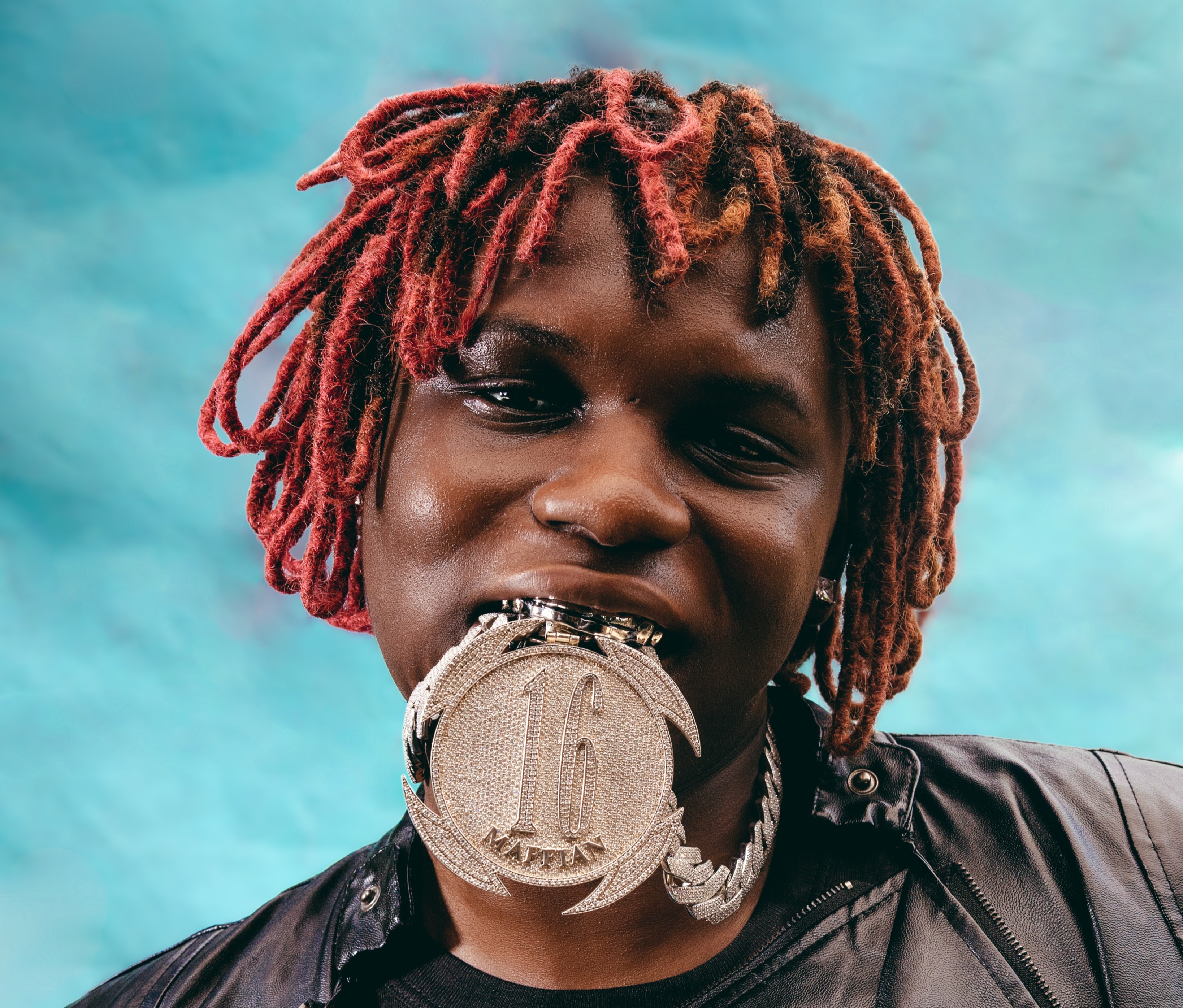
In conversation with Ejiose Ikuenobe
“If there’s one ailment that everybody, at least in this part of the world, cannot but catch one day, it is malaria. So I was just trying to express that helpless feeling of being caught in that circle of that thing you may have sworn never to fall into. So it was just me being lyrical or poetic, even of a true feeling or my reality at the time the song was written, cos yeah it is my real experience that I feel a good number of others can relate to.”— Ayo Maff
That feeling sits at the centre of his new single, and it’s why I wanted to sit with him after its release. Nigerian songwriter, singer, and vocalist Ayo Maff, born Ayorinde Mafoluku Ayodele, is a dancehall, Afrobeat, and Afropop artist. His latest single, “Malaria,” features Zinoleesky. We spoke about how it came together. I came to the conversation to find out his process as an artist, his storytelling, and his plans, and I got all of it at once. But hearing someone’s journey and experience from the person themselves is different from listening to it through the music.

Ayo Maff has a gift for making plain feeling sound clever, and he knows it.
“I have always been very good with wording my lyrics in ways that come off as interesting when all I am doing is merely being expressive,” he says.
I asked whether the metaphor began as a joke. His answer, the one that opens this piece, says it didn’t. It was a true feeling, his reality at the time he wrote the song.
From there, the conversation drifted to the other voice on the record. Ayo Maff and Zinoleesky both come out of street-pop, yet they sound nothing alike, and I wanted to know what each of them carried into the room. I asked him:
You and Zinoleesky both come from street-pop but sound very different. What did each of you bring to the record, and how did the session actually go?
He answered:
“With respect to what we both bring, I think the song already showcases it. Our difference in sound is because of our individual authenticity and style, and it is always a beautiful thing when such diversity does not hinder creativity. Actually, it was that diversity that I feel brought out the greatness of that record. And with regards to how the session went, big shout out to my big bro Kizz Daniel, cos I was at a session with him and Zinoleesky when I played him the song, and he suggested that Zinoleesky will be a great fit for the song, coincidentally, I had always also thought so, so he was there, we just made it happen.
There’s a quiet backdrop here, too. Zinoleesky left Marlian Music in April and started his own label, Zinodict Music, and days after “Malaria,” he announced Waziyung as its first signing. For Zino, this is one of his first major features as an independent executive. Neither of them raised that with me, but it sits just behind the record, two artists sharing a chorus while each is, in his own way, building something new. Humour runs through Ayo Maff’s songwriting, and “Malaria” is funny right up until the moment it isn’t. The joke turns, and what’s underneath is exposed. I wanted to know whether he steers that, or whether it steers him. So I asked:
Humour is a big part of your songwriting, but “Malaria” is also vulnerable. How do you decide when to be playful and when to be open?
He said:
“With this music thing, you don’t exactly decide; the music leads you where it wants to take you. I make music at times, not really knowing what I want to make from the instance, but as the making progresses, we arrive somewhere, and it becomes clear where the music has taken us. So it depends on the vibe when making the music, what matters is being authentic and following the spirit at the time you make the music.”

I am a street boy, that one thing that can never change about me.
That answer made me curious about the raw material. If the music leads, then where does the language come from? Ayo Maff writes in the voice of the street, in Yoruba and Pidgin and everyday speech, and I asked what makes the cut and what he keeps out: Street language and everyday experiences shape your writing. Which slang phrases or moments from real life end up in your songs, and what do you avoid?
He didn’t offer a formula:
“Like I mentioned earlier, with music you don’t decide; it just happens. It mostly depends on the mood and vibe one is in at the time actually. I am a street boy, that one thing that can never change about me. So it will always show in my music in some way, be it in lyrics or delivery or other ways, and I always say that I write about things I’ve been through and experienced, I no fit talk about things when I no know. But how I get to pick and choose, I doubt there’s a formula to that, it just comes as it comes.”
That honesty has run through his work since Bariga, the Lagos neighbourhood he comes from, where early records like “Jama Jama” turned daily struggle into song and carried a quiet fear that success might pull him away from home. “Malaria” is lighter in tone, but it follows the same rule. He writes what he knows. It also made me want to ask how far that road has taken him. Ayo Maff is a different artist now than he was when he made Prince of the Street, in profile and in reach, so I asked what had shifted underneath:
Since Prince of the Street, how have you changed as a storyteller and as an artist, both in sound and in the way you build a project?
He pushed back on the word “changed”:
“I wouldn’t say change, I doubt I’ve changed. Grown though, yes, that has happened exponentially. I always say that I’ve never recorded as much and as intentionally as I have since my last album, and in the build-up to my next album. I would always be a storyteller, na just so we be from where I come, and I see my music as an outlet to say how I feel or talk about my experiences in ways that people who have been through what I’ve been through can relate and maybe it can also help them release those feelings and emotions as I do when I make my music.”
A song like “Malaria” never reaches people as sound alone. It arrives with a look, a mood, a world built around it, and I was curious about the people behind that world. Ayo Maff talks about growth as something he’s done alongside others, so I asked who stands next to him when a release takes shape:
Creatively, what does the world around “Malaria” look like, from the visuals to the rollout, and who shapes that direction with you?
He started with gratitude:
“Gratefully, I have a team that is perfectly in sync with me with regard to how to visually portray my music. We have for a while understood each other and know what the visual representation of my releases are, I feel that if you follow me, you’d reckon that there’s been consistency with how I go about my visuals. So with that level of understanding, we always collaborate to trade ideas and create visual concepts that depict the idea of the record in a way that fits well with how I like it. So yeah, we always find ways to work with the right photographer or videographer to achieve the ideas we put out or set out to achieve. So the world around it is me and my team steadily putting in work.”

By the end, the talk turned to the thing every listener wants to know: where he goes from here. With “Malaria” out and the conversation around it growing, I asked him straight: What’s next: is there a project or EP on the way, and what should we expect from it? Any tour plans, and which countries or regions do you want to tap into, and why now?
He kept the details close:
“What’s next? A lot, I promise you, there is a lot, but I would rather you sit and watch the space as it all unfolds. With regards to a project, it is no secret that my album “HIGHSTAR” is on the way, it will be my second studio album, and it drops soon. Tours, what region or countries… just stay tuned, they will all be rolling out soon and in due time, I promise. Why now? Why not now? HIGHSTAR is coming, so it all has to start happening now so that everyone will get the full experience of what HIGHSTAR is all about.”
Then I asked who would be on the project, and who he’d most like to work with:
Who would you most like to work with on the next project, whether artists, producers, or creatives outside music, and what would you want to create together?
“I will need a long sheet of paper to make this list cos there are so many people I would love to work with, so it will be quite a lot to start to list them. But the good thing is that I have some of them on my upcoming album, so soon enough you’d get to know them, and for those who won’t be there, in due time too, God willing, I will work with them and you’d know those ones as well.”
I left the conversation with one thought: Ayo Maff isn’t selling a persona or a polished origin story. He’s a young man from Bariga who still writes about what he’s lived, credits the people beside him, and treats growth as something earned slowly. The story behind “Malaria,” and his voice alone, tell you this is an artist who cares about the message. That’s what to expect from his second album, HIGHSTAR, dropping soon, especially with the new names and collaborations he’s adding to the list. It’s one to watch out for.