Written By Ejiose Ikuenobe
Welcome to the school of Ayra Starr. This is Year 3 , 16 courses , with a run time of 46 minutes. Co-lecturers include Dr Kwn, Prof. Wizkid, Dr Theodora, Dr Rema, Prof. Zayn, and Prof. Danny Ocean.
The Erudite Prof Starr explores a range of sounds that allows her to show off range, skill, storytelling and just share exceptional talent. From Afrobeats, to R&B, contemporary pop, dancehall, and finally house. Prof Starr explores all of these to produce her most cohesive body of work yet. Welcome to Starr Girl 301!

Most of the writing still runs through Ayra herself, credited under her birth name Oyinkansola Sarah Aderibigbe, but the room around her has gotten a lot bigger: Ilya Salmanzadeh, Amanda Ibanez, Mason Tanner, Malika Hamza, Jerry Duplessis, and Wyclef Jean all show up somewhere in the credits. It’s a more international writers’ room than the one behind “19 & Dangerous” or “The Year I Turned 21,” and the polish that comes with it hasn’t cost her anything, her voice and her Nigerian identity still come through clearly.

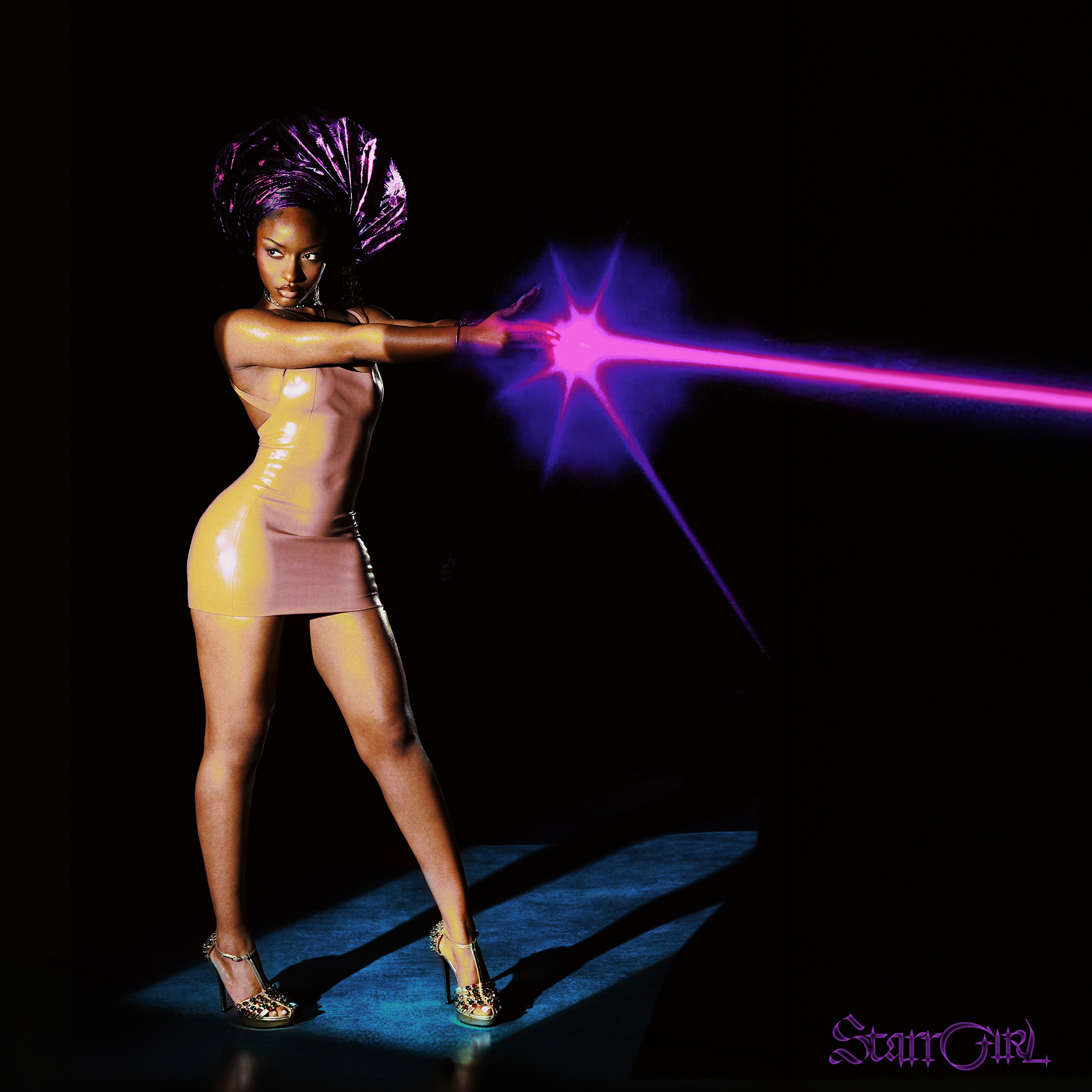
STARRGIRL
STORYTELLING AND OVERALL MESSAGE
Set next to her debut “19 & Dangerous” (2021) and sophomore effort “The Year I Turned 21” (2024), “Starr Girl” plays like an artist finally growing into herself rather than performing growth for the cameras. It’s not flawless, but it’s genuinely hard to point to a real miss across sixteen tracks, and the production holds a consistency her earlier work sometimes lacked. Her voice sounds more settled too, moving between sultry restraint on the slow cuts and a brighter, more playful register on the pop moments without either one feeling like a costume.
That consistency isn’t just sonic. With a second Grammy nomination landing earlier this year, the title reads less like Starr crowning herself and more like a statement of something that’s been obvious since “Bloody Samaritan” broke her out in 2021. By her own account, the album is about “existing in multitudes,” and that idea is what keeps a project this scattered from falling apart. It shows up in language as much as sound she moves between English, Pidgin, and Yoruba, and lets some Spanish slip in on the “Hot Body” remix, so the cosmopolitanism is audible in how she says things, not just what she’s saying them over.

SEQUENCING
The album opens on “Dangerous,” a moody, mid-tempo statement of intent, before “Amazing,” featuring kwn, lifts the mood into brighter pop territory. “Gimme Dat” reintroduces her Grammy nominated Wizkid collaboration, and the run of “Pressure,” “Tornado,” and “Midnight in New York” settles into the album’s most emotionally textured stretch, blending Afrobeats percussion with R&B restraint. “Hot Body” and “Ms. Paper,” featuring Theodora, bring the tempo back up before “Dance” and “Where Do We Go” close the midsection with two of its most immediate pop moments. “Who’s Dat Girl,” featuring Rema, and “Misunderstood” pull the mood back inward, “Letter to God” is the record’s most reflective turn, and “Heaven Baby,” featuring Zayn, alongside “Treasure,” winds things down before the “Hot Body” remix featuring Danny Ocean closes on a victory lap. It reads less like a rigid three-act structure and more like a mood board tension, brightness, reflection, tension again which tracks with how Starr describes the album herself.
TRACK BY TRACK: WRITING AND PRODUCTION
“Dangerous” opens on a nod to Mobstarr, her fan community, a reference she reinforced when the album was previewed for fans at a Tape Lagos listening event in April 2026. Beyond that, the verses are pure declaration Starr staking her claim on her own business command and the speed of her success before anyone else gets a word in. Production stays clean behind the vocal, and it’s an efficient, confident way to open the record.
“Amazing,” with kwn, is lighter and more playful, closer to comedy than seduction, with kwn’s own verse playing coy about being pressed for time a palate cleanser after the weight of the opener.
“Gimme Dat” was never going to surprise anyone after its Grammy nomination and its status as Starr and Wizkid’s first reunion since the 2022 fan favourite “2 Sugar.” It samples Mary J. Blige and Wyclef Jean’s 2000 single “911,” which explains the sprawling writing credits Starr and Wizkid alongside Adekunle Oluwaseyi, Elvis Akujobi, Richard Imaekhai, Fred Daniels, Edafe Gabriel, Olusola Mayowa, Aniekeme Akpan, Jerry Duplessis, Katia Cadet, Mary Brown, and Wyclef Jean himself. Lyrically it leans on Pidgin, building its come on around “awoof” something got for free, unearned as Starr sets her own terms before any deal gets sealed. Vybe0 and Mikababeatz keep the production in a groove-first Afrobeats pocket, the interpolated hook giving it an early 2000s R&B backbone under the Afrobeats surface the clearest case on the album of Starr reaching outside her own lane for source material.
“Pressure” leans on background vocals from Leon Thomas, whose falsetto threads through the mix without pulling focus, landing closer to pure R&B than almost anything else here. “Tornado,” produced by Skillies, Shizzi, and RiotUSA, carries Latin tinged percussion and extra vocal texture from Fola and Donel Mangena, pushing briefly into dancehall Afrobeats crossover territory. Its boasts go further than most of the record’s, drawing an audacious comparison to Anini, the Nigerian outlaw who became a folk anti-hero in the 1980s a strange, memorable flex inside an otherwise straightforward one.
“Midnight in New York,” co-written by Starr with Andre, Kadu, and Donel Mangena, is produced by London, Starr, and Matt James, and mixed by Johnny Drille, her fellow Mavin signee. Where “Dangerous” is declarative, this one is loose and unattached, a no-strings encounter over wine with a stranger rather than anything built to last. It’s one of the album’s most atmospheric records, built for a late night mood rather than the dancefloor, and the only song where Starr’s own production credit sits next to her writing credit. Drille’s mixing also spans “Hot Body,” “Dance,” “Who’s Dat Girl,” “Heaven Baby,” and “Treasure,” giving “Starr Girl” a sonic throughline her last two albums didn’t quite have.
“Hot Body” keeps the tempo up in uptempo Afrobeats territory, though its title hook is arguably the weakest part; the verses do the heavier lifting, trading in luxury car imagery and the feeling of being watched from a distance. The Spanish language remix that closes the album, featuring Danny Ocean, keeps the same swagger but reframes it as a bilingual duet rather than a solo brag. “Ms. Paper,” with Theodora, is a smoother R&B-leaning duet Theodora folds French inflected wordplay into her verse alongside the English and it benefits from the two voices sitting close together. “Dance” is one of the record’s clearest statements of self-acceptance, its lyric built around being content with who she already is, its bounce edging toward the house influence running faintly through the album.
“Where Do We Go,” written by Starr with Ilya Salmanzadeh, Amanda Ibanez, Mason Tanner, and Malika Hamza, produced and arranged by Salmanzadeh, is an Afropop detour built on a pulsing bassline, playing out as a hesitant push-pull between two people told through a shared-commute metaphor rather than a direct confession. “Who’s Dat Girl,” featuring Rema and written with Nwamu Chukwudebem, Promise Ekpe, Divine Ikubor, and Nilusu Nisanka, is produced by Ragee and The Elements. Rema’s verse leans on pop culture wordplay fashion, cartoon villains, prison break plotlines while Starr’s own verse reaches for something heavier, invoking Ken Saro-Wiwa, the Nigerian writer and activist executed in 1995, an unusually weighty touch inside an otherwise flirtatious song.

The back half turns inward. “Misunderstood” is one of the most reflective solo cuts, told in the third person about a woman written off by everyone around her who refuses to shrink for it, a quieter turn from someone who’s spent five years being talked about as much as listened to. “Letter to God” follows in the same register, built around piano, bass, and a full-band crescendo, as Starr addresses a precarious but worthwhile love directly to God; it’s the closest the album comes to gospel-inflected balladry. “Heaven Baby,” with Zayn, strips the percussion out entirely for a classic piano led duet, Starr’s voice against Zayn’s falsetto on a song about instant attraction. It’s the album’s most obvious reach for a global pop audience, and while it doesn’t always sit as naturally as the Afrobeats-rooted tracks around it, it’s a reasonable bet for an artist actively building a Roc Nation-backed international profile.
“Treasure,” also mixed by Drille, closes the reflective run with a vocal delivery that echoes “Dangerous” back at itself, each syllable seeming to hold up the next rather than resolve cleanly, a small structural rhyme that bookends the album. From there, the “Hot Body” remix with Danny Ocean sends the record off with a Latin Afrobeats crossover that’s become increasingly common across the genre, a victory lap rather than a comedown, and a smart way to close a project that spends its second half getting quieter.
STANDOUT TRACKS
“Misunderstood,” “Dance,” “Pressure,” “Gimme Dat,” and “Hot Body” are the five songs that best justify the run time, each one making its case independent of its features or where it sits in the album’s arc.
“Starr Girl” isn’t a perfect album, but it’s Ayra Starr’s most assured one. The production is more unified than “19 & Dangerous” or “The Year I Turned 21,” the writers’ room is bigger without diluting her voice, and the sequencing gives the record real emotional movement instead of a flat run of singles. Where it loses points is ambition that sometimes settles for polish over risk; a handful of mid album tracks play it safer than the opening run promises. Still, two years and two Grammy nominations on, with a title that finally matches the moment, Ayra Starr has certified her accolades as a star.
Rating: 8/10