Tag: review

  • The Devil in Designer: The Good, The Bad, and The Billionaires

    The Devil in Designer: The Good, The Bad, and The Billionaires

    By Meron Fikru

    Sequels are notoriously difficult to pull off; even more so when the sequel is building on the legacy of a beloved cult classic. In the midst of a 2000s nostalgia revival, with global audiences of eager millennials chomping at the bit, The Devil Wears Prada 2 had a high bar to meet. All things considered, I think it’s safe to say that this sequel met the mark. 

    20 years after the first film, our story returns as Andy Sachs (Anne Hathaway) receives a high journalistic honour at a prestigious awards dinner. Unfortunately for Andy, that joy is short-lived. Moments before, Andy and her team received the devastating news that they had all been laid off and that their publication would subsequently be closing down. Navigating through an onslaught of shock, Andy makes her way onstage to accept her award and takes that moment to lament the importance of journalism in a disappearing industry. As Andy emphatically proclaims: “Journalism still f***ing matters,” 

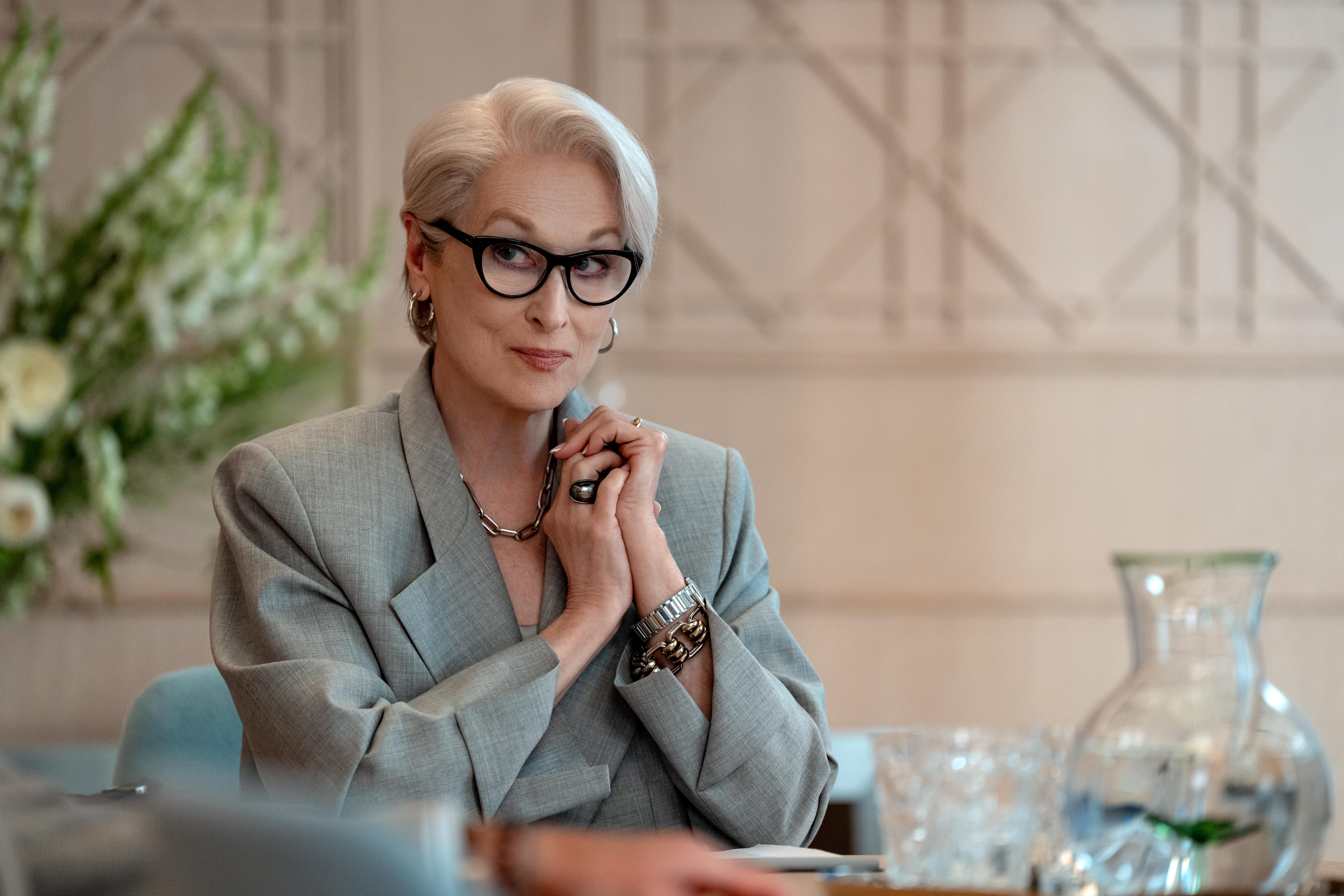
    Across town, Miranda Priestly (Meryl Streep) arrives at an event reminiscent of the Met Gala, when news of a scandal at Runway breaks as she begins to walk the carpet. In a quick turn of events, with Andy now back on the job market and Miranda suddenly needing to do damage control at Runway, Andy is brought back into the magazine to lead the Features department. 

    Reunited, Andy and Miranda spend much of the film in a push and pull over what journalism is supposed to look like at Runway. With Andy at the helm of the newsroom, now armed with years of serious journalism experience, she endeavours to put out meaningful, reported pieces. Weighed down with the chairman of Runway’s concerns around engagement, Miranda presses Andy throughout the film to pursue more metrics-focused journalism. Through the lens of capitalism, what is the utility of a story in a mainstream publication if nobody reads it?  

    Scattered throughout the film, a number of well-placed easter eggs serve as callbacks to the original film for its most attentive fans: from the street salesman holding up the two matching belts; the return of the iconic refrain “a million girls would kill for this job”; and Andy re-wearing the same cerulean vest she wore in the original film, in her last scene in The Devil Wears Prada 2. (Although this version was a bit more elevated.) 

    Two decades later, some of the most notable differences are felt in the personas of and relationships across our returning characters. The 2026 version of Miranda comes across on screen as a much softer version of herself. Miranda is much more meek in conversation with new management, and far more pliable in learning the language of body positivity with the gentle but firm adjustments from the new “Emily”, Amari (Simone Ashley). This time around, Nigel (Stanley Tucci) and Andy’s working relationship retained its playfulness with some endearing moments of care. Nigel has maintained his edge over the years, while remaining in his role at Runway as Miranda’s #2. He returns to Andy’s rescue a few times throughout the movie, offering up Runway’s closet for Andy’s trip to the Hamptons, to the end-of-the-film reveal, where we find out he was the person in the head’s ear to get Andy rehired. 

    In terms of one of the newest additions to the cast, the inclusion of Peter (Patrick Brammal) as Andy’s love interest, presents one of my few qualms with the film. Peter is a charming Australian contractor that Andy connects with on a viewing of a new luxury apartment building. After Andy inadvertently insults his work, the two end up exchanging information via Tracie, Andy’s long-term best friend. They go on a couple dates throughout the film, before nearly calling it quits prior to Andy’s work trip to Italy. Although they come back together at the end (in true rom-com fashion), I would argue that this milquetoast romance makes for an extremely unnecessary subplot in this film. It does nothing to advance Andy’s character growth, nor does it move the actual story forward. Quite frankly, Andy does not need him.

    Furthermore, I think the crux of Andy’s character lives in her clear love for her career, and her unwavering commitment to salvaging the industry. Andy represents the quintessential career woman; every other relationship (outside of work) in her life, feels very secondary in her world. Including this relationship feels like a strange choice, considering that romantic love (and particularly, this love) feels so inconsequential for Andy’s character evolution and story. 


    Andy and the original Emily’s (Emily Blunt) relationship was perhaps the most interesting to watch. Emily Charlton is now head at Dior, following an abrupt, compulsory departure from Runway. From the surface, she appears to have found her footing in the luxury retail space. Emily Charlton and Andy end up joining forces to rescue Runway from the McKinsey-style management consulting takeover after the surprise death of the chairman. Emily Charlton’s new billionaire beau, Benji Barnes (Justin Theroux) swoops in to save the day, and the advancement of this premise is where the film loses me. 

    We first see her partner on the cover of a magazine, where, oddly enough, he is glowingly referred to as the “Data Center King”. While there emerges a clear need for capital to rescue the company from the clutches of the son of the chairman, the “good billionaire” bit falls a bit flat when you consider that the very reason that journalism in the U.S. has been decimated is because of the billionaires bankrolling mainstream media. 

    After a surprising betrayal by Emily Charlton, Andy and Miranda band together to finesse a new offer at the last minute and miraculously save Runway. The film closes with the two in a car on the way home, with Miranda giving Andy approval to write the secret memoir on Miranda (because, of course, Miranda has ears everywhere). 

    For a film that had to fill in its narrative world following a 20-year gap, the characters feel like they have grown with their audience. Andy has truly grown into herself and her work with a newfound air of self-assuredness, despite the moments at Runway where we see flashes of her younger self return. After decades in Miranda’s shadow, we even get the opportunity to see Nigel stretch out his wings. 

    The subject matter equally feels to have reached an appropriate maturation; the reckoning with the grief and outrage over a depleted sector is palpable, and very real within and outside of media circles. The conversation this film prompts on the sacrifices made when corporate interests eclipse the arts, and how these decisions have reconfigured the role of journalism in society (commercialization over curiosity), is critical in understanding the gangrene that has spread across the industry. 

    To have premiered the weekend before this year’s controversial, billionaire-sponsored Met Gala, I am reminded of the words of Oscar Wilde, “Life imitates Art far more than Art imitates Life.” In a tumultuous time for fashion on the big screen and in real life, I can appreciate that the film prompts us to consider what happens to art and fashion under corporate capture. With the film closing on the hint of a memoir on the way, audiences are left to wonder if this is the last we will see of Andy Sachs. 

  • Review: My Father’s Shadow Is Not Just a Film — It’s the Story of Us

    Review: My Father’s Shadow Is Not Just a Film — It’s the Story of Us

    A review by Mercy Oluwanisola Akintola.

    The first time someone close to me died, it was my paternal grandmother. According to those around her, there were signs that she was preparing to leave. Her skin started to glow, and she had deep, intentional conversations with her children reminding them to be kind and patient with their father, her husband. Another sign was that my youngest cousin, her last grandchild, turned his back to her for three days before she passed. None of these signs made sense to us at the moment; they only became clear a few hours after she died.The adults in my life said she knew she was going to die, so she prepared everyone the best way she could. If I had  to compare the story of her last days to any film, it would be My Father’s Shadow. 

    Still From My Father’s Shadow

    The film begins with two brothers simply being boys, playing with paper action figures, eating together, talking and laughing freely. You didn’t need to be told they were brothers; they showed it. Their father calls them into a room, and seeing how hesitant they are for him to leave again, he decides to take them to Lagos. For the first time, they get to know the world outside their small, familiar environment, experiencing life through their father’s eyes. They witness the parts of Nigeria that feel ordinary yet extraordinary once you really look at them: the way ants move together, the crabs walking along Ajah beach, the long petrol queues that only appeared during fuel scarcity or Christmas, the ever-present religious fanatic in every situation, and the way so many Nigerians lean on “God go do am” as a solution to everything. It was relatable in a way only Nigerians truly understand, but told clearly enough for anyone to feel the story. 

    Cinematography

    The cinematography reminded me of old cassette films my parents and their friends watched before CDs became popular: the warmth, the grain, the slow movement of the camera. Pure nostalgia.My favorite scene was at the beach. In that moment, there was no politics, no struggle, just a father and his sons, living, learning, and being present with one another.My favorite line in the film was when one son confronted his father about never being around. The father replied, “Everything you sacrifice, you just have to make sure you don’t sacrifice the wrong thing.”For me, that was a wake-up call, a reminder that in all my striving and ambition, I must not forget to check up on my people, to be present, to love while I can. 

    I wasn’t born when the Abiola ’93 election happened, but I felt the pain and anger Fola felt. It reminded me of every election I witnessed as a child, the way my parents made sure we all stayed home throughout election weekend to keep us safe. It reminded me of corrupt Nigeria: missing ballot boxes, chaos, confusion, and all the characteristics that make up a Nigerian election.The film ends with Fola, the father, trying to get his children home safely to avoid any trouble caused by the election results. They are stopped for no reason by an agitated military officer who orders their father sitting in the back seat to get down. That scene hit hard, because 30 years later, Nigerians still experience the same brutality, only now it comes in a different font

    called SARS.The film shows how much Nigeria has evolved, and yet how little has truly changed on a larger scale. 

    Another detail I appreciated, which we rarely see in Nigerian films today, is the authentic celebration of life during mourning. In many recent films, when someone dies, everyone wears black, which does not reflect how we actually honour our dead. Here, the film captured that balance: yes, we are sad, but we don’t have to look sad. And the hymn “A o pade leti odo” instantly transported me back to my grandmother’s funeral mass.

    Characters  

    The acting was strong. The side characters played by Greg Ojefua, Patrick Diabuah, and the talented Ụzọamaka who are some of our best actors in Nigeria, so I expected excellence, and they delivered. The boys, played by Godwin Egbo and Chibuike Marvelous Egbo, were convincing. I immediately compared them to two of my friends who are brothers, they had real chemistry. Later, when I learned they are brothers, it made sense. If you’re a cinephile, you could notice some inexperience, especially in moments where they accidentally looked into the camera, but for their first film, they did well. I look forward to seeing them grow. 

    The woman,my favorite character,played by Wini Ẹfọ̀n, was outstanding. She appeared briefly, said nothing, yet delivered everything her character needed to. No crumbs left.And now to the main actor, the man of the hour: Ṣọpẹ́ Dìrísù.There is no doubt that Ṣọpẹ́ is a magnificent actor, but in some of the dialogue, the British accent tried to jump out the same way my h factor tries to jump out when I’m speaking fluent English. In a few lines, it felt like he was announcing his dialogue. If you’re not obsessed with films or Nigerian speech patterns, you might not notice it at all. 

    Direction

    The direction Akinola Davies took made sense. The film carried an indie softness, and considering how different Nigeria is today compared to 1993, the world-building must have been challenging. Yet, they managed to take us back. His attention to detail was clear, he gave us exactly what we needed, without leaving gaps or over-explaining. 

    The storytelling by Wale Davies and Akinola Davies is one for the books. It raises the bar not just for Nigerian storytelling, but for African storytelling. My Father’s Shadow feels like the beginning of our stories being told properly, and I can’t wait to see what African cinema looks like in five years. 

    I feel sad that those of us in the diaspora only get to watch it at film festivals. I hope it lands on streaming platforms next year because I want to watch it again and again. I would rate it a solid 5/5. When someone asks me for a Nigerian movie recommendation, I will shout My Father’s Shadow before they finish their sentence. This story is inspiring, not just because I love films, but because the storytelling itself blew my mind.

    Rating: 5 out of 5.
  • Casa Mìra Mar:June Freedom’s Ocean of Sound

    Casa Mìra Mar:June Freedom’s Ocean of Sound

    By TOSINTEVS 

    Some artists find their sound. Others build it — layer by layer, language by language, experience by experience. For June Freedom, music is not a place you arrive at. It’s something you return to. Again and again.

    His latest album, Casa Mìra Mar, is more than a record. It’s a homecoming. A love letter to Cape Verde. A passport stamped with rhythm and memory. And perhaps most importantly, it’s a mirror reflecting the life of an artist whose identity was never meant to fit into one culture, one genre, or one lane.

    A Cape Verdean Soul, Raised in Motion

    “I was born in the U.S.,” June tells me, “but from the age of three to fifteen, I lived in Cape Verde. That’s where everything started.”

    His mother, a restaurant owner on the island, gave him more than a roof — she gave him a stage. “From age ten, every weekend, I’d be at my mom’s restaurant watching live bands perform. I was obsessed,” he recalls. “It’s literally where my career began. I’d just stand there watching how they did it, learning, feeling. That was my music school.”

    But Cape Verde wasn’t just about music. It was about culture, community, and presence. “My island was calm. People went inside by 8 p.m. I’d spend days riding horses in the countryside with my cousins, surfing at the beach, listening to traditional music. I didn’t even know who Prince was. I only knew Bob Marley.”

    When he moved back to Boston at 15, it was like landing in another world. “The West changed everything,” he says. “The hustle was different. The music, the language, the lifestyle — it was fast. Aggressive. Intense. I discovered DMX, Usher, 50 Cent, Linkin Park. I was being hit with all these new sounds and I didn’t know how to process it.”

    That transition sparked a creative crisis — and eventually, a creative revolution. “It took me a decade to understand my sound,” he says. “I didn’t have an identity for a long time. I had to live life, make mistakes, and feel things before I could create from a real place.”

    From Student to Storyteller

    The turning point came in Los Angeles, where June spent five years in quiet development. While others rushed to release, he focused on learning.

    “LA was my experimental phase. I wasn’t just creating for myself — I was learning how to write for others, how to play instruments, how to listen professionally. I worked on songs for artists like Swae Lee and The Weeknd. I had to sit in sessions and be a fly on the wall. That taught me everything.”

    Eventually, the desire to create his own voice grew louder.

    “After a while, I said, ‘I’m ready for my own shit.’ And I went back to the essence.”

    That essence is Casa Mìra Mar , a project that bridges continents and connects past and present.

    “My grandfather had a store back home called Casa Mira Mar,” he explains. “You could see the ocean from there. You could see another island. It was peaceful. This album is that store — a place of calm, of connection, of perspective.”

    He continues, “There’s a lot going on in the world right now. I wanted this album to feel like an escape. Like a slow ride by the ocean. Like peace.”

    Building a Sonic Diaspora

    Across 12 songs, Casa Mira Mar fuses Afrobeat, R&B, Latin, Cape Verdean folk, and subtle rock influences into a seamless body of work. There’s “Spiritual”, a hypnotic anthem with militant drums and Afro-fusion bounce. There’s “Girls Like Shade” with Ghanaian-Dutch artist Nana Fofie, and “Oh My Lady”, a standout Afro-pop duet featuring Nigerian talent Abolaji Collins, whom June jokes he “stole from L.A.X.”

    “He did the guitar, wrote the hook — I just re-sang it and added my verses. He’s my brother. A real one,” June says. “That one has a real Nigerian vibe, but I made it my own. You can feel the influence, but it’s still me.”

    What makes the album even more special is the organic way it came together. “It was supposed to be a six-song EP,” he admits. “Then it turned into 12. It took a year and a half. Nothing was forced. Every feature, every verse happened naturally.”

    One of the album’s most magical collaborations came by chance. “There’s a track called Dorama. I met a girl named Lua de Santana at my show in Spain. Her friend brought her. Six months later, I saw a video on Instagram, and I’m like, ‘Who is singing this?’ She goes, ‘That’s me.’ I was like, ‘Bitch, you didn’t even tell me you make music!’ So I sent her a track. She killed the verse. Now she’s part of the album.”

    This kind of serendipity defines June’s creative process. “It never happens the same way twice,” he says. “I don’t chase formulas. I chase feeling.”

    “You Hear Everything in Me”

    Trying to box June Freedom into a single genre is a losing game. “Editors always ask me, ‘Is it R&B? Is it Afrobeats? Is it Latin?’ I’m like, ‘Yes.’ I grew up with African drums. We were colonized by the Portuguese. I live in America. I speak Creole, Portuguese, Spanish, and English. You’re going to hear all of it.”

    His core collaborators, Ergin and Eric, Dutch producers based in Rotterdam, have helped him shape that blended identity. “Their textures are like fine wine. It just works with my tone. I’ve tried working with other producers and it’s never the same. These are my ninjas. I keep them tucked.”

    Still, he’s been expanding — working with BlaiseBeats, Kel P and others. “The next project’s going to have a lot of Nigerians,” he hints. “I just sent something to BNXN.”

    Presence Is the Point

    The emotional core of Casa Mira Mar is rooted in memory — of home, family, and simplicity. “I remember my grandfather. He was that guy. He’d drive through the countryside and honk at every single house. Everyone knew him. This album is for him. For that version of peace.”

    Even the album’s outro, “Leban Ku Bo”, sung in Cape Verdean Creole, is poetic closure. “It means ‘Take me with you.’ It’s about love, longing, and letting go. It’s the most personal one. It just felt right to end there.”

    When asked what he wants listeners to feel, June doesn’t hesitate: “I want you to feel present. I want you to feel peace. I want you to feel love. I want you to feel connected to yourself.”

    The Road Ahead

    Following a sold-out listening party in Paris and growing buzz across Europe, June is planning a tour with dates in the Netherlands and London. “You better come see this shit live,” he grins. “I’m bringing the ocean with me.”

    He’s also using his platform to shine light on lesser-known artists from Cape Verde and beyond. “Look out for Maida Andrade, Dino Santiago, Ellie Delmeda. Cesária Évora opened the doors for us — we have to keep it going.”

    June Freedom isn’t here to follow trends. He’s here to document the diaspora. His music is memory. His voice is migration. And his albums — especially Casa Mira Mar — are sacred spaces where tradition, evolution, and rhythm can all exist in harmony.

    “I’m not trying to be anyone else,” he says. “I just want to be present. And I want my music to help people feel that, too.”

  • DISCOVERY & DEPTH AT MELTDOWN: KARA AND KONYIKEH TAKE THE PURCELL STAGE

    DISCOVERY & DEPTH AT MELTDOWN: KARA AND KONYIKEH TAKE THE PURCELL STAGE

    One of the underrated joys of festivals — aside from hearing your favourite artists perform your favourite songs — is the discovery. New sounds, new genres, new names that suddenly become unforgettable. That was exactly my experience yesterday at the Purcell Room, tucked inside the Southbank Centre, where I encountered Konyikeh and Kara for the very first time — and I left changed.

    Konyikeh opened the evening with a stripped-down, soul-stirring set accompanied only by her acoustic guitarist. I walked in just as she was performing “Sorrow,” and let me tell you — I felt every word as it poured out of her voice. It was raw, haunting, and incredibly beautiful. There’s a calm confidence in her delivery that holds you tight.

    Then came Kara.

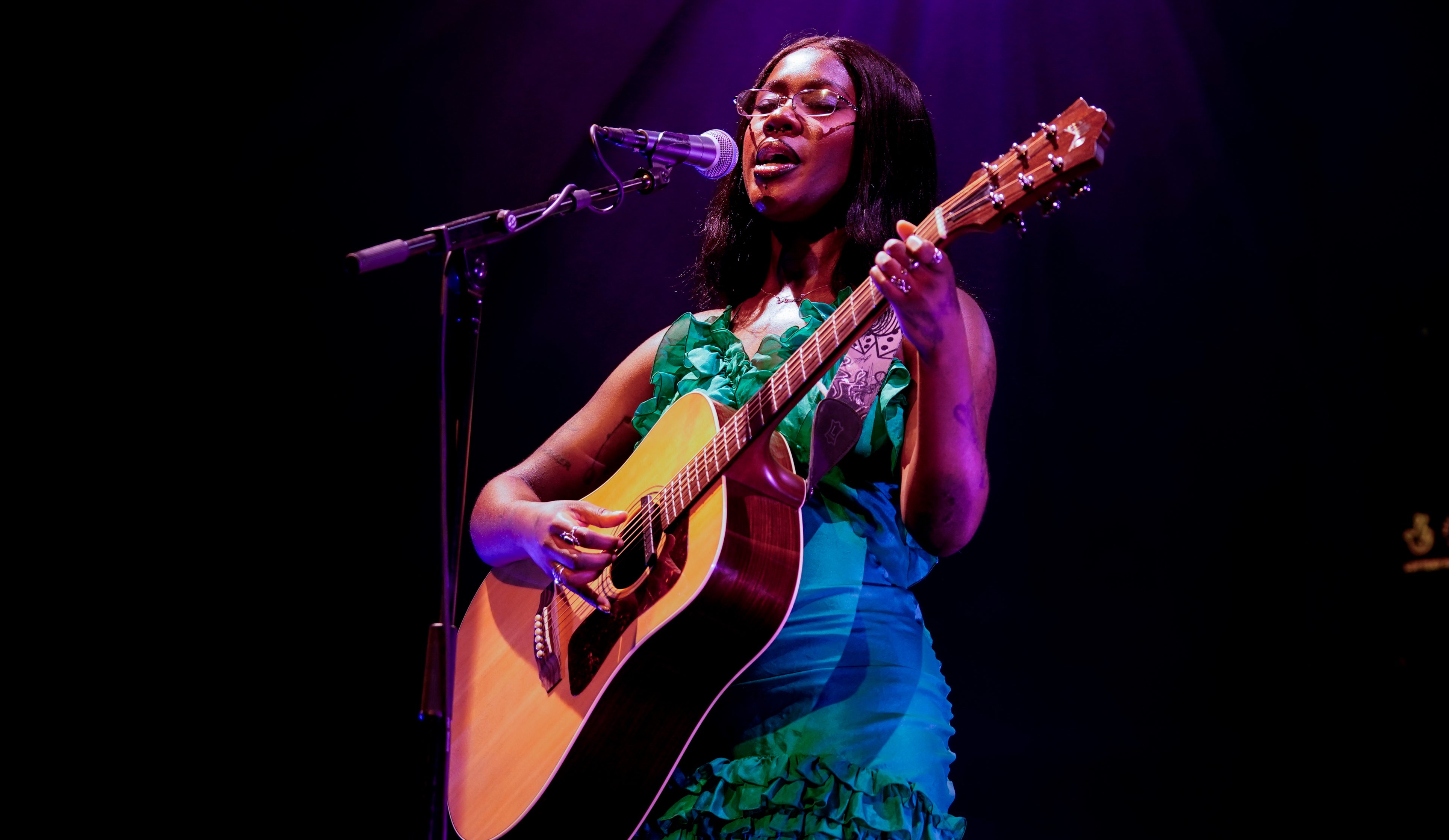
    The hall dimmed. A soft purple strobe lit the stage. Out walked Kara — tall, graceful, guitar in hand, rocking a green dress and small-heeled shoes. She didn’t have to say much; the room was already hers. Her voice — deep, warm, expansive — filled the space immediately as she began her set with “Lil Baby.”

    She performed songs from her latest project, “Why Does the Earth Give Us People to Love?” — including standouts like “Therapy” (a personal fave), “Pawn Show” and more. In between songs, she reflected on writing from as young as 18 and her deep obsession with Amy Winehouse, whose influence was clear in Kara’s own raw, poetic lyricism.

    But Kara wasn’t just soulful, she was real. Between tracks, she cracked jokes in her soft-spoken tone that somehow made us all feel like we were sitting in her living room. She gave a heartfelt shoutout to Little Simz, who curated the Meltdown Festival and brought her to London — even though Kara had promised herself no international flights this year. (I think she’s coming back though… she better!)

    She closed the set with what she playfully called the “most vulgar” track on her project — “Dickhead Blues.” And somehow, even that felt elegant, delivered with confidence, wit and grace.

    For me, this wasn’t just a performance — it was an ushering into the universe of a vocal powerhouse with enigmatic writing and a grounded presence. Kara, if you’re reading this, London is ready for more.