Written by Tobi Oke
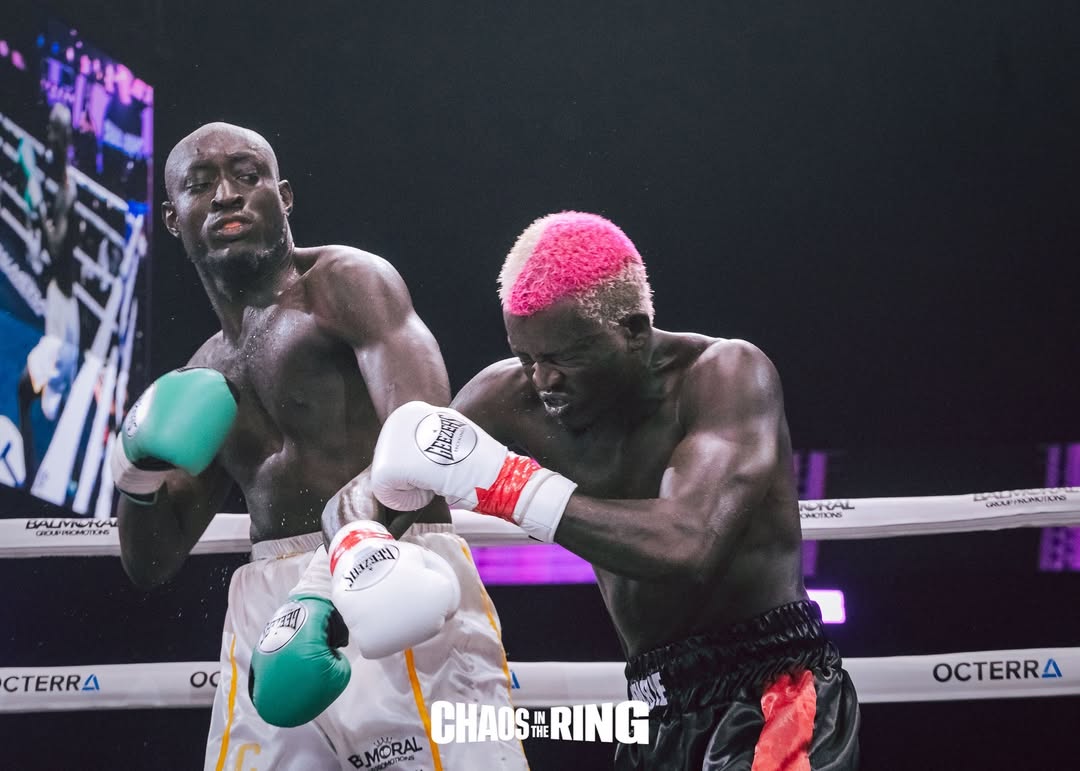
On May 1st, something unusual happened in Nigerian entertainment. Two non-professional fighters stepped into a boxing ring: Carter Efe, the fast-rising streamer whose internet growth has become impossible to ignore, and Portable, a street-pop artist who has turned unpredictability into an entire brand. In less than four rounds, the fight was over. But the real story was never the fight itself. It was everything surrounding it.
At face value, the bout looked like exactly the kind of celebrity spectacle the internet feeds on: chaos, controversy, and attention. And to be fair, it delivered all three. Portable entered with exhibition experience from previous fights against Charles Okocha and Speed Darlington. Carter Efe came in with none, yet controlled the fight from the opening moments and finished convincingly. Still, technical quality was never really the attraction here. The attraction was clout.

Almost immediately, clips from the event flooded TikTok, Twitter, Instagram, and meme pages. Reaction videos, edits, commentary threads, and recreated moments spread faster than the fight itself. For days, the internet treated the event like a national occurrence. DAZN broadcasting the bout only amplified things further, giving what could have been dismissed as local internet chaos an unusual level of global visibility.
That visibility matters because it reveals something deeper about modern Nigerian entertainment culture. Carter Efe represents a newer kind of internet celebrity; chaotic, spontaneous, and constantly evolving in public. Portable operates differently. His visibility thrives on unpredictability. Whether through music, controversy, interviews, or public incidents, he has mastered the attention economy in ways many artists still struggle to understand. Put both personalities in a ring and the outcome almost becomes secondary. The event becomes content before it even begins.

Before the celebrity main event, there were undercard fights involving lesser-known fighters, and some showed real promise. For brief moments, you could almost see the outline of something sustainable underneath all the noise. Because if personality alone can generate this level of attention, what happens when actual structure, training, and long-term investment enters the picture?


Backed by Balmoral Group in partnership with DAZN, the event was packaged, funded, and distributed seriously. Reports from stakeholders suggested budgets running into billions of naira, alongside temporary local jobs, tourism activity, and international attention directed toward Lagos. At that point, this stops feeling like entertainment alone. It starts looking like infrastructure.
That is why boxing in Nigeria suddenly feels like it could be more and more like a legitimate opportunity. The audience already exists, the attention could be upscaled. Even the commercial potential becomes difficult to ignore. What remains uncertain is whether the structure can catch up before the hype burns out.


For boxing to survive beyond spectacle, the foundation has to become intentional. Fighters need proper coaching, conditioning, and technical development capable of competing globally over time. Safety standards, medical oversight, and post-fight care cannot be optional in a sport this dangerous. Then comes compensation. If fighters cannot build stable careers locally, they will leave, repeating the same cycle seen across Nigerian football, tech, and other industries where talent develops at home but thrives elsewhere because the systems abroad simply work better.

And yet, the momentum still feels real. More events are already being planned, promoters are openly discussing expansion, and audiences are paying attention in ways they have not before. The Carter Efe and Portable fight will probably be remembered for the chaos, the memes, and the internet reactions. But its real significance might be what it quietly proved: Nigeria is not lacking in talent, audience, or global attention. What it has consistently lacked is structure. And for the first time in a while, it feels like people are finally starting to pay attention.

Leave a Reply