Written by Oluwatobi Oke

pgLang does not announce things. It presents them. A clear example of this is shown on June 2, 2026, when Kendrick Lamar and Dave Free‘s creative company and label posted a signing and a debut album on the same day: no singles, no teaser campaign, no rollout architecture to soften the landing: just a name, a cover, and eleven tracks. The name was Imani Imani, born Imani Ram, formerly Imani Selina, and the decision to say her name twice feels less like a rebrand and more like an affirmation. The album was Papercut. And if you were paying attention, you already knew her, even if you did not know her name.
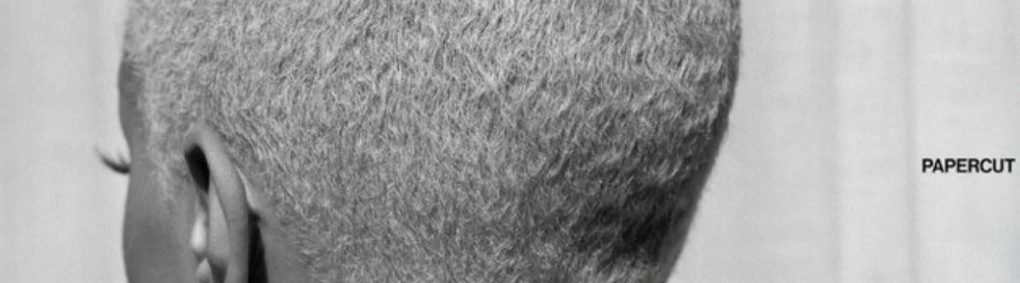
She was the voice on an unreleased Kendrick Lamar track that soundtracked Chanel’s Spring-Summer 2024 Haute Couture show in Paris . Her record Snatch opened that same runway. She had been inside the most intentional creative ecosystem in contemporary music since at least 2024, developing without pressure, building without announcement. The grey album cover, Imani looking away from the camera, her name in small black font to the right, unassuming and certain at the same time, is the visual equivalent of how the whole thing arrived. Not demanding your attention. Assuming it.
What pgLang has built with its artists is worth naming before the music, because it is the context the music lives inside. Baby Keem released The Melodic Blue in 2021 to critical acclaim and then went silent for five years before Ca$ino arrived in 2026. Tanna Leone dropped Sleepy Soldier in 2022 and has moved with that same unhurried deliberateness since. The pattern is not coincidence. It is philosophy. You do not rush an artist toward commercial readiness. You wait until the work is actually ready. And when it arrives, it arrives whole. A philosophy that seems to have found its home at pgLang

Papercut
Produced entirely by Daan Zinkhaan, a Dutch producer whose credits before this were deliberately understated, the album builds a sonic world that feels complete without being cluttered. Zinkhaan composed the Adidas Originals World Cup campaign, scored independent film projects, and produced Snatch for Chanel. But Papercut is his most sustained statement, and the decision to trust an artist of this profile entirely to one producer who has not dominated the mainstream is almost certainly deliberate. He co-wrote, engineered, mixed, and structured the entire thing alongside her, working closely with mixing engineer Oli Jacobs and bridging collaborators like James Fauntleroy and Sam Dew on the writing side. The result sounds like an album made between people who trusted each other completely, which is rarer than it should be on a debut.

Sonically, Zinkhaan structures the album around alternative R&B without letting it settle too comfortably into any one mode. Bet On Me opens on a knocking sound and 808s before Imani’s voice arrives, warm and unhurried, betting on a stranger she does not know yet with a confidence that feels like a personality trait rather than a lyrical device. Come Together pushes the desire forward with layered vocals and a complex, vibrant production that builds as it moves. Snatch pulls back into atmospheric territory, almost an interlude in feel but with real weight in the writing, fully independent one moment, needing to be called the next, the tension between freedom and wanting held inside a single song without resolution. Mindgames and Slideee carry sleek electronic textures that give those tracks a futuristic, bedroom-pop intimacy while You’re Mine leans into a cleaner, classic R&B sound, precise mixing and a vocal performance that makes the control in the lyrics feel lived in rather than performed.
On Demand is the album’s most culturally loaded moment. Zinkhaan builds the production around a melodic interpolation of The Notorious B.I.G.’s One More Chance remix, and Imani sings the hook directly into it, “baby give me one more chance,” but the emotional context has been completely flipped. Biggie’s original is seduction. Imani’s version is surrender. She has gone from the woman placing the bet on Bet On Me to the woman begging to be taken back, and the interpolation makes that collapse feel intentional rather than incidental. 1 of 1 continues that descent, asking what she would do to please him, to keep him, and the woman who opened the album not even knowing his name is now defining herself entirely through his presence.
That arc is the real architecture of Papercut. Control giving way to need. Confidence softening into vulnerability without ever fully abandoning its shape. Chasing finds her packing bags she does not travel with, alone too long, admitting she does not know why she keeps chasing this. Frank closer My Mistakes strips everything back to voice-memo intimacy, less than two minutes, just enough to close the door quietly rather than slam it.
Imani Imani went from zero monthly listeners on Spotify the day this dropped to 143,600 inside two weeks, with On Demand alone crossing 155,000 streams. Not that the numbers are the story. But they confirm what a close listen already tells you. Something about this voice is making people stay.

pgLang has been a home for rappers. Kendrick, Baby Keem, Tanna Leone. Imani Imani is the first singer on the roster and the first woman, and the way she has been developed and introduced suggests the label understood exactly what they had. No rush. No compromise. Just the work, released when it was ready, into a world that did not see it coming.
Papercut is not a flawless debut. At 33 minutes it occasionally feels like it ends before it fully opens. But that is the complaint of someone who wanted more. And wanting more, after a first album that arrived out of nowhere with this much quiet assurance, is exactly the right problem to have.
Rating: 7/10
Leave a Reply