In the early 1970s, Ofege released Try and Love while still in secondary school. The Obalende teenagers fused West African rhythms with psychedelic rock and helped shape a Nigerian sound that history almost forgot.
The band grew out of St. Gregory’s College, where guitarist and vocalist Melvin “Noks” Ukachi and bassist Paul Alade began playing together under the earlier name Hitch Hykers. They later added Dapo Olumide and M-Ike Meme. Their first attempt to audition at a recording studio reportedly ended with advice to return to their studies. They did not.
When they eventually reached EMI, producer and A&R manager Odion Iruoje heard something worth developing. He put the teenagers through intensive rehearsals and brought them into the sessions that became Try and Love.
The result was not a novelty record made by children playing at being rock stars. It was a confident, melodic, and emotionally direct album that fused West African rhythms with the fuzz guitars, soul, and psychedelic textures of 1970s rock. Ofege drew from Santana, Led Zeppelin, Osibisa, and The Funkees, but they did not sound like an imitation of any of them.
Try and Love opens with “Nobody Fails,” a song built on a waltz-like rhythm, bright guitar punctuation, and Ukachi’s youthful vocals. “Gbe Mi Lo” brings more intricate drumming and a majestic guitar solo from session musician Berkley Jones. “It’s Not Easy,” written by bassist Paul Alade, remains the album’s most tender moment: a languid, yearning love song that has since found new audiences through licensing in television.
What makes Ofege remarkable is not simply that they were young. It is that their youth did not limit the ambition of the music. Try and Love carries the urgency of teenagers discovering love, freedom, and possibility, but it is arranged with enough sophistication to hold up more than 50 years later.
They were not alone. Nigeria had a thriving psychedelic rock scene in the 1970s, one that included Blo, The Funkees, and Ofo the Black Company. Yet the story that has travelled furthest internationally is often Afrobeat, leaving bands like Ofege under-discussed despite their influence and quality.
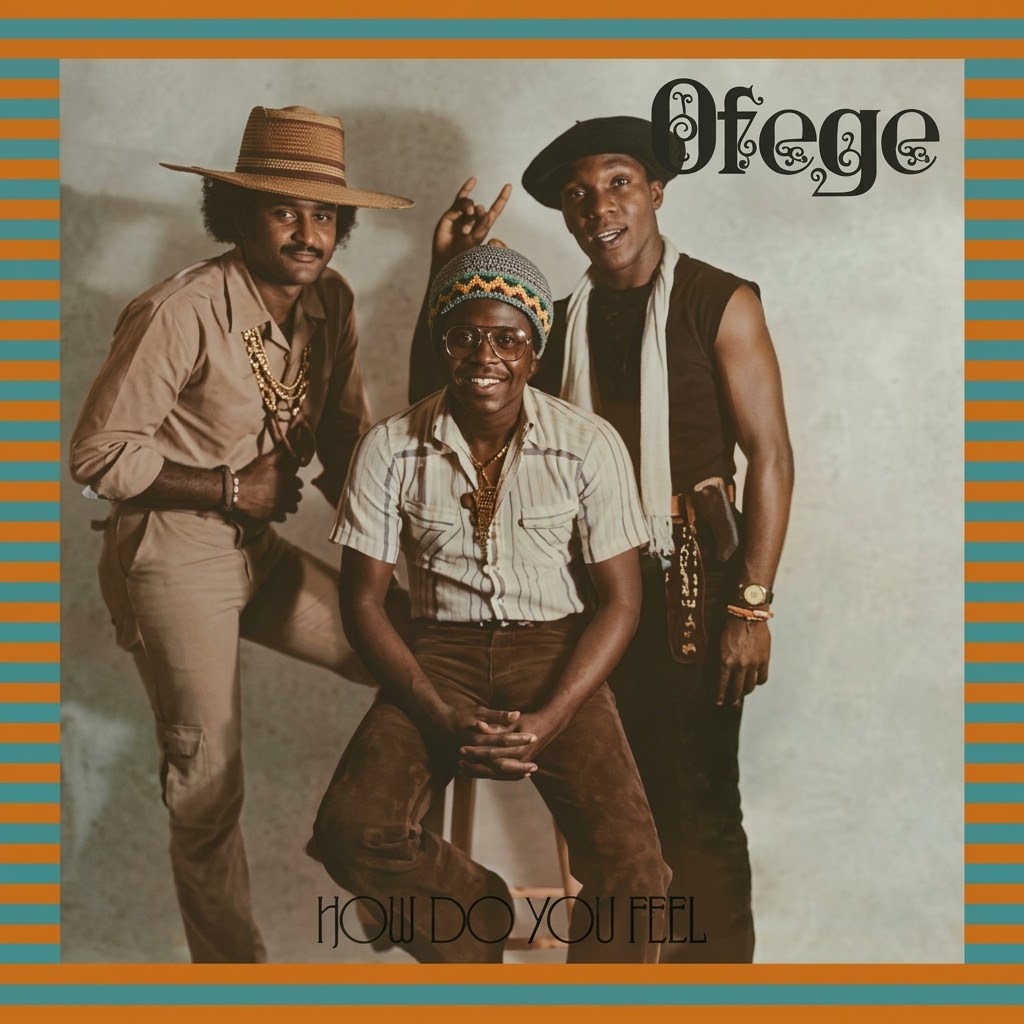
Ofege released The Last of the Origins in 1976, Higher Plane Breeze in 1977, and How Do You Feel in 1978 before fading from the scene after graduation. But Try and Love remains their defining statement: an album made by schoolboys from Obalende that still sounds alive, restless, and completely its own.
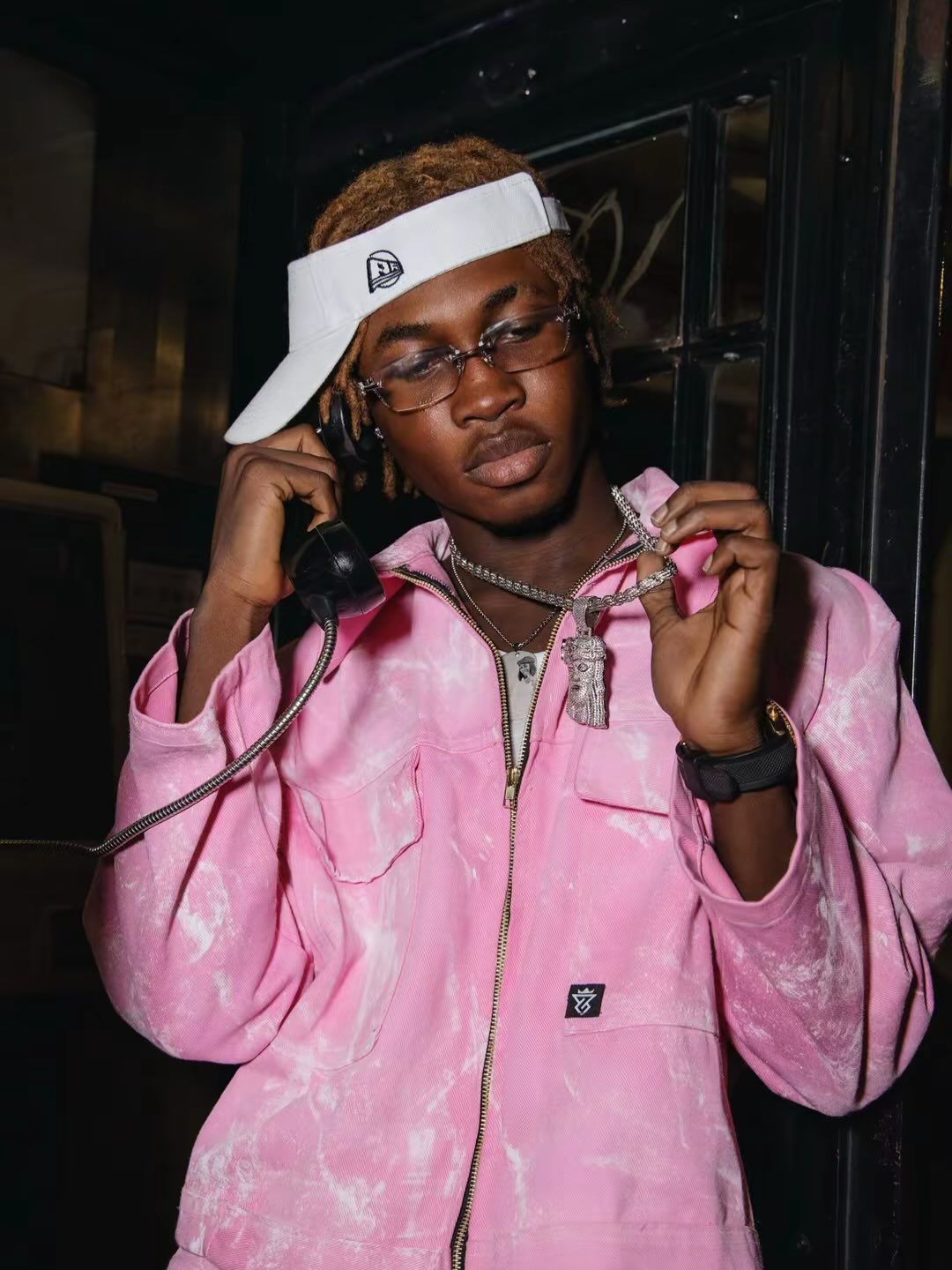
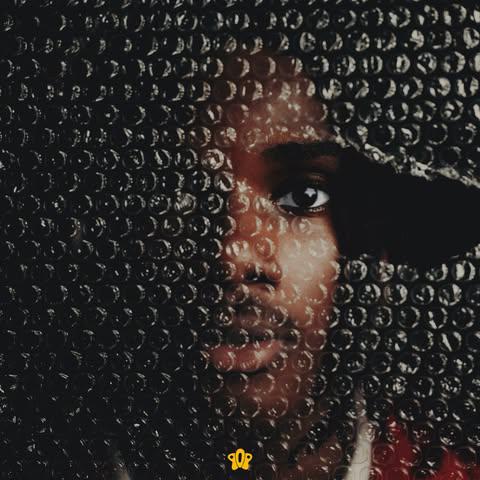
BNXN is in charge, and he wants you to know it. Still In Charge is him saying it out loud.
It is a long way from the kid who used to beg strangers on Twitter for airtime. When those old posts resurfaced and the mockery followed, his reply, since deleted, was that the same telecom company had since signed him. He even started under another name. Buju became BNXN to avoid brand confusion with the veteran Jamaican reggae artist Buju Banton. Thankfully, he was already relatively known, and since then he has put every foot forward in the right direction, building BNXN into the brand it is today.
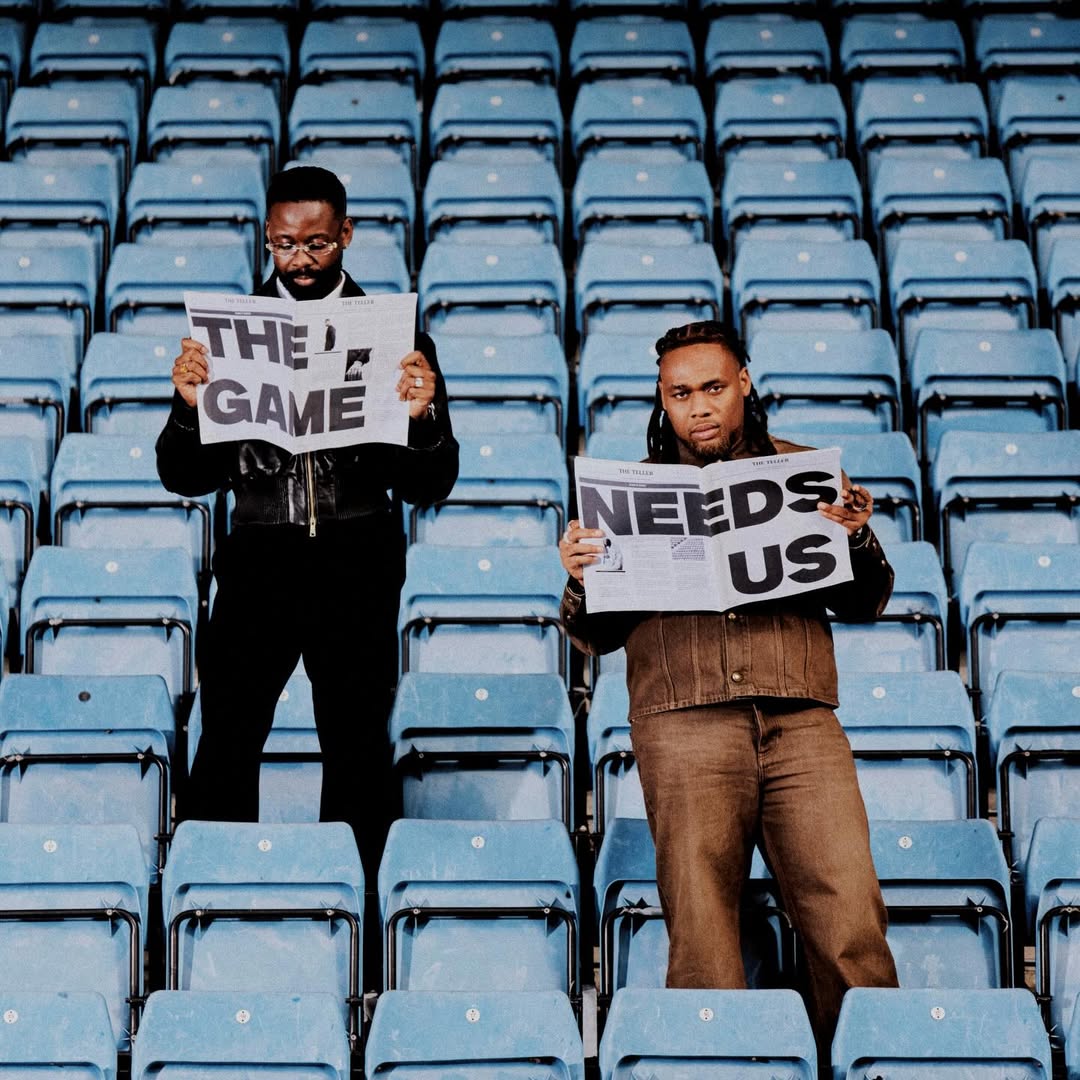
Back on “Sorry I’m Late,” Daniel Benson sang that “he had never stopped in his life and had no reason to stop now.” His run of projects has been him making good on that line. “Sincerely, Benson” introduced the man behind the name. “Captain” put him in the driver’s seat. “The Game Needs Us”, with Sarz, told the industry it needed him. “Still In Charge” confirms he never left the seat: six songs in about 16 minutes.
He is not subtle about where he thinks he stands. Before release he posted a Pablo Escobar meme from Narcos with six faces on it: his own, Asake, Davido, Wizkid, Burna Boy and Rema. In a listening session he explained that those are the names he considers the top of the industry. Eja Meja puts the second face next to his. It is their first record together, and in a year where Asake has been on a feature run, the linkup lands less as a surprise than a confirmation. Blaisebeatz keeps the drums heavy enough that neither man sounds like a guest.
Online takes the viral line about not being online and turns a quiet stretch into evidence of work. 16 is the spine. It goes back to hustling at sixteen, with WalahiSteph, a university mate, on production, which says something about who has been in his corner since before the money. Deliberate Work opens as swagger, then turns on someone from his business past he says took from him. He never names them, and neither will I. Braggadocio with a bill attached is where “in charge” gets earned, because control means more from a man who has lost some.
Shamaya is the one pure love song. FOLA’s chemistry with BNXN was already proven on the Alone remix and Very Soon, and with sbthaproducer pulling the drums back, FOLA’s cadence is what you hear first. If You Like, produced by Semzi, closes carefree.
BNXN told listeners this started as a deluxe for Captain before he scrapped it. Right call. A deluxe would have been a footnote. As an EP it plays closer to The Game Needs Us, tight enough that nothing needs defending.
My reservation is the online complaint that he reuses the same flows. I do not fully buy it, but I see where it comes from. On a project this short, every hook has to justify its place, and for a man claiming charge, the sound should bend more than it does. Finding new pockets is what presiding looks like, and that is the gap between a very good EP and a great one.
A kid who once begged for airtime now decides when his music arrives and what it says. Still In Charge is that sentence, six songs long.
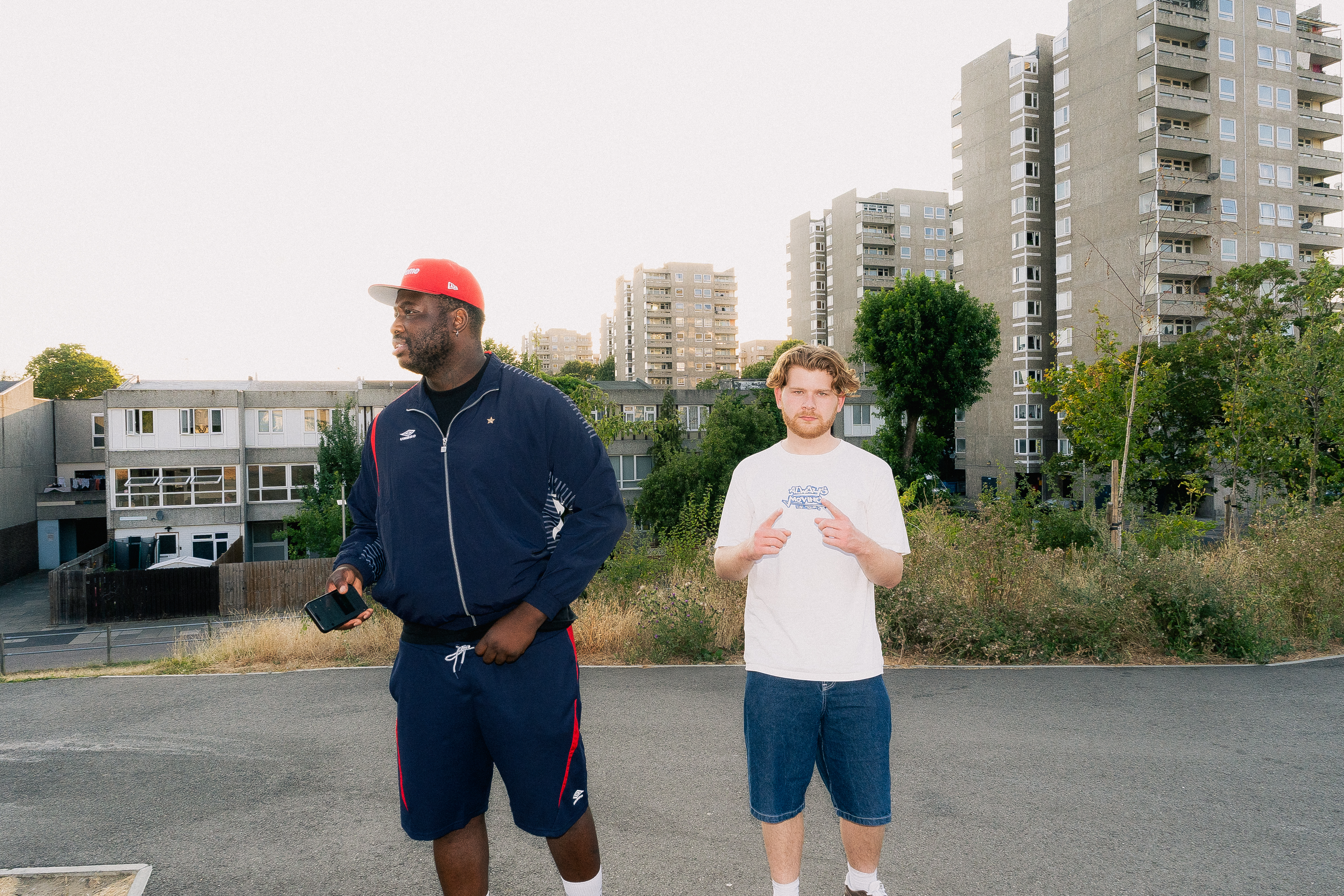
BexBlu and Paul Stephan Find a Warmer Groove on New Single ‘U Feel Good’UK producer BexBlu and rapper-vocalist Paul Stephan are back with “U Feel Good”, a new single that finds the pair leaning into a warmer, more soulful sound. Out today via Empire, the track follows their recent release “Never Relax” and offers another look at the creative chemistry taking shape between them.
Built around rich keys, chopped samples and crisp, head-nodding drums, “U Feel Good” carries a nostalgic edge without feeling stuck in the past. BexBlu brings together elements of hip-hop, soul and electronic music, while Stephan moves between relaxed rap flows and melodic hooks, giving the track an easy rhythm that draws you in.
What makes the record work is how naturally the two approaches meet. The production balances soulful textures with punchy percussion and playful vocal effects, while Stephan glides across the beat with a laid-back confidence. The result is a feel-good cut with enough character to stand apart from a straightforward nostalgia trip.
Both artists bring a willingness to move between sounds rather than settle into one lane. On “U Feel Good”, that instinct pays off in a collaboration that feels loose, melodic and assured, with the pair continuing to explore what their sound can become.
By the time you finish Lusanda’s By The Time I Wake Up, something has shifted. Not because the EP attempts to overwhelm you with scale, but because it understands the value of restraint. Across three tracks, the South African singer and trained ballerina turns inward, works through reflection and uncertainty, and eventually arrives at a place of release. The project is brief, but its emotional arc is carefully considered.
Lusanda’s background in ballet feels particularly relevant here. Ballet is built around precision, discipline and the ability to make demanding movements appear effortless. Those qualities are present throughout By The Time I Wake Up, a project produced entirely by Anoop D’Souza. Rather than relying on excessive production or unnecessary embellishment, Lusanda allows her greatest strength to remain at the centre of the music: her voice. Warm and controlled, it carries a remarkable amount of emotional weight without needing to force the listener into feeling anything.
“Progress” opens the EP with a sense of space. The production gives Lusanda enough room to move through themes of self-discovery and reflection, particularly the strange experience of looking back and realising that growth was happening even when it did not feel visible. The song is less about a dramatic breakthrough than the quiet recognition that comes afterwards. When she sings “suddenly I see,” the moment feels less like revelation and more like finally understanding what the journey has been doing all along.
The title track, “By The Time I Wake Up,” is where the project finds its emotional centre. A guitar enters within the first few seconds and remains a steady presence throughout, giving the song a grounded pulse while Lusanda’s vocals move around it with remarkable ease. Neither the production nor the vocal performance competes for attention. Instead, they create a balance where each element knows when to step forward and when to leave space.
That balance gives the song its emotional pull. The writing traces an internal movement towards clarity and hope, while the vocalising towards the end becomes one of the EP’s most memorable moments. It is the kind of performance that rewards a replay because its impact comes from feeling rather than spectacle. There is also something versatile about the song’s construction. It could sit comfortably in the intimacy of a quiet evening at a bar or expand naturally onto a festival stage without losing what makes it work.
“Lunchbox,” featuring fellow South African producer iam6teen, changes the temperature. After two songs centred on reflection, growth and healing, the EP finally exhales. The snare and toms give the track a different physicality, creating a sense of movement and release. If the first two tracks are concerned with the work of becoming, “Lunchbox” is about what happens when that internal work begins to show up in the outside world.
Its central idea is simple but effective: the freedom that comes from being completely yourself around another person. Lusanda asks whether she can be carefree in their presence, and the question gives the song its warmth. It becomes the most liberated moment on the project, not because the subject matter suddenly becomes more complicated, but because the music no longer needs to carry the weight of introspection.
That is ultimately what makes By The Time I Wake Up work. It does not attempt to stretch three songs into something larger than they are. Instead, each track has a clear purpose, and together they form a concise progression from reflection to recognition to release. The EP’s brevity becomes part of its strength.
Lusanda does not waste a single second. She arrives with a clear sense of who she is, a voice capable of carrying the project, and enough restraint to let the music breathe.
Lusanda was already awake. This EP just proves it.
Reggae music has always been more than just a genre. It’s resistance, unity, consciousness and good vibrations. It’s a living archive for the intellectually marginalized, for identity and freedom carried through divine languages of sound systems, fashion, and the act of authentically uniting on the dancefloor.
For me, reggae music isn’t just a passive listening experience; it’s a universal layout for community, knowledge and consciousness culture.
In the capital city of Abuja, beneath the regular noise and the repetitive pattern of mainstream entertainment, a counter culture (Dub & Riddim) is realigning the consciousness back into the physical safe space.
This subcultural platform creates an atmosphere for people to gather without having to dilute who they innately are.
At the core of this movement lies two worlds:
Oge Kimono, daughter of legendary reggae icon Ras Kimono, carrying forward a lineage deeply connected to the sonic and cultural legacy approaching reggae as something expansive, timeless and alive. Funmi Malik, a fashion designer, translates that same frequency through fabric, silhouette and movement, exploring what happens when the values of sound system culture become something you can wear and carry with you.
Somewhere between the bassline and the garment; the dancefloor and the body, the memory and moment, I ask an important question:
What does it mean to keep a culture alive without turning it into a museum memory?
I had a conversation with the innovators of this movement over a phone call with reggae inspired instrumentals playing in the background, giving the atmosphere a calm spiritual ambience, setting the tone.
Diving into their world as they relaunch their monthly sanctuary for good vibes, creativity and sound system culture in October, I began with joint questions and exclusive questions to further understand the idea of the timeless creation.
Historically, reggae and sound system culture was never just about low-end frequencies, they were about reclaiming physical space and creating a sanctuary for the marginalized communities, while asserting presence. In this digital era where physical safe spaces and intentional communities are diminishing, how is Dub and Riddim using music and fashion to reclaim physical territory for subcultural expression in the city of Abuja?
OGE KIMONO:
In the city of Abuja, we know that nightlife and cultural spaces are often shaped around mainstream entertainment, so Dub & Riddim creates intentional spaces where reggae, subcultures and other genres can be seen, heard and experienced. Through music and good vibes, we transform ordinary venues into high frequency cultural territories; spaces where reggae, dancehall, dub, roots, lovers rock and the sound system culture particularly become the centre of the experience. Dub & Riddim isn’t just a regular party, it’s an intentional community of people who share an affinity for the culture to occupy space, connect, belong and authentically express themselves. It’s a calling of oneness, knowing that you belong to something; with reggae inspired colors where you step inna di space. Yah man.
(She switches to Jamaican Patois)
Dem vintage Jamaican aesthetics, African prints, street wear, dreadlocks, accessories, individual styles and people embodying the culture, expressing themselves through what they wear. Because what people wear becomes an extension of the music and a visible declaration of identity.
FUNMI MALIK:
(Speaking in her calm and abyssal energy)
For me I would say it’s less about reclaiming territory and more about reconnection because we live in a time where people are mostly connected online, not physically and that’s the space Dub ‘n’ Riddim exists to fill. We stand for reggae and sound system culture. It brings people from different walks of life together through musical conversations, ideas and positive energies. Dub & Riddim is our way of saying there’s still value in showing up, there’s value in community building, there’s value in still checking on people to know how they’re really doing.
We intend to promote intentional community and we’ll continue to do this through music, art, fashion and culture where we create a space where people don’t necessarily have to fit into a box but be themselves authentically.
There’s something deceptively radical about simply showing up. In an era where connection is often mediated by screens and doomscrolling, the dancefloor becomes a physical argument against isolation; a room full of people listening to the same bassline is enough for people to re-member and recall.
Dub & Riddim’s idea of space is larger than the room itself.
This is from us to the rest of the world to say we get what reggae culture is all about and we’re here for that.
There’s an inherent link between how sound moves us and how we dress to move through the world. As a cultural platform built on reggae, lifestyle and sound system heritage, how do you translate the intangible architecture of riddim, shared spaces and raw frequency into wearable authority for the community?
OGE KIMONO:
I’ll say that’s a very deep question you know! (she laughs) and switches to Patois.
Talk bout architectural space, yah man!
I would say it lives in the riddim, the frequency, the memory, the movement and the collective presence. One of the aims is to create wearable cultural vocabulary pieces coming from contemporary African textiles, showcasing Africa through the musical lens of reggae music. Because you know we’re kings and queens inna di place, yah man. And of course, reggae music is royalty music and I want people to feel royal when they step pon the dancefloor, dem ah fi style out, yunno?
Because the wearable authority reserves a memory that makes the community feel they belong to a genuine subculture that communicates things like I was there, I belong to this movement, I innerstand the sound and the message; giving members an innate identity to a cultural frequency.
FUNMI MALIK:
Music and fashion are inseparable. They have the same conversations, just in different languages. Music is what people hear and fashion is what people say. A heavy bassline has presence; it enters a room before anyone says a word. A textile does exactly the same.
That’s the connection for us and it’s natural. The pieces would be inspired by the movement, individuality, freedom and confidence. That’s the feeling that exists with reggae and sound system culture so we want people to wear pieces that feel authentic to who they are, not because they’re following a trend but because they’re expressing something about themselves.
When someone wears a Dub & Riddim inspired piece, we want them to feel like they’re wearing a timeless piece of culture.
Subcultures are constantly co-opted by mainstream fashion and corporate playlists, turning radical identities into trivial trends. As Dub and Riddim expands, how do you protect the sacredness and authenticity of roots and sound system culture while building a sustainable cultural platform?
OGE KIMONO:
We see this culture both as heritage and a living practice. Dub & Riddim expands the authenticity and roots of sound system culture because it’s been central to our vision and value system. The culture is one we must respect, honour, document, preserve and pass on to the next generation, which is very important, because faya cyan cool in this vibes enuh.
(She says in Patois)
We also create room for contemporary African expression; a space where creatives can come in and vibe to a reggae riddim in afro style, like ah Afro-skankin, yunno? (She says in Patois).
We’re innovating through music, storytelling, fashion and live experiences. We’re connecting creatives to wider audiences, which is ultimately about preserving the essence of the culture while creating space for the future so the culture can evolve without losing its roots.
FUNMI MALIK:
Dub & Riddim was not created because reggae was fashionable and I think authenticity becomes easier to protect when you remember how and why you started.
It was created because of what culture represents, which is community, freedom, consciousness, people gathering together and sharing something meaningful and as we grow, the goal is not to chase trends or be fashionable or try to make culture more acceptable to people.
The goal is to stay rooted in the values that inspired us in the first place and that means continuing to tell the stories, history, support the people who have carried the culture for years and create experiences that feel genuine. Culture evolving is necessary but there’s a difference between evolution and dilution.
Growth should never mean losing its soul and that distinction may be the most silent manifesto in the entire Dub & Riddim philosophy because preservation doesn’t necessarily mean repetition.
OGE KIMONO: THE SELECTA, THE NAVIGATAH AND THE FREQUENCY
Historically, reggae and sound system culture reshaped how we experience music by treating space and dub as essential instruments. When building the soundscapes for Dub and Riddim, how do you use space and silence to create a deeper, authentic connection with the audience?
Using space and silence to create an experience is a signature to Dub & Riddim, which stems from the sound system culture. We create moments of anticipation, intimacy and connection; giving the community room to feel the sound rather than simply consuming. At our identifiable sound system experience we don’t simply play music, we take people on a sonic journey with the selecta who’s the vibe navigatahhh, yunno?
Carefully navigating the audience through different eras and memories while we introduce them to new sounds, new artists and random selections you didn’t know you needed to hear. The musical soundscape transports the atmosphere into a time travel journey through sound because music has always been a time machine. It’s nostalgic. It takes you to the past and brings you to the future. The host on the other hand is the connector; serving as a bridge between the sound and the people, keeping the energy and frequency alive; and getting the people to move and maintain the high vibrational frequency to intentionally get soaked in the experience.
The host engages the audience in a call and response kind of vibration; hyping and crowd engagement. There’s the open mic session where you pass the mic to the next person and they buss up some likkle rhymes inna di space, yah man. The host reads the room and wheels up a tune which is a common practice in the sound system culture.
(She continues in Patois)
Dem say when di music nice you play it twice, when it’s sweet you repeat. We’re creating space for the community to connect with that frequency.
Reggae music and sound system culture carry a profound legacy of spiritual connection and social commentary. How do you honour that conscious legacy while innovating the sound to reflect the rhythm and energy of the urban reality?
Honoring the conscious legacy of reggae music is first of all understanding that reggae is a masterpiece. It has never been limited to a particular sound or era. Like Bob Marley said in 1980 on his Redemption song:
(She sings)
“Emancipate yourselves from mental slavery, none but ourselves can free our minds.”
If you don’t unchain your mind from mental shackles, you may not be able to experience reggae music freely because it’s a very broad genre. So we honour the legacy and roots of the masterpiece. We are not leaving the past, we innerstand that we need to honour the roots. However we take the consciousness of reggae music and fuse it into the realities of contemporary African space, where we use the creativity and sound system culture of something that’s rooted and distinctly ours.
When someone steps into the physical footprint of a heavy bassline, the experience is innate and bodily. What do you want people to feel mentally and physically, when they enter the sonic atmosphere you curate?
(She begins with the popular line from Bob Marley’s Trenchtown Rock released in 1971)
“One good thing about music, when it hits you feel no pain.”
When people step into Dub & Riddim we want them to feel free, we want you to be, to breathe, to unwind, to move and express yourself through dancing, whatever way you deem fit that makes you free your mind, body and soul to express yourself; through fashion or even sitting still and soaking it all in. Just be in the presence, be connected to the sound and the people, to know they belong in that space and moment and for me, that’s the power of the Dub & Riddim experience.
FUNMI MALIK: THE TACTILE ARCHITECT
The style in sound system culture; from roots, dancehalls to modern style have always functioned as an armor for revolt and rugged individuality. When designing for this project, how do you approach the garment construction to serve as a uniform for cultural pride and timeless preservation?
When people come into Dub & Riddim space, they’re dancing, connecting, moving and being fully present and I believe the pieces should support that. They have to be comfortable, functional and effortless. So for this project, when I’m creating costumes, I would rather create pieces people could genuinely live in, because that’s what sound system culture is all about.
It’s not about looking perfect, it’s always about subliminal self expression, identity, confidence and belonging. We also want the pieces to feel timeless. Fashion moves quickly as we all know, but culture moves differently. Many years from now, I want someone to find one of those pieces and remember not just because they wore it, but how they felt in that moment they wore it, the music they heard, the people they met and the energy in the space. For me that’s momentum and timeless preservation, not locking culture up like we’re in a museum, but allowing people to wear it, live it and carry the culture forward.
In reggae and dancehall, a riddim is the foundational sonic structure that different artists build upon. What is the foundational ‘riddim’ of your design ethos? Which core silhouettes, raw textures or functional details serve as your visual signature whenever you create?
If I had to describe my design rhythm in one word, it would be freedom; freedom to move, freedom to be yourself, freedom from labels and expectations to fit into a box and that’s probably why I gravitate towards unisex fashion.
I’ve never liked the idea of clothes telling people who they should be, I prefer creating pieces that allow people to bring themselves into the garment. So you often see relaxed fits, oversized silhouettes, utility details, pocket layered pieces that feel easy, but still command presence.
I also love fabrics with personality, fabrics that age well, fabrics that don’t look better because they’re new, but because they’ve been worn, travelled in, danced in and lived in.
I think my signature has always been balancing comfort with confidence. Clothes that don’t scream for attention but still make a statement when you walk into a room.
Dub & Riddim style demands functionality; with clothes built for endurance, physical movement, and late night sound sessions. How do you balance raw utility and working class workwear roots with high concept design aesthetics?
With designing, I always start with how the garment will be used. Can you move in it? Can you dance in it? Can you wear it all day? Does it serve its purpose? Once these foundations are established, I begin to play with the design language; the proportions, the styling, the details, the attitude. I believe the magic happens when something feels practical and expressive at the same time and that’s the joy of it; pieces that don’t just sit in a wardrobe looking beautiful but become part of someone’s life in every way.
When people look back at this era of subculture 20 years from now, what imprint do you hope Dub and Riddim leaves on the relationship between independent fashion, sound, and community identity?
I hope people look back and say we created something not driven by trends or something that was fashionable, but because it felt real.
I hope people remember that Dub & Riddim brought people together; created conversations, friendship, collaborations and a sense of belonging.
I hope they remember that fashion wasn’t separated from music and music wasn’t separated from the community. They all existed together as one experience.
And most importantly, I hope young people see that culture doesn’t have to come from big corporations or massive budgets. Sometimes it starts with a few people who believe in something enough and create a space for it.
In 20 years from now if someone says Dub & Riddim helped preserve a culture, celebrate individuality and built a community, then I think we’ve done something worthwhile.
Because at the end of the day, that’s what it’s really about for me; people, connection, culture and leaving something meaningful behind.
As I close the curtains on this deep conversation, the reggae instrumentals keep playing in the background, bridging the digital distance between us. The phone call ends, but the frequency stays.
In a city where attention spans are shortened and physical spaces are mostly trivial, what Oge Kimono and Funmi Malik are building with Dub & Riddim is nothing short of an act of quiet rebellion. It’s a reminder that subcultures don’t survive by succumbing to algorithms or freezing themselves in museum displays; they survive because people still crave the raw, unmediated truth of standing side by side in a room, letting the bassline do the talking.
As October approaches and the red, gold, and green lights come to life once more in the capital city of Abuja, the message remains clear: the dancefloor is a non-negotiable runway, the riddim is locked, and the sanctuary is ready. All you have to do is show up, step inna di space, and let the music do the rest.
Five albums deep into a catalogue that has been directed outward, to God, to a lover, to her children, to everyone around her who needed reassurance, Gentlewoman is the first time she has turned the full weight of that voice on herself. The title is not ironic. It is instructional. She is speaking to herself the way she has always spoken to others. With tenderness. With patience. With the understanding that becoming something takes time and that the process deserves to be witnessed.
Cleo Sol was born Cleopatra Zvezdana Nikolic in Ladbroke Grove, London, to jazz musicians who gave her a musical inheritance she has spent her career quietly drawing from. She rarely gives interviews. She rarely performs live. The music has always done the speaking, and all five of her solo albums have been produced entirely by her husband Inflo, the man behind SAULT, one of the most deliberately mysterious creative operations in contemporary British music. Their partnership is so tightly woven that separating her voice from his production feels almost impossible. They are the same argument, made from two directions. Inflo deserves his flowers. The arrangements on Gentlewoman are some of the most considered of his career, strings, choir, bass guitar, acoustic piano, harp all moving with a restraint that serves her rather than competes with her. He knows exactly when to fill the room and exactly when to step back. That instinct is what makes this album breathe the way it does.
The argument on Gentlewoman is different from what came before. Rose in the Dark balanced the highs and lows of romantic relationships and personal growth. Mother went deep into the complexities of maternal love and generational healing. Heaven and Gold arrived as surprise doubles in 2023, Heaven centring faith and divine alignment, Gold celebrating family resilience with an upbeat soul warmth that felt complete and generous. Gentlewoman does not try to replicate any of that. It turns inward in a way none of the previous projects fully did.
The album opens with I Only Look to You, and the first words she sings are the most important words on the project. “Finally, I’m looking out for me.” After five albums of pouring herself outward, it sounds like a door swinging the other way. The acoustic piano is spare and deliberate, making room for every syllable. She sings about being torn in pieces, about relearning how to trust, about wasting time where she does not belong. The forgiveness in the chorus is not offered to someone else. It is claimed for herself.
Sweet Thing follows with Inflo’s bass guitar leading into strings, a choir, a harp under David Campbell’s conducting. The scale is enormous but it never crowds her. Force of Love is my definite favourite, a dancehall-influenced track with Rick Nowels on guitar that has a looseness and physical energy the rest of the album does not attempt. It moves differently. Love is personal on this track, not theological, not relational in the usual sense, just immediate and direct. Sentimental Love moves through bossa nova territory with the same natural ease, and it is worth naming that these are not genre experiments. They are extensions of a vocabulary that already knows which words belong where.
Family Ties is where the album shows its sharpest edge. Over a time-waltz Inflo constructs almost entirely alone, she confronts estrangement without sentimentalising it. The lyric “This ain’t family ties” lands not as accusation but as a boundary finally spoken out loud. She gave grace. The cycle held the other person back anyway. She has to be the change. It is a difficult song written with the restraint of someone who has thought about it for a very long time.
Together is a gentle midpoint, familiar territory, and what wins here is not the writing but the production and the way her voice sits inside it. The background vocals are beautiful. The seamless transition from Together into Their Smiles Are Not the Same is the moment the album shifts gear entirely. What follows is the most dramatically beautiful thing she has recorded. Dave Okumu’s guitar enters, then the strings, then the semi-operatic vocals, and around the two-minute mark a full choir arrives, voices layering over each other in a way that feels almost architectural, like a room expanding suddenly to contain something too large for ordinary walls. The melody is an earworm before you have even finished the first listen. The outro of this track alone is worth the price of the whole album.
Honest Talk strips everything back to acoustic guitar and delivers the second verse that is the most quietly devastating writing on the project. “An honest talk with myself. How have I not seen this? Can’t change the direction that somebody’s going in. Insecure people do insecure things. You can have the world. Still feel like something’s missing.”Let Me Cry asks only to be allowed to be tired. These three tracks together form the emotional spine of Gentlewoman, and Inflo honours that by stepping back. The musicians know when to get out of her way.
All Because of Love earns its place as one of the best RnB songs of the year because it does something the genre has largely forgotten how to do with consistency. It goes back to the root. The first half is a woman speaking with full emotional honesty about not wanting to burden someone with what she has been through, the writing lean and precise and genuinely felt. Then the production opens, bass deepens, warmth floods the mix, and the song becomes something celebratory and almost churchy in its joy. It is RnB the way the Isley Brothers understood it, music that carries both pain and gratitude in the same key without either cancelling the other out. Toward the end she stops singing and starts speaking, a quiet message to someone she loves, asking if she has been there for them the way they have been there for her, telling them not to go a day without giving thanks. It is one of the most human moments on the album.
Thank You gives the album its fullest moment of direct conversation with God. Simple, unadorned, exactly what it is. Little Things is the closest she has come to straight soul in a Daptone style and it is a beautiful detour. The album closes with Gentlewoman [Acknowledgement], the shortest track, just keyboard and her voice, a message she is sending to herself as much as to anyone listening. “Gentle woman, I hear you. We are making it through. You’re safe to love again.”
On Gentlewoman, Cleo Sol is not trying to surprise you with where she goes. She is showing you how far she has come and making the honesty of that journey feel like a gift rather than an obligation. It is quieter than Gold and more interior than Mother. It is also more necessary than either. Because what she has made here is not a record for other people. For the first time, it is for herself. And somehow, that makes it feel like the most generous thing she has ever released.
Street hop is not a genre that announced itself with a manifesto. It arrived the way most things worth paying attention to do: quietly, from the corners where two worlds overlap. In this case, the overlap between UK road energy and Nigerian street pop. Between growing up on drill in the endz and going home to Olamide on the speaker. Between holding a Lagos accent in your chest and code-switching the moment you step outside.
A generation of UK-based Nigerian artists did not have to choose between those two identities. They made music from the middle of them, and the result is one of the most interesting sounds coming out of the UK right now. These five artists are the frontiers.
1. Ay Lemi
Born Odunayo Ezekiel Olalemi, Ay Lemi is the kind of artist whose origin story explains everything about his sound. He started playing drums and guitar at three in his local church choir. His influences run from gospel icon Tope Alabi to Olamide and Wizkid, which sounds like an unusual combination until you hear what he does with it. The warmth of the church and the directness of the street coexist in his music without either cancelling the other out.
Loader, his debut single released in February 2025, announced him immediately. Happy Day followed in May, opening with infectious Yoruba lyrics before dropping into a hook built for both a Lagos street corner and a UK festival stage. Over two million streams on spotify. A Billboard Afrobeats chart entry before most people knew his name. Happy Day alone sparked over 4,000 videos across TikTok and Reels.
Ay Lemi leads this list not just because of the numbers but because of what the numbers reflect. He sounds fully formed, like someone who spent years preparing for exactly this moment without knowing it was coming. The church trained his ear. The streets gave him his subject matter. Street hop gave him somewhere to put both.
The name alone signals intent. Kelz Shakur is not hiding his influences or his ambitions. The Tupac reference is deliberate, a statement that street hop, in his hands, carries something more than flex and energy. He performed live in London in August 2025 and his 2025 single Destiny gives you a direct line into where his head is at. This is an artist who understands that the streets are not just an aesthetic, they are a context that demands to be interrogated, not just celebrated. His music sits in the part of street hop where bars are doing real work, where growing up Nigerian and British in the UK is not a background detail but the whole argument.
If Ay Lemi is the energy, Lil Dipz is the vibe. His 2025 single Bestie went viral on YouTube and gave the clearest picture yet of what he brings to this sound. He built the instrumental foundation himself, starting from a melody he found on a virtual instrument called SKY KEYS, then layered bass, drums, and lyrics over it until it became something that moved. That self-sufficiency tells you something about how seriously he takes the craft.
His dual nomination at the RBE Awards 2025 for both Best Afrobeats Act and Best R&B Act confirms what the music suggests. He moves between melodic R&B and Afrobeats cadences without sounding like he is compromising either, which is the exact quality that makes street hop compelling when it is done right. Hard and soft in the same breath. Built for a party and capable of making someone feel understood in a quiet moment.
Foyin is the storyteller of this group. Where others in the street hop space lead with energy or statement, Foyin leads with narrative, the kind of music that rewards attention and reveals more on every listen. He captures the tension of navigating a dual identity without smoothing it over, which is exactly what makes it feel true. In a movement that can sometimes skim the surface, Foyin digs deep, armed with one key weapon: his flow, and his ability to ride it while telling his story in Yoruba.
Every movement needs its underground voice. The artist who keeps the roots honest when everything else starts to polish up and reach for playlists. Deezer Boy is that for street hop. Less concerned with crossover moments than with documenting where he is from and what it actually sounds like there. His music carries the kind of rawness that only comes from someone who is not performing the streets but reporting from them.
Together, these five show that street hop is not one sound but a spectrum. From Ay Lemi’s energy to Deezer Boy’s underground authenticity, from Kelz Shakur’s conscious weight to Lil Dipz’s melodic crossover and Foyin’s storytelling depth, what connects them is not a shared producer or a shared aesthetic. It is a shared identity: UK-raised, Nigerian-rooted, and making music from the space in between.
That space is where the next decade of this sound is being built.
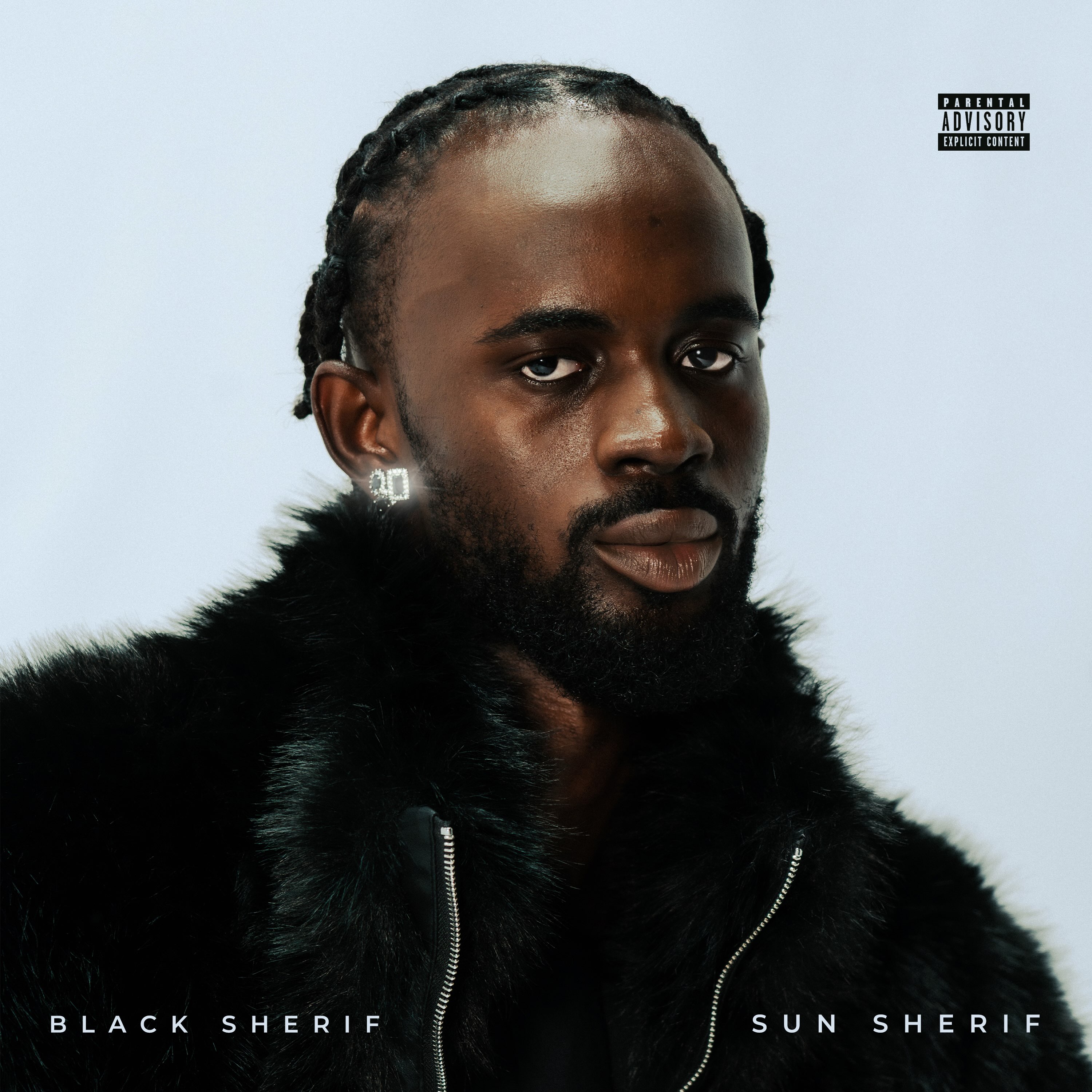
Six tracks, and not one of them sounds like an artist still processing pain out loud. This is Sherif comfortable enough to talk about ease, love, and ….
Blacko opens like a man who has made peace with his own weight. More confident, steadier in the pocket, and maybe that peace comes loaded with a run that has been building quietly, a feature on Davido’s “Amazing Grace,” then “Cry” with Llona, both moments where he showed up in someone else’s world and still left fingerprints behind. Sun Sherif Vol. 1 feels like where that momentum lands. Six tracks, one title that tells you everything before you press play. Not hiding from the light this time. Stepping into it.
Espresso opens things on admission rather than apology. Sometimes he spends more than he makes just to feel something these days, he says, and it is the kind of line the old Sherif might have buried under guilt. Here it just sits there, honest, unbothered by its own honesty, the grind and the loneliness that comes with it laid out plainly.
Run Around slows the pace down, piano leading the way into something more guarded emotionally. This is Sherif working through the walls he puts up in romance rather than the walls he puts up against the world, a quieter kind of vulnerable.
Forever with AratheJay picks the energy back up, dynamic and rewarding, a man enjoying the fruits of the work rather than questioning it. It also marks the first time Sherif has brought a Ghanaian artist onto one of his own projects, after years of either going solo or leaning on Nigerian collaborators, a small but deliberate widening of his circle.
Jolie is the early favorite on this first listen. Calm, introspective, the sound of someone genuinely settled rather than performing settlement. It carries the project’s emotional center without straining for it. Frontline is where he reaches back into his Nigerian bag, a subtle Lagos reference and a sharp “omo iya mi” dropped into the track. Fierce, assertive, proof the calm has not softened the edge.
Love Again closes with Full Blown, the Trinidadian duo bringing funky, melodic instrumentation that gives the record a different texture from everything before it, warm and slightly island-leaning, the perfect backdrop for a song about finally letting acceptance in. Shoutout to Full Blown, they understood the assignment.
Six tracks, and not one of them sounds like an artist still processing pain out loud. This is Sherif comfortable enough to talk about ease, love, and what fame has actually cost and given him. He is not just surviving anymore. He is glowing, and for the first time in a while, he knows it.
On his new seven track EP titled “For A Good Time”, the British Nigerian star trades introspection for a passport, calls in Jorja Smith. There’s only one feature on Odeal’s new EP, and it says something that he chose Jorja Smith. Not a rapper for a bounce record, not a hype name for a headline Jorja Smith, whose whole career has been built on restraint, on knowing exactly when to hold a note back. For A Good Time looks, on paper, like an artist letting loose. Underneath, it’s still Odeal being careful about who he lets into the room.
The seven track project arrives as a clear pivot for the British Nigerian singer, songwriter and producer. His last two EPs The Summer That Saved Me and The Fall That Saved Us, both released in 2025 were set inside Lustropolis, the fictional emotional world he has been building since 2024, and both were preoccupied, in different ways, with heartbreak and the fallout of it. For A Good Time… was reportedly assembled during a run of writing camps across Medellín, Los Angeles and London, three cities with three very different rhythmic instincts, and for the first time in a while, Odeal steps outside the metaphor entirely and simply lives in the present tense.
The timing helps. Odeal comes into this project off arguably the biggest stretch of his career a sold out night at London’s O2 Academy Brixton, headline dates across the UK, Europe and Australia, a Stormzy feature on “24 Hours,” MOBO wins for Best R&B/Soul Act and Best Newcomer, a BET Award nomination and Billboard’s African Rookie of the Year honour. For A Good Time lands less like an artist chasing momentum and more like one who has earned the right to exhale.
The Sound: Where R&B Meets The Dancefloor
Production has always been where Odeal quietly outworks his peers, and this EP continues that streak while pushing his palette somewhere new. The lyrics on opener “Rush” lyrics and its follow-up “Get Down” lean on low, smooth instrumentation built to flatter his voice rather than compete with his voice. Warm bass understated percussion, and spacious arrangements give his vocal runs room to breathe, keeping the production sleek without stripping away its intimacy.
“Rush” lyrics
“If we rush, there’s not enough, to make me stay,but when we touch, nothing matters, let the world wait”.
It’s a texture longtime listeners will recognise from The Summer That Saved Me, an EP that drew on a wide production bench including P2J and GuiltyBeatz, blending Afrobeats percussion with lush, unhurried R&Bchords. Odeal hasn’t abandoned that DNA here; he’s just pointed it somewhere lighter.
The clearest sonic leap on the project is “Bluey Vitton,” which trades that smoothness for an uptempo, Amapiano- inflected pulse: log drums, a rolling bassline, house adjacent momentum making it arguably the most club-facing record Odeal has released to date. It’s also, by some distance, the EP’s best evidence of his range: a Nigerian dance idiom filtered through a British R&B voice, delivered with enough confidence that it never reads as a detour. To this critic’s ear, the title does some quiet work of its own, evoking the early-2000s culture of luxury-brand name-dropping, though that remains an interpretation rather than a stated intention from Odeal. And it lands as clever rather than gimmicky once the beat actually drops.
At the emotional centre of the EP sits “Coming Home,” the project’s only feature, with Jorja Smith, produced by P2J the same hand behind some of Odeal’s most affecting work on “The Summer That Saved Me. It’s a useful throughline: P2J’s production has become something of a constant across Odeal’s catalogue, the connective tissue between his more introspective ballads and his brighter, rhythm forward material. Here, lush R&B chords sit over a gentle Afrobeats undertow, and Smith’s voice threads through Odeal’s without either artist crowding the other. Set against the moodier, string laden textures that opened “The Fall That Saved Us“, a record more interested in sitting with discomfort, “Coming Home” feels like sunlight through a window that used to stay shut.
“After The Club” follows with a nice touch: an interpolation of Craig David’s 2001 hit “Rendezvous” tucked underneath its groove Craig David and Mark Hill, who wrote and produced the original, are both credited as writers on the new track. It’s a small, well placed reference that rewards listeners who grew up in that era of UK R&B without ever feeling like a gimmick. It’s the kind of detail that only lands if you’re paying attention, which is very much the point with Odeal he rarely puts anything on a record by accident. The closing run of “Love n Hate” and “TryingThings” pulls the tempo back down into the low, unhurried instrumentation that has always been his comfort zone, steering the project toward vulnerability just as it winds to a close. “After The Club” lyrics
“that you come, come with me now it’s half past 3 after the club and it’s her, you and me your choice was to leave with me tonight and pleasure indeed”.
Storytelling, From The Cover Art Down
What continues to set Odeal apart from his contemporaries in the Nigerian and British R&B space is how deliberately he treats a project as a total object, not just a collection of songs. That instinct is on full display here. Each of the seven tracks arrives with its own visualiser, extending the EP into a small cinematic world rather than treating visuals as an afterthought. The project also introduces Bluey, a character pulled directly out of “Bluey Vitton” who embodies the EP’s spontaneous, slightly reckless spirit, a piece of world building that mirrors what he did with Lustropolis, except in service of joy this time rather than grief.
That same intentionality runs through the writing. Odeal has built a reputation, project after project, on storytelling that rewards patience songs that read as simple on a first pass and reveal more careful detail on repeat listens. For A Good Time is no exception. Even at its most carefree, the lyricism still carries his fingerprints: specific, image driven, unwilling to settle for a generic hook when a more particular one is available. It’s part of why Odeal’s music tends to resist easy categorisation alongside other Nigerian R&B voices his songs ask to be sat with rather than skimmed, even when the subject matter is a night out rather than a heartbreak.
Sequencing And Verdict
Structurally, For A Good Time is one of the more confidently sequenced EPs Odeal has put out. Each addition blends into the next without ever feeling like padding, and the seven track runtime works in the project’s favour long enough to build a full arc, short enough that nothing overstays its welcome. It plays out almost like the itinerary of one long night, opening on the nervous energy of getting ready and closing somewhere far more vulnerable than where it started.
It won’t convert anyone who found Lustropolis’s melancholy more compelling than this newer, sunnier register, and a small handful of the deeper cuts lean closer to pleasant than essential. But as a statement of range proof that Odeal can chase a good time on record without abandoning the storytelling instincts that built his following it succeeds. For A Good Time is not the project that will define Odeal’s career, but it is the one that confirms he has more than one register worth paying attention to, and that even his lightest work still asks to be listened to closely.
Whichever way it’s ranked against the Lustropolis run, For A Good Time does what a good summer EP is supposed to do: it makes the case for its own mood without abandoning the craft that got Odeal here. Seven tracks, one clear feature, a handful of smart production choices, and an artist confident enough to sound this unbothered without sounding careless. That’s a harder balance to strike than it looks, and For A Good Time mostly gets there.
The talent has never been the argument. His songwriting, his melodic instinct, his ability to make something feel genuinely personal without losing its broad appeal…
Two years ago, a video stopped my scroll. A guy in a corporate shirt, singing. Not performing, not trying. Just singing, with the kind of ease that makes you suspicious. Like he already knew something you did not. I did not know his name yet. I just knew I was going to find out.
Then Folake dropped and the suspicion became a certainty.
Fast forward to now, the question Popstar – Side A is quietly answering in 2026 is a different one. Not “who is this,” but who is this becoming, and is it happening fast enough?
The talent has never been the argument. His songwriting, his melodic instinct, his ability to make something feel genuinely personal without losing its broad appeal, all of that is intact and visible on this project. What has been harder to name is why someone with his level of ability, his styling thanks to Fadil, his creative direction courtesy of Anike, and his ear for a song, has not yet seized the room in the inescapable way his talent suggests he should. Popstar – Side A is him responding to that question by refusing to wait for permission. The title is a declaration. Everyone does not have to agree. He knows who he is, and there’s still so much more to him than what we heard on this project. Which is exactly why I’m already waiting for Side B.
The project opens with Chaos, and it is a fitting starting point. He is singing about a rollercoaster life he is not driving, asking the people around him to understand his inconsistencies while he figures things out. It is not the strongest narrative hook, but it sets the emotional register correctly. This is an artist in the middle of becoming, and he is choosing to document that rather than perform the finished version.
Isn’t It Beautiful carries soulful choral vocals over a funk-inspired beat. The writing is warm if not particularly revelatory. Simone reaches for something more western in production, almost Weeknd adjacent, and it is the project’s most uncomfortable stretch. You can hear him on unfamiliar terrain, and it shows. But Deliver Me pulls things back immediately, mid tempo Afropop with shakers and an acoustic guitar, and on the second verse he is entirely in his element.
Multiple thoughts woven together, love, aspiration, a little flexing, all delivered with the cadence of someone who genuinely enjoys the craft and I definitely enjoyed this one. That song deserves more than it will probably get.
Then Uche Jombo arrives and it is the record that holds the project together in the public imagination for good reason. Sampling Wizkid’s Don’t Dull was not an obvious move. Nobody had touched that record in the years since it helped reshape Nigerian pop, and the way Taves approached it tells you something about his taste. He does not replicate Wizkid’s looseness. He brings his own energy and lets the sample breathe underneath it. The result is a song that honours the lineage it is borrowing from while sounding entirely like him. That is harder to do than it looks.
The back half of the project moves through Preaching, which is introspective without being particularly urgent, Space, which is old school earnest RnB that rewards his day ones, and Take Me Away, which closes things with soft piano and drum rolls and a gospel-tinged quality that gives the project an ending that feels considered rather than tacked on.
Production across the board is neat. Spax, OG Sterling, Arie, and Synx bring enough variety to keep the project from feeling monotonous, and the Samklef sample on Uche Jombo shows the kind of instinct for sonic heritage that sets confident artists apart. He also wrote every single song on this project himself, which is not a flex for its own sake but a statement about what these songs are and where they come from.
Here is where the honest criticism lives. Popstar – Side A does not fully do what its title promises. The songs are solid, occasionally excellent, but rarely startling. Compared to some of what he has released previously, this does not feel like an escalation. It feels like a holding pattern dressed in confident branding. The rollout was arguably stronger than the project, with listening parties in Lagos and Ibadan and a visual identity that finally matched the artist he has been presenting himself as. Side A suggests Side B is coming. That is either the right move or a way of managing expectations. Time will settle which.
What is undeniable is that the foundation is real. The talent is real. And Taves is one compelling project away from the moment that makes his self-given title feel inevitable rather than aspirational.
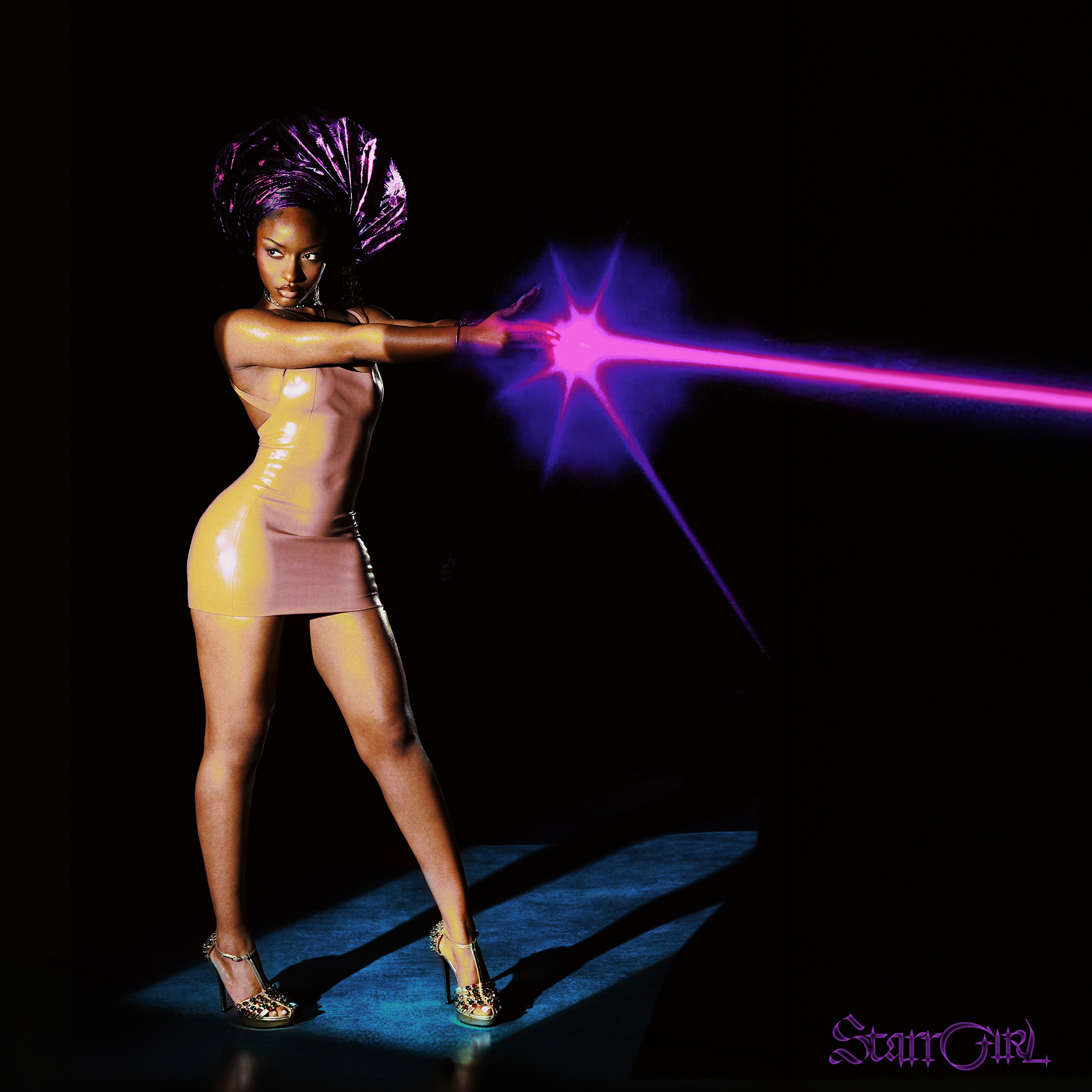
Welcome to the school of Ayra Starr. This is Year 3 , 16 courses , with a run time of 46 minutes. Co-lecturers include Dr Kwn, Prof. Wizkid, Dr Theodora, Dr Rema, Prof. Zayn, and Prof. Danny Ocean.
The Erudite Prof Starr explores a range of sounds that allows her to show off range, skill, storytelling and just share exceptional talent. From Afrobeats, to R&B, contemporary pop, dancehall, and finally house. Prof Starrexplores all of these to produce her most cohesive body of work yet. Welcome to Starr Girl 301!
Most of the writing still runs through Ayra herself, credited under her birth name Oyinkansola Sarah Aderibigbe, but the room around her has gotten a lot bigger: Ilya Salmanzadeh, Amanda Ibanez, Mason Tanner, Malika Hamza, Jerry Duplessis, and Wyclef Jean all show up somewhere in the credits. It’s a more international writers’ room than the one behind “19 & Dangerous” or “The Year I Turned 21,” and the polish that comes with it hasn’t cost her anything, her voice and her Nigerian identity still come through clearly.
STARRGIRL
STORYTELLING AND OVERALL MESSAGE
Set next to her debut “19 & Dangerous” (2021) and sophomore effort “The Year I Turned 21” (2024), “Starr Girl” plays like an artist finally growing into herself rather than performing growth for the cameras. It’s not flawless, but it’s genuinely hard to point to a real miss across sixteen tracks, and the production holds a consistency her earlier work sometimes lacked. Her voice sounds more settled too, moving between sultry restraint on the slow cuts and a brighter, more playful register on the pop moments without either one feeling like a costume.
That consistency isn’t just sonic. With a second Grammy nomination landing earlier this year, the title reads less like Starr crowning herself and more like a statement of something that’s been obvious since “Bloody Samaritan” broke her out in 2021. By her own account, the album is about “existing in multitudes,” and that idea is what keeps a project this scattered from falling apart. It shows up in language as much as sound she moves between English, Pidgin, and Yoruba, and lets some Spanish slip in on the “Hot Body” remix, so the cosmopolitanism is audible in how she says things, not just what she’s saying them over.
SEQUENCING
The album opens on “Dangerous,” a moody, mid-tempo statement of intent, before “Amazing,” featuring kwn, lifts the mood into brighter pop territory. “Gimme Dat” reintroduces her Grammy nominated Wizkid collaboration, and the run of “Pressure,” “Tornado,” and “Midnight in New York” settles into the album’s most emotionally textured stretch, blending Afrobeats percussion with R&B restraint. “Hot Body” and “Ms. Paper,” featuring Theodora, bring the tempo back up before “Dance” and “Where Do We Go” close the midsection with two of its most immediate pop moments. “Who’s Dat Girl,” featuring Rema, and “Misunderstood” pull the mood back inward, “Letter to God” is the record’s most reflective turn, and “Heaven Baby,” featuring Zayn, alongside “Treasure,” winds things down before the “Hot Body” remix featuring Danny Ocean closes on a victory lap. It reads less like a rigid three-act structure and more like a mood board tension, brightness, reflection, tension again which tracks with how Starr describes the album herself.
TRACK BY TRACK: WRITING AND PRODUCTION
“Dangerous” opens on a nod to Mobstarr, her fan community, a reference she reinforced when the album was previewed for fans at a Tape Lagos listening event in April 2026. Beyond that, the verses are pure declaration Starr staking her claim on her own business command and the speed of her success before anyone else gets a word in. Production stays clean behind the vocal, and it’s an efficient, confident way to open the record.
“Amazing,” with kwn, is lighter and more playful, closer to comedy than seduction, with kwn’s own verse playing coy about being pressed for time a palate cleanser after the weight of the opener.
“Gimme Dat” was never going to surprise anyone after its Grammy nomination and its status as Starr and Wizkid’s first reunion since the 2022 fan favourite “2 Sugar.” It samples Mary J. Blige and Wyclef Jean’s 2000 single “911,” which explains the sprawling writing credits Starr and Wizkid alongside Adekunle Oluwaseyi, Elvis Akujobi, Richard Imaekhai, Fred Daniels, Edafe Gabriel, Olusola Mayowa, Aniekeme Akpan, Jerry Duplessis, Katia Cadet, Mary Brown, and Wyclef Jean himself. Lyrically it leans on Pidgin, building its come on around “awoof” something got for free, unearned as Starr sets her own terms before any deal gets sealed. Vybe0 and Mikababeatz keep the production in a groove-first Afrobeats pocket, the interpolated hook giving it an early 2000s R&B backbone under the Afrobeats surface the clearest case on the album of Starr reaching outside her own lane for source material.
“Pressure” leans on background vocals from Leon Thomas, whose falsetto threads through the mix without pulling focus, landing closer to pure R&B than almost anything else here. “Tornado,” produced by Skillies, Shizzi, and RiotUSA, carries Latin tinged percussion and extra vocal texture from Fola and Donel Mangena, pushing briefly into dancehall Afrobeats crossover territory. Its boasts go further than most of the record’s, drawing an audacious comparison to Anini, the Nigerian outlaw who became a folk anti-hero in the 1980s a strange, memorable flex inside an otherwise straightforward one.
“Midnight in New York,” co-written by Starr with Andre, Kadu, and Donel Mangena, is produced by London, Starr, and Matt James, and mixed by Johnny Drille, her fellow Mavin signee. Where “Dangerous” is declarative, this one is loose and unattached, a no-strings encounter over wine with a stranger rather than anything built to last. It’s one of the album’s most atmospheric records, built for a late night mood rather than the dancefloor, and the only song where Starr’s own production credit sits next to her writing credit. Drille’s mixing also spans “Hot Body,” “Dance,” “Who’s Dat Girl,” “Heaven Baby,” and “Treasure,” giving “Starr Girl” a sonic throughline her last two albums didn’t quite have.
“Hot Body” keeps the tempo up in uptempo Afrobeats territory, though its title hook is arguably the weakest part; the verses do the heavier lifting, trading in luxury car imagery and the feeling of being watched from a distance. The Spanish language remix that closes the album, featuring Danny Ocean, keeps the same swagger but reframes it as a bilingual duet rather than a solo brag. “Ms. Paper,” with Theodora, is a smoother R&B-leaning duet Theodora folds French inflected wordplay into her verse alongside the English and it benefits from the two voices sitting close together. “Dance” is one of the record’s clearest statements of self-acceptance, its lyric built around being content with who she already is, its bounce edging toward the house influence running faintly through the album.
“Where Do We Go,” written by Starr with Ilya Salmanzadeh, Amanda Ibanez, Mason Tanner, and Malika Hamza, produced and arranged by Salmanzadeh, is an Afropop detour built on a pulsing bassline, playing out as a hesitant push-pull between two people told through a shared-commute metaphor rather than a direct confession. “Who’s Dat Girl,” featuring Rema and written with Nwamu Chukwudebem, Promise Ekpe, Divine Ikubor, and Nilusu Nisanka, is produced by Ragee and The Elements. Rema’s verse leans on pop culture wordplay fashion, cartoon villains, prison break plotlines while Starr’s own verse reaches for something heavier, invoking Ken Saro-Wiwa, the Nigerian writer and activist executed in 1995, an unusually weighty touch inside an otherwise flirtatious song.
The back half turns inward. “Misunderstood” is one of the most reflective solo cuts, told in the third person about a woman written off by everyone around her who refuses to shrink for it, a quieter turn from someone who’s spent five years being talked about as much as listened to. “Letter to God” follows in the same register, built around piano, bass, and a full-band crescendo, as Starr addresses a precarious but worthwhile love directly to God; it’s the closest the album comes to gospel-inflected balladry. “Heaven Baby,” with Zayn, strips the percussion out entirely for a classic piano led duet, Starr’s voice against Zayn’s falsetto on a song about instant attraction. It’s the album’s most obvious reach for a global pop audience, and while it doesn’t always sit as naturally as the Afrobeats-rooted tracks around it, it’s a reasonable bet for an artist actively building a Roc Nation-backed international profile.
“Treasure,” also mixed by Drille, closes the reflective run with a vocal delivery that echoes “Dangerous” back at itself, each syllable seeming to hold up the next rather than resolve cleanly, a small structural rhyme that bookends the album. From there, the “Hot Body” remix with Danny Ocean sends the record off with a Latin Afrobeats crossover that’s become increasingly common across the genre, a victory lap rather than a comedown, and a smart way to close a project that spends its second half getting quieter.
STANDOUT TRACKS
“Misunderstood,” “Dance,” “Pressure,” “Gimme Dat,” and “Hot Body” are the five songs that best justify the run time, each one making its case independent of its features or where it sits in the album’s arc.
“Starr Girl” isn’t a perfect album, but it’s Ayra Starr’s most assured one. The production is more unified than “19 & Dangerous” or “The Year I Turned 21,” the writers’ room is bigger without diluting her voice, and the sequencing gives the record real emotional movement instead of a flat run of singles. Where it loses points is ambition that sometimes settles for polish over risk; a handful of mid album tracks play it safer than the opening run promises. Still, two years and two Grammy nominations on, with a title that finally matches the moment, Ayra Starr has certified her accolades as a star.
Nigerian alternative R&B artist Ekene chooses to tell a story about himself across 7 tracks and in just over 20 minutes, he creates a deeply personal body of work that examines heartbreak, faith, family and identity with a level of honesty that feels both intimate and unsettling. Ekene focuses on the quiet moments that often leave the deepest scars: the relationship that lingers long after it should have ended, the faith you’ve inherited but no longer fully understand, and the younger version of yourself you wish you had listened to sooner.
Ekene for the first time, in “Little Us” serves as both an introduction and a statement of intent. The Lagos born singer has steadily built a reputation through his emotionally charged songwriting and alternative approach to Afrobeats and R&B. Ekene has always leaned toward vulnerability. His music often feels less like performance and more like reading pages torn from a diary. That quality remains central to “Little Us”, but here it is delivered with a greater sense of purpose and artistic maturity than ever before.
Little Us
The emotional core of the EP lies in its understanding that not all love stories are meant to survive. This isn’t a project about dramatic betrayals or explosive endings. Instead, it explores the quieter pain of realizing that something you love can no longer hold its shape. Throughout the record, Ekene repeatedly returns to the uncomfortable space between holding on and letting go. Whether he is addressing a romantic relationship, his relationship with faith, or even his younger self, the question remains the same: what happens when love exists, but the future doesn’t?
That bittersweet tension reaches its peak on “Relations,” the project’s emotional centerpiece featuring Braye. Rather than presenting heartbreak as a clear cut conflict, the song thrives on uncertainty. The lyrics
Every smile was a story that I couldn’t say
Every lie was a lazy decision I made, ohh
Now all I remember was moments that filtered down into nothing to me
“
Not a day in the wind in my fluttering sleep
And when we feel like we’re stuck in these waters
Trying to escape the madness of the mundane
And do you feel like we’re bodies or lovers?
Lying to ourselves that what we had is the same”
wrestle with questions many people have asked themselves in failing relationships. Are we staying because we still love each other, or simply because we’ve invested too much to walk away? There are no easy answers, and that ambiguity is what makes the track resonate. Ekene understands that some of life’s most painful moments aren’t defined by anger but by hesitation. The result is a song that feels painfully familiar, capturing the emotional exhaustion of trying to save something that may already be beyond repair.
What makes “Little Us” particularly compelling is its willingness to extend those themes beyond romance.
Lullaby
On “Lullaby,” one of the most vulnerable songs on the project, Ekene draws inspiration from the experience of witnessing a loved one’s struggle with Alzheimer’s disease. His plea feels raw and human, transforming personal grief into something universally recognizable. The lyrics
I blame it on caution I put it on Christ
How could I ignore them I saw the signs
You walk on all fours now, you’ve lost your sight
And I’m moving on forward your left behind
Can you make sense out of it?
How your here but your out of it
Do I seem so anonymous
Mum please snap out of it
Don’t be scared I’m your son
It should be so obvious
Not your fault on the count of this
I know your memories counterfeit.
It’s a reminder that loss doesn’t always arrive through death; sometimes it comes through watching someone slowly drift away while remaining physically present. The emotional weight of the song is heightened by its restraint, allowing the lyrics to carry the burden rather than overwhelming the listener with excessive production.
Epiphany” and “4 Square Ft
Faith also occupies a significant place throughout the EP. Songs like “Epiphany” and “4 Square Ft.” explore the complicated relationship many young people have with religion, particularly those raised in deeply religious environments. Rather than rejecting faith outright, Ekene approaches it with curiosity and doubt, questioning whether the beliefs he holds are genuinely his own or simply inherited from those around him. The use of gospel inspired melodies and church imagery adds another layer to these reflections, creating a fascinating tension between reverence and uncertainty. These songs do not offer definitive conclusions, but they succeed in capturing the confusion that often accompanies personal growth.
On Production
Sonically, “Little Us” continues to position Ekene outside the mainstream center of contemporary Afrobeats. While elements of Afrobeats remain present, the project is more closely aligned with alternative R&B pop and singer songwriter traditions. The production often favors atmosphere over momentum, creating space for reflection rather than movement. The arrangements remain understated, allowing emotions to unfold naturally. This minimalist approach won’t appeal to people searching for instant gratification, but it serves the project’s themes remarkably well. Every instrumental choice feels designed to support the storytelling rather than distract from it.
Pen On Little Us
The EP’s greatest strength, however, lies in its songwriting. Ekene has repeatedly described songwriting as a form of diary keeping, and nowhere is that philosophy more evident than on “Little Us”. His lyrics are specific enough to feel authentic yet open enough for people to project their own experiences onto them. Whether reflecting on lost relationships, personal ambition or spiritual uncertainty, he avoids over-explaining his emotions. Instead, he trusts that you will fill in the spaces between his words. That trust creates a sense of intimacy rarely found in contemporary pop music.
For those familiar with Ekene’s earlier releases, “Little Us” also represents a significant step forward in his artistic evolution. The vulnerability that first drew attention to songs like “Lullaby” remains intact, but it is now paired with greater confidence and cohesion. Earlier work often felt like isolated snapshots of specific emotions. Here, those emotions are woven into a complete narrative. Likewise, “Red Benz” demonstrated his ability to build entire worlds from ordinary moments, turning a simple image into a powerful symbol of longing and possibility. ‘“Little Us” expands on that strength, showing an artist increasingly comfortable with allowing themes and ideas to develop across an entire project rather than relying on individual songs to carry the weight.
Perhaps the most impressive achievement of “Little Us” is its refusal to rush toward resolution. In an era where many artists package emotional struggles into neat lessons or triumphant conclusions, Ekene chooses uncertainty. He understands that growth is rarely linear and that healing often begins with acknowledging uncomfortable truths rather than overcoming them.
My Verdict
The EP doesn’t promise closure because life rarely does. Instead, it invites people to sit with their doubts, regrets and unanswered questions.
By the time the project reaches its conclusion, “Little Us” feels less like a collection of songs and more like a letter addressed to multiple versions of the same person; the child who dreamed without limits, the young adult struggling to find direction, and the artist learning to trust his own voice. It is an exploration of relationships that couldn’t survive, beliefs that no longer fit and ambitions that refuse to disappear.
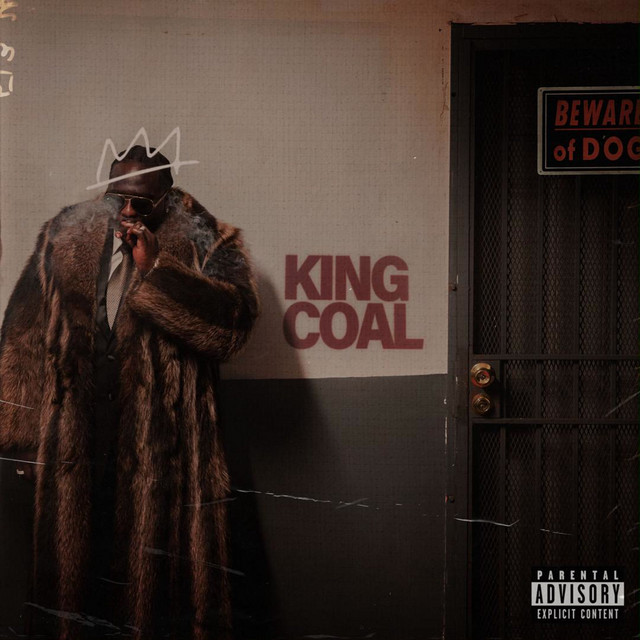
Seventeen years after “Mushin 2 Mo’ Hits” rewired the sound of Nigerian pop, Wande Coal has returned with “King Coal,” a 15-track statement released in June 2026, that plays less like a comeback and more like a coronation. Where his last outing, 2023 “Legend or No Legend,” was preoccupied with proving his relevance, “King Coal” finds him settled as an artist no longer asking for his flowers but simply wearing the crown he’s earned.
King Coal’s Outstanding
The album’s central achievement is tonal. Across its 42-minute runtime, the 15-track project moves between R&B, dancehall, and fuji-inflected sounds without ever feeling scattered. That is a meaningful pivot from the anxious duality that defined “Legend or No Legend.” Wande Coal retools that album’s narrational push and pull here, sounding as though he’s finally settled into his status as one of the genre’s most important figures. It is the difference between an artist arguing his case and one simply presenting his résumé a résumé that includes “Bumper to Bumper” (2008), the breakout single that first announced him as a solo force; “Ololufe” (2009), still regarded as one of the greatest Nigerian love songs ever written; “You Bad,” a Mo’ Hits-era favourite featuring D’Banj; “Baby Hello” (2015), produced by Maleek Berry; “Iskaba” (2018), the street anthem that earned him Best African Contemporary Artist that year; and “Come My Way” (2021), the Amapiano leaning single that soundtracked that year’s “detty December.” That confidence carries through lyrically as well. On “Regard,” featuring Projexx, he is assertive about being given his due wherever he goes, a theme he revisits on the grass-to-grace anthem “Balenciaga.” Elsewhere, the record loosens up. The humorous, drill-adjacent “DEM GO PAY” acts as a reminder of his industry reach, proving his sonic palette remains adaptive and modern rather than nostalgic for its own sake.
One of the most telling collaborations on the album is his reunion with Tiwa Savage on “Must Be Love.” Their chemistry didn’t start here it was set up earlier in the year with “Energy,” a single released in May 2026 that paired Tiwa Savage and Wande Coal with rising Gen Z artist Mavo, a record built around themes of ambition and self belief that bridged three distinct generations of Nigerian music. That single marked the first time the two veterans had shared a record together, and notably used the moment to introduce Mavo to a wider audience alongside two established giants of the industry. Carrying that same energy into “Must Be Love” on “King Coal” shows a veteran still willing to build new bridges rather than simply lean on old ones, proof that even at this stage of his career, Wande Coal continues to grow and continues to make room for the next generation.
His collaboration with Wizkid tells a longer story. The two artists go back to the Mo’ Hits era, when both were coming up under the same stable that shaped modern Afrobeats. After years of fans asking for another pairing, they reunited on “Ebelebe” in 2023, the fourth single from “Legend or No Legend,” and picked the chemistry back up as though no time had passed. “King Coal” continues that lineage with “Oshe,” the album’s closing track, for which Wande Coal traveled to Ghana specifically to record Wizkid’s verse.
Money come mo gbe mi o (hm)
Vibes just dey body, oh (body, oh)
Nothing like k’ó ma jó o?
I like money, ṣá gbé wá bé o
Pulling up, andale, oh (andale, oh)
Move like Poco Lee, oh
Big body, codedly, oh
Nobody fit do am like me, oh
Lyrically, the song sits squarely in gratitude and good- life territory a celebration of success and appreciating life’s blessings and it plays as the natural next chapter in a partnership that has moved from their earliest days together, through “Ebelebe,” to this moment, an ever growing collaboration rather than a one off reunion.
“Gbesunmo,” featuring Ruger and BNXN, is one of the album’s most kinetic moments.
See the girls dem architecture
The way she fine, I want to collect her lecture
No follow them talk, make you follow the director
We giving them the premium, no be sector
Everywhere we enter, na premium package
The way she roll her waist, she fit cause damage
But I don’t care, I go pay the leverage
Pass me the juice and pass me the beverage
Comment allez-vous?
En Français aujourd’hui, what are you doing?
The vibe is moving and the people are grooving
No trace, nobody fit find what we proving.
It trades the record’s more reflective, R&B leaning passages for a harder, club ready energy, with Ruger’s raspy delivery and BNXN’s melodic street pop instincts playing off Wande Coal’s falsetto rather than competing with it. Thematically it leans into flexing and self-assurance money, status, and enjoying the wins in keeping with the album’s broader “settled king” posture, and its tempo and bounce make it one of the more immediately replayable cuts on the tracklist.
“Must Be Love,” featuring Tiwa Savage, sits at the more romantic end of the record. It’s built around a smooth, mid-tempo R&B groove that gives both vocalists room to trade tender, affectionate lines about devotion and being sure of a partner, with Tiwa Savage’s runs weaving around Wande Coal’s falsetto rather than overpowering it. It carries the same warmth that made “Energy” their earlier single with Mavo land as an uplifting, generational bridge, but here the focus narrows from communal energy to something more intimate and one-on-one.
Production
Production is where the album’s confidence really lives. Rather than chasing one trending sound, “King Coal” moves comfortably between Afrobeats, R&B, dancehall, amapiano, and fuji-inflected instrumentation without any single style overwhelming the others. The mix stays clean and mid-tempo heavy throughout, giving Coal’s falsetto and ad-libs room to sit up front instead of getting buried under busy arrangements. It’s a deliberately vocal-forward record: drums and percussion groove rather than dominate, basslines stay warm and rounded instead of aggressive, and the more upbeat cuts like “Gbesunmo” lean into punchier, club-ready low end while the romantic tracks like “Must Be Love” and “Dearly” strip things back to airy, mid-tempo grooves that leave space for melody. That same lightness carried over from “Energy,” his pre-album single with Tiwa Savage and Mavo, produced by Krisbeatz, a bright, contemporary Afro-pop sound that “King Coal” largely keeps up throughout its 15 tracks. The result is a project that sounds current without ever feeling like it’s imitating anyone younger, polished enough for playlists, but built specifically around what Wande Coal’s voice does best.
The Features
Beyond the marquee names, the deep cuts carry real weight. Dera brings a standout contribution on the street-pop anthem “Money,” while Fido adds a playful touch on “Sure for Me” both moments that let the album breathe outside its A-list gravity and hint at Coal’s ear for where the genre is headed next.
Comparison
Measured against his discography “Mushin 2 Mo’ Hits” (2009), “Wanted” (2015), the “Realms” EP (2020), and “Legend or No Legend” (2023) “King Coal” reads as a synthesis rather than a reinvention. It does not chase a new sound the way “Wanted” leaned into slicker pop production, nor does it carry the defensive edge of “Legend or No Legend.” Instead, it pulls from all three genre pillars that have defined his career: R & B, dancehall, and fuji and lets them coexist without friction. The result is a project that highlights Wande Coal’s artistic growth while reinforcing his status as a figure whose influence continues to shape the direction of African music. Critically, the record has landed well. Apple Music frames it as the apotheosis of Coal’s brilliance and method, and outlets covering the dancehall and reggae space have taken note too. DancehallMag described it as arriving not as a comeback or reinvention, but as something rarer a veteran who sounds completely settled in who he is.
Verdict
“King Coal” is not trying to reinvent Wande Coal, it is trying to remind listeners why he never needed to. The falsetto that carried “Bumper to Bumper” and “Iskaba” is still intact, but it is now wrapped around songs that feel unhurried, generous with the spotlight, and confident enough to let Wizkid, Tiwa Savage, Qing Madi, Ruger, and BNXN share the frame without ever losing the thread of whose album this is. It is not a flawless record ; at 15 tracks, a couple of mid-album cuts feel like connective tissue rather than destinations but as a victory lap for one of Afrobeats’ foundational architects, it more than earns its title. A veteran statement that trades urgency for mastery, and mostly wins because of it.
On a sunny afternoon in Lagos, we spent just over an hour together on Google Meet talking about music, faith, purpose and the unlikely idea that would eventually become Gospel House. Going into the conversation, I was curious to understand how a young creative man had managed to build a movement that places Christian worship alongside Afro House music without losing its spiritual identity.
Tobi Peter, a Nigerian DJ, producer, animator and creative entrepreneur, isn’t trying to redefine Christianity. Instead, he’s exploring how faith can meet people where they already are. Through Gospel House, he has created a space where House music and worship coexist, challenging long-held assumptions about where people can encounter God.
“I didn’t want to choose between my love for God and my love for electronic music,“he tells LSTV.“For a long time, it felt like those two worlds weren’t supposed to meet.”
Long before Gospel House existed, Tobi’s love for music was already taking shape.
“Back in primary school, I didn’t even know what FL Studio was,” he recalls with a laugh. “I’d arrange Blue Band plastic containers like drums, record loops on my phone and experiment with different sounds.”
From Bedroom Beats To A Bigger Vision
By Line
Those childhood experiments slowly became an obsession. He spent years teaching himself music production, making mistakes, improving and learning through persistence.
“I made terrible beats at first,” he admits. “But every project taught me something. I just kept going.”
His dedication eventually opened doors into DJing, production and live performance. Yet even as his career developed, he constantly wrestled with one question: could his love for electronic music coexist with his Christian faith?
Instead of abandoning one for the other, he chose to build something entirely new.
The Birth of Gospel House
By Line
Contrary to what many people assume, Gospel House wasn’t created because Tobi felt the church was lacking. Instead, he saw an opportunity to create another space where young Christians could express both their faith and their creativity.
“There were young Christians who loved music, creativity and community but didn’t always feel like there was a space where those things could exist alongside their faith,”he says.
He added, “I wasn’t trying to replace the church. Church is church. I simply wanted to create another environment where people could genuinely encounter God.”
Today, Gospel House gatherings blend Afro House, electronic music and gospel records into live DJ sets where people dance, sing, pray and worship together.
“People think worship has to happen inside the four walls of a church, but if people are sincerely connecting with God, that’s worship.”
The audience reflects that openness.
“We’ve had Christians, Muslims, creatives and people who don’t identify with any religion come to Gospel House. The same people you see at clubs, parties and festivals are the same people you’ll find at Gospel House. Everyone is welcome.
Although the first edition gave him hope, Tobi says it was the second edition that made him realise Gospel House had become something much bigger than him.
That was when it really clicked for me,” he says. “I started seeing people from completely different industries showing up, people from the tech space, influencers, creatives and people I never expected to see there.There were no celebrity endorsements or expensive marketing campaigns driving attendance. People simply kept showing up. I realised people weren’t just coming because they liked the music. They believed in what we were building.”
That moment convinced him Gospel House could become more than an event; it could become a movement. As Gospel House has grown, so have the misconceptions surrounding it.
Ironically, Tobi says many of those assumptions come from prospective partners and venue owners before they even experience the event.
“People hear the name Gospel House and immediately think we’re trying to organise an all-night rave or a ten-hour event,” he says.
The reality is far simpler.
“Originally, the whole idea was just to record a one-hour YouTube set.”
Even now, every event is intentionally planned with balance in mind.
“Most of our events happen on Sundays because I know people have work on Monday. I’m not trying to keep people out all night.”
Perhaps the biggest misconception, however, is financial.
“People think we’re making a lot of money from this, I’ve always said I’m not here for the money.”
Producing Gospel House often costs hundreds of thousands and sometimes more than a million naira yet many editions remain free because impact has always mattered more than profit.
One of the biggest questions surrounding Gospel House is how Tobi balances his Christian convictions while performing in mainstream entertainment spaces.
His answer is simple.
“If we’re called to be light, we can’t only stay where it’s comfortable. Sometimes you have to go into spaces where people least expect to encounter God.”
That mindset has seen him perform everywhere from Monochroma, Obi House, Access Showcase Festival and Element House to venues including Club Quilox, Sky Bar, Black Orchid, Cage Abuja, Mainland Block Party, Sunday Service, Vaniti Lagos and Gidi Culture Festival.
Tobi Peter – DJ
Rather than viewing those spaces as conflicting with his faith, he sees them as opportunities to represent it.
“I’m trying to be more careful now,” he admits. “Since Gospel House started growing, people don’t just see me as a DJ anymore. They see someone representing a movement and a brand. Even though I’m not doing anything crazy, I know people are watching.”
He’s equally transparent about his personal walk with God.
“On a personal level, I’ve struggled with consistently going to church and maintaining my prayer life, but whenever I’m preparing for a Gospel House set, I’m locked in with God. I spend time praying because I don’t want it to just be about music. I want people to experience His presence genuinely.”
His Lagos Gospel House sets are carefully curated around gospel records layered with Afro House and electronic sounds inspired by artists such as AN Endless Ocean and Maverick City, allowing him to preserve the atmosphere of worship while maintaining the energy expected from a live DJ experience.
“I’m still growing just like everyone else,”he says.
“But I never want the music to become bigger than the message.”
Because Gospel House occupies a space few people have explored before, criticism has become part of the journey.
“My heart has always been ministry first,”he says.“I’m not interested in creating hype for the sake of it.”
He understands why some Christians question the concept but believes many criticisms come from misunderstanding the mission rather than experiencing it firsthand.
“People see where I perform or who I work with and immediately make conclusions,I’m just trying to follow God while doing what He’s called me to do.”
The 360 Music Connoisseur
DJ, Producer and Creative Director
By Line
Gospel House has become his most recognised project, but Tobi has quietly built an impressive catalogue as a producer and DJ.
Projects like Summer Wavs Vol. 2 (Remixes) and Saved , featuring Emly, showcase different stages of his musical journey.
When asked which project deserves more recognition, he answers without hesitation.
“All Day.”
“It has over 34,000 streams on Spotify, but I still feel like many people haven’t really discovered it.”
He also points to a professionally recorded live set from Kenya that has attracted around 22,000 views despite receiving little promotion.
“Sometimes great music takes time to find its audience. I’m okay with that because I believe the right people will eventually hear it.”
For him, numbers have never defined success.
Separating The Fame
By Line
“I just want people to experience something genuine. If my music gives someone hope or brings them closer to God, then that’s success for me.” As Gospel House continues to grow, so does Tobi’s visibility.
Has that changed his priorities or relationship with God?
“Not really,” he says after a brief pause. “It’s good that we’re getting visibility because it means more people are hearing about Gospel House.”
What has changed, however, is the pressure.
“Success comes with pressure and responsibility. Once people know you, there are expectations you have to meet. You have to be intentional because people are watching.”
Rather than allowing that pressure to distract him, he sees it as a reminder to remain grounded.
“It keeps reminding me why I started this in the first place.”
One milestone Tobi speaks about with particular excitement is Gospel House’s sixth edition in Nairobi, Kenya, organised in partnership with Lumennecho.
The event featured full DJ sets and live mixes alongside Kenyan artists including IamJoelz, DJ GG, Arap Rono, Lily White and Arnold, marking Gospel House’s first major international expansion.
“That showed me this vision could travel,”he says.
Gospel House Kenya
His ambition now is to establish Gospel House as a globally recognised platform with editions across London, Johannesburg, the United States, Spain, France and other major cities.
He’s equally open to collaborating with both gospel and mainstream artists.
“Good music can carry a powerful message,” he says. “Those things don’t have to be separated.”
Among the artists and producers he’d love to work with are An Endless Ocean, Tems, Fireboy, Drake, Rema, Fireboy DML, Sarz, David Guetta, Black Coffee, Justin Bieber, P.Prime, Shimza, Kabza De Small, Major League DJz, Black Dave, Naija House Mafia and Proton.
Rather than seeing similar Gospel House initiatives as competition, he welcomes them.
“The goal isn’t ownership,” he says. “If more people create spaces where others can encounter God, that’s something to celebrate.”
Looking Ahead
“I’ll always defend this community because I know the heart behind it,”he says, “ I’ve seen people’s lives change. I’ve seen people worship, pray and reconnect with God in these spaces. So when people judge it without understanding it, I’ll always stand up for what we’re building“
By Line
He’s also passionate about the future of Afro House in Nigeria, believing DJs like Black Dave, Smeez & D3an and Naija House Mafia are helping push the genre into the mainstream.
“The more people champion Afro House, the bigger the culture becomes.”
As our conversation comes to an end, one thing becomes increasingly clear. Gospel House isn’t simply about music. It’s about challenging assumptions, building community and creating spaces where faith can be experienced differently.
“I’ll always defend this community because I know the heart behind it,”he says“ I’ve seen people’s lives change. I’ve seen people worship, pray and reconnect with God in these spaces. So when people judge it without understanding it, I’ll always stand up for what we’re building”
Whether Gospel House becomes a global movement or remains a niche community, Tobi Peter has already started a conversation that few imagined possible one where worship finds a home on the dance floor without losing sight of its purpose.
On the day Omah Lay dropped his sophomore album Clarity of Mind, a long-anticipated body of work, he also introduced the world to his new label signee, ELMAH. She was the only featured artist on the project, appearing on a track titled “Coping Mechanism.” I had heard ELMAH before, from the TikTok-trending “New Boy in Town,” but I wasn’t really paying attention to the artist herself, rather to the trend. When “Coping Mechanism” dropped, people fell in love with her voice. The vulnerability in the lyrics, the storytelling, the expressive vocals. Then they started paying closer attention to ELMAH.
I decided to dig into her discography, and what I found convinced me that she might just be one of Afrobeats’ biggest talents of the coming decade. ELMAH possesses what I call the lethal triad of a musical artist.
The first is her sound. During an interview, Omah Lay said that the sound ELMAH possesses does not currently exist in Afrobeats, and that is true. Her sound feels original, soulful, and deeply authentic. The second is her storytelling. I can say with confidence that I remember the story of every single one of her songs: the boy who came to her village and swept her off her feet in “New Boy in Town,” the lover who expects too much while giving too little in “Criminal (Adedijo),” and the promise to do better in “Promise I’m Better.” Her storytelling is relatable and layered in a way that sticks with you. The third is her range. We do not know the full extent of it yet, since she has not released an album, but even across the handful of songs available, from the up-tempo energy of “Criminal” to the soulful melodies of “Coping Mechanism,” it is clear she can move comfortably across different moods and dimensions of the genre.
Her Discography
New Boy in Town (2023): Her breakout moment came with “New Boy in Town,” which went viral on TikTok and introduced a wider audience to her world. The song tells the story of a boy who arrives in a village and catches her eye, and she prays that she does not fall for his charm. The sound immediately set her apart. Some people have drawn comparisons to Billie Eilish, and while that comparison is not without reason, ELMAH feels like something distinct: a voice that belongs specifically to Afrobeats but with a clarity and emotional directness that is uncommon in the genre.
Can You See Me (2024) :A brief two-minute Afrobeats collaboration with producer Oxygenmix. More of a transitional piece than a statement record. The title hints at her recurring theme of wanting to be truly seen, but the short runtime does not give the idea enough room to breathe.
I Promise I’m Better (2024) : A maturity step. Where her debut was about resisting someone, this one turns inward and takes accountability. She is not pointing fingers here, she is making a promise, and the vulnerability in that is what makes it land.
Criminal (Adedijo) (2025) : Her rawest record. She describes it herself as a story of heartbreak, silence, and emotional escape for anyone who has ever begged to be seen. She should not have to beg for someone’s time. She knows it is over. She finds peace in the noise. A deeply personal song that did not make an album but was too real to stay unreleased.
Coping Mechanism ft. Omah Lay (2026) : The biggest stage she has been on. She opens the track asking her person to smile, sensing the weight they are carrying. Critics called her vocals angelic on this one, and her presence is what makes it the most emotionally intimate moment on the entire Clarity of Mind album.
ELMAH is quite private online; she has very little information about her present on the internet, not even her name. But I’ll do my job as a curator to inform the reader.
She has been growing under Omah Lay’s mentorship and working on establishing herself as a fully formed artist. Is she another broken-heart artist in his mold? I do not think so, and honestly, I do not want her to be. ELMAH is too singular for that lane. With time and consistency, I believe she has the depth to reach Billie Eilish levels of global recognition, not as an imitation but on her own terms. I genuinely cannot wait for her first album, or even just a new song.
…… I should have added the link to the interview would do that.
pgLang does not announce things. It presents them. A clear example of this is shown on June 2, 2026, when Kendrick Lamar and Dave Free‘s creative company and label posted a signing and a debut album on the same day: no singles, no teaser campaign, no rollout architecture to soften the landing: just a name, a cover, and eleven tracks. The name was Imani Imani, born Imani Ram, formerly Imani Selina, and the decision to say her name twice feels less like a rebrand and more like an affirmation. The album was Papercut. And if you were paying attention, you already knew her, even if you did not know her name.
She was the voice on an unreleased Kendrick Lamar track that soundtracked Chanel’s Spring-Summer 2024 Haute Couture show in Paris . Her record Snatchopened that same runway. She had been inside the most intentional creative ecosystem in contemporary music since at least 2024, developing without pressure, building without announcement. The grey album cover, Imani looking away from the camera, her name in small black font to the right, unassuming and certain at the same time, is the visual equivalent of how the whole thing arrived. Not demanding your attention. Assuming it.
What pgLang has built with its artists is worth naming before the music, because it is the context the music lives inside. Baby Keem released The Melodic Blue in 2021 to critical acclaim and then went silent for five years before Ca$ino arrived in 2026. Tanna Leone dropped Sleepy Soldier in 2022 and has moved with that same unhurried deliberateness since. The pattern is not coincidence. It is philosophy. You do not rush an artist toward commercial readiness. You wait until the work is actually ready. And when it arrives, it arrives whole. A philosophy that seems to have found its home at pgLang
Papercut
Produced entirely by Daan Zinkhaan, a Dutch producer whose credits before this were deliberately understated, the album builds a sonic world that feels complete without being cluttered. Zinkhaan composed the Adidas Originals World Cup campaign, scored independent film projects, and produced Snatch for Chanel. But Papercut is his most sustained statement, and the decision to trust an artist of this profile entirely to one producer who has not dominated the mainstream is almost certainly deliberate. He co-wrote, engineered, mixed, and structured the entire thing alongside her, working closely with mixing engineer Oli Jacobs and bridging collaborators like James Fauntleroy and Sam Dew on the writing side. The result sounds like an album made between people who trusted each other completely, which is rarer than it should be on a debut.
Sonically, Zinkhaan structures the album around alternative R&B without letting it settle too comfortably into any one mode. Bet On Me opens on a knocking sound and 808s before Imani’s voice arrives, warm and unhurried, betting on a stranger she does not know yet with a confidence that feels like a personality trait rather than a lyrical device. Come Together pushes the desire forward with layered vocals and a complex, vibrant production that builds as it moves. Snatch pulls back into atmospheric territory, almost an interlude in feel but with real weight in the writing, fully independent one moment, needing to be called the next, the tension between freedom and wanting held inside a single song without resolution. Mindgames and Slideee carry sleek electronic textures that give those tracks a futuristic, bedroom-pop intimacy while You’re Mine leans into a cleaner, classic R&B sound, precise mixing and a vocal performance that makes the control in the lyrics feel lived in rather than performed.
On Demand is the album’s most culturally loaded moment. Zinkhaan builds the production around a melodic interpolation of The Notorious B.I.G.’s One More Chance remix, and Imani sings the hook directly into it, “baby give me one more chance,” but the emotional context has been completely flipped. Biggie’s original is seduction. Imani’s version is surrender. She has gone from the woman placing the bet on Bet On Me to the woman begging to be taken back, and the interpolation makes that collapse feel intentional rather than incidental. 1 of 1 continues that descent, asking what she would do to please him, to keep him, and the woman who opened the album not even knowing his name is now defining herself entirely through his presence.
That arc is the real architecture of Papercut. Control giving way to need. Confidence softening into vulnerability without ever fully abandoning its shape. Chasing finds her packing bags she does not travel with, alone too long, admitting she does not know why she keeps chasing this. Frank closer My Mistakes strips everything back to voice-memo intimacy, less than two minutes, just enough to close the door quietly rather than slam it.
Imani Imani went from zero monthly listeners on Spotify the day this dropped to 143,600 inside two weeks, with On Demand alone crossing 155,000 streams. Not that the numbers are the story. But they confirm what a close listen already tells you. Something about this voice is making people stay.
pgLang has been a home for rappers. Kendrick, Baby Keem, Tanna Leone. Imani Imani is the first singer on the roster and the first woman, and the way she has been developed and introduced suggests the label understood exactly what they had. No rush. No compromise. Just the work, released when it was ready, into a world that did not see it coming.
Papercut is not a flawless debut. At 33 minutes it occasionally feels like it ends before it fully opens. But that is the complaint of someone who wanted more. And wanting more, after a first album that arrived out of nowhere with this much quiet assurance, is exactly the right problem to have.
Drake has spent most of his career controlling the rhythm of modern rap culture. From chart dominance to internet influence, the Toronto superstar built a reputation around consistency, emotional transparency, and commercial precision. But the period leading into the release of ICEMAN, HABIBTI, and MAID OF HONOUR represented the most turbulent chapter of his career. The aftermath of his public feud with Kendrick Lamar fundamentally shifted the way the culture viewed him. Kendrick’s diss records became internet moments that expanded far beyond hip-hop, turning into social media debates, memes, think pieces, and conversations about Drake’s legacy. For the first time in nearly fifteen years, Drake looked vulnerable in public.
The battle reached its peak when Kendrick Lamar’s records questioned Drake’s authenticity, relationships, and position within the culture. Drake attempted to respond through songs and online narratives, but the momentum continued leaning toward Kendrick. Every move Drake made afterward felt heavily scrutinized. Critics argued that he sounded creatively exhausted on recent projects and was too dependent on formulas that once guaranteed success. At the same time, conversations surrounding Drake’s business relationship with Universal Music Group and his long-running partnership structure began surfacing online. Reports suggested Drake wanted more ownership freedom and greater control over how quickly he could release music. Throughout his career, Drake carefully spaced out projects for commercial impact, but this triple album release felt different. It felt less calculated and more emotional, almost like an artist trying to regain control of his own narrative in real time.
That tension becomes the foundation of ICEMAN. The album opens like a war diary. Drake immediately addresses the public humiliation he endured during the Kendrick Lamar feud. On “Make Them Cry,” Drake raps about betrayal and isolation, describing how people who once celebrated his dominance suddenly became silent once public opinion shifted against him. The song’s central theme revolves around survival and revenge. On “Dust,” he references people attempting to erase his accomplishments, essentially arguing that one battle cannot erase two decades of cultural dominance.
The most direct responses appear on “Burning Bridges” and “Plot Twist.” Drake uses these records to revisit the fallout from the diss war. On “Burning Bridges,” he references friends who distanced themselves during the controversy. The lyrics imply frustration toward artists who benefited from his support but refused to publicly defend him once the culture turned against him. Several bars appear directed toward J. Cole after Cole decides to step away from the conflict earlier in the year. Drake frames the situation as abandonment rather than neutrality.
On “Plot Twist,” Drake becomes more aggressive. He attacks the narrative that Kendrick permanently damaged his career. One standout line references people praying for his downfall, but still depending on his success to keep conversations alive in the industry. Throughout the record, Drake paints himself as a villain created by public obsession. Instead of apologizing or softening his tone, he embraces the arrogance critics accused him of having for years.
“Firm Friends” becomes one of the album’s most layered songs. Drake addresses loyalty within hip-hop and entertainment circles. The lyrics carry indirect references to figures like JAY-Z, LeBron James, and other celebrities whose silence during the feud became a talking point online. Drake never fully names everyone directly, but the implication is obvious: he felt abandoned by people he once viewed as allies. The emotional weight of the song comes from how exhausted he sounds rather than how angry he sounds.
“Janice STFU” is perhaps the coldest record on the project. Drake targets internet commentators, gossip culture, and people constantly analyzing his personal life. The record sounds intentionally hostile, with sharp flows layered over distorted production. Meanwhile, “Whisper My Name” reflects on paranoia, fame fatigue, and the psychological pressure of remaining culturally relevant for over a decade. The album repeatedly returns to the idea that Drake no longer trusts the people around him.
Production-wise, ICEMAN is built around cold atmospheric rap production. The sound palette is dark and stripped back. Heavy basslines, eerie piano loops, distorted synths, and slow-burning trap drums dominate the album. The production intentionally leaves large empty spaces within songs, allowing Drake’s voice and lyrics to feel more isolated. Vocals are layered with subtle reverb and delay effects that create an almost claustrophobic atmosphere. The album sounds emotionally frozen, which perfectly fits the ICEMAN title.
If ICEMAN represents anger, HABIBTI represents emotional collapse. The album immediately shifts into a softer, reflective space. Drake abandons direct confrontation and focuses instead on exhaustion, loneliness, and emotional detachment. The title itself reflects the project’s obsession with affection, intimacy, and emotional confusion.
“Rusty Intro” opens with Drake acknowledging how public pressure changed the way he views relationships and friendships. He raps about no longer knowing whether people genuinely care about him or simply benefit from proximity to fame. “Classic” explores the emotional aftermath of betrayal. The lyrics describe women leaving once vulnerability appears and friends disappearing once controversy arrives.
On “High Fives,” Drake revisits the idea of performative loyalty. He criticizes people who celebrate him publicly while privately contributing to negative narratives around his name. The song subtly revisits the Kendrick situation without directly naming him. Instead of sounding combative, Drake sounds emotionally exhausted.
“I’m Spent” becomes one of the trilogy’s most revealing songs. Drake openly discusses burnout, emotional emptiness, and the pressure of constantly maintaining success. The lyrics focus heavily on isolation despite fame. He describes moving through luxury environments while mentally disconnected from everyone around him.
“Fortworth,” featuring PARTYNEXTDOOR, returns Drake to familiar territory, toxic romance and emotional confusion. The chemistry between both artists gives the record a nostalgic atmosphere reminiscent of older OVO collaborations. Meanwhile, “Camel Lights” and “Late Checkout” continue the album’s themes of emotional distance, failed intimacy, and self-destruction.
Musically, HABIBTI leans heavily into atmospheric R&B, trap-soul, ambient pop, and Middle Eastern-inspired instrumentation. The production uses softer percussion, airy synth textures, vocal harmonies, and slower tempos. Several records incorporate subtle Arabic melodic structures and global rhythmic influences. Unlike the aggression of ICEMAN, this album prioritizes mood and emotional immersion. Drake sounds less interested in winning arguments and more interested in documenting emotional damage.
The production process also feels intentionally luxurious. Songs transition smoothly into one another, creating the feeling of late-night reflections rather than isolated singles. The album relies heavily on layered harmonies, ambient textures, and melodic repetition. Vocally, Drake spends much of the album half rapping and half singing, allowing emotion to carry more weight than technical performance.
Then comes MAID OF HONOUR, the trilogy’s most energetic and stylistically chaotic project. After two emotionally heavy albums, Drake pivots toward movement, escapism, and global sounds. But beneath the vibrant production lies another response to public criticism. Drake sounds determined to remind the industry that he still understands how to dominate culturally.
“Road Trips” opens the album with high-energy percussion and dance-driven production. Drake raps about moving through different countries while remaining emotionally detached from stability. “Outside Tweaking” directly references social media narratives surrounding his career. He mocks critics who predicted his downfall while emphasizing his ability to remain commercially dominant.
“Amazing Shape” blends melodic rap with dancehall-inspired rhythms. Drake uses the record to celebrate survival after one of the most difficult public moments of his career. Meanwhile, “Which One,” featuring Central Cee, becomes one of the album’s strongest rap collaborations. Drake addresses accusations that he constantly adapts to trends by arguing that global influence naturally comes with artistic evolution.
“Cheetah Print” featuring Sexyy Red represents Drake embracing chaos and internet culture. The song intentionally sounds unserious, loud, and viral-ready. But even within its playful energy, Drake continues referencing public criticism surrounding his image.
The production on MAID OF HONOUR is intentionally maximalist. Afrobeat percussion, Jersey club drums, UK rap influences, Caribbean bounce, electronic pop synths, and dancehall rhythms all collide throughout the project. The album feels heavily inspired by international nightlife and global festival culture. Compared to the colder minimalism of ICEMAN and the emotional atmosphere of HABIBTI, this album feels extroverted and explosive.
The sequencing of the trilogy reveals Drake’s larger artistic intention. These are not simply three random albums released together. They represent different emotional reactions to public pressure. ICEMAN is confrontation. HABIBTI is emotional reflection. MAID OF HONOUR is escapism and survival.
What ultimately makes this trilogy important within Drake’s catalogue is the urgency behind it. Many of Drake’s recent projects sounded comfortable. These albums do not. Across all three projects, Drake sounds challenged, paranoid, competitive, emotionally unstable, and desperate to regain control of the narrative surrounding his career. That tension gives the trilogy emotional weight.
Compared to projects like Certified Lover Boy, Honestly, Nevermind, and even sections of For All The Dogs, this trilogy carries greater emotional intensity and sharper focus. Drake sounds fully aware that public perception shifted against him after the Kendrick Lamar feud. Instead of pretending the moment never happened, he builds three entire albums around the aftermath.
The trilogy also reinforces Drake’s greatest strength as an artist’s adaptation. Few artists in modern music can move between aggressive rap records, atmospheric R&B, global dance records, introspective confessionals, and commercial club music as naturally as Drake does across these projects. While not every experiment lands perfectly, the ambition itself becomes impressive.
More importantly, these albums restore something many people believed Drake had lost: hunger. Throughout the trilogy, Drake sounds obsessed with proving he still deserves his position at the top of rap culture. Every album feels driven by pressure, insecurity, ego, and determination. That emotional conflict creates some of the strongest moments of his career.
ICEMAN, HABIBTI, and MAID OF HONOUR may eventually be remembered less as individual albums and more as one massive emotional statement from an artist refusing to disappear quietly. Instead of retreating after public criticism, Drake responded with excess, vulnerability, confrontation, and ambition. Whether viewed as redemption or resistance, the trilogy captures one of the most important moments of Drake’s career a superstar fighting to protect both his legacy and his identity at the same time.
Feeling is the language of the soul, and music is soul food; it finds you at the right time when you need it. While coincidences may be unplanned, they’re a wink from the universe, and this piece found you for a reason, because music is a school you intentionally educate yourself through; a course where you’re forever a student. As we unpack these recommended records, layered with lessons, we hope and believe they nudge your mind in ways you never expected, because music is the king of all professions.
“Music is a spiritual thing; you don’t play with music.” – Fela Anikulapo Kuti, 1982.
J. COLE – LOVE YOURZ
Intentional words from a wise man who has passed through the fire and alchemized pain from a conscious and introspective vibration. He dropped this thought-provoking track off his debut Forest Hills Drive album, released in December 2014.
The theme of the song centres on self-love and happiness, not attaching your innate worth to the material and focusing on who you are after you’ve reached certain heights, highlighting beauty in the struggle, not just the destination. While aiming for greatness is good, don’t lose your inner spark in the process of chasing external validation and materialism. Contentment should be a constant because there’ll always be something better. If you keep chasing the external to feel something, you create a bottomless void in the process because Internal value repels external validation. A reflective question to ask yourself: Who am I when no one is looking? Who am I without the societal pressure?
KENDRICK LAMAR – ALRIGHT
A protest anthem produced by Pharrell Williams (who was also on the chorus) and Sounwave, released in March 2015 from the To Pimp A Butterfly album that won a Grammy for the Best Rap Album category in 2016.The trumpets used on the intro and other parts of the song gave listeners the Section 80’s jazzy feel. Artists are divine messengers, and Kung Fu Kenny delivered hope and resilience with this piece, transcending pain to power and overcoming everlasting mayhem through unity and trusting the most high; even when he was seeking temporal happiness through drugs, women and money. He transmuted his anger and channelled it into the music, fighting the power, as Public Enemy did in 1990. You could feel the grit in his voice when he grabbed that mic.
This song was used in the Black Lives Matter protest in 2015 because of the extrajudicial killings that happened at the time. Pain and suffering triggered this music, which is reflected in the lyrics. On the 2015 BET Awards, he performed the song on top of a police car, cementing the song’s aim at wailing against police brutality and declaring hate for po po.
COLDPLAY – FIX YOU
This song was written by Chris Martin (co-founder of the band) for his then-wife, Gwyneth Paltrow, to help ease her pain for the loss of her dad, who passed away in 2002. One of the songs from their X&Y album, released in 2005, fused with soulful instrumentals, this heartfelt ballad speaks on the pain of irreplaceable loss of a loved one and the endless grief that accompanies it, stuck in a dilemma. The singer attempts to fix the broken part of that person that needs comfort, assuring her light will come eventually, even if the pain doesn’t go away completely.
2PAC SHAKUR – CHANGES
The game changed with this timeless piece originally recorded in 1992 and posthumously released in 1998, two years after his untimely death from theGreatest Hits album. It features striking samples of piano riffs and chorus from American rock band Bruce Hornsby and The Range’s The Way It Is released in 1986, and Strafe’s drum loop from Set It Off released in 1990.
With Makaveli lamenting from the heart, he’s asking those gut-challenging questions; describing the cycle of drug violence, police brutality, systemic racism and poverty in the black community. He touches on the divide-and-conquer method used by these power players to make people fight each other, turning the world into a big boxing ring. He also cited Huey Percy Newton’s “fight back” theme used as the central message on the Black Panthers’ Ten-Point program.
He encourages healing, love, peace and unity amongst ourselves as a method of resistance to make the chess players powerless. He also advocated for healthy eating, cutting down processed food that inflames the gut.
J. COLE – EVERYBODY DIES
This song was released in December 2016, featured in the Eyezdocumentary, and includes samples from Minnie Riperton’s “Inside My Love” (1975), “Theme From The Planets” by Dexter Wansel (1976), and Tupac’s “Me Against The World” (1995).
He was taking a jab at sponsored rappers selected by the white man to push a negative narrative, highlighting that hip hop isn’t what it used to be. He referred to these shallow artists as “Pitchfork” rappers, probably because Kanye West once mentioned them alongside The New York Times and Rolling Stone as white publications that shouldn’t review black music.
Who cares about the white man’s rating, though? Those days are long gone!
He advocates for lyrical originality, which should be a reflection of one’s experiences, not superficial artistry with fabricated stories. Back in the day, gangsters were trying to be rappers, now it’s the other way round, where these new school mumble rappers yapping about drugs they never did nor pushed. He affirms that hard work pays if you play your part consistently because the outcome is inevitable, just like death.
KIRKO BANGZ FEAT AUGUST ALSINA – RICH
This autotuned piece, released in July 2014, defines wealth from a perspective of someone who has lived a life of constant struggle, viewing wealth as a way out of pain and troubles; aiming for financial stability and wanting more of the luxurious lifestyle that the regular 9-5 can’t afford. Kirko needs to be noticed by fellow rappers when he flaunts his expensive lifestyle, which makes him feel included and gives him confidence amidst his peers. He expresses displeasure in himself for not aiming high and giving in to his vices. It also reflects on wealth as emotional security and a case of survival, where wealth is seen as a pedestal for healing and happiness.
ED SHEERAN – SUPERMARKET FLOWERS
This emotional ballad describes grief in a relatable form which was a song off his Divide album released in 2017 and was dedicated to his late grandmother who was ill when he was recording the album and died while he was in the studio. He described her as one who possessed an angelic persona, affirming that God will celebrate her celestial return. He reminisces on those beautiful heartfelt memories, describing simple priceless moments engraved in his heart; attempting to hold his horses on the outside while meticulously breaking on the inside.
SHAWN MENDES – IN MY BLOOD
Beginning with the acoustic guitar accompanied by his tender voice, he’s expressive about vulnerability, feeling empty on the inside, wailing from the heart and seeking help where he describes his overwhelming and anxious state eating him up, hoping on external vices for temporal happiness, which is never enough and eventually fades away. While acknowledging his mental troubles, he adopts resilience, viewing these feelings as a phase. This relatable mental health-themed song, released in March 2018 from his self-titled album Shawn Mendes, catalyses listeners dealing with internal struggles, encouraging them to speak up when they need help.
MEEK MILL – DREAMS AND NIGHTMARES
The intro track from his debut album of the same name (Dreams and Nightmares) released in 2012, speaks on his ambition and begins with a reflective tone, reflecting on those days he hoped for what he currently has, aiming for what he wanted regardless of the obstacles. He ascended from trauma and survival. The song is divided into two parts, which is confirmed by the instrumental switch and Meek’s gritty, aggressive aura portraying his nightmares and expressing his emotional scars even after achieving his dreams; highlighting how he attracts envy, not forgetting what his trauma taught him, where he came from and how to fight back against his enemies.
DRAKE – HEADLINES
A quiet confession wrapped in beautiful melodies, he paints a picture of knowing his worth and confidence in dominating the music industry, while struggling with insecurity underneath. This describes the overwhelming state of others celebrating him and the loneliness that approaches after achieving a milestone, describing the emotional isolation from being in the headlines beyond the glamour and aesthetics, not knowing who’s real and who’s fake. One of the songs from the Take Care album, released in 2011, this record sounds both triumphant and introspective.
Music is a universal language, and that’s evident from these soulfully relatable records, irrespective of how it’s delivered or who the vessel is. Being able to alchemize one’s experiences using the creative power of the pen, they say, is mightier than the sword; but when you see it from another perspective, the WORD is the SWORD used to intellectually pierce your mind and spark thoughts that challenge your conventional perspective. Artists are messengers navigating you to the research path, teaching you with their knowledge and experiences, so you remain strapped and think like a warrior even when you’re at peace.
Some projects do not arrive asking to be understood. They simply exist, fully formed, and leave the work of catching up to you. The Game Needs Us is exactly that kind of project.
That self-assurance is earned before a single lyric lands. The opening seconds of Rum & Soda make the case through string guitar, melodic, unhurried, intimate. BNXN’s voice follows, threading through the instrumentation with the ease of someone who knows exactly where he is going. The writing frames a familiar emotional situation, a woman with one foot out the door and a man asking only that what they shared stays sacred. But what makes the record land is less the narrative than the texture of the delivery. It feels lived in, not performed. As openings go, it sets a standard the project largely sustains.
What makes BNXN and Sarz a credible pairing is not simply prior chemistry, though that exists. Hustle, Gwagwalada, Pidgin & English, and even Ilashe on the Ruger collaboration are all reference points. The more important thing is that both are, at their core, disciplined craftsmen. Sarz does not produce to chase moments. His catalogue of collaborative projects with WurlD, Lojay, and Obongjayar are each defined by distinct sonic identity, not trend-chasing. And BNXN, for all the accusations of commercial comfort, writes with a precision that holds up past the first listen. The Game Needs Us is the product of both instincts working in tandem.
Back Outside is the clearest evidence of that. The interpolation of Amadou and Mariam’sKo Neye Mounka Allah La is not a gimmick or a nostalgic wink. It is a structural decision, placing a West African classic at the emotional center of a mid-tempo record, then layering in children’s choral vocals and flute arrangements until the song becomes something larger than its parts. BNXN’s presence here is almost secondary, which, for a feature-heavy artist, is the tell of real artistic security. He lets the song breathe. He knows when to step back.
The midsection is where the EP’s thematic intention sharpens. Already is BNXN at his most declarative, working, calculating, invoking God even while insisting on his own effort. The Garage fusion production frames the message cleanly, and the line that gives the project its name lands not as a boast but as a reckoning. Then Emotional High slows everything back down, using extended instrumental space to carry weight before the percussion enters. It is production functioning as emotional architecture, not just background.
Frank Sinatra closes things with something rarer than confidence: exhaustion. BNXN has a history of paying homage to his influences through implication rather than imitation, in lyrics, song titles, and framing, and the closing track fits that pattern. But the tribute is secondary to what the song actually does. It captures the specific fatigue of a love that has become routine, “it happens every week,” and the image of two people trapped inside the same recurring conflict gives the EP its closing arc. It opens with chemistry. It ends with conflict. What sits between is desire, work, faith, and vulnerability, which is a more honest portrait of adult life than most projects of this length attempt.
The rollout deserves mention. Sarz is not new to using short-form narrative film as pre-release strategy. He did it with Protect Sarz at All Costs, and here, the role reversal with BNXN playing producer and Sarz playing artist does something smart: it reframes the entire project through the lens of creative labour. You arrive at the music already primed to hear it as a work of mutual investment, not just a commercial collaboration.
Is The Game Needs Us the definitive statement either artist has made in their respective catalogues? No. BNXN’s collaborative ceiling remains RnB with Ruger. Sarz has made conceptually bolder moves with WurlD and Obongjayar. But what this EP does, consistently, cleanly, without fanfare, is demonstrate that greatness does not always announce its presence. Sometimes it simply shows up and does the work. The game may not need them the way the title implies. But listening to this, you would struggle to argue they do not belong in it.
For an artist whose rise has been defined by momentum, M$NEY is surprisingly comfortable standing still. On first listen, it does not try to impress or reinvent Asake’s sound in any radical way. It stays within familiar sonic territory, which may feel underwhelming if the expectation is experimentation. But the record is not trying to expand his identity; it is refining it. The real shift is not only sonic, but psychological.
M$NEY functions as a consolidation of Asake’s artistic identity. It is rooted in control, clarity, and self-assurance. Rather than chasing new directions, he settles into the one he has already built. This is an album about arrival, and across the project, Asake embodies the “Mr. Money” persona fully formed. The confidence, lifestyle, and success he once projected now feel lived in. Yet faith and gratitude remain central, quietly grounding the entire work. That tension between abundance and spirituality shapes the album’s emotional core.
The album opens with a spiritually charged intro built on Isizulu chants, suggesting unity and movement. However, the execution feels less emotionally anchored compared to earlier projects like Mr Money With The Vibe or Work of Art, where intros carried stronger narrative weight. Despite this, the sequencing improves as the album progresses. Early tracks lean reflective, while the midsection shifts into affirmation and declaration. Songs like Worship, Gratitude, and Amen establish a transition from introspection to certainty. By the time the album reaches its later stages, the tone has fully shifted into confidence and self-affirmation. The structure holds, even if the opening moment does not fully establish emotional depth.
Production is the most consistent strength of the album. Magicsticks provides the sonic foundation across most tracks, maintaining a cohesive blend of log drums, soft piano textures, and mid-tempo bounce. The sound remains rooted in Asake’s established Afrobeats–Amapiano fusion, but with more restraint and control. A notable choice is how often Asake delays his vocal entry, allowing instrumentals to build atmosphere before he arrives. This creates anticipation and gives production more narrative space. Blaisebeatz’s contribution on Wa and MCBH stands out as more emotionally textured, offering one of the album’s softer, more intimate moments.
However, while polished, the production rarely pushes beyond familiar patterns. Lyrically, Asake continues to operate in repetition, affirmation, and emotional shorthand rather than detailed storytelling. The central themes revolve around money, gratitude, faith, love, and emotional balance. On records like Amen, he leans into manifestation and affirmation. On MCBH, he introduces a more reflective idea that money does not guarantee happiness. On Wa, the tone shifts into vulnerability, exploring love outside of status and success. Why Love introduces doubt, questioning emotional authenticity in the context of fame. Across the album, wealth and vulnerability exist in tension rather than resolution. The album uses sampling and interpolation subtly but effectively. Oba draws from What You Won’t Do for Love by Bobby Caldwell, popularized through Do for Love by 2Pac, adding nostalgia and emotional familiarity. Badman Gangsta carries rhythmic influences reminiscent of One Thing by Amerie, adding texture without overwhelming identity.
These references feel intentional rather than decorative.Sonically, M$NEY blends Afrobeats, Fuji influence, Amapiano elements, and touches of Afro-house.Asambe leans most directly into Amapiano structure, prioritizing rhythm over lyric density. Other tracks incorporate these influences more subtly while retaining Fuji-inspired vocal phrasing.However, the album does not aggressively push genre boundaries. Instead, it refines a hybrid sound already established in Asake’s catalogue.
Despite its restraint, the album is cohesive. There is a consistent sonic palette, recurring thematic focus, and a clear emotional progression from reflection to affirmation. Within Asake’s catalogue, M$NEY sits as a stabilising project rather than an exploratory one. Compared to the urgency of his earlier work, this feels more settled and controlled. It represents a shift from expansion to consolidation. M$NEY is not a groundbreaking album, but it is a defining one. It reflects an artist operating from stability rather than hunger, refining an identity rather than reinventing it. The result is a project rooted in control, clarity, and self-awareness. For first-time listeners, it may not offer a surprise. But it offers something more subtle: certainty.
Album Rating: 7.5/10
⭐⭐⭐⭐⭐⭐⭐⭐
Rating: 7.5 out of 10.
Written by: Tobi Oke, Zionne Soule, Ejiose Ikuenobe, Emmanuel Moronfolu
Last night carried a charge that never let up. From the opening beat to the final encore, Blaqbonez commanded the room with the kind of stage presence that turns a performance into a shared experience, the crowd locked into every lyric, every adlib, every moment.
He tore through tracks from No Excuses, teased what’s next on No Excuses Deluxe, and even shared some Naira in London, truly one of one. Then he took us on a journey through the hits: BBC, Bling, Fendi, ACL — records that had the room fully immersed in that unmistakable rap energy.
Through the lens of culture curator Ayo Lawa [ @fujilope] , the night comes alive in frames that don’t just capture moments, they preserve the feeling. Intimate, almost ethereal, and unapologetically Blaqforce.
When Omah Lay revealed in 2024 that the idea for his sophomore album, Clarity of Mind, had been stolen, the announcement sent shockwaves across the scene; equal parts confusion and intrigue, especially as anticipation had already been building around what many expected to be a defining project from one of Nigeria’s most compelling artists of the last decade. Fast forward to 2026, two years later, and Omah Lay has remained relentless in his pursuit of this album—framing the body of work as a statement of ego, intent, and artistic supremacy, boldly positioning it as the greatest Afrobeats album of all time. Now, the album has finally arrived: a 12-track offering with a lone feature from Elmah, an exciting new signee to his imprint, Boy Alone Inc.
The album opens like a quiet confession whispered into the dark. From the very first notes of Artificial Happiness, Omah Lay does not so much perform as he exhales. There is a softness to the entry point, almost deceptive before you begin to notice the weight beneath it. His voice carries the fragility of dependence, the suggestion that clarity is something he negotiates. The haze becomes both shield and prison, a coping language he has grown fluent in. Yet even within that vulnerability, there is an unmissable pride in his craft; his artistry feels like the one thing untouched by doubt..
Jah Jah Knows follows with a lift in tempo. The violins stretch across the production, framing a man caught between instinct and introspection. There is a spiritual bargaining here—an almost reluctant surrender to a higher power. He circles around questions of self-worth and emotional capacity, arriving at a place that feels unresolved but honest. Love, in this context, becomes philosophical: how does one extend what one cannot fully contain within?
Then comes Canada Breeze, a sonic contradiction in the most compelling way. The production is alive—fast drums, intricate guitar riffs, communal chants that feel almost celebratory. But beneath that energy lies a deeply personal excavation. He revisits loss, both public and private, weaving references from career disappointments at the grammys and emotional fractures into the rhythm.
The line between self-awareness and self-judgment blurs as he recognizes his own instability, yet embraces it with a strange kind of defiance. The music moves forward urgently into Water Spirit, the album shifts into something more intimate, tactile i’d say. The sensuality here is textured, deliberate, and emotionally charged. He treats Desire as both escape and expression, with each note carefully placed to heighten that tension. It stands as one of the album’s most controlled and well executed performances.
The pre-released Don’t Love Me introduces emotional detachment with almost alarming clarity. There is no attempt to romanticize the dynamics, he boldly presents it as a conscious imbalance acknowledging his own toxicity with disarming honesty, positioning himself as both participant and observer in the relationship. The track feels like a self-diagnosis—cold, reflective, and unflinchingly direct. That narrative deepens on Coping Mechanism featuring Elmah, where perspective expands beyond Omah Lay’s internal dialogue. Elmah’s voice enters as both contrast and complement, offering a tenderness that he seems unable to reciprocate. The interplay between them transforms the song into a conversation. Here, Omah Lay reveals the pressures shaping him—family expectations, identity struggles, the quiet search for belonging. It is one of the album’s most human moments, where vulnerability is shared.
Elmah & Omah Lay at Clarity of Mind Listening Party in Lagos.
Julia disrupts the emotional pacing with a burst of kinetic energy. The tempo accelerates, the guitars become more aggressive, and the sonic palette widens into something almost chaotic. It feels intentional, a release of tension built up over previous tracks. The album momentarily abandons introspection for movement, embracing a raw, almost rebellious freedom. That momentum carries into Waist, a track that grounds itself in the familiarity of Afro-pop while maintaining the album’s thematic core. It is rhythmic, infectious, and instinctive—music that connects immediately with the body..
On Mary Go Round, he returns to themes of desire, but with a more cyclical awareness. Pleasure becomes routine, almost mechanical, as he navigates the space between longing for love and settling for its substitutes. There is an emotional detachment that lingers, suggesting that fulfillment remains just out of reach.
Then I Am arrives as a statement piece. The electronic production expands the album’s sonic boundaries, allowing him to experiment with structure and delivery. There is a confidence here that feels earned—a declaration and evolution of his identity that this writer has been looking for, his melodies align seamlessly with the production, creating a sense of cohesion that elevates the track into something definitive. It stands as both climax and affirmation.
The closing stretch, Holy Ghost and Amen feels spiritual in resolution. There is a quiet acceptance woven into these final moments, a recognition of both struggle and survival. Faith is acted upon as solace, a space where he can lay down the weight he has carried throughout the album. Gratitude replaces tension, and the desire for peace becomes the final note.
In its totality, this album feels like a mind in motion—restless, searching, and often overwhelmed by its own contradictions. Omah Lay presents himself here as someone still circling the idea of clarity rather than embodying it. The confusion is palpable: he leans on his smokey days as a stabilizing force, wrestles with a persistent sadness that seeps into the core of the music, and navigates a love life that feels fragmented—where emotional connection remains elusive, yet physical desire becomes a recurring refuge. There is a raw honesty in how these themes unfold, giving the sense that the album functions as more as therapy.
But that therapeutic openness comes at a cost. The listening experience often drifts, as narratives blur into one another—moments of introspection interrupted by sensual indulgence, spiritual reflection colliding with chaos. It creates an emotional whiplash that, while deeply human, sacrifices a level of cohesion the album seems to reach for but never quite secures. His self-proclamation as the greatest, and the framing of this project as one of the greatest of all time, sits in contrast with its execution; the ambition is clear, but the sonic world does not yet fully stretch into the kind of grand, unified conceptual space that such a claim demands.
Even his suggestion to experience the album in reverse sequencing adds another layer to this tension. While the idea offers an intriguing recontextualization—l inviting listeners to trace the journey better, perhaps from resolution to origin, it reads more as a conceptual crutch for a body of work that already struggles with cohesion in its intended form. In reverse, the fragmentation becomes even more pronounced; emotional arcs lose what little continuity they had, transitions feel more abrupt, and the thematic threads unravel rather than tighten. Instead of revealing hidden structure, the reversed format amplifies the disjointedness, making the listening experience feel more like scattered entries in a diary. What is undeniable, however, is the evolution. Sonically, this album pushes beyond the foundation laid on Boy Alone, expanding his palette with a boldness that feels intentional and exploratory. The production stands as one of its strongest pillars—rich, detailed, and immersive. Tempo’s use of guitar riffs becomes a defining texture across the project, injecting a distinct identity into multiple tracks, while Lekaa Beats delivers a standout moment on I Am, crafting a soundscape that feels both expansive and precise. These elements elevate the album into a space of artistic growth, even as its conceptual center remains unsettled. This Writer feels like this is a transitional album—a project caught between who the artist was and who he is becoming. It is less about the triumph of finding answers, or in better terms, the clarity of his mind but more a faithful documentation of the struggle to search for them.
The collision of sonic worlds within Afrobeats has re-emerged as a defining marker of its evolving cool, though this is far from a novel phenomenon. From earlier moments like Alphabetical Order by Modenine and XYZ in 2013, to the culturally resonant 2 Kings by Olamide and Phyno, collaborative projects have long served as sites of creative convergence. The tradition continued with works such as Chemistry by Simi and Falz, and Make E No Cause Fight by BOJ and Ajebutter22. More recently, this collaborative impulse has regained momentum through projects like Live Report by MI Abaga and AQ, R&B by Ruger and BNXN, Real by Wizkid and Asake and so much more.
The latest entry into this lineage arrives with Joeboy and Wizard Chan’s joint project, Agaba Romantic, a meeting point of two markedly distinct sonic identities. Joeboy, rooted in Afro-pop’s emotive and love-driven sensibilities, contrasts sharply with Wizard Chan’s more introspective and conscious approach, shaped through his self-styled “Afro-Teme,” a textured fusion of Highlife, Reggae, Hip-hop, and indigenous Ijaw expression. Having previously intersected on tracks like Loner, Heal, and I’ll Be Okay, the duo now extends their synergy into a seven-track offering that fully realizes this cross-pollination of worlds, further enriched by contributions from Qing Madi and Braye.
Screenshot
The project opens with Fall Back Into Your Arms, featuring Braye, like the quiet beginning of something fragile yet inevitable, the kind of love that creeps in before you even name it. Local drums rise gently, like a heartbeat finding rhythm, as Wizard Chan leans into vulnerability with a softened edge, tracing the contours of longing over tender guitar strings. Braye’s voice glides through the record with a soulful ease, embodying the warmth of presence, while Joeboy enters with a steady conviction, as though assuming responsibility for a feeling too big to ignore.
On 100 Meters, Joeboy sets an upbeat tone, crafting a love letter over a richly layered Highlife rhythm driven by resonant piano chords. His synergy with Wizard Chan crystallizes in the chorus “I wanna give you love and romance o” a melodically infectious refrain rooted in traditional cadence yet executed with contemporary polish. The interplay of ad-libs, vocal layering, and the crisp precision of Pumbamix production underscores the track’s standout quality.
Woman carries this momentum forward but with a firmer, more grounded stride. The Hip-hop-leaning beat introduces a sense of weight, as Joeboy continues his emotional outpouring,less infatuation now, more commitment. Yet life, in its unpredictability, always demands contrast. Wizard Chan arrives with a reggae-inflected verse that shifts the emotional axis, one that ranks among the project’s most striking moments. A palpable shift in tempo arrives with Love Sick Crazy, featuring Qing Madi, a Highlife-infused composition layered with pronounced kicks and emotional urgency. Wizard Chan sets the tone, but it is Qing Madi who emerges as the track’s centerpiece, her vocal dexterity and lyrical poise embodying the narrative’s feminine perspective with remarkable depth, as Joeboy responds in kind; it stands as the project’s undeniable highlight.
Here, this project reaches what this writer considers its emotional peak, capturing what it means to be consumed by feeling irrational, intoxicating, and utterly human. But life does not remain suspended in sweetness. With the Pre-release, Loner and the transition into Lazarus, reality asserts itself. The warmth of romance gives way to introspection, to solitude, to the quiet battles we fight within. On Lazarus, Wizard Chan fully inhabits his Afro-Teme ethos, weaving Ijaw expressions, trumpets, and traditional gongs into a soundscape that feels ancestral and urgent. He speaks to survival, to rebirth, to the stubborn will to keep going even when life strips everything back. Joeboy, rather than retreat, adapts—proving that growth often lies in stepping outside of one’s comfort and standing firm in unfamiliar terrain
Forever closes the project on a reflective but steady note. Both artists balance introspection with quiet confidence, acknowledging progress while keeping their forward gaze intact. It’s a composed ending—neither overstated nor abrupt—that rounds out a project built on contrast, alignment, and careful interplay.
Ultimately, this joint effort thrives on the tension and eventual harmony between two distinct artistic identities. Wizard Chan, in particular, emerges as the more transformed figure here; stepping away from the dense, culturally anchored textures that define much of his previous work, he embraces a more pop-leaning palette with surprising ease. The instrumentals meet him halfway—sleeker, more accessible, yet still textured enough to carry fragments of his Afro-Teme sensibilities. It is a notable expansion of range, and one that signals an artist consciously negotiating space within the mainstream. That said, this transition is not without compromise. The cultural specificity that often grounds his music feels sparingly deployed, most pronounced on Lazarus and the pre-released Loner, raising questions about how much of that identity can be sustained within a more commercially inclined framework. In contrast, Joeboy operates from a place of familiarity and control, delivering a consistently strong performance, but with less at stake. This is, in many ways, Wizard Chan’s pivot—he stands to gain greater visibility and audience reach, but also risks dilution if the balance isn’t carefully maintained going forward. Even within that tension, however, the project holds its own: cohesive, intentional, and ultimately a very good body of work that captures two artists meeting at the intersection of ambition and identity.
Nostalgia has a way of masquerading as truth. In music, it often presents itself as authority declaring what is “real,” what is “lost,” and what today’s artists supposedly fail to live up to. But beneath its warm glow, nostalgia is selective, emotional, and sometimes misleading. It doesn’t preserve the past as it was; it preserves the past as we felt it. And that distinction matters.At its most honest, nostalgia is not evidence of superior music. it is evidence of familiarity. It reminds us that music, like taste itself, is acquired.
The Comfort of Remembering Wrong
A few days ago on Obasanjo’s internet, a group of people were arguing who is a better musician between Fela and Wizkid. Now if you are objectively looking at it, if you say Wiz is greater, you are right, and if you say Fela is greater, you might also be right. I’m sure there’s one millennial eyeing me now, but how many Gen Zs grew up listening to Fela? Just a handful. But Wiz has been giving us bangers since 2010, which is the average time most Gen Z started listening to music.
When people say, “Music was better back then,” they are rarely talking about the full musical landscape of the time. They are talking about a curated memory: the songs that survived, the emotions attached to specific moments, the context that shaped how those sounds landed. Nostalgia edits history. It erases the mediocre releases, the forgotten artists, the industry politics, and the experimentation that didn’t quite work.
This is why nostalgia can feel like a scam. Not because the past didn’t produce great music, but because it convinces us that greatness was effortless, constant, and universal. It wasn’t. Nostalgia doesn’t just remember music; it protects it from criticism.
Music Is an Acquired Taste
Very few people fall in love with unfamiliar music immediately. What we call “good music” is often music we’ve had time to understand. This is very evident when we see the older generation struggle to understand the craze behind Mavo music but the young man is popping in every Gen Z circle but repetition breeds recognition in Gen Z words “Everybody go feel the Burti”.
Once you accept that music is an acquired taste, the hierarchy between “old” and “new” begins to collapse. The past no longer stands as a benchmark of quality but as a reference point in an ongoing conversation.
Nostalgia as a Creative Engine
Ironically, nostalgia is not just a weapon used against modern music. It is one of its most powerful tools.
When artists sample older records, echo familiar rhythms, or reference past aesthetics, they are not attempting to recreate history. They are translating it. Nostalgia becomes a bridge, allowing listeners to move backward and forward at the same time. A younger audience discovers older music through modern voices, while older listeners find echoes of familiarity in new sounds.
Letting Music Grow
When nostalgia becomes doctrine, it suffocates creativity. It traps artists in expectations they didn’t create and audiences in comparisons that ignore context. It turns memory into a weapon and evolution into a crime.
But when nostalgia is treated as a reference rather than a rule, it enhances the listening experience. It reminds us that music is not static, that taste matures, and that today’s “soulless” songs may become tomorrow’s classics—once they are given time to live, breathe, and attach themselves to memory.
Music does not need to return to the past to be meaningful. It needs the freedom to move forward without being haunted by an edited version of history.
Nostalgia should not decide what music is allowed to be. It should simply remind us where the conversation began.
London as they break down their new project, “Sounds of the Diaspora.”A project we think might be their hardest yet.A chilled conversation on music, identity, and where they’re headed next.
LSTV CUT: Let’s get into it; what’s the unspoken rule that helped stay solid through growth, pressure, and success?
NSG: In all honesty, there’s no unspoken rule. We all very much believe in unified power, so we stay united forever. United through adversity and through all the blessings
LSTV CUT: How do you balance individual ideas without them clashing or slowing the process down?
NSG:Different visions because we all see things from different perspectives, but we have all the same goal.which is an advantage. We share our different ideas and find a way to meet at common ground
LSTV CUT:As a collective, how do you handle moments when individual members are in different headspaces creatively or mentally??
NSG: Yes, absolutely, because at the end of the body, no be firewood and that’s one thing we all understand.
LSTV CUT:fair, How did you decide which artists represented the “diaspora” you wanted to capture on this album
NSG:First of all, big up to the artists featuring on SOTD. We wanted to be intentional with the features, but also it needed to make sense sonically, and when you hear the songs, you’ll hear how seamless they all sound. Aside from being fans of these artists, we love how they represent their roots through their art and how they connect with the diaspora worldwide.
LSTV CUT: What did these collaborations ON SOtD teach you about how African music is evolving globally?
NSG: As Africans, UNITY is the way forward, when we come together, we can achieve a lot OF great things, whether by music, fashion… whatever it is. Togetherness is the way forward
.
LSTV CUT:100! Let’s try this unity thing. If Sounds of the Diaspora could be described as a colour, what colour would it be — and why?
NSG: The colour would be BLACK because it carries history , energy, evolution, all at the same time.
LSTV CUT: At what point did you realise NSG had become bigger than just music?
NSG: Ahah when people started dressing like NSG, I knew Yep this is deeper than music and on the music side , just by the conversations we be having with people we once looked up to growing up. Also, by the way people genuinely ride for us. a special shout-out to the AREA BOYZ AND GIRLZ OUT THERE . we love you guys.
LSTV CUT:Even I was dressing like NSG haha. You dropped albums in January last year and again this year. Is that timing intentional? What does starting the year with new music mean to NSG?
NSG: Timing is everything. Start as you mean to go on, and this year we mean to release plenty OF music. So why not start the year with 8 tracks and an interlude?
LSTV CUT: The album artwork is striking and feels symbolic. What was the inspiration behind the cover, and what story were you trying to tell visually?
NSG: The artwork tells the story of the diaspora kids. Even though we are African or Caribbean by blood (black representation on the cover), some of us were born/raised in the United Kingdom, so it’s part of our identity, whether we like it or not. You can see this through how we speak, or dress, BUT sometimes you feel like you don’t fully fit into what you would call, quote & quote“British person”, hence why in the artwork, you can see the individual is standing a bit further back from everyone else, while still having the flag wrapped around him. It’s not just an artwork, it’s real life!
LSTV CUT: Looking ahead, what do you want people to feel when they listen to this album a year from now, not just right now?
NSG: A year from now , we want the people to feel the timelessness of this project, something they can come back to and say “this still hits” from the lyrics to the sounds.
There is a specific kind of electricity that hits the timeline when a massive joint project is announced. It feels different from a solo album rollout; while a solo body of work is a statement of self, a joint project is a high-stakes conversation—and honestly, it’s the ultimate ego-check. Right now, it’s time for Real Vol 1 from Wizkid and Asake, which in all senses we are incredibly lucky to be getting. In an industry often paralysed by “Who is bigger?” and “Who has more streams?”, seeing the architect of the 2010s global run trade verses with the undisputed landlord of the 2020s is a massive win for the culture. It’s a refreshing outlier, proof that when the music is right, the generational gaps and the towering egos simply take a backseat.
I’ve always felt that the African music landscape finds its greatest strength in these rare, concentrated collisions. Unlike a standard feature—where an artist just “pops in” for a quick 16 bars, a joint project requires building an entirely new world. We saw this tectonic shift back in 2015 with Olamide and Phyno’s 2Kings. That wasn’t just an album to me; it was a cultural treaty. Seeing the King of the West and the Eze Nnunu of the East shake hands on a full-length record told the streets of Lagos and Enugu that we were all on the same frequency. It proved that our local dialects weren’t only “indigenous”—but the main event. If you want to talk about drama-turned-classics, we have to look at Bnxn and Ruger’s RnB. For years, we watched them trade subs on Twitter over “solo hits” vs “features” and who had the better numbers. Then, out of nowhere, they hopped on a flight, sat in a room, and knocked out a seven-track EP in just three days. Sonically, it’s a masterclass in chemistry—Bnxn’s “velvet and honey” hooks meeting Ruger’s gritty, dancehall-inflected delivery. It transformed a public rivalry into a shared victory lap that solidified proving that an alliance will always be more powerful than an enemy.
The impact of these alliances often dictates the very “vibe” of our lives for years. Think back to the mid-2010s when the energy between Nigeria and Ghana was at its peak. Those collaborative efforts between the likes of Mr Eazi and Juls literally slowed down our heartbeats. They took us from the frantic dance steps of the early 2010s into a smooth, “Pon Pon” highlife-infused era that had everyone leaning back in the club instead of sweating through their shirts. These projects are like the secret R&D labs of Afrobeats; they test the sounds that eventually become our personality for the next three Decembers.
What really gets me excited about Real Vol 1 is the “coronation” factor. When a titan like Wizkid shares the marquee with a force like Asake, it’s the ultimate flex of confidence. Wizkid has mastered this polished, “expensive” minimalism that feels like a chilled glass of wine on a private jet. Then you have Asake, whose sound is like a frantic, beautiful Lagos rush hour—choral, urgent, and deeply rooted in Fuji. Watching these two sonic worlds collide is fascinating because it’s a handshake between the veteran’s poise and the newcomer’s hunger, plus you could tell both of them genuinely enjoy each other’s company. Remember the “big brother, small brother” energy that completely took over our feeds some months back, seeing them buddy up on their Apple Music radio takeover and joke around for Instagram’s Close Friends Only series made the internet pause a little from stan wars, but enjoy a lovely, wholesome environment, maybe i’m living in a bubble who knows, but it’s rare to see that level of unfiltered love in such a high-pressure industry, and it makes the music on the project feel so much deeper knowing it comes from a place of actual friendship.
Ultimately, these bodies of work remind us that we’re part of a continuum. In an industry where everyone is constantly fighting for a singular crown, the joint project is that rare moment where two giants decide the kingdom is better served by a shared vision. It’s a bridge between the legends we grew up with and the superstars we’re stanning today. I don’t see this as a new tracklist or just another collaboration; we’re witnessing a legacy being reinforced in real-time, and I for one am just happy to be here for the ride.
At the Centre of every middle-class family revolves an evening’s catching up with African magic playing on the DSTV. The choice of “Afrika Magik” is a symbolic one by SDC. Almost like a reminder of the cultural heritage and nostalgia African magic brought to our homes. The album is a love-letter to Nigerian life, to the undercurrents of belief, myth, women’s voices, and the rhythms of Lagos and beyond.
The Significance of “African Magic” in our Everyday Lives.
From the outset, the album houses a spiritual undercurrent: on the opening track “Libations”, Tec and Ghost pay homage to musical forebears such as Victor Olaiya and William Onyeabor, weaving in the idea that legacy, ritual and daily life are intertwined.
Processed with VSCO with s2 preset
In Nigerian everyday life, “magic” is less about fantasy and more about the subtle ordinariness of belief: the stories told during commutes, the juju whispered in cautionary tales, the spiritual backdrop to success or failure. The album taps this: interludes such as “White Juju” (which humorously addresses “AI aka white juju and voodoo”) highlight how technology, mysticism and everyday hustle merge. Thus, Afrika Magik becomes more than just an album—it becomes a map of how African spiritual aesthetics, cultural memory and modern life co-exist. The nods to old Nollywood films further this: they’re not just nostalgia, they’re cultural signposts reminding us that “fantasy” and “normal life” share the same space in Nigeria.
Inclusion of Female Voices
On this album, SDC said UP FEMCO!!
This album has more female features in contrast to their previous albums. One of the strengths of this album is how it elevates female voices and perspectives not merely as features but also as integral presence on this album. Artists like Tems,Moonchild Sanelly, Lulu Winny and Lusanda. Btw Tems and SDC can never do wrong in my eyes. Their collaborations always feel like a harmattan breeze blowing over skin. This inclusion matters because it shifts the album away from simply male rap narratives; it makes space for female texture, influence and presence not just as backing but as foreground. In a society where women’s lives are often the unspoken backdrop, these features lift them into view.
The Role of Interludes
Interludes here act as more than mere breathing space; they are dramaturgical and thematic anchors. The “Nollywood Vixens” interlude, for instance, explicitly situates the album in a cultural cinema-space, invoking female archetypes and the interplay of everyday drama with myth.
Similarly, “One Chance (Interlude)” and “White Juju” help punctuate the album into acts: the first half often more reflective/romantic, the second more celebratory/expansive. These breaks allow the listener to reset and transition between moods, which is vital given the diverse sonic terrain. This kind of album-craft is deliberate: SDC treat the album like a film.
Standout Tracks
Libations: A powerful opener that declares their place, name-checking legendary Nigerian artists and setting tone.
Small Chops and Champers: Do I need say more about this track?? What a track guy!! It gave everything it was meant to give. Just give me small chops and champagne joor .
Pressure (FT Taves): Taves was literally flexing on this track. He almost stole the song from them (just my opinion tho). The beats also in this track too>>>>.
“Magik (ft Moonchild Sanelly): Experimental Rhythm, connects South African + Nigeria, bridges hip-hop, kwaito and the albums theme of “magic”.
Experimental Tracks & Production & Writing
One of the hallmarks of Afrika Magik is its fearless blending of genres: highlife, palmwine music, hip-hop, alté, amapiano, R&B.
The production was handled by longtime collaborator Spax, with contributions from Guiltybeatz, Genio and Yinka Bernie. Instrument such as guitar riffs, horns, soft percussion, log drums (especially on the closer) bring a live-feel, organic layer. The writing is rich. Dialogues with past legends, personal journeys, street-life, love, ambition. The lyrics on “Send a Text” for example, become conversational and reflective.
Experimentally, tracks like Magik (with its kwaito bounce) or masterkey (mixing R&B/hip-hop with American singer Mereba) push SDC outside their previous safe zones. The interludes themselves are creative experiments—cinematic skits, voice-overs, nostalgia refracted into sound. Thematically and sonically, the album is both wide and deep.
Verdict
Afrika Magik is a strong, multifaceted album. It doesn’t just sound good, it feels rooted, culturally attuned and ambitious. Show Dem Camp manage to honour the past (the musical and cinematic traditions of Nigeria), include new voices (especially female collaborators) and explore new sonic territory without losing their identity.
For a Nigerian listener, the album works on many levels: it’s a soundtrack to everyday life—party, reflection, hustle, love, belief. It’s also a mirror of how African magic (in its broadest sense) lives in the margins, in songs, in gatherings, in the interludes of life.
If I have a caveat, it’s that the length (17 tracks) and the variety means that at times the pacing could feel uneven. Some transitions are bold; some tracks may require several listens to fully land. But that is a small trade-off for the album’s ambition and the rewards it offers.
Score: 4/5
If you’re looking for a project that offers depth, nostalgia, and fresh collaborations, Afrika Magik is more than worth your time. For SDC fans it’s a meaningful continuation; for newcomers it’s a compelling entry point into what Nigerian rap and Afro-fusion can sound like in 2025.
Their vision is intentional. Blending heritage and global, modern fame. So the album isn’t just nostalgic, it’s forward-looking while anchored in tradition
The cavemen have mastered the art of bringing that African highlife experience into the modern-day reality. The type of music that’s played under a palm tree, with the steady huns of local African drums playing. The type of music that is all about community, the shared laughter, the shared kola nut, the clinking of calabashes filled with palm wine, and the steady hum of guitars echoing stories of love, wisdom, and joy. And no better piece of work captures all of that like the cavemen’s
“Cavy in the City”.
One thing that stands out with the cavemen is how consistent they have been over the years. They don’t chase trends, but rather refine their style to appease their audience. That commitment to live instrumentation in an era of heavy digital production gives their work texture and depth. Their vision is intentional. Blending heritage and global, modern fame. So the album isn’t just nostalgic, it’s forward-looking while anchored in tradition.
Benjamin & Kingsley of The Cavemen
Now let’s dive into the Cave. Grab your cold palm wine and journey with me.
Released in October 2025, Cavy in the City is a 13-track, 38-minute journey that bridges heritage and modernity.
A Warm Welcome to the Cave
The album opens with Welcome to the Cave, and it feels exactly like a moonlight tale. The Cavemen. use this introduction to pay homage to the “ancestors” of highlife. The pioneers who laid the groundwork for the beauty of the genre we all enjoy today. It’s the perfect opener: reflective, inviting, and rich with reverence. From the first notes, you know you’re in for a journey through rhythm, culture, and memory.
Keep Moving — Featuring Angélique Kidjo
Track two, Keep Moving, features the legendary Angélique Kidjo. The pairing feels symbolic a union of African generations. The song’s groove carries the unmistakable influence of Fela Kuti, with infectious horns and layered percussion driving a message of persistence and optimism. The title itself feels intentional: an encouragement to stay in motion, to keep dancing, to keep living to keep moving.
Adaugo — Daughter of Wealth.
Then comes Adaugo — “the wealth of her father.” You know those women that you only see once in a lifetime, fair, blessed in the right places that you can risk everything for. Yes, you know what I’m talking about and you have definitely met one or two. That’s what this track gives 😂. I won’t be explaining further.
Signs and Wonders
Signs and Wonders delivers exactly what its title promises. It delivered signs and wonders to my ears. It’s a soothing track, gentle, peaceful, and mesmerizing. The instrumentation here is especially rich, filled with harmonies and tones that wash over the listener like a Sunday morning breeze.
Gatekeepers — Featuring Pa Salieu
One of the album’s standout collaborations, Gatekeepers featuring UK rapper Pa Salieu, feels like putting a round peg in a round hole. Pa Salieu’s energy perfectly complements The Cavemen.’s groove. The fusion of highlife and contemporary Afro-fusion creates something fresh and urgent. A song that questions power, access, and authenticity without losing its rhythm.
Paddling and Chameleon
Paddling is pure nostalgia; it takes you right back to those childhood days in Sunday school, singing playful rhymes to close the service. It’s lighthearted and filled with innocence. Then, Chameleon flips the tone. It’s the aftermath of Adaugo— when the love you risked everything for starts revealing her “true colours.” The storytelling here shows The Cavemen’s knack for weaving humour and heartache into everyday experiences. Ohhh, what a joy to experience music!!
Mama Speaks & Onwunwa Celestine — The Perfect Farewell
The closing tracks, Mama Speaks and Onwunwa Celestine, feel like parting words from a village elder, wisdom, prayer, and a sense of closure. They bring the listener gently back from the journey, reminding us that every story, every groove, must eventually find its rest. It’s a graceful, emotional exit from the cave.
On “Cavy in the City”, they maintain that live-band, analogue warmth approach. The kind of warm music that you play on a Sunday afternoon gathering.
Production and Song Writing.
Kingsley Okorie handles much of the production programming and composition for the duo. Benjamin James anchors the live rhythm section (drums); their sound has always been built on live instrumentation(bass + drums + guitars + horns) rather than purely programmed beats. For example, their debut Roots (2020) was entirely written, vocalised and produced by them.
On “Cavy in the City”, they maintain that live-band, analogue warmth approach. The kind of warm music that you play on a Sunday afternoon gathering.
The writing largely appears to be the cavemen’s domain. They write songs, arrange instrumentation, lead vocals and harmonies. Some tracks might involve co-writing with features (especially in the verses of guest artists) but the backbone remains theirs.
Final Thoughts
Cavy in the City is a celebration of heritage a perfect blend of Igbo highlife and modern storytelling. The Cavemen. continue to champion live instrumentation and lyrical simplicity that connects directly to the soul. Fans of legends like Rex Lawson will find comfort here, but so will a new generation seeking authenticity in today’s soundscape.
The production is clean, the collaborations feel purposeful, and the spirit of highlife remains intact. In instrumentation you will find warm baselines, bright clean guitars,horns, layered vocal harmonies (often in Igbo + English/pidgin), live drums and percussion that swing rather than follow programmed rigidity. The production preserves micro-timing and feel
The sequencing of the album also reflects a “Journey ” feel: The introductory track “Welcome to the Cave” into city-groove tracks, features, reflective songs, then returning home in the closing (“Mama Speaks”, “Onwunwa Celestine”). This shows they are thinking not just track-by-track, but as a crafted album.
Verdict : A beautifully crafted highlife album that honors tradition while dancing boldly into the city lights
Burner accounts are anonymous or fake social media profiles used to share opinions, spread gossip, or leak private information without revealing the person behind them. Unlike official artist pages, they operate in the shadows, often dropping “receipts,” screenshots, or unverified claims that fuel speculation. In fan cultures worldwide, from K-pop to hip-hop, burners have become a powerful tool to shape narratives. In Afrobeats, they’re now central to how drama unfolds, bypassing labels, PR teams, and sometimes even the artists themselves.
The Afrobeats industry has always thrived on whispers. Rumors of collaborations, secret studio sessions, and private fallouts often travel faster than the songs themselves. But in today’s digital era, whispers don’t stay whispers for long, they morph into screenshots, burner accounts, and viral threads. This new rumor economy is reshaping the culture in real time.
The recent controversies involving Omah Lay and Rema, and the never-ending Burna Boy and Wizkid rivalry, are prime examples of how a culture of anonymous leaks and unverified revelations is reshaping not only fan conversations but also the reputations of some of Afrobeats’ biggest stars.
Earlier this month, screenshots allegedly from a burner account linked to Omah Lay began circulating online. The account, which had operated under the handle “Story of an Angel,” posted iMessage chats that appeared to show Omah Lay sharing an album concept with Rema back in 2023, an idea that, months later, seemed to resurface in Rema’s own project. What made fans believe this anonymous account was connected to Omah Lay were subtle clues: the account’s intimate knowledge of his creative process, posting patterns that aligned with his public statements, and a writing style that mirrored his previous social media presence. The validity of the chats has not been confirmed, and neither artist has publicly addressed them. Yet that hasn’t stopped the story from dominating headlines, fueling debates about creativity, trust, and betrayal in the music industry.
Similarly, the Burna Boy and Wizkid dynamic has long been amplified by anonymous accounts and whispered claims. From subtweets to alleged burner accounts dropping “receipts,” their rivalry thrives on ambiguity. Even when neither artist speaks directly, “stans” and blogs seize on fragments, turning them into narratives that dominate timelines. The absence of confirmation only deepens speculation, as silence is reinterpreted as strategy.
This is the peculiar power of burner accounts: they bypass traditional gatekeepers i.e the labels, PR teams, even the artists themselves and deliver raw claims straight into the bloodstream of fan culture. With one post, they can tilt the narrative, turning speculation into per deceived truth. And because these accounts are anonymous, there is little accountability if the claims turn out to be false. The court of public opinion moves faster than facts.
The stakes extend far beyond hurt feelings. In an industry where global streaming numbers, international collaborations, and brand endorsements can make or break careers, reputation damage can translate into real financial losses. When whispers suggest an artist has stolen concepts or betrayed collaborators, it doesn’t just affect fan perception, it can influence label executives, booking agents, and potential collaborators making decisions worth millions of dollars. This raises a difficult question: how much weight should we give to revelations that emerge in this way? On one hand, burner accounts and leaked screenshots can sometimes expose real injustices whether unpaid royalties, broken promises, or unacknowledged collaborations. They provide fans with an insider’s view of an industry that often operates behind closed doors. On the other hand, they also create fertile ground for misinformation, where private tensions are amplified into public scandals before anyone has had a chance to verify the details.
The result is an environment where reputation is increasingly fragile. An artist can wake up to find years of work overshadowed by a screenshot, with no way of proving or disproving its authenticity. Even silence becomes risky. If Omah Lay and Rema remain quiet, fans will interpret that silence as confirmation. If Burna Boy or Wizkid ignore burner chatter, their fanbases fill the vacuum with competing interpretations. In a culture dominated by leaks, the narrative is rarely controlled by the people at the center of it.
Burner culture also changes the relationship between fans and artists. Afrobeats audiences are no longer passive listeners; they are detectives, piecing together timelines from tweets, interviews, and leaked messages. The fandom becomes a whisper network of its own, feeding on half-truths and speculations, sometimes with more energy than the music itself. This dynamic can be exciting, creating a sense of insider knowledge and community among fans. But it can also be corrosive. When gossip outpaces art, the focus shifts from creativity to controversy.
This pattern isn’t entirely unique to Afrobeats, hip-hop has long featured diss tracks and public feuds. But where traditional rap beefs played out through official releases and public statements, Afrobeats drama increasingly unfolds through anonymous accounts and unverified leaks, making it harder to separate performance from genuine conflict, strategy from spontaneous emotion.
The irony is that Afrobeats is entering its most professional era yet, artists are signing global deals, filling stadiums, and charting internationally. But beneath this polished surface, the machinery of gossip is more chaotic than ever. In many ways, burner accounts represent the growing pains of an industry that is both local and global, informal yet professional. They expose the gaps between how the industry is managed publicly and how it operates privately.
Finding Balance in the Noise
What is needed now is balance. Fans should be cautious in how much they elevate unverified claims, understanding that screenshots can be fabricated and anonymous accounts may have ulterior motives. Media outlets must resist the temptation to treat every screenshot as gospel, remembering that the pursuit of clicks cannot come at the cost of fairness. And artists themselves need to adapt, understanding that in an era of leaks, transparency and proactive communication may be the only way to stay ahead of the rumor mill.
At its best, the whisper network surrounding Afrobeats reflects the passion of its community. It shows how deeply fans care about not just the music but the stories behind it. But left unchecked, it risks becoming a culture that thrives more on suspicion than celebration.
Burner accounts will not disappear; anonymity has always been a powerful tool for those seeking to share sensitive information without facing direct consequences. What matters is how we, as fans, media, and artists, engage with them. Do we treat them as starting points for discussion, or as final verdicts? The difference may determine whether Afrobeats continues to grow on the strength of its music or becomes trapped in the noise of its own whispers. As the genre reaches new global heights, the industry must decide whether it wants to be defined by its art or its rumors. The whispers will always be there. The question is: are we listening to the right voices?
Some artists find their sound. Others build it — layer by layer, language by language, experience by experience. For June Freedom, music is not a place you arrive at. It’s something you return to. Again and again.
His latest album, Casa Mìra Mar, is more than a record. It’s a homecoming. A love letter to Cape Verde. A passport stamped with rhythm and memory. And perhaps most importantly, it’s a mirror reflecting the life of an artist whose identity was never meant to fit into one culture, one genre, or one lane.
A Cape Verdean Soul, Raised in Motion
“I was born in the U.S.,” June tells me, “but from the age of three to fifteen, I lived in Cape Verde. That’s where everything started.”
His mother, a restaurant owner on the island, gave him more than a roof — she gave him a stage. “From age ten, every weekend, I’d be at my mom’s restaurant watching live bands perform. I was obsessed,” he recalls. “It’s literally where my career began. I’d just stand there watching how they did it, learning, feeling. That was my music school.”
But Cape Verde wasn’t just about music. It was about culture, community, and presence. “My island was calm. People went inside by 8 p.m. I’d spend days riding horses in the countryside with my cousins, surfing at the beach, listening to traditional music. I didn’t even know who Prince was. I only knew Bob Marley.”
When he moved back to Boston at 15, it was like landing in another world. “The West changed everything,” he says. “The hustle was different. The music, the language, the lifestyle — it was fast. Aggressive. Intense. I discovered DMX, Usher, 50 Cent, Linkin Park. I was being hit with all these new sounds and I didn’t know how to process it.”
That transition sparked a creative crisis — and eventually, a creative revolution. “It took me a decade to understand my sound,” he says. “I didn’t have an identity for a long time. I had to live life, make mistakes, and feel things before I could create from a real place.”
From Student to Storyteller
The turning point came in Los Angeles, where June spent five years in quiet development. While others rushed to release, he focused on learning.
“LA was my experimental phase. I wasn’t just creating for myself — I was learning how to write for others, how to play instruments, how to listen professionally. I worked on songs for artists like Swae Lee and The Weeknd. I had to sit in sessions and be a fly on the wall. That taught me everything.”
Eventually, the desire to create his own voice grew louder.
“After a while, I said, ‘I’m ready for my own shit.’ And I went back to the essence.”
That essence is Casa Mìra Mar , a project that bridges continents and connects past and present.
“My grandfather had a store back home called Casa Mira Mar,” he explains. “You could see the ocean from there. You could see another island. It was peaceful. This album is that store — a place of calm, of connection, of perspective.”
He continues, “There’s a lot going on in the world right now. I wanted this album to feel like an escape. Like a slow ride by the ocean. Like peace.”
Building a Sonic Diaspora
Across 12 songs, Casa Mira Mar fuses Afrobeat, R&B, Latin, Cape Verdean folk, and subtle rock influences into a seamless body of work. There’s “Spiritual”, a hypnotic anthem with militant drums and Afro-fusion bounce. There’s “Girls Like Shade” with Ghanaian-Dutch artist Nana Fofie, and “Oh My Lady”, a standout Afro-pop duet featuring Nigerian talent Abolaji Collins, whom June jokes he “stole from L.A.X.”
“He did the guitar, wrote the hook — I just re-sang it and added my verses. He’s my brother. A real one,” June says. “That one has a real Nigerian vibe, but I made it my own. You can feel the influence, but it’s still me.”
What makes the album even more special is the organic way it came together. “It was supposed to be a six-song EP,” he admits. “Then it turned into 12. It took a year and a half. Nothing was forced. Every feature, every verse happened naturally.”
One of the album’s most magical collaborations came by chance. “There’s a track called Dorama. I met a girl named Lua de Santana at my show in Spain. Her friend brought her. Six months later, I saw a video on Instagram, and I’m like, ‘Who is singing this?’ She goes, ‘That’s me.’ I was like, ‘Bitch, you didn’t even tell me you make music!’ So I sent her a track. She killed the verse. Now she’s part of the album.”
This kind of serendipity defines June’s creative process. “It never happens the same way twice,” he says. “I don’t chase formulas. I chase feeling.”
“You Hear Everything in Me”
Trying to box June Freedom into a single genre is a losing game. “Editors always ask me, ‘Is it R&B? Is it Afrobeats? Is it Latin?’ I’m like, ‘Yes.’ I grew up with African drums. We were colonized by the Portuguese. I live in America. I speak Creole, Portuguese, Spanish, and English. You’re going to hear all of it.”
His core collaborators, Ergin and Eric, Dutch producers based in Rotterdam, have helped him shape that blended identity. “Their textures are like fine wine. It just works with my tone. I’ve tried working with other producers and it’s never the same. These are my ninjas. I keep them tucked.”
Still, he’s been expanding — working with BlaiseBeats, Kel P and others. “The next project’s going to have a lot of Nigerians,” he hints. “I just sent something to BNXN.”
Presence Is the Point
The emotional core of Casa Mira Mar is rooted in memory — of home, family, and simplicity. “I remember my grandfather. He was that guy. He’d drive through the countryside and honk at every single house. Everyone knew him. This album is for him. For that version of peace.”
Even the album’s outro, “Leban Ku Bo”, sung in Cape Verdean Creole, is poetic closure. “It means ‘Take me with you.’ It’s about love, longing, and letting go. It’s the most personal one. It just felt right to end there.”
When asked what he wants listeners to feel, June doesn’t hesitate: “I want you to feel present. I want you to feel peace. I want you to feel love. I want you to feel connected to yourself.”
The Road Ahead
Following a sold-out listening party in Paris and growing buzz across Europe, June is planning a tour with dates in the Netherlands and London. “You better come see this shit live,” he grins. “I’m bringing the ocean with me.”
He’s also using his platform to shine light on lesser-known artists from Cape Verde and beyond. “Look out for Maida Andrade, Dino Santiago, Ellie Delmeda. Cesária Évora opened the doors for us — we have to keep it going.”
June Freedom isn’t here to follow trends. He’s here to document the diaspora. His music is memory. His voice is migration. And his albums — especially Casa Mira Mar — are sacred spaces where tradition, evolution, and rhythm can all exist in harmony.
“I’m not trying to be anyone else,” he says. “I just want to be present. And I want my music to help people feel that, too.”
At Outer South, the ethos has always been about pushing boundaries sonically, visually, and culturally. It’s a label that doesn’t just sign artists, it cultivates visionaries. And no artist embodies that spirit more clearly right now than Tim Lyre.
There’s a certain momentum building around Tim right now. He’s in full “album mode,” and the energy is infectious. When we catch up, he’s calm, assured, and most importantly, excited. “I’m good, thank you. Thanks for having me on,” he says, smiling. “Things are good right now — album mode gingered.”
Tim’s new album, Spiral, is more than a body of work. It’s a landmark moment in a journey that began over a decade ago.
“Well, I’d say I’ve been putting out music since 2012 — not when I was 12, that would be crazy,” he laughs.
“But I’ve been around music my whole life. I come from a long line of church musicians — great-grandfather, grandfather, father. From a young age, I was reading music and learning classical theory.”
From a young age, I was reading music and learning classical theory.
Tim Lyre
Raised in the cadence of choirs and instruments, Tim was involved in music early.
Tim- It was like a rite of passage. Everybody had to be in the choir. That environment shaped me. I play piano, guitar, a bunch of instruments, so being around music constantly helped me understand a lot — not just as a vocalist but as a producer and writer too.
The Chop Life Crew Chapter
By 2020, Tim was part of a collective known affectionately as Chop Life Crew, a name inspired by Mojo AF and Prettyboy D-O’s celebratory anthem.
Tim – That name just made sense at the time. Everywhere we went — me, Mojo, Ronehi — people already associated us with it,” Tim explains. “We made it official. I’ve known Mojo and Ronehi since A-levels. We grew together.”
The collaboration wasn’t just organic; it was transformative.
Tim- It’s definitely impacted my music. When you grow with like-minded people like Mojo and Ronehi, it pushes you. If you listen to the music, you hear the growth in production, in storytelling, everything.
The chemistry, particularly between Tim and Mojo, is evident — especially on “Villagio,” a standout on Spiral.
Tim- We’ve worked together since uni. That kind of familiarity builds instinct. I don’t have to overthink when I’m working with Mojo. I just see what he’s vibing to, and we go. He’s the best rapper in the country, as far as I’m concerned.
Introducing Spiral
Tim’s earlier works — worry > and masta — hinted at something bubbling under the surface. With Spiral, it erupts.
Tim- It’s more expansive than anything I’ve done. More tracks, more subject matter, more storytelling. I’m talking more. And it’s my first double-sided project.”
More tracks, more subject matter, more storytelling. I’m talking more. And it’s my first double-sided project.”
Tim Lyre
Inspired by old-school double-sided CDs, the idea was both nostalgic and strategic. “
Tim- Some of my favourite albums came like that. I wanted Side A and Side B to feel different sonically, but still connected. Each side tells its own story.
So, why the name Spiral?
Tim- Someone once told me spiraling means something negative, like a downward spiral. But for me, it’s about evolution,” Tim explains. “Life unravels — fast. You chase a dream and sometimes miss what’s happening around you. This album is me making sense of everything that’s happened — as an artist, as a person. It’s my evolution.
Intentional Collaborations
From Show Dem Camp to Binta, the album’s features are both eclectic and carefully placed.
Tim- I’m a studio writer type of artist, so I’m always around other creatives — producers, singers. Some people I connect with online, some through mutual friends. With Binta, for example, we’d been talking since worry < dropped. We finally linked up in London and made ‘Storytime’
Two standout features — Joshua Baraka (Uganda ) and Manana( South African) — reflect Tim’s ability to bridge the continent’s sounds.
Tim- Joshua was unexpected. I love his voice. The label reached out to his team, we were both in London, and it all just aligned. Manana, I’ve never met in person. We connected on Instagram. He sent his part back the same day I sent the song. Crazy.
Despite producing less than usual, Tim still crafted about 40% of the album’s sound.
Tim – This time I worked more with others. KC Freeley produced Economy, Lock In, Rocketship. Of course, Ronehi — that’s my long-time guy. We record almost every day. Dare also contributed to this one.
Bars From Real Life
Tim even flexes his rap muscles on the album. One of his favorite verses? From “Villagio” with Mojo:
“My kele just wan go abroad,
She said she want to hammer, rowo mo japa,
I say baby what you running from?
She say baby where I’m coming from,
I’m tired of niggas, they all do fraud…”
He laughs.
That’s real. A real conversation with a babe. She was moving out of the country ‘cause every guy she met was doing fraud. Lagos is not a real place.
Beyond the Booth: Songwriting and Discovery
Outside of his own records, Tim is gaining momentum as a songwriter, with credits on Boj’s album and even some work with Adekunle Gold.
Tim- Writing is new for me, but it’s been fun. There’s less pressure than when I write for myself. I try to step into their perspective. It’s a challenge I enjoy.
And he’s still discovering.
Tim – There’s this artist — Braye. Insane. Like a baby Nigerian Chronixx. His project I Wish I Had More Time is what I’ve been spinning lately.
The Live Experience
Tim isn’t just releasing music — he’s bringing it to the stage.
Tim – We’ve got merch coming soon and a live show on September 25th at Camden Assembly — that’s the biggest venue I’ve headlined so far. And we’re planning a show in Lagos towards the end of the year too.
When asked what he wants fans to take from Spiral, he’s reflective.
Personally, I hope it helps me break through a certain ceiling. For fans, I just want them to receive it the way I’m giving it — with love. If you’ve followed my music till now, this is just an expansion of all that. And I’m excited.
As the album builds, one track, Ski, marks a shift in tempo — the bounce kicks in.
“I always wanted to make one of those two-in-one songs,” Tim says. “The first part was inspired by a Boyz II Men song. I wanted to start R&B and then switch to a dancehall vibe. I didn’t know how it would land, but when it was done, I was proud of it.”
From church choirs to Camden stages, from Chop Life Crew to Spiral, Tim’s evolution is unfolding in real time. And if this album is any indication, we’re just witnessing the beginning of his next act.
Yes, he’s trained for this moment. Yes, it’s war. But not the kind with bloodshed—this is artillery made of rhythm, pen game, and pure emotion. On 16 Soldiers, BNXN redefines what it means to fight for legacy in Afrobeats.
Opening an album with four experimental tracks isn’t a common move in today’s Afrobeats scene. But BNXN charges forward, guns blazing. From the introspective spark of I Alone, to Cutesy with Seyi Vibez riding over an AfroJersey bounce, to that subtle Burna Boy sample on Jiles—you instantly know he’s not here to play. The tone is set, the mission is clear: BNXN is building legacy, not just moments.
This project is a testament to the consistent work he’s poured into his craft. Tracks like Asimolowo, Jies, and Laye Mi showcase a cultural awareness that’s both sharp and poetic. He tells stories through melody—nuanced, rich, and emotionally layered. No two songs sound alike, even if his smooth delivery can occasionally trick the ear into thinking otherwise. Lyrically, he’s in his bag. Versatility? Fully unlocked.
Standouts? Yes Sir, Laye Mi, Jies, Cough Syrup. These aren’t just songs—they’re pages from a diary he never locked away. BNXN never misses a chance to remind us of his come-up—from squatting in friends’ houses to collecting rejections—and still, he plays with the number 16 on 5hrs to Nairobi, weaving his story deeper into the fabric of this album.
The features? Seyi Vibez arguably delivers the best feature on the tape, gliding effortlessly next to BNXN. He also introduces us to a new voice—Fola—on Very Soon, and it’s clear: this newcomer came ready. Of course, the Rema banger made the cut, because what’s a war chest without an explosive?
Toward the end, Cough Syrup pairs BNXN with Victony—two pens, one stage, and zero fear. Victony brags: “I been writing my songs on lowkey before Jazzy put the Mo in the Mo’Hits”—a bar heavy enough to shut the beat down. When BNXN comes back in, it’s with grace and precision, re-taking command of his sonic battalion.
And that battalion? It’s not just made of words and melodies—it’s powered by some of the best producers in the game: Kel P, Semzi, Blaize Beats, Ryemz, Larry Lanes and more. Each one a soldier. Each one essential.
The album ends on a reflective, deeply spiritual note with the Grammy-nominated Soweto Gospel Choir. BNXN stands firm in his faith, giving thanks to Jesus for carrying him through the chaos, the highs, the trenches, and the triumphs.
For me, 16 Soldiers feels like the commander—BNXN—has returned from the battlefield, battered, wiser, victorious. And now, he’s celebrating with the 16 who survived the musical war alongside him.
And if we’re talking dream staging? I want to see 16 Soldiers live in a Royal Albert Hall-type setting. That’s the only space worthy of a project this culturally significant, emotionally raw, and artistically unshakable.
You know what? I never doubted Tim Lyre’s ability to deliver — especially on a two-sided project. The nostalgia this album carries instantly reassures you of his commitment to the craft. Spiral is Tim’s sophomore album following Worry (2022), and four years later, the king of penmanship is still in the booth delivering bangers like it’s his first time.
There’s a noticeable confidence in his sound now. He kicks off the project with a cheeky bit of self-praise, describing a fight against the game: “I sting like a bee so they can’t have access / Left, right, left so they can’t pass us” — a direct nod to Muhammad Ali and his tactical, poetic bravado. This opening record features the always-smooth Moelogo. Together, they bounce bars off each other effortlessly, making the intro a definite replay moment.
Now let’s talk features. It’s no secret Tim blends seamlessly with his usual collaborators — Mojo, Show Dem Camp, BOJ. But it’s the newer voices like Joshua Baraka, Joyce Olong, BINA, and Binta that elevate this body of work. Just wait till you hear what they do to your soul.
Storytelling? Already covered that with the intro — but it doesn’t stop there. One standout moment for me is the quality of production. When a project’s mixing and mastering blurs the line between live instruments and digital kits, that’s when you know the budget was up, and the ears were sharp.
All in all, this album might be the project that brings Tim Lyre to the forefront — closer to the conversation of who’s next, and who’s elite. It cements him as one of the most refined voices to come out of the continent, and a true craftsman in every sense.
Fresh off announcing his sophomore album Spiral, the ever-consistent music genius Tim Lyre is back with a follow-up single titled “Skii.”
At first listen, it feels like a solid hip-hop drop — then Tim flips the script. He delivers a soulful, emotive performance layered over a bouncy Afro-reggae/dancehall beat, reminding us just how versatile his sound really is.
“Skii” sets the tone for what we can expect from the Outer South forerunner this season — genre-fluid, emotionally resonant, and sonically rich.
From a big Grammy nomination to his first single of the year—Lojay is clearly gearing up for something major. And if I had to bet? We’re getting an album.
Now, I’d be lying if I said I could predict what this pen god is about to bring on his debut album, but from the rollout of Somebody Like You, it smells like experimentation. Lojay might just be stepping into new sonic territory with this one. And while we wait, we need a follow-up feature with his longtime collaborator, Chris Brown, plus a few unexpected surprises. But first things first—where’s the album title and release date? We need answers.
On Somebody Like You, Lojay effortlessly crosses genres, fusing Afro-Latino influences with a lead guitar melody that pulls us right back home. And with Sarz—a certified legend—on production, this is exactly the kind of teaser that makes us want more from him on the full project.
“What if I gave you love to my ceiling?”—a standout line that lingers long after the track ends.
Lyrically, Lojay pours his entire heart out to a heartbreaker. “What if I gave you love to my ceiling?”—a standout line that lingers long after the track ends. The song is packed with raw emotion, layered with questions and regrets, as he hopes to find someone just like her. But seriously… who broke the Pen God’s heart?! Because now, he’s unstoppable.
Lojay for the Grammys
An error has occurred, which probably means the feed is down. Try again later.
First heard of Ray The Boffin [ @raytheboffin ] back in 2023, right before the release of his debut EP, Freckles. That was my introduction to the world of a creative genius. The Jos-born, Abuja-based Nigerian artist isn’t just a pen god, he’s a genre bending producer without limits and a visual artist who designs most of his own cover art. Oh, and did I mention he’s an almost-pro skater? (Let’s call it semi pro LOL. Check his TikTok if you need proof.)
Ray The Boffin
First heard of Ray The Boffin [ @raytheboffin ] back in 2023, right before the release of his debut EP, Freckles. That was my introduction to the world of a creative genius. The Jos-born, Abuja-based Nigerian artist isn’t just a pen god, he’s a genre bending producer without limits and a visual artist who designs most of his own cover art. Oh, and did I mention he’s an almost-pro skater? (Let’s call it semi pro LOL. Check his TikTok if you need proof.)
Listening to Freckles for the first time, I remember thinking: we need to get this man in the booth with Kid Cudi. And honestly, I still see that happening. Until then, Ray keeps pacing toward his dreams with major collaborations under his belt—Suté Iwar, Tim Lyre, July Drama, Iver Rivers and, most recently, DapTheContract. (Another artist I can’t wait to write about.)
Then came Iron Sight. A love at first listen type record. The muffled-yet-clear lyricism, the genre-bending mastery, the rave-ready energy… it all hits in just the right way. This record comfortably sits at the top of this year’s new drops. But that’s not all. Earlier this year, Ray blessed us with Cold Summer, a poetic Afro-fusion gem that’s probably sitting pretty on a few “lovers’ playlists” right now.
Ray The Boffin
It sounds like Ray is setting the stage for a massive 2025, with releases that flex his range and creative evolution. And me? I’ve got front-row seats.
Iron Sights is out now on all streaming platforms. Go run it up.
An error has occurred, which probably means the feed is down. Try again later.