LOOOK Issue 02 | October, 2026
Words & interview: Tobi Oke
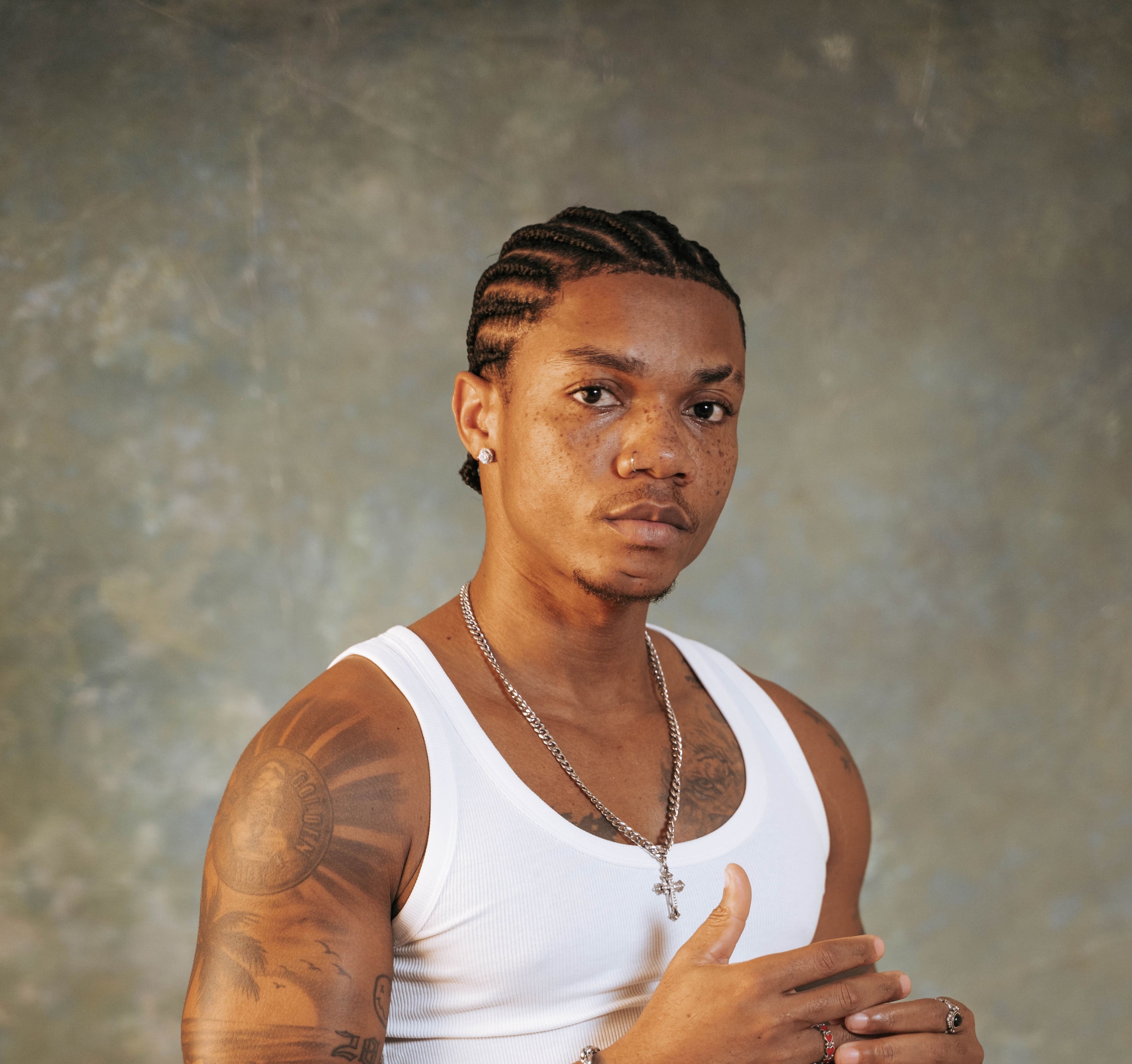
KiDi has not come down yet, and he says so before I get to my first real question.

“I expected that by now I’ll be down from the high but unfortunately I’m still floating in cloud nine,” he tells me, a week or two after his first solo headline show in London. He is back in Accra, where he lives, but he is clear that the rest of him has not caught up. “My spirit is actually still at the venue. It’s still on that stage, still taking it all in.
“The team jumped on a call for the cover of the second issue of LOOOK, and the KiDi who answers is the relaxed, generous version of an artist whose first headline show in a city he has a soft spot for went the way he hoped.
London, it turns out, was never a normal room. In the videos that circulated afterwards I noticed fans saying they had flown in from Australia and Ireland, and KiDi says the pull went wider. “Not just fans in the UK, fans in Spain, fans in Germany, fans in France,” he says, people who had spent years asking for a KiDi show and treated this one like a road trip. A month or two earlier, on a TikTok live, he had spoken to a fan in London who was about to fly back to America. She had just learned about the concert and decided to stay an extra month to be in the room. “All these things are a blessing,” he says.
I ask if he had a ritual before walking out to around 2,000 people. What he describes is company, not ceremony. Backstage it was his team and a few friends from the media, music playing, nothing staged. “We’re just chilling and hanging,” he says, and that was the whole method. “I felt the love. I felt so much assurance and energy.”
Then I make him play a game. I have been living inside Where Do We Go From Here, his latest album, I tell him, and he gets three guesses at my favourite of its fifteen tracks. He tries Headache, then See Thru, and misses both. After a third try and locking in, he lands on Agreement.
My case for it being my favorite is structural. The album opens in motion, Crazy World into Special Lovin, and three more tracks, Agreement is where it finally lets you sit. It is the bridge that makes fifteen tracks feel like a journey and not a queue, and it is why there is no song on the project I am tempted to skip. KiDi says he is honoured I noticed. Then he tells me something I did not expect. When his team met to plan the video for Agreement, he kept telling them the song would be played for a long time and the visuals had to hold up in twenty years. I tell him I am calling it now, that Tobi from LSTV said so. “I also do believe that,” he says. The song, he adds, “might transcend me” and the album around it.
Only four features sit on the project, from Sarkodie, Kwesi Arthur, Lasmid and AratheJay, and none of them feels parachuted in. That was the brief. His team built the album around the listening journey, asking what each guest would add to a song: the production, the message, the delivery. “Sometimes you hear a collaboration and the song might be good but the collaboration kind of feels out of place,” he says. His test is ten years out. He wants a listener to return to these songs and find “nothing out of place about it.”

Many Nigerians met KiDi through Odo with Davido, so I ask who he would run it back with now. He answers with a restaurant receipt. “It’s such a long list,” he says, the kind of bill that keeps unrolling. Fireboy comes first. Asake gets the most considered pitch: whatever the subject, KiDi hears spirituality and soul in how he interprets it, and “me and him on a song would just be crazy.” Tiwa Savage, Ayra Starr and Adekunle Gold make the list too.
Then the question I knew would test the mood. KiDi was left out of the Artiste of the Year race, and his public response, that he was coming back stronger, struck many people as too calm. He explains that the line is older than this year. “I’ll be back” began the year he was nominated, a favourite, and lost. He won the year after. “It was something I was using to reassure myself,” he says. “It’s not a race, it’s not a fight, it’s not a do or die.” He will clap for the people in the category. He also plans to return next year, and he says it with a grin I can hear: “It’s looking like we are back.” It is a more useful answer than the defiant one fans wanted. The line was never a threat, it was a note to Dennis.
That thread runs into his definition of success, which has changed more than his schedule has. At 22, he says, happiness was always one event away: “If this next song becomes a hit then I’ll be happy. Or if I get this award.” Each time, the thing arrived and the feeling did not. “That fulfillment and that happiness will not come from any destination,” he says. A good dance, he adds, goes backward and sideways as well as forward. “It’s all part of the dance.”
Asked to choose between Sugar, The Golden Boy and the new album, he spends a few seconds being diplomatic, each record had a role to play, and then he stops. “It represents me now,” he says, “my current story.”
The conversation turns to Zane, his son, whose name KiDi carries boldly on his Instagram profile. “Everything I’m doing now, it’s not just for me,” he says. Zane is watching and learning, which cuts both ways for a public figure whose stage performances land on timelines. Some of what he does is art and not for a child to absorb unguided, so he and Zane’s mother guide him through it. Zane, meanwhile, has notes. When Signature came out, he asked why he had not been allowed to design the cover, then asked whether the artwork could be taken down so he could replace it. “That’s not how it works,” KiDi says, “but maybe next time.” KiDi is kinda happy that his son has already picked up something and is already fighting for his space.
If Zane ever says he wants to sing, KiDi answers with a history lesson. His generation did not get this freedom. Any African child, he says, knows the pressure to become a doctor, a lawyer or an engineer. “We didn’t have all this freedom, but the good thing is we’ve learned from all these things.” Whatever he chooses, he will guide and support.
Independence is where KiDi sounds most like a man doing arithmetic. The freedom is real, he says, and so is the workload. A label’s machine is well oiled, and going alone means owning every part of the craft. That is where his team comes in, the people he calls his soldiers. “There’s a reason why these labels exist,” he says, and carrying every task yourself can dilute you as an artist. What stands out is what he refuses to do. A newly independent artist could dunk on the label system. He does not.
I ask for advice on ownership and leverage for any young artist, in Ghana or elsewhere. He opens with a caveat: “What works for Peter might not work for Paul.” Then a method. Look at where you are, the talent you carry and the vision you hold, and ask who can help you get there. If it is a label, go, but be wise in your signings and read the fine print. If it is your own team, do that. Either way, learn everything, because “eventually you will not be in a label system forever.”
He is as generous about home. Kojo Blak and Olivetheboy lead his list of Ghanaian names worth hearing, with a deeper bench of artists and producers he believes the world will reach in due time. Ugly and Tough, Liquidbeatz and Alor G.

The quick fire loosens the room. Accra or London? “London,” he says, “only because I already live in Accra.” Asked what the 2015 MTN Hitmaker version of himself would say seeing him now, he says that boy would not believe his eyes. “I can’t believe girls used to love that boy.” What would surprise fans? He paints, and keeps a sketchbook he used to draw in. It is hard to hear that and not think of Zane and the Signature artwork. “I know where it comes from,” he says. “Sometimes your kid takes something from you. It’s a proud moment.”
One word for Where Do We Go From Here? He gives me one that is technically two. “WORLD WIDE.” It is not only the music travelling. “I want to be on stages around the world performing. I just love being on stage.”
It would be easy to catch him in a contradiction. A man who says no destination can make him happy is still floating a week or two after his first solo headline show, and he sounds in no hurry to land. Somewhere around that word, worldwide, I stop reading it as one. London was not a destination. It was a room, and he is staying in it for as long as it lasts, which sounds a lot like the joy in the journey he says he is learning. His body is in Accra. His spirit, by his own account, is still on that stage, and from the way he says worldwide, it is already scouting the next one.
Credits:
Editor-in-Chief: Lanre Shonubi
Photography: Nhana Kwame
Producer: LSTV World Wide
Editor: Fortune Ibeh
Co Producer: Yewi Omo
Design: Fortune Ibeh
Writer: Tobi Oke
Leave a Reply