In conversation with Fortune Ibeh
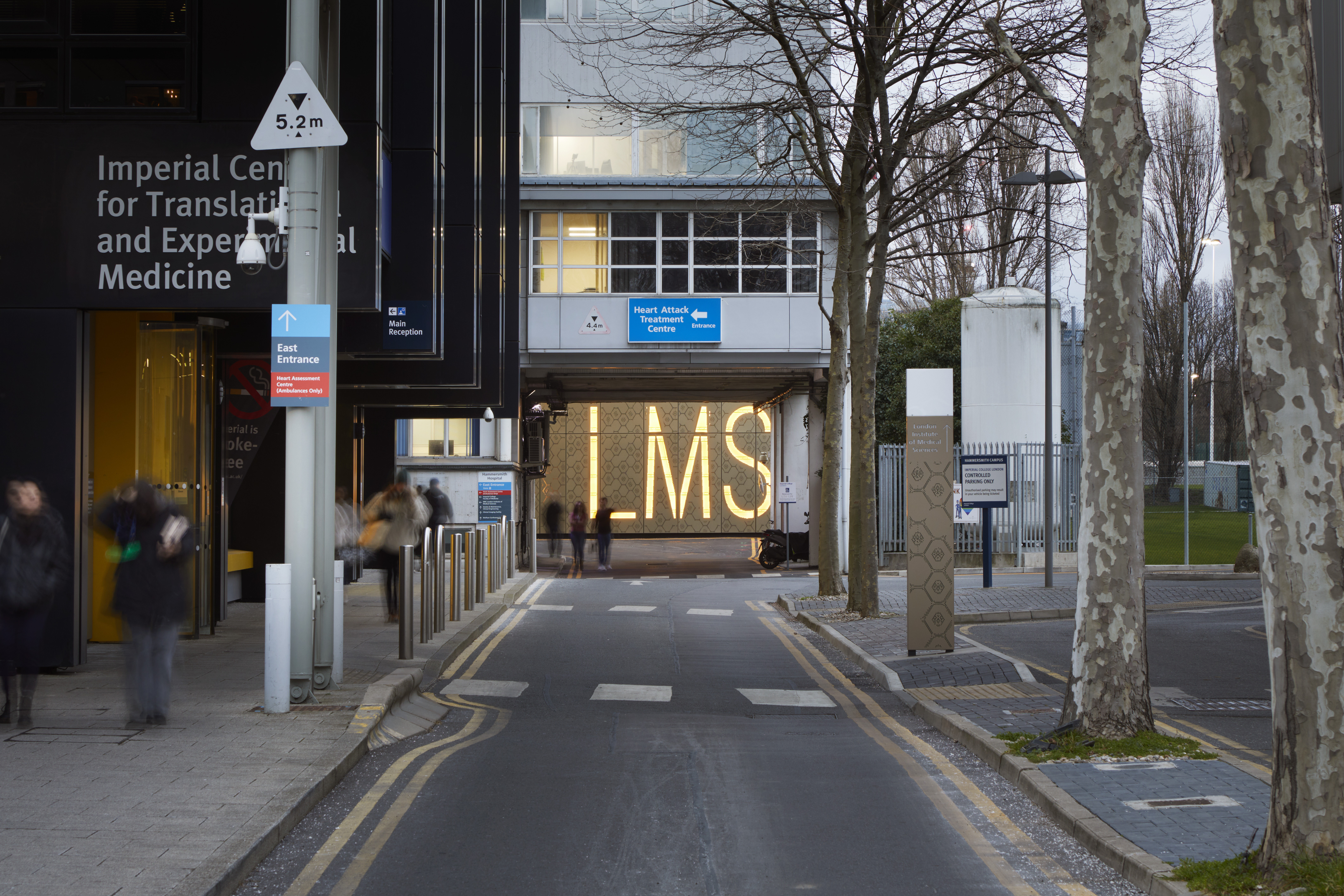
On Du Cane Road in Hammersmith Hospital Campus, a research institute dedicated to understanding how our genes and environments shape who we become is preparing to turn its walls into an exhibition space. Home in Motion, the MRC Laboratory of Medical Science’s (LMS) largest Black History Month event to date, marks the first time the institute has opened its building to an exhibition featuring external artists.
Responding to this year’s UK Black History Month theme, Honouring Our Communities, the exhibition explores a question that becomes more complicated the longer you sit with it: where is home when home keeps moving?

The project builds on The Gene Home, an earlier LMS initiative inspired by Michael McMillan’s The Front Room, which recreated a Caribbean family’s London living room in collaboration with the Windrush community. The project used a familiar domestic setting to open up conversations about the relationship between genetics, environment, health and identity.
With Home in Motion, that conversation moves into the gallery. Bringing together artists working across photography, painting, textiles, film, sound and digital desigin, the exhibition explores how personal histories, cultural inheritance and the experience of migration shape our understanding of home. The works range from a painting informed by an anonymous survey on the Black experience to the design of an Igbo detective witch for a video game, reflecting the many ways artists interpret identity and belonging.
For the LMS, the exhibition is also an opportunity to bring its research into conversation with the communities and experiences that give it meaning.
I spoke with Tade Elesheku, [Internal comms] and Joshua A Owolabi [EDI committee chair] about the thinking behind Home in Motion, the relationship between art and science, and what happens when a research institute makes room for the stories its walls have yet to tell.
In Conversation with Tade Elesheku and Joshua A. Owolabi:
Q: What led you to start The Gene Home?
A: The Gene Home grew out of Black History Month at the LMS. It was the driving inspiration for the first project. We wanted to talk about our science, how our genes and our environment together shape our health and identity, in a way that started from people’s lives rather than the lab.
Working with the Windrush community, and inspired by Michael McMillan’s The Front Room, we recreated the living room of a Caribbean family in London. It gave us a space where science and personal history could sit side by side.
Q: Has the LMS marked Black History Month every year since?
A: We’ve marked Black History Month in recent years. Last year, we held a talk alongside a celebration featuring food, music, games and a staff-curated playlist. Home in Motion is our biggest event yet, and the first time we’ve opened our building to an exhibition with external artists.
Q: Why an art exhibition, and where do art and science meet?
A: Our research looks at how genes and the environment shape who we become, and home is one of the most powerful environments in anyone’s life. Artists explore that same question in a different language.
An exhibition also brings people into the building who might never otherwise come to a research institute. It’s a chance for our staff to see themselves and their cultures reflected in the place they work. At their best, art and science are both about paying close attention and asking why.
Q: What does Home in Motion mean to the LMS?
A: Home isn’t just a place; it’s something we carry with us: objects, food, music, memory, family. For many in the African and Caribbean diaspora, home has moved across countries and generations, and it keeps changing.
At the LMS, we have staff from all over the world, so the idea that home moves with you and shapes you felt true to us as an institute, as well as to the theme of honouring our communities.
Q: How did you approach the selection process?

A: We ran an open call through Imperial’s staff and student networks, the Students’ Union, our community partners and LSTV’s networks, with a particular focus on up-and-coming and emerging artists.
Each submission was scored independently by two judges on the quality of the work, how it connected to home, memory and belonging, and how it would sit in the space. We then averaged the scores, with a third colleague on hand as a tie-breaker.
Q: What happens to the artworks after the exhibition?
A: The original works will be returned to the artists after the exhibition. Some of the printed works may stay up on the seventh floor for a few weeks so more staff can see them.
We’ll also respect artists’ wishes about their prints. Some have asked for theirs to be destroyed afterwards to protect future editions.
Q: Has anything in the submissions surprised you?
A: The range. We had photography, painting, pen drawing, textiles, film, sound and even 3D character design for games. One artist created an Igbo detective witch for a video game.
Others drew on Nigerian, Ghanaian, Jamaican, Saudi-Nigerian and Gambian roots. Some pieces were joyful, while others were confronting, including a painting built from an anonymous survey about the Black experience. It showed us there’s no single way to tell a story about home.
Q: What do you hope people take away from the exhibition?
A: A feeling of being seen and welcomed, and maybe a new way of thinking about what home means to them.For our staff, we hope it’s pride that their workplace celebrates their culture. For visitors, we hope it’s a sense that a science institute is a place they belong, too.
Q: Could this be the start of something more regular?
A: We’d love Home in Motion to be the start of something. This year has shown us how much talent and appetite there is, so we want to keep building partnerships with artists, communities and organisations like LSTV, and keep finding ways to bring our science and our communities closer together.


Home in Motion takes place on Wednesday, 21 October 2026, from 4 pm to 7 pm at the MRC Laboratory of Medical Science, Du Cane Road, Hammersmith Hospital Campus, London W12 0HS.
Leave a Reply