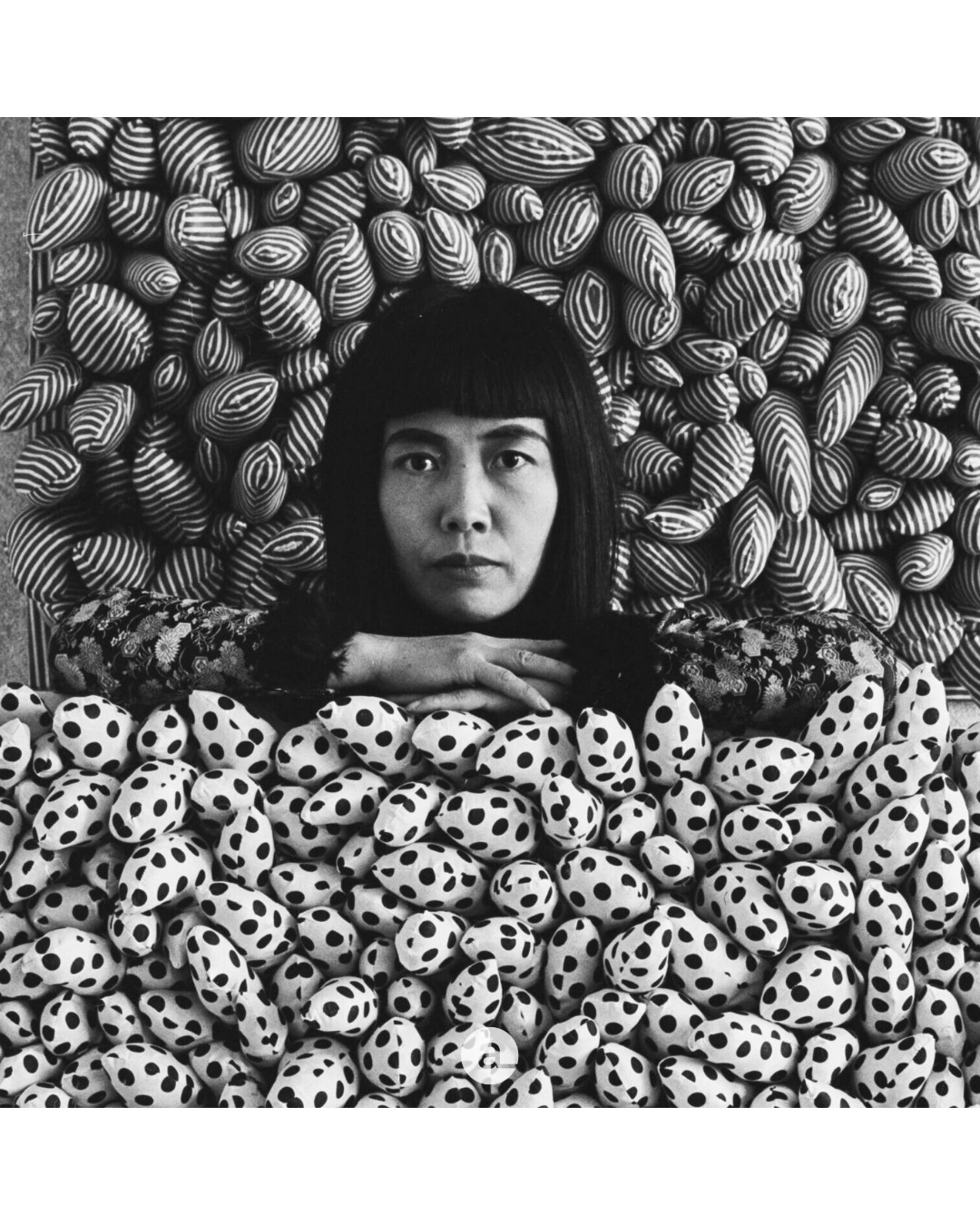
Yayoi Kusama built a visual language so distinctive that, eventually, it needed little introduction.
The polka dots, Infinity Nets, pumpkins, mirrors and obsessive repetition became recurring signatures of a practice that stretched across painting, sculpture, performance, film, writing and immersive installation.
Born in Matsumoto, Japan, in 1929, Kusama moved to New York in 1957 and quickly became part of the city’s avant-garde art scene. There, she produced the large-scale Infinity Nets, soft sculptures and experimental happenings that challenged the boundaries of what art could be.
Over the decades, repetition became more than a recurring aesthetic in her work. It became a way of exploring infinity, self-obliteration, space and perception.Her Infinity Mirror Rooms, in particular, transformed those ideas into environments audiences could physically enter, helping establish Kusama as one of the most recognisable figures in contemporary art.
Her influence, however, was never confined to museums and galleries.
Kusama’s visual language proved remarkably adaptable, finding new audiences through fashion, design, beauty, automobiles, food and popular culture.
Her collaborations with Issey Miyake, Coca-Cola, BMW MINI, UNIQLO, iida, Lancôme, X-girl, XLARGE, Veuve Clicquot, HEYTEA and Louis Vuitton translated her signature motifs into clothing, mobile phones, beauty products, cars, bottles, packaging, storefronts and immersive experiences.
Her collaborations with Louis Vuitton in 2012 and again in 2023 brought the dots, pumpkins and mirrored imagery into fashion and retail on a global scale, while later projects such as her work with HEYTEA showed how naturally her visual vocabulary could move into everyday consumer culture.
That ability to cross boundaries is central to understanding Kusama’s enduring influence.
The language she developed over decades could move from a canvas to a mirrored room, from a sculpture to a handbag, and from a gallery into the street without losing its unmistakable identity.
Few artists have created a visual language with that kind of cultural reach, and fewer still have made repetition feel endlessly new.
Curated by Dara Shonubi, the two-day exhibition brings together Phillip Udeka, Johaan Martins, Z4, Ayomide Popoola, Daevees, Nathaniel Goodnews and Laila Shuaib around ideas of uncertainty, experimentation and renewal.
In a creative landscape where uncertainty can easily become part of the job description, “We Go Again” makes a simple but weighty proposition: keep making.
The group exhibition, curated by Dara Shonubi in collaboration with MSVmag, brings seven emerging artists together at DIDI Museum in Lagos on August 29 and 30. Phillip Udeka, Johaan Martins, Z4, Ayomide Popoola, Daevees, Nathaniel Goodnews and Laila Shuaib will share work around persistence, play, experimentation and renewal, reflecting the realities of young artists trying to build meaningful practices while navigating an often unpredictable creative environment.
But “We Go Again” is not framed as a celebration of persistence in the abstract. Its title carries the exhaustion that can sit behind the decision to continue. For young artists, ambition exists alongside uncertainty: changing opportunities, limited resources, questions about visibility and the pressure to keep creating even when the conditions around the work are constantly shifting. The exhibition takes that reality and turns it into its central question: what does it mean to begin again, even when you are not entirely sure what comes next?
That question also gives the exhibition room to embrace different forms of artistic expression. Rather than asking the seven artists to arrive at one unified aesthetic, “We Go Again” brings their individual practices into conversation. The result is intended less as a fixed statement about where emerging Nigerian art is and more as a snapshot of artists experimenting with where it could go next.
There is an important distinction here. Going again does not necessarily mean returning to the same place. The exhibition’s emphasis on play, experimentation and renewal suggests movement rather than repetition. Persistence can mean changing direction, trying something that might fail, rethinking an existing practice or finding another way into an idea that did not work the first time.
The collaboration with MSVmag extends that idea beyond the physical exhibition. Alongside presenting the artists, the publication will document the people, ideas and stories behind the show, creating a record of this particular creative moment. In that sense, “We Go Again” becomes both an exhibition and an attempt to preserve the conversations surrounding a generation of artists figuring things out in real time.
For an exhibition lasting only two days, that archival instinct gives the project a longer life. The works may occupy the museum for a weekend, but the stories around their making, the uncertainty behind them and the decision to continue despite it all become part of a wider record of Lagos’ emerging art community.
Ultimately, “We Go Again” is less interested in presenting persistence as a polished success story than in acknowledging what it takes to keep showing up. It is a room full of artists at different points in their practices, brought together by a shared willingness to experiment, reflect and try again.
Despite the fatigue. Despite the uncertainty. Despite whatever changed between the first attempt and the next one.
We go again.
WE GO AGAIN
Curated by Dara Shonubi in collaboration with MSVmag
📍 DIDI Museum, 175A Adetokunbo Ademola Street, Victoria Island, Lagos
Emotion is indeed a dialect of the soul. When sounds transcended boundaries and moved in frequencies, the human spirit resonated long before grammar was invented. I was having a musical discussion with a friend and he described his experience about listening to music without understanding the language; He was driving through a silent night carrying a weight he couldn’t quite articulate when a song played through the speakers and it effortlessly pulled lonely tears from his eyes. When he translated the lyrics, it painted an intimate picture of what he was passing through.
That’s the sacred alchemy of music. It doesn’t ask for permission or require a dictionary, sometimes it arrives with translating energy in motion. In a culture obsessed with meaning, there is a quiet solace in natural mystery.
Music will find you when you didn’t know you needed it, saying what your heart can’t describe. In some cases, not understanding the song is intentionally enjoying the vibrations felt, because beyond language barriers lies a world of transcendent artistry and we need to give these voices the space they deserve on our playlists. How often do you listen to songs that aren’t in English? Let’s check out some.
AMADOU AND MIRIAM
Amadou Bagayoko and Mariam Doumbia’s sound was beyond audible, it was visionary. They were fondly addressed as The Blind Duo of Mali (Le Couple Aveugle du Mali). They crafted a sound that blurred the lines between ancient West African storytelling and electrically charged psychedelic blues. Singing in French and their native Malian language, Bambara (also known as Bamanankan), they transformed personal hardship into a universal language of resilience, romantic devotion, and radical joy.
Mariam lost her sight at age five due to untreated measles, finding her passion for singing almost immediately, where she began performing at local events when she was six. Amadou lost his sight at 15 to congenital cataracts. His love for instruments developed at a tender age and he channeled that passion for rhythm through flute, percussion and electric guitar. As a teenager, he earned himself a slot in the legendary Les Ambassadeurs du Motel de Bamako band alongside Malian icon Salif Keïta.
He crossed paths with Mariam in 1975 at Bamako’s Institute for Young Blind People (L’Institut des Jeunes Aveugles) playing together in the school’s Eclipse Orchestra. What began as a musical partnership blossomed into a lifelong romance. They got married in 1980, merging their artistic spirits into an eclectic frequency, with Amadou’s guitar weaving riffs inspired by Jimi Hendrix, Eric Clapton, Led Zeppelin, and Pink Floyd into fascinating Bambara rhythms, and Mariam’s vocals grounding their sound in pure authenticity.
In 1998, their breakout song Mon Amour, Ma Chérie brought them international acclaim, but their 2008 track Sabali, from their Welcome to Mali album solidified their place in iconic history. The track’s ethereal synth line and Mariam’s meditative chant caught the ears of musicians. On Nas and Damian Marley’s joint album Distant Relatives released in 2010, they sampled Sabali on one of the popular songs on the album, translating the song’s core message as Nas noted:
“Sabali, that’s patience. That’s what the old folks told me.”
Maroon 5 sampled the blind duo’s Sabali on their 2012 track Wipe Your Eyes from the deluxe edition of their fourth studio album, Overexposed. Sarz and BNXN also sampled their 1990 song Ko Neye Mounka Allah La from the couple’s Le Couple Aveugle Du Mali Vol. 2 album on their Back Outside track from The Game Needs Us album released April this year.
Following Amadou’s passing in 2025 at the age of 70, DJ Snake released a reimagined tribute to Sabali, ensuring the couple’s sonic lineage continues to reverberate across modern dance floors. Amadou & Mariam proved that when eyes close, the soul listens harder; leaving behind a legacy that continues to heal, unite, and elevate listeners across every continent.
EMEL MATHLOUTHI
To hear Emel Mathlouthi sing is to understand that music is a weapon of grace, protest and mental emancipation. The Tunisian born and New York based royalty channels the foundational truth spoken by Nina Simone and Fela Anikulapo Kuti: that an artist’s true duty is to reflect the times and she took that concept personally. She sings predominantly in Arabic while weaving threads of French, Spanish, and English across electric pop and orchestral instrumentals, with her voice surpassing intellectual translation to speak directly to the soul.
In 2008, after her politically charged songs were banned from Tunisian airwaves by the President during that regime, Emel fled to Paris on a self imposed exile to sharpen her craft. When the Jasmine Revolution erupted in 2010, her viral anthem Kelmti Horra meaning My Word Is Free became the unofficial anthem for the Arab Spring. She performed the acapella version of the song in the middle of a massive crowd in Tunisia at the Avenue Habib Bourguiba. The cultural impact of that song earned her the Voice Of The Tunisian Revolution. She dedicated her first album to social and political freedom.
In 2015, Kelmti Horra brought her to the Nobel Peace Prize Concert stage. Surrounded by a full orchestra, she offered a masterclass in universal dialect, delivering a performance that transcended basic understanding.
Reflecting on that performance as one of the highlights of her career, she tells The New Arab:
“Simply, it was magical, singing on a beautiful and very wide stage with a full orchestra would be any artist’s dream, and there I was, singing something I wrote in a language that was foreign to many audiences but that yet spoke to the whole world, because it’s the language of emotions, the language of the inside.”
In 2024, she released a collaborative feminist manifesto album called MRA meaning WOMAN in Arabic, where she featured women on the whole album; from the artists to the production crew. Nigerian rap powerhouse, Eva Elohor Alordiah was featured on a track titled IDHA from the album, sung in Arabic and English. Emel continues to redefine global sound because she stands as living proof that where language builds walls, pure, unbridled frequency tears them down.
FATOUMATA DIAWARA
In many ways, Fatoumata Diawara is the origin of this entire piece; the catalyst that demands we listen beyond the boundaries of translation. To hear the soulfully soothing Malian Empress sing in Bambara is to witness a voice that refuses to compromise her freedom, carrying an innate and rugged individualistic grace that transcends beyond the noise.
Her story reads like a cinematic act of defiance. In 2001 at just 19 years old, Fatoumata fled her home in Mali for Paris, escaping an arranged marriage to pursue an unwritten future. She later joined a theater company Royal de Luxe as an actress. Music wasn’t her primary focus until the company’s director overheard her singing for fun backstage during a rehearsal. Captivated by the ethereal nature of her voice, he immediately shifted her role to a featured vocalist for the group’s live performances.
Treachery transmuted to trajectory. She taught herself how to play the guitar and began to perform in local Parisian cafes, eventually catching the attention of Malian legend, Oumou Sangaré. After singing backup for Sangaré for sometime, Diawara earned a record contract with World Circuit Records, releasing her electrifying 2011 debut album Fatou and its breakout anthem Sowa. Singing in Bambara, she fused traditional Wassoulou rhythms with electric desert blues, funk, and folk; creating an ancient and contemporary sound.
By the time she released her second studio album Fenfo, that included the breathtaking anthem Nterini which is one of my personal favorites. Her global frequency was undeniable.
She also recorded with Ms. Lauryn Hill for Jeymes Samuel’s The Harder They Fall movie soundtrack titled Black Woman released in 2021. In 2023 she had a song with the late neo soul legend, Angie Stone titled Somaw from her London Ko album.
Fatoumata proves that when an artist follows their passion with absolute, unwavering conviction, their native tongue becomes a universal lighthouse. She doesn’t just sing in Bambara; she speaks in pure, resonating vibration.
LES NUBIANS
From the Afropean architects of soul, there’s a distinct frequency that occurs when bloodline harmony meets cultural displacement. For sisters Hélène (1975) and Célia Faussart (1979), the Grammy nominated duo’s music have always been about bridging worlds. Born in Paris to a French father and Cameroonian mother before relocating to Chad in 1985, the sisters were teenagers in the crossroads of the African diaspora, spending their adolescence deciphering jazz records and layering their voices into seamless, resonating harmonies.
Adopting a name that pays homage to the ancient African Kingdom of Nubia while honoring their dual heritage, they redefined global R&B with their 1998 debut album, Les Nubiennes. Led by their breakout single Makeda, they introduced the world to an intriguing blend of hip hop, soul and traditional West African storytelling. Existing as modern day griots, their soulfully melodious French phrasing carried weight; celebrating Black womanhood, Pan Africanism and sovereign identity with an effortless flow of rhythms.
American hip hop royalty, Talib Kweli caught the vibration almost immediately. When him and Hi-Tek (called Reflection Eternal as a duo) collaborated on their Train of Thought project, the sisters delivered their verses entirely in French on Love Language proving that intimacy and lyricism transcended translation. Their global recognition expanded through iconic collaborations with Yasiin Bey (Mos Def), Black Thought, the Black Eyed Peas, and an electrifying tribute to Fela Anikulapo Kuti where they collaborated with Senegalese artist Cheikh Lo on RED HOT + RIOT: THE MUSIC + SPIRIT OF FELA KUTI compilation, performing a cover of his timeless classics; Shakara and Lady. They also featured Talib Kweli in 2003 on their Temperature Rising track from their Step Forward album. The duo proves that French isn’t just a European language; it’s a catalyst for diasporan pride and timeless Afropean soul.
LIJADU SISTERS
Before modern Afrobeats dominated global airwaves, the identical twins and queens of Yoruba psychedelic funk, Yeye Taiwo and Kehinde Lijadu were already fusing Yoruba philosophy with psychedelic rock and disco. They were born in Jos, raised in Ibadan and shared the radical music DNA of their second cousin Fela Anikulapo Kuti. The twin dynamo became the beating heart of Nigeria’s pop music scene.
Singing in telepathic twin harmony, their 1968 breakout song Iya Mi Jowo announced two young women who refused to be shoved to the background in a male dominated industry. When legendary drummer Ginger Baker arrived Nigeria in the early 70s searching for raw talent and soul, he was so blown away by their stage presence and vocal harmony that he recruited them into his band named Salt, bringing their Yoruba infused funk to international stages.
Their sonic vault remains a foundational catalyst for modern hip hop and Afrobeat. The classic masterpiece Orere-Elejigbo from their 1979 album Horizon Unlimited was sampled by Nigerian Afro pop duo, Black Tribe in 2001 on their song Nino. Nas sampled their Life’s Gone Down Low from their 1976 album Danger on his Life’s Gone Low from his 2006 EP: The Prophecy, Vol 2: The Beginning of Nas. Orere Elejibo also reincarnated decades later as the foundation for Ayra Starr’s 2021 hit Sare from her self titled EP released in 2021.
The Lijadu sisters prove that Yoruba vocal traditions weren’t museum pieces; they could electrify stadiums and carry resonating soul across borders.
LES FILLES DE ILLIGHADAD
Deep in the quiet expanse of the Sahara in a secluded village in Central Niger, Les Filles de Illighadad (The Daughters of Illighadad) are quietly revolutionizing desert blues. Singing in Tamasheq language, the collective founded in 2014 by lead vocalist and guitarist Fatou Seidi Ghali, she reclaims ancient Saharan heritage by shattering a generational gender barrier. In Tuareg culture, the guitar was historically reserved for men, but Fatou secretly taught herself to play on her brother’s instrument, becoming the first Tuareg woman to play the guitar professionally. The cultural themes of their songs are focused on life in the desert, family values, healing and spirituality. They’re keeping their culture alive through the power of music.
Their self-titled 2016 debut album captures this communal energy in its unadulterated form on a 17 minute track Tende, drawing in the listener to feel the raw energy when the Instrumentals begin with claps followed by drums, chants and echoes of laughter. The song is named after the traditional Tuareg water drum (made from goat skin) and the women led musical originality distinctive to Niger. Another song on the album worth listening to is Telilit, explored by avant garde techniques, keeping their ancient traditional sound alive in history’s timeline.
Les Filles de Illighadad shows listeners that true resonance needs no translation. You don’t need to speak Tamasheq to feel the ancient power of women keeping their culture alive through authentic frequency.
ACCHI MELLO
Hip hop has always been built on regional identity, but Osaka’s Acchi Mello treats local dialect like a heavyweight global weapon. A multitalented, independent rapper, lyricist, music director, and street dancer who launched his musical career in 2024 with a sound that transcends linguistic borders; fusing drill, trap and electronic instrumentals, he effortlessly blends Japanese language, kansai dialect, french and (english for mostly hooks), weaving a seamless flow of languages into one track.
He leans into street realism and the emotional weight of urban survival on Lost, a track from his 2024 debut project NO MELLO, delivering a razor sharp social commentary, strictly in Japanese language.
He released another album Vanquish in 2025 and one of the tracks that stood out is Don’t Count Me that focused on mental resilience and transformed personal introspection that became an anthem for the misunderstood.
Acchi Mello is proof that the future of hip-hop doesn’t need a translation matrix. By rejecting standard phrasing in favor of his raw dialect and fusing in European drill vibrations, he creates a cross cultural friction that feels electric. He isn’t just rapping; he’s building a bridge between global subcultures, one multilingual bar at a time. His recent collaborative EP with French rapper, Jewel Usain titled Aniki, mon frere, Knock Knock is worth listening to!
MAKOMA
For anyone like me whose earliest musical memories were soaked in the warmth of African gospel, Makoma holds a timeless and sacred sanctuary in the soul. Hailing from the Democratic Republic of Congo, this family collective proved early on that music doesn’t require a translation to uplift the spirit; it requires unyielding cadence and undeniable rhythm. Long before many of us understood a single word of Lingala, their infectious arrangements and soaring melodies offered a universal language of joy and good vibrations.
At the centre of that magic was lead vocalist Nathalie Makoma, whose magnetic, soulfully soothing, and deeply passionate voice could light up a room in seconds. On songs like Mwinda, Moto Oyo, Natamboli, and Napesi, from their 1999 album Nzambe Na Bomoyi, her vocal delivery carried a praise filled intensity that transcended intellectual comprehension directly to the soul. From her point of view, Lingala wasn’t just a local dialect, it was an instrument of pure emotion.
When internal rifts and financial strain led Nathalie to depart for a solo career in the Netherlands in 2004, it left a void in global gospel. But bloodlines and shared creative destiny have a way of pulling artists back to their roots. After a 20 year hiatus, the Makoma dynasty finally reunited, reclaiming their crown with their track Tempelo Na Ye released October 2025. The project brought decades of listeners full circle, proving that true harmony, from family, faith, and spirit is timeless.
TIKEN JAH FAKOLY
I call him the Rastafarian Ivorian and the thunder of West African roots. Born Moussa Doumbia musically known as Tiken Jah Fakoly is a force to reckon with in the upliftment of the consciousness culture. He stands as a warrior of conscious reggae whose voice carries the political and spiritual weight of a continent. When corruption and civil strife threatened to consume his homeland in the early 2000s, he made his microphone louder. His uncompromising musical comments on political hypocrisy and imperial exploitation made him a target of death threats, forcing him into exile in Bamako, Mali, in 2003 where he stayed for almost 2 decades. It didn’t quiet his crusade, it expanded his musical sanctuary.
Singing in French and his native dialect Dioula (also known as Dyula), Fakoly took the heartbeat of Jamaican roots reggae and fused it into the acoustic soul of West Africa;
with the basslines and guitars seamlessly intertwined with the mystical sound of the ancient stringed kora, the resonance of the balafon, and the earthy feel of the djembe drum.
On defining milestones like his 2002 eponymous studio album Françafrique and his Plus rien ne m’etonne track released in 2004 from his Coup de Gueule album, he turned the recording booth into a historic time machine, connecting ancestral African history with modern sociopolitical rebellion. He pioneered a distinct style called mandingo reggae.
You don’t need a fluent command of Dioula or French to be shaken by his delivery. His vocal authority carries the same energy that once burned through Bob Marley and Peter Tosh, proving that roots reggae is a global vibration. Fakoly uses his art as both a mirror for systemic injustice and a shield for the displaced, reminding us that when consciousness is backed by rhythm, it speaks in a frequency power can never tame.
RZO A BANCA
From my point of view, this Portuguese speaking hip hop group carries the spirit of Staten Island’s Wu Tang Clan, born in the concrete jungle of São Paulo, Brazil. (Rapazida da Zona Oeste) shortened as RZO meaning the Homies From the West Zone is similar to the name of Wu Tang’s de facto leader, Rza.
The group’s logo on their spotify account is also the official Wu Tang Logo. The group was established in 2023 by Dj Negro Rico (a former member of the original RZO group, originally formed in 1987.
The legendary hip hop collective carries an electro charged gritty energy that hits like a physical strike. They channel that raw street realism of the favela that are anchored by heavy boom bap drums and sharp Portuguese lyricism that demands no translation to convey the unfiltered energy.
Their musical kinship with the Wu-Tang Clan is impossible to miss; from their production style that echoes RZA’S sampler alchemy to their collective conscious mentality, Rzo A Banca operates as a movement bound by street philosophy, social commentary, and survival. They weren’t just influenced by Western hip hop, they absorbed its elements with precision, remaking them in the image of São Paulo’s West Zone and serving as the breeding ground for Brazilian rap royalty like Negra Li and the late Mauro Mateus dos Santos, musically known as Sabotage.
You don’t need to understand Portuguese to feel the gravity of their sound. The instrumentals pulse with a menacing, neck snapping grit that cuts through language barriers. The collective proves that true hip hop is a global communing avenue for unity, resilience and consciousness. When the drums are this hard and the conviction is this pure, the spirit often speaks the same vibrational language everywhere. Their recent single Eles Não Fazem Nada is a good listen.
To limit our musical palette strictly to the words we comprehend on paper is to intentionally close our ears to nine tenths of the world’s emotional depth. Whether through the desert blues of Niger, the electric drill of Japan, the sacred harmonies of the Congolese gospel collective, these artists remind us of music’s ultimate truth, that feeling is a universal dialect.
When we let go of the need for literal translation, we step into that universal dialect. We allow the rhythm to tell the story, the vocal timbre to reveal the emotion, and the spirit of the artist to meet us halfway. Language may define our borders, but frequency is how we remember that we are all wired to feel the exact same things.
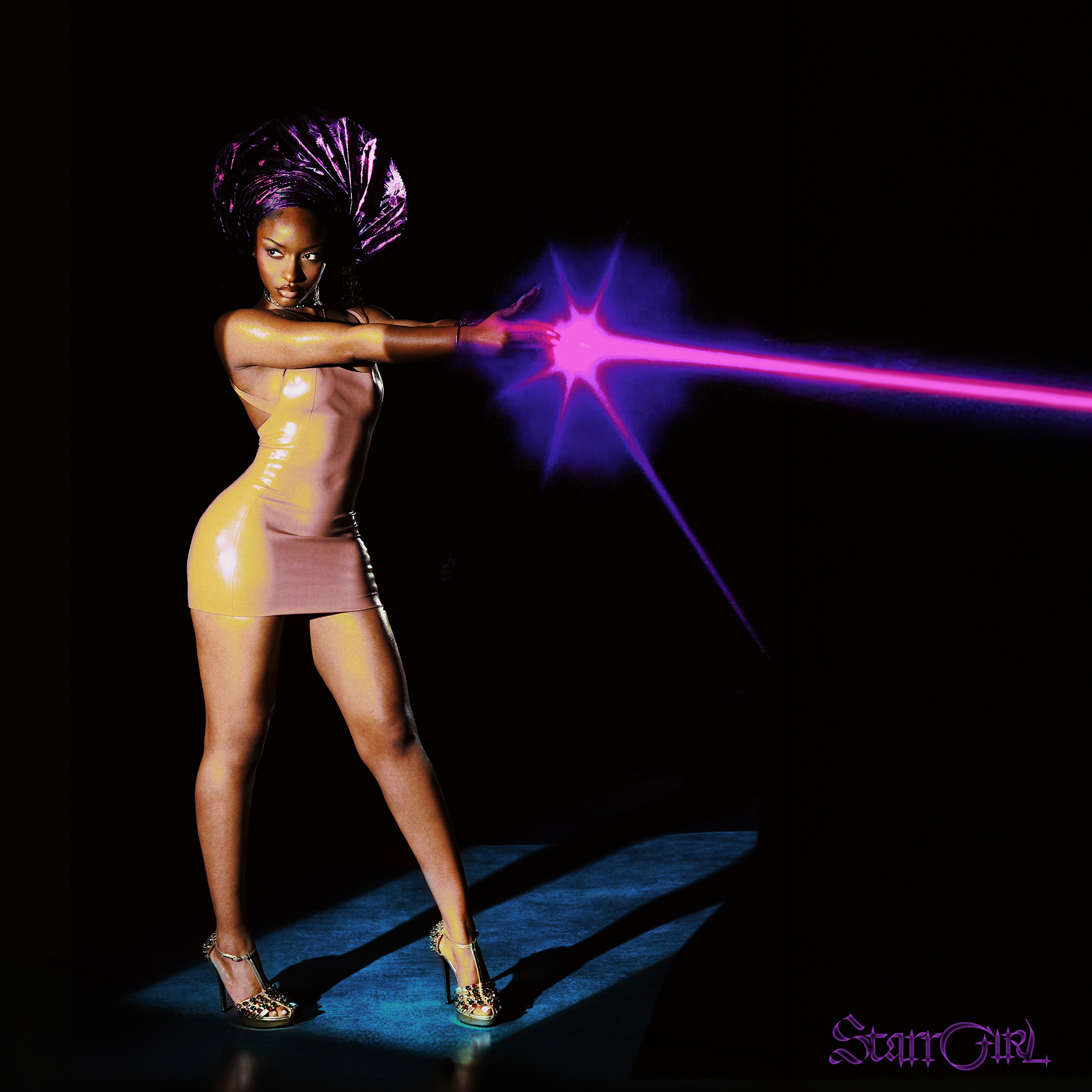
Welcome to the school of Ayra Starr. This is Year 3 , 16 courses , with a run time of 46 minutes. Co-lecturers include Dr Kwn, Prof. Wizkid, Dr Theodora, Dr Rema, Prof. Zayn, and Prof. Danny Ocean.
The Erudite Prof Starr explores a range of sounds that allows her to show off range, skill, storytelling and just share exceptional talent. From Afrobeats, to R&B, contemporary pop, dancehall, and finally house. Prof Starrexplores all of these to produce her most cohesive body of work yet. Welcome to Starr Girl 301!
Most of the writing still runs through Ayra herself, credited under her birth name Oyinkansola Sarah Aderibigbe, but the room around her has gotten a lot bigger: Ilya Salmanzadeh, Amanda Ibanez, Mason Tanner, Malika Hamza, Jerry Duplessis, and Wyclef Jean all show up somewhere in the credits. It’s a more international writers’ room than the one behind “19 & Dangerous” or “The Year I Turned 21,” and the polish that comes with it hasn’t cost her anything, her voice and her Nigerian identity still come through clearly.
STARRGIRL
STORYTELLING AND OVERALL MESSAGE
Set next to her debut “19 & Dangerous” (2021) and sophomore effort “The Year I Turned 21” (2024), “Starr Girl” plays like an artist finally growing into herself rather than performing growth for the cameras. It’s not flawless, but it’s genuinely hard to point to a real miss across sixteen tracks, and the production holds a consistency her earlier work sometimes lacked. Her voice sounds more settled too, moving between sultry restraint on the slow cuts and a brighter, more playful register on the pop moments without either one feeling like a costume.
That consistency isn’t just sonic. With a second Grammy nomination landing earlier this year, the title reads less like Starr crowning herself and more like a statement of something that’s been obvious since “Bloody Samaritan” broke her out in 2021. By her own account, the album is about “existing in multitudes,” and that idea is what keeps a project this scattered from falling apart. It shows up in language as much as sound she moves between English, Pidgin, and Yoruba, and lets some Spanish slip in on the “Hot Body” remix, so the cosmopolitanism is audible in how she says things, not just what she’s saying them over.
SEQUENCING
The album opens on “Dangerous,” a moody, mid-tempo statement of intent, before “Amazing,” featuring kwn, lifts the mood into brighter pop territory. “Gimme Dat” reintroduces her Grammy nominated Wizkid collaboration, and the run of “Pressure,” “Tornado,” and “Midnight in New York” settles into the album’s most emotionally textured stretch, blending Afrobeats percussion with R&B restraint. “Hot Body” and “Ms. Paper,” featuring Theodora, bring the tempo back up before “Dance” and “Where Do We Go” close the midsection with two of its most immediate pop moments. “Who’s Dat Girl,” featuring Rema, and “Misunderstood” pull the mood back inward, “Letter to God” is the record’s most reflective turn, and “Heaven Baby,” featuring Zayn, alongside “Treasure,” winds things down before the “Hot Body” remix featuring Danny Ocean closes on a victory lap. It reads less like a rigid three-act structure and more like a mood board tension, brightness, reflection, tension again which tracks with how Starr describes the album herself.
TRACK BY TRACK: WRITING AND PRODUCTION
“Dangerous” opens on a nod to Mobstarr, her fan community, a reference she reinforced when the album was previewed for fans at a Tape Lagos listening event in April 2026. Beyond that, the verses are pure declaration Starr staking her claim on her own business command and the speed of her success before anyone else gets a word in. Production stays clean behind the vocal, and it’s an efficient, confident way to open the record.
“Amazing,” with kwn, is lighter and more playful, closer to comedy than seduction, with kwn’s own verse playing coy about being pressed for time a palate cleanser after the weight of the opener.
“Gimme Dat” was never going to surprise anyone after its Grammy nomination and its status as Starr and Wizkid’s first reunion since the 2022 fan favourite “2 Sugar.” It samples Mary J. Blige and Wyclef Jean’s 2000 single “911,” which explains the sprawling writing credits Starr and Wizkid alongside Adekunle Oluwaseyi, Elvis Akujobi, Richard Imaekhai, Fred Daniels, Edafe Gabriel, Olusola Mayowa, Aniekeme Akpan, Jerry Duplessis, Katia Cadet, Mary Brown, and Wyclef Jean himself. Lyrically it leans on Pidgin, building its come on around “awoof” something got for free, unearned as Starr sets her own terms before any deal gets sealed. Vybe0 and Mikababeatz keep the production in a groove-first Afrobeats pocket, the interpolated hook giving it an early 2000s R&B backbone under the Afrobeats surface the clearest case on the album of Starr reaching outside her own lane for source material.
“Pressure” leans on background vocals from Leon Thomas, whose falsetto threads through the mix without pulling focus, landing closer to pure R&B than almost anything else here. “Tornado,” produced by Skillies, Shizzi, and RiotUSA, carries Latin tinged percussion and extra vocal texture from Fola and Donel Mangena, pushing briefly into dancehall Afrobeats crossover territory. Its boasts go further than most of the record’s, drawing an audacious comparison to Anini, the Nigerian outlaw who became a folk anti-hero in the 1980s a strange, memorable flex inside an otherwise straightforward one.
“Midnight in New York,” co-written by Starr with Andre, Kadu, and Donel Mangena, is produced by London, Starr, and Matt James, and mixed by Johnny Drille, her fellow Mavin signee. Where “Dangerous” is declarative, this one is loose and unattached, a no-strings encounter over wine with a stranger rather than anything built to last. It’s one of the album’s most atmospheric records, built for a late night mood rather than the dancefloor, and the only song where Starr’s own production credit sits next to her writing credit. Drille’s mixing also spans “Hot Body,” “Dance,” “Who’s Dat Girl,” “Heaven Baby,” and “Treasure,” giving “Starr Girl” a sonic throughline her last two albums didn’t quite have.
“Hot Body” keeps the tempo up in uptempo Afrobeats territory, though its title hook is arguably the weakest part; the verses do the heavier lifting, trading in luxury car imagery and the feeling of being watched from a distance. The Spanish language remix that closes the album, featuring Danny Ocean, keeps the same swagger but reframes it as a bilingual duet rather than a solo brag. “Ms. Paper,” with Theodora, is a smoother R&B-leaning duet Theodora folds French inflected wordplay into her verse alongside the English and it benefits from the two voices sitting close together. “Dance” is one of the record’s clearest statements of self-acceptance, its lyric built around being content with who she already is, its bounce edging toward the house influence running faintly through the album.
“Where Do We Go,” written by Starr with Ilya Salmanzadeh, Amanda Ibanez, Mason Tanner, and Malika Hamza, produced and arranged by Salmanzadeh, is an Afropop detour built on a pulsing bassline, playing out as a hesitant push-pull between two people told through a shared-commute metaphor rather than a direct confession. “Who’s Dat Girl,” featuring Rema and written with Nwamu Chukwudebem, Promise Ekpe, Divine Ikubor, and Nilusu Nisanka, is produced by Ragee and The Elements. Rema’s verse leans on pop culture wordplay fashion, cartoon villains, prison break plotlines while Starr’s own verse reaches for something heavier, invoking Ken Saro-Wiwa, the Nigerian writer and activist executed in 1995, an unusually weighty touch inside an otherwise flirtatious song.
The back half turns inward. “Misunderstood” is one of the most reflective solo cuts, told in the third person about a woman written off by everyone around her who refuses to shrink for it, a quieter turn from someone who’s spent five years being talked about as much as listened to. “Letter to God” follows in the same register, built around piano, bass, and a full-band crescendo, as Starr addresses a precarious but worthwhile love directly to God; it’s the closest the album comes to gospel-inflected balladry. “Heaven Baby,” with Zayn, strips the percussion out entirely for a classic piano led duet, Starr’s voice against Zayn’s falsetto on a song about instant attraction. It’s the album’s most obvious reach for a global pop audience, and while it doesn’t always sit as naturally as the Afrobeats-rooted tracks around it, it’s a reasonable bet for an artist actively building a Roc Nation-backed international profile.
“Treasure,” also mixed by Drille, closes the reflective run with a vocal delivery that echoes “Dangerous” back at itself, each syllable seeming to hold up the next rather than resolve cleanly, a small structural rhyme that bookends the album. From there, the “Hot Body” remix with Danny Ocean sends the record off with a Latin Afrobeats crossover that’s become increasingly common across the genre, a victory lap rather than a comedown, and a smart way to close a project that spends its second half getting quieter.
STANDOUT TRACKS
“Misunderstood,” “Dance,” “Pressure,” “Gimme Dat,” and “Hot Body” are the five songs that best justify the run time, each one making its case independent of its features or where it sits in the album’s arc.
“Starr Girl” isn’t a perfect album, but it’s Ayra Starr’s most assured one. The production is more unified than “19 & Dangerous” or “The Year I Turned 21,” the writers’ room is bigger without diluting her voice, and the sequencing gives the record real emotional movement instead of a flat run of singles. Where it loses points is ambition that sometimes settles for polish over risk; a handful of mid album tracks play it safer than the opening run promises. Still, two years and two Grammy nominations on, with a title that finally matches the moment, Ayra Starr has certified her accolades as a star.
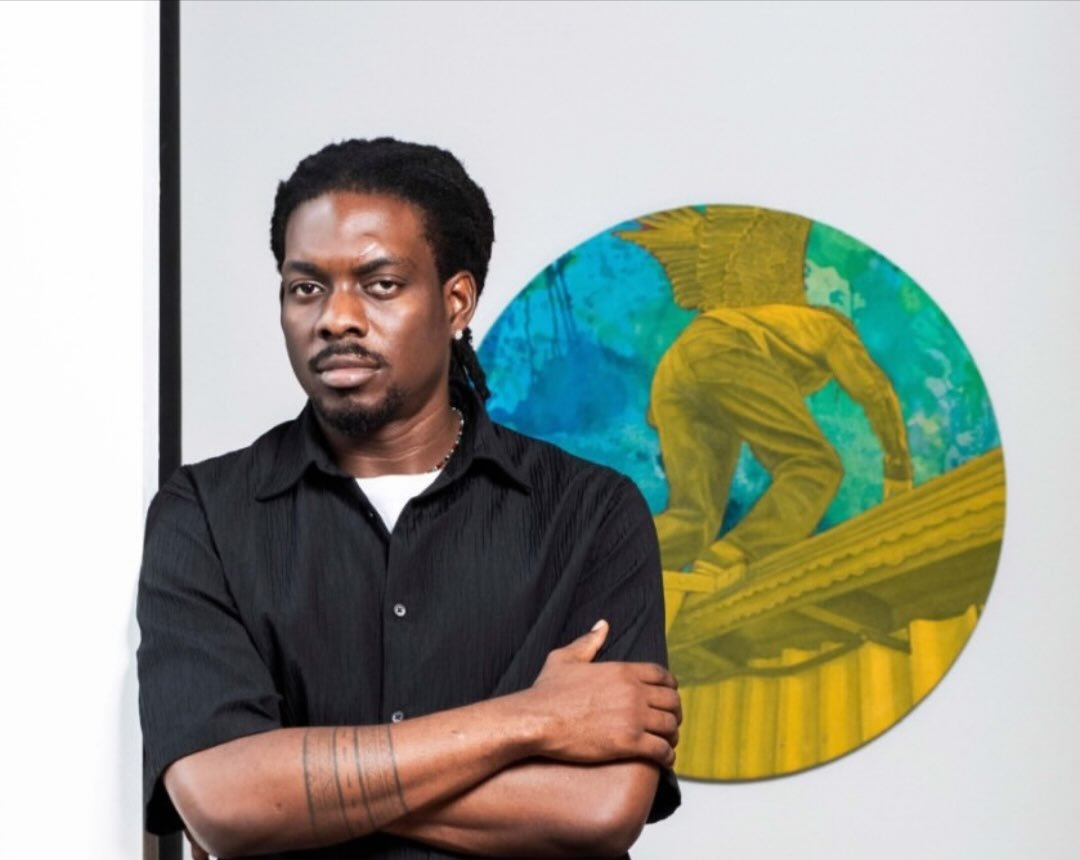
There is a moment in almost every Ken Nwadiogbu work when the illusion gives way. A figure begins to dissolve, a body breaks apart, colour takes over the canvas, and somewhere within it all, an eye looks back at you. Rendered with almost photographic precision, it has become one of the most recognisable elements of Nwadiogbu’s practice. But the eye is more than a signature. It is the thread connecting a body of work concerned with visibility, identity, memory and what it means to really look at another person.
The story behind it is deeply personal. As a child in Lagos, Nwadiogbu injured his eye while playing with his brother, tearing it on a door handle and undergoing stitches while still awake.
The experience stayed with him. So did his mother’s words that the eye is a gateway to the world. Years later, that childhood injury would become one of the defining ideas in his art, turning something that once made him self-conscious into a way of looking more closely at the world around him.
Nwadiogbu did not begin with plans to become an artist. Born in Lagos in 1994, he studied civil and environmental engineering at the University of Lagos while developing his art independently. His early charcoal drawings gained attention for their hyperrealism, often appearing so photographic that the distinction between drawing and photograph became almost irrelevant. But Nwadiogbu was never interested in realism simply as a technical feat.
He wanted the image to carry something beyond what could immediately be seen.
That thinking eventually became Contemporealism, his approach to combining hyperrealism with contemporary social and cultural ideas. His figures are often fragmented, obscured or interrupted, creating space for conversations around migration, displacement, Black identity, African culture and visibility. The realism draws you in, but the disruption asks you to stay longer. His recurring eye becomes the point of connection, confronting the viewer while giving his subjects a sense of presence that refuses to be overlooked.
His practice has continued to expand with him. Since his solo debut, A Different Perspective, in 2022, Nwadiogbu has taken his work from Lagos and Abuja into galleries and cultural spaces in London, Berlin and the United States.
His work has appeared at places including Somerset House and Saatchi Gallery, while collaborations and commissions have pushed his visual language beyond the conventional gallery setting.
He has also explored materials such as Akwete cloth, bringing his contemporary figures into conversation with histories and traditions embedded in Nigerian craft.There has been an equally visible shift in the work itself. After moving to London to study painting at the Royal College of Art, Nwadiogbu began moving beyond the monochromatic restraint of his early charcoal work. Rich reds, oranges and yellows now sit alongside his familiar figures, creating paintings that feel more atmospheric and emotionally charged. The change has not abandoned the questions at the heart of his practice. If anything, the colour has given those questions another language.
The recognition has followed. In 2025, Nwadiogbu received the Royal Society of British Artists’ Rising Star Award, before winning the Young Generation Art Award in Berlin in 2026 from a field of almost 400 applicants. Yet his trajectory remains tied to the creative community he came from. Through initiatives including Artists Connect NG and Title Deed, he continues to create spaces for emerging artists in Nigeria. For an artist whose work is so concerned with being seen, perhaps that is the most fitting extension of his practice: looking back, and making sure others have a chance to be seen too.
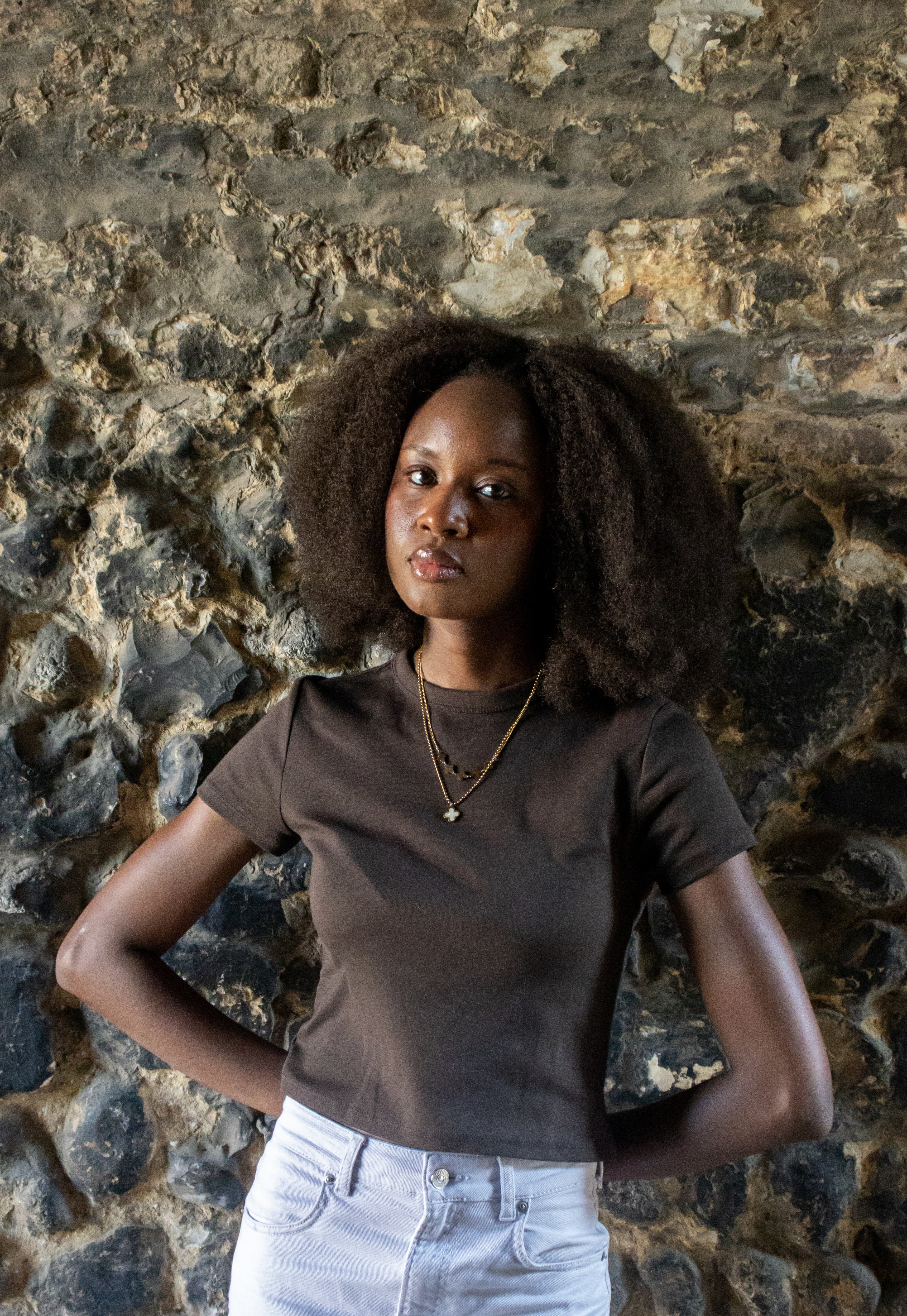
The first thing you notice about Luchong’ studio is not the paintings.
It is the feeling.
“My studio is a soothing space,” Luchong says. “It is designed intentionally to calm my nerves and relax my mind, so my creativity has a safe space to flow. My choice of colour, inspiration images, objects, wall fixtures, etc, is all intentional to fit this mood.”
Tucked away in Norwich, the space carries a quiet rhythm that immediately softens the pace of the carefully against the walls. Canvases wait patiently in different stages of completion. Favourite paint brushes sit within easy reach beside jars of paint, while a laptop, speakers, headphones and a bottle of water occupy familiar places nearby. The room feels lived in, but never crowded.
It feels more like an emotional refuge than a workspace.
“My studio is a soothing space,” Luchong says. “It is designed intentionally to calm my nerves and relax my mind, so my creativity has a safe space to flow. My choice of colour, inspiration images, objects, wall fixtures, etc, is all intentional to fit this mood.“
Just before our conversation, she had stepped away from a painting she is particularly excited about. Like many of her recent works, it already has an accompanying sound piece slowly taking shape alongside it. Yet this one feels different.
“It stands out to me because of the particular emotion it carries,” she says. “It’s a tough one.There is something revealing about that response.For Luchong, paintings are never simply images. They carry emotional weight. They hold conversations. They become companions that continue revealing themselves long after the final brushstroke has dried.
Perhaps that is why her work resists quick consumption.In a culture increasingly conditioned to scroll, skim and move on, Luchong asks something far more demanding of her audience.Pause, stay and Look again.At first glance, her paintings are striking for their beauty. Rich colours sit comfortably beside textured surfaces. Sculptural jewellery and carefully layered materials create portraits that immediately command attention. Their visual elegance is undeniable.But beauty is only the beginning.
I think the first thing people notice about my work is how beautiful it looks, the faces, the colors, the jewelry,” she says. “The gaze is often secondary, which is actually intentional because the goal is to get people to pause and look deeper, but sometimes people can miss this, focusing on the beauty and not the emotion that rests in the gaze.”
That distinction lies at the heart of her practice. Her paintings do not ask to be admired only, they are asking to be listened to.Long before Luchong understood this herself, the signs were already there.Growing up, she occupied an interesting space between company and solitude. She enjoyed people, but she also protected moments of being alone. It was a balance that others sometimes misunderstood.
“I was a generally reserved child. I wouldn’t say I was quiet or shy, people often misunderstood that and would peg me for a shy child, but I wasn’t, I just had selective energy. Moments when I liked to play, interact with people, and times when I wanted to be left alone. I enjoyed my own company a lot.“Those quiet moments became fertile ground for curiosity. Her older sister still laughs about one particular childhood habit.
“When I was much younger, maybe four or five years old, if you couldn’t find me or didn’t hear my voice, look for me immediately because I would most likely be ‘destroying’ something.“Luchong smiles as she tells the story. Paper, boxes, slippers, almost anything within reach could become material for experimentation. Years later, her sister would realise those small acts of destruction had never really been destruction at all.“She always wondered why,” Luchong says.
“Years later she tells me she now understands it was my creative side showing up.”Looking back, the evidence was everywhere. She built miniature houses from Indomie cartons. She played endlessly with clay. She sewed clothes for dolls. Schoolbooks quickly filled with drawings that had little to do with whatever lesson was being taught that day. Even the family computer became another creative tool, where she spent hours exploring Paint and CorelDRAW long before digital illustration became commonplace.“It genuinely made me happy”.
Yet making things was only one half of what would eventually become her artistic language. The other half was observation.One memory, in particular, has remained with her.“The first time I noticed and understood a facial emotion in someone, I think I was about 8 or 9. I think subconsciously since then I started to pay attention to what people’s faces were saying, not always what they said, and especially when they weren’t speaking at all. I generally like to observe things.”
“The first time I noticed and understood a facial emotion in someone, I think I was about 8 or 9. I think subconsciously, since then, I started to pay attention to what people’s faces were saying, not always what they said, and especially when they weren’t speaking at all. I generally like to observe things.”
It is a remarkable thought because it quietly explains so much about the work she creates today. The lingering gaze, restrained expression, quiet posture, the emotional tension that exists beneath stillness. Edited conversation observation may be where Luchong’s work begins, but its craft is what gives it form. When asked how her paintings come together, the intuition people often associate with her work quickly reveals itself as something far more deliberate.
Every piece is built through a series of careful decisions, revisions, and layers that slowly find their place.“My process usually begins with an emotion I feel personally, or sometimes sense from interacting with other people,” she says. That emotion becomes the starting point. It sends her searching, sometimes instinctively, for an image that carries the same feeling. But that image is never the final destination.“That first image usually isn’t the reference for the entire painting. Instead, it helps me decide the composition and the dimensions of the canvas.” From there, the work expands. She gathers fragments from multiple sources, blending them with details that exist in her imagination until something entirely new begins to emerge.“I rarely work from a single image; most paintings are built from at least five different references, combined with elements from my imagination. I might take an impression of a face from one image, clothing from another, jewellery from somewhere else, and develop the rest as I work.”
Long before the first brushstroke lands on canvas, there’s a quieter kind of work unfolding behind the scenes. She often stretches her own canvases, primes them, sands every surface, and prepares them with the same care that eventually shows up in the finished painting.
A million naira used to feel like a serious head start. For many creatives today, it can disappear before a project has properly begun.
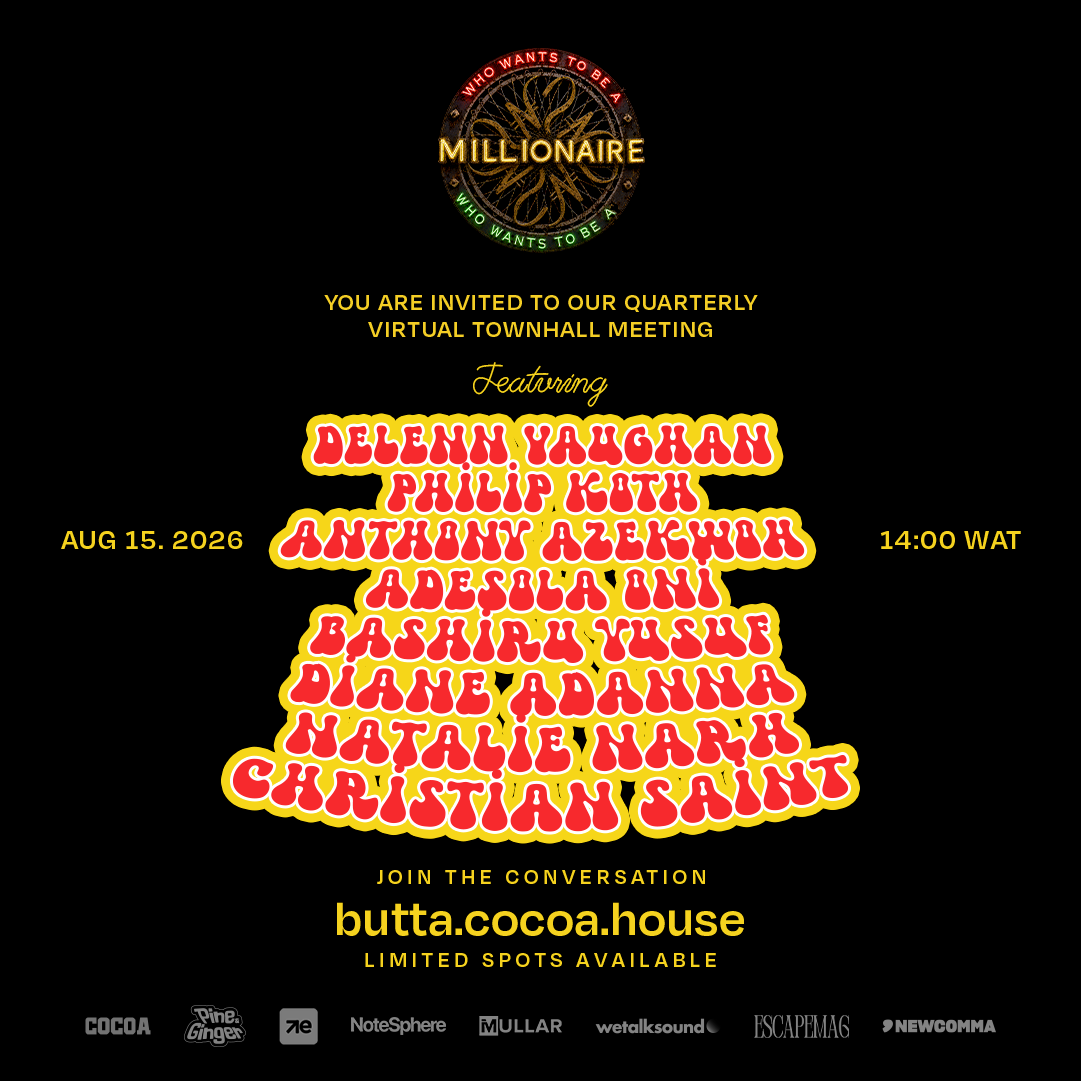
That changing reality sits at the centre of COCOA’s upcoming town hall, “Who Wants to Be a Millionaire?”, a conversation examining how inflation is reshaping the economics of creative work across Africa.
Taking place on Saturday, August 15 at 2:00 PM WAT via Zoom, the town hall will bring together creatives and industry voices including Delenn Vaughan, Philip Koth, Anthony Azekwoh, Adeshola Oni, Bashiru Yusuf and Diane Adanna, with Natalie Narh of NewComma moderating.
The premise is simple, but the problem is not: what does it actually mean to build a creative career when everything costs more?
For artists, designers, filmmakers, photographers and other creative professionals, inflation doesn’t stop at rent or groceries. It reaches the studio, the camera, the laptop, transportation, production crews, software, materials and, perhaps most importantly, the price of their own labour.
As costs rise, creatives are being forced to rethink how they price projects, negotiate fees and decide which opportunities are worth taking. A job that once made financial sense can now leave little behind once the real cost of producing it is accounted for.
Bisola Abimbola, Editorial Lead at COCOA, says the changing value of money is also changing what creatives believe is possible.>
“A few years ago, a million naira could meaningfully change what was possible for someone. Today, that same million can disappear into the cost of producing a project before the work even gets off the ground.”
That tension is what gives the town hall its title. Who Wants to Be a Millionaire? borrows the familiar language of wealth and turns it into a question about purchasing power, ambition and survival. If a million naira no longer takes you as far as it once did, how much does it take to build a sustainable creative career now?
The conversation will look beyond the headline figure to the decisions happening underneath it: how creatives set their rates, protect their value, fund their work, choose clients and navigate an economy where earning more does not necessarily mean having more.
For an emerging creative trying to turn talent into a career, these aren’t abstract economic questions. They can determine whether a project gets made, whether a freelancer accepts an underpaid opportunity, or whether someone can afford to keep creating at all.
COCOA’s town hall arrives at a moment when Africa’s creative industries continue to attract global attention, while many of the people powering that growth are still figuring out how to make the work financially sustainable.
The bigger question, then, isn’t simply who wants to be a millionaire?
It’s what does it take to stay creative when becoming one feels further away?