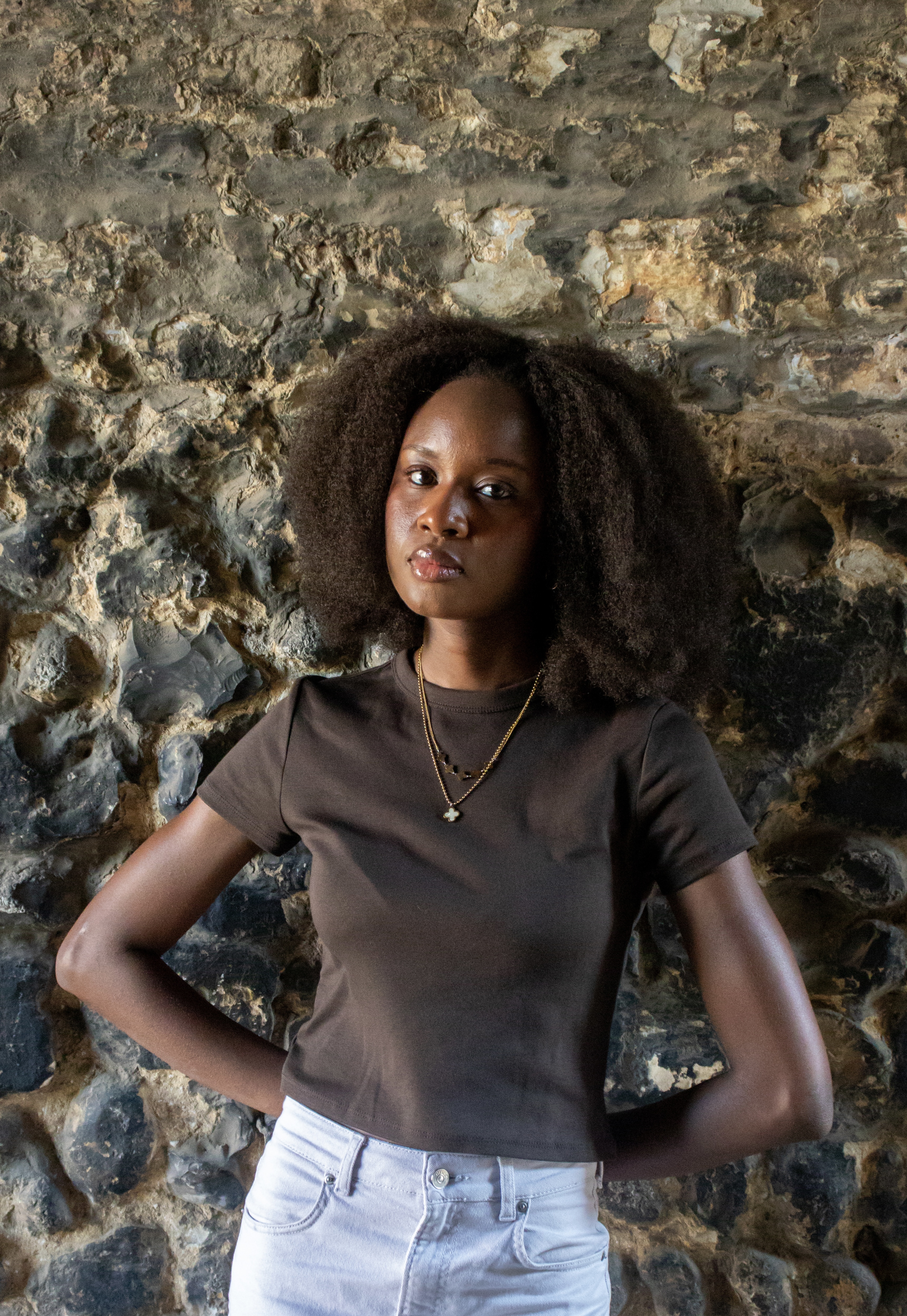

LISTENING AS A TOOL FOR LUCHONG
For Luchong, the painting does not simply give form to an emotion, it responds to it, becoming another voice in the conversation and gently reshaping the feeling that first brought it into being. In this sense, her practice extends beyond the visual and into a quieter, more attentive realm. Once the work has settled into itself, she enters what feels like a second ritual: listening. When I asked what that listening looks like in practice, her answer was characteristically simple and direct. “Spending time sitting with my painting. Literally just staying with it, experiencing being in its presence and taking note of how it is influencing me. It always reveals something new.”
It is this willingness to remain with the work, rather than rush past it, that allows each painting to continue unfolding, offering fresh meanings both to the artist and to those who encounter it.There is something radical about this approach. In a world that rewards speed and productivity, she chooses presence, refusing to rush meaning. Instead, she allows it to arrive in its own time. Perhaps it was inevitable that sound would eventually become part of her practice. Not music in the conventional sense, but immersive compositions built from layered vocal recordings, breath, resonance and vibration. These are not accompaniments designed to sit quietly in the background.
They become extensions of the paintings themselves, giving emotional texture a sonic form.Her fascination with sound began with curiosity.“I chose to use sound when I discovered the powerful effect it has on the human brain. I noticed it in myself first and it led me to researching more about it.”The questions came naturally.”Asking questions like why do we react to certain sounds in different ways, why does a loud bang scare me? Why does my brain know that that sound signals a threat? Why does the sound of water or a stream soothe me? How does my nervous system know all these things?”Those questions led her into research, exploring the relationship between sound, memory, emotion and the body.” Reading on how music helps with some mental and physical health challenges like Parkinson’s disease and Alzheimer’s.
It was all incredibly fascinating to me and I particularly love the ability of sound to expand, guide and somewhat control human emotion. That curiosity reveals something essential about Luchong’s practice. She is interested not merely in how art appears, but in how it behaves: the way it moves through the nervous system, settles into memory, alters the emotional atmosphere of a room, and quietly encourages us to pay closer attention to ourselves.

When asked what she hopes viewers take with them after encountering her work, she offers a response that feels less like an artist’s statement than a quiet act of care: “I hope people realize that it is okay to feel. To create space for your emotion, understand it, hug it, feel it, but don’t let it consume you. Persevere and keep living.”

Back in her studio in Norwich, another painting waits quietly on the easel.

Music drifts through the room, though on other days it might be the conversations of passersby or the melodies of street performers echoing from outside. The atmosphere remains exactly as she intended it to be, a place calm enough for creativity to emerge intentionally to fit her mood.
Somewhere nearby, another sound piece is beginning to take shape.
Luchong once described her practice in the simplest possible terms.
“I like to paint things that make you pause.”
By the end of our conversation, it becomes clear that the pause at the heart of Luchong’s practice is never an end in itself. It is a point of departure, an invitation to look beyond beauty and appearance, and beyond the stories we habitually tell about who we are. In the stillness her work creates, we begin to notice other forms of language: the eloquence of a gaze, the quiet honesty of a gesture, and the emotions that gather just beneath the surface of everyday life.
What her paintings ultimately reveal is that listening is not confined to the ear. It can begin with the act of looking, with the willingness to remain present before an image long enough for it to speak. At times, it is the heart that does the hearing. And sometimes, all that is required is the courage to stay still, allowing what has been waiting within us all along to finally come into view.
Leave a Reply