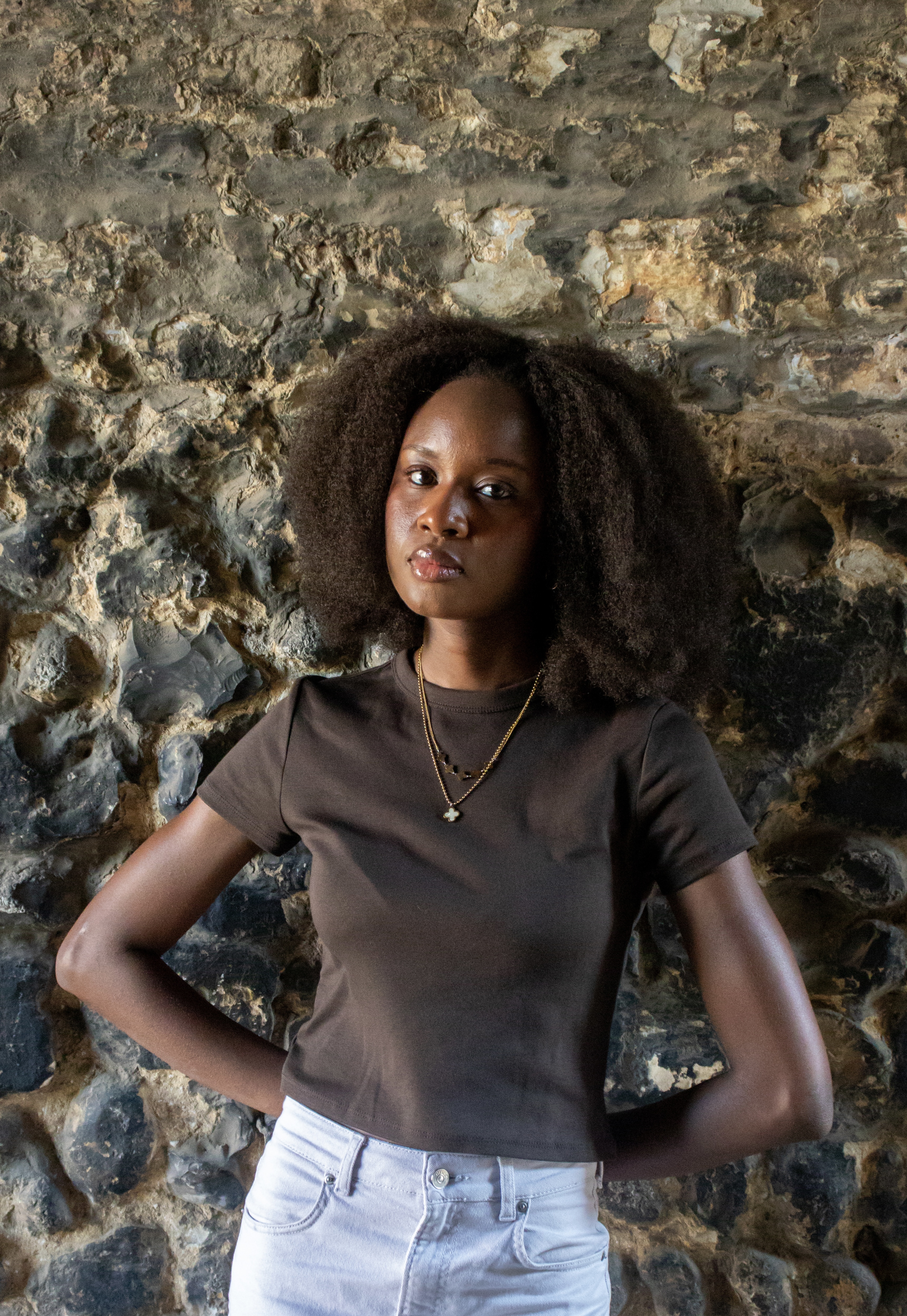

THE LUCHONG PROCESS
Only then does the image begin to take shape, first as a sketch, then as a digital study.“Once I’ve settled on the composition, I begin stretching the canvas, a lot of the time myself; I prime it, and sand it before I begin painting. Next, I sketch the painting out, then recreate it digitally so I can test different compositions and colour palettes before committing to paint.” Her materials are layered too. Acrylic shares space with fabric, flour paste textures, ink, and, when the work calls for it, gold leaf.
There isn’t a fixed sequence. Each painting decides its own rhythm.“I mainly work with acrylic on canvas, fabric, flour paste textures, ink, and sometimes gold leaf. Most times, I build the painting first, focusing on the figures and composition, before introducing fabric, jewellery, sculptural elements, and textures. Sometimes I work in reverse, painting the figures last.”
That instinct for layering doesn’t stop with paint. It carries into her sound practice as well. Working with recordings of her own voice, she builds immersive soundscapes piece by piece, shaping them in Adobe Audition and Audacity until they feel complete. “Alongside my paintings, I create sound works using my voice. I record vocals in an audio recording booth and edit them in Adobe Audition and Audacity audio editing software, layering humming, breath, sustained notes, and other vocal textures to gradually build the final soundscape.” Whether she’s painting or composing sound, the philosophy remains the same. Nothing arrives all at once. Everything is assembled, adjusted, and patiently refined. Knowing when a work is finished isn’t something she measures against a checklist. It’s something she feels.“That’s usually how I know a painting is complete. There isn’t a checklist. I keep making decisions until the work becomes alive and holds a presence of its own.” Listening to Luchong describe her practice, it’s clear that her work isn’t driven by sudden flashes of inspiration. It’s built through patience, quiet persistence, and a willingness to keep returning to the work until it begins to breathe on its own.
Luchong has spent years paying attention to what people communicate when words fall away. As she grew older, those observations only became more profound.“Becoming much older, understanding the world for myself, navigating complex emotions as an adult, being privileged to hear people’s stories, and observing my society, it was somewhat fascinating to see people moving through life and carrying so much often with a smile on their face.” She remains fascinated by the gap between how people appear and how they truly feel, and by the hidden stories and quiet emotional worlds they carry with them each day. When asked how she usually describes her work to someone encountering it for the first time, she doesn’t offer an elaborate artist’s statement, instead, she says something wonderfully direct.

“I like to paint things that make you pause.” – Luchong
Perhaps that is the simplest way to understand her practice: not as paintings about emotion, but as works that create enough stillness for emotion to rise to the surface.
In that quiet space, viewers often find themselves noticing feelings and stories they might otherwise overlook, a gentle reminder that some of the most honest conversations begin not with speaking, but with looking long enough to see what has been there all along.If observation is where Luchong’ practice begins, empathy is where it settles. Recently, she has found herself thinking deeply about what it means to inhabit someone else’s emotional world. Not merely to understand it intellectually, but to feel it with enough intensity that it begins to leave a mark.
Leave a Reply