Category: Film

  • Biafra and Nigeria: What the BBC’s Alabi-Isama Documentary Reveals About Memory, Identity, and the Stories We Tell About War

    Biafra and Nigeria: What the BBC’s Alabi-Isama Documentary Reveals About Memory, Identity, and the Stories We Tell About War

    Writen by Frotune Ibeh

    The greatest strength of the BBC documentary featuring Major General Godwin Alabi-Isama, filmmaker Meji Alabi, and survivors of the Nigerian Civil War is not that it tells us something new about the war.

    It exposes how little many Nigerians understand about it.

    Nearly six decades after the guns fell silent in January 1970, the Nigerian Civil War remains one of the most discussed yet least understood events in the country’s history. For some, it is remembered as a failed secession. For others, it is remembered as a fight for survival. For many younger Nigerians, it exists only as a fragment of history, rarely taught in sufficient detail and often inherited through family stories rather than rigorous historical engagement.

    The documentary enters this space not as a definitive account of the war, but as something perhaps more valuable: a meditation on memory.

    What emerges is not simply a story about Biafra or Nigeria. It is a story about how people remember conflict, how nations process trauma, and how different participants can carry radically different interpretations of the same historical event.

    Watching the documentary, I was struck less by the military history and more by the faces behind it.

    The survivors who appeared on screen were not speaking about abstract political ideas. They were speaking about experiences that continue to live within them decades later. The pain remained visible. It could be heard in their voices, seen in their expressions, and felt in moments where words appeared insufficient to communicate the weight of what they had endured.

    Some spoke with grief, others spoke with pride, some appeared haunted by memory, others reflected on military operations with the confidence of men discussing achievements.That contrast may be the documentary’s most important contribution.

    History records events, memory records emotion.

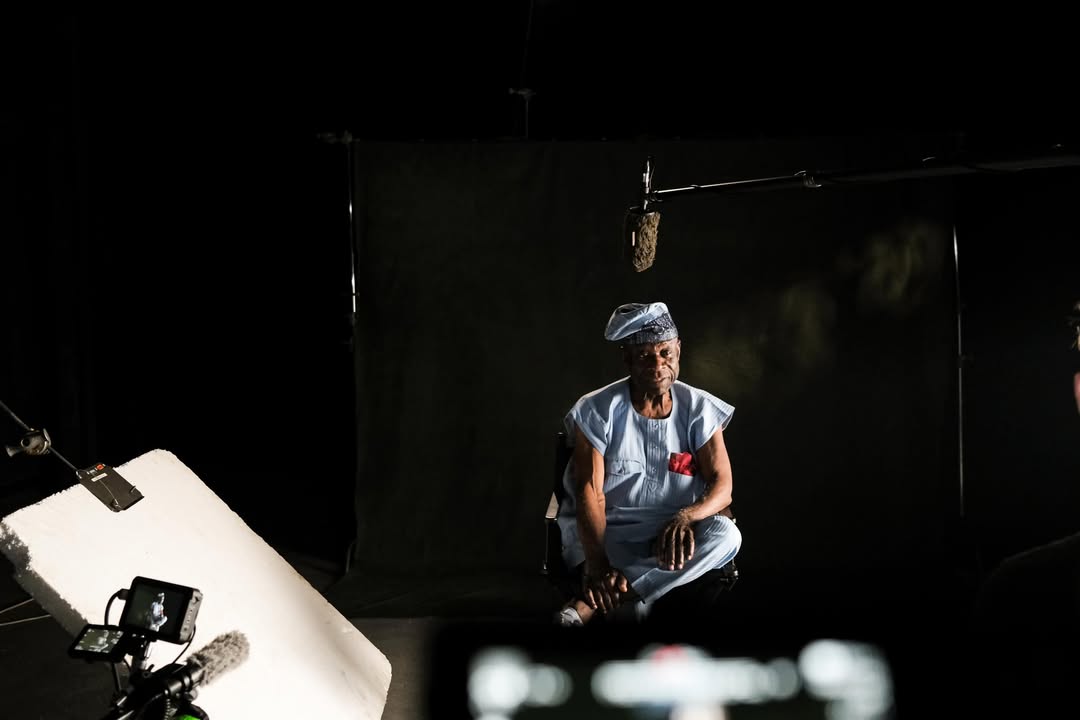
    The documentary reminds viewers that while wars officially end, they rarely end for those who lived through them. One of the most fascinating figures in the film is General Godwin Alabi-Isama himself. Not because of his military accomplishments alone, but because of what his life represents.

    Alabi-Isama’s father was an Ukwuani man from present-day Delta State, while his mother, Alhaja Jeminatu Ajiun Isama, was from Ilorin in present-day Kwara State. To many viewers, this may seem like a minor biographical detail. In reality, it is one of the most historically significant aspects of the documentary.

    Before the Nigerian Civil War, the British colonial administration grouped numerous ethnic nationalities into large regional structures. Minority communities that now occupy present-day Delta, Bayelsa, Rivers, Cross River, Akwa Ibom, and other parts of southern Nigeria existed administratively within the Eastern Region through structures such as the Calabar, Ogoja, and Rivers provinces. 

    This reality complicates many of the simplistic narratives that dominate contemporary discussions of the war.

    Too often, the conflict is reduced to an ethnic contest between “Nigeria” and “Biafra” or between “the Igbo” and “everyone else.” History tells a far more complicated story.

    General Yakubo Gowon & Major General Odumegwu Ojuku

    The documentary indirectly reminds us that loyalties during the war were not always determined by ethnicity.

    There were Yoruba officers who fought for Biafra.

    Brigadier Victor Banjo became one of the highest-ranking officers in the Biafran Army and led the famous Midwest offensive that temporarily pushed Biafran forces deep into the Midwestern Region. Major Adewale Ademoyega, one of the “Five Majors” associated with the January 1966 coup, also fought on the Biafran side. Lieutenant Fola Oyewole and Captain Ganiyu Adeleke similarly committed themselves to the Biafran cause.

    At the same time, not every person of Eastern origin fought for Biafra.

    Major General Ike Omar Sanda Nwachukwu, born to an Igbo father and a Hausa mother, remained loyal to the Federal Military Government and fought against Biafran forces. Ukpabi Asika, an Igbo intellectual, worked with the Nigerian government as Administrator of the East Central State during the conflict. Alabi-Isama himself fought within the Nigerian Army despite his roots within the former Eastern Region.

    These examples matter because they challenge one of the most persistent misconceptions about the war.

    The Nigerian Civil War was not simply a conflict between ethnic groups.

    It was also a conflict shaped by military loyalty, competing ideas of nationhood, regional interests, political convictions, personal relationships, and circumstance.

    Alabi-Isama’s story becomes important because he embodies that complexity.

    He represents the thousands of Nigerians whose identities did not fit neatly into the categories history often prefers.

    In this sense, the documentary’s most compelling figure is not Alabi-Isama the soldier.

    It is Alabi-Isama the contradiction.

    Yet while the documentary succeeds in presenting personal testimony and human experience, it leaves important historical questions unexplored.

    One of its most noticeable limitations is the absence of substantial discussion about the political developments that preceded the war. The coups of 1966, the retaliatory violence that followed, the collapse of trust between regions, and the failed political negotiations that attempted to prevent conflict all remain essential to understanding how Nigeria arrived at war.

    The documentary does not meaningfully engage with the Aburi Accord, a notable omission given its significance within many historical interpretations of the conflict.

    This is not necessarily a flaw, but it is a choice.

    The filmmakers appear more interested in examining memory than in constructing a comprehensive political history.

    Whether viewers consider that approach a strength or a weakness will depend largely on what they expected from the film.

    As a documentary, however, the decision largely works.

    The film understands that history is often most powerful when experienced through people rather than through dates and statistics. Instead of overwhelming audiences with endless exposition, it allows witnesses and participants to speak for themselves. This creates an intimacy that many historical documentaries struggle to achieve.

    The involvement of Meji Alabi also introduces an important generational dimension.

    The documentary becomes more than a historical record. It becomes a conversation between generations attempting to understand a past that continues to shape the present.

    Perhaps the most haunting aspect of the documentary is what it reveals about the cost of war.

    The political arguments surrounding the Nigerian Civil War remain contested.

    The human suffering does not.

    The images of starvation that emerged from Biafra remain among the most recognisable humanitarian images of the twentieth century. Children reduced to living skeletons became symbols of a tragedy that captured global attention and permanently altered perceptions of the conflict.

    Watching the documentary, I found myself repeatedly returning to a simple question:

    Who benefits from war?

    The fighting soldiers? Suffering civilians? Children inheriting the scars?  or the Politicians making these decisions?

    Yet history repeatedly demonstrates that conflicts often continue long after their human cost becomes undeniable. And that reality remains one of the documentary’s most painful lessons.

    At several points, I found myself emotional while watching. Not because the film was attempting to manipulate its audience, but because the testimonies carried an authenticity that was impossible to ignore.

    The suffering felt real because it was real.

    And perhaps that is why the documentary feels so relevant today.

    Nigeria remains a country with an uneasy relationship with its own history. Many young Nigerians know remarkably little about one of the defining events in the nation’s existence. Historical knowledge is often fragmented, politicised, or absent altogether.

    The result is a society that frequently debates history without fully understanding it.

    For that reason alone, this documentary deserves to be watched.

    Not because it provides every answer.

    Not because it settles every argument.

    Not because it offers a definitive account of the war.

    But because it encourages engagement with a history that continues to shape the nation.

    The documentary’s greatest achievement is not what it reveals about military campaigns, political leaders, or battlefield strategy.

    Its greatest achievement is exposing the inadequacy of the stories we often tell ourselves about the war.

    The closer one examines the lives of those who lived through the conflict, the harder it becomes to sustain simplistic narratives about heroes and villains, victims and victors, Nigeria and Biafra.

    History, like identity, is rarely that neat.

    Nearly sixty years later, Nigerians are still debating the causes, meanings, and consequences of the Civil War.

    That may be the documentary’s most powerful revelation.

    The war produced few true winners. Its consequences continue to echo across generations.

    If there is one lesson modern Nigeria should take from both the documentary and the history it explores, it is this: no political objective, ideological ambition, or national disagreement is worth repeating the horrors that consumed the country between 1967 and 1970.

    History’s greatest value is not in remembering the past.

    It is in learning enough from it to avoid repeating it.

  • The Devil in Designer: The Good, The Bad, and The Billionaires

    The Devil in Designer: The Good, The Bad, and The Billionaires

    By Meron Fikru

    Sequels are notoriously difficult to pull off; even more so when the sequel is building on the legacy of a beloved cult classic. In the midst of a 2000s nostalgia revival, with global audiences of eager millennials chomping at the bit, The Devil Wears Prada 2 had a high bar to meet. All things considered, I think it’s safe to say that this sequel met the mark. 

    20 years after the first film, our story returns as Andy Sachs (Anne Hathaway) receives a high journalistic honour at a prestigious awards dinner. Unfortunately for Andy, that joy is short-lived. Moments before, Andy and her team received the devastating news that they had all been laid off and that their publication would subsequently be closing down. Navigating through an onslaught of shock, Andy makes her way onstage to accept her award and takes that moment to lament the importance of journalism in a disappearing industry. As Andy emphatically proclaims: “Journalism still f***ing matters,” 

    Across town, Miranda Priestly (Meryl Streep) arrives at an event reminiscent of the Met Gala, when news of a scandal at Runway breaks as she begins to walk the carpet. In a quick turn of events, with Andy now back on the job market and Miranda suddenly needing to do damage control at Runway, Andy is brought back into the magazine to lead the Features department. 

    Reunited, Andy and Miranda spend much of the film in a push and pull over what journalism is supposed to look like at Runway. With Andy at the helm of the newsroom, now armed with years of serious journalism experience, she endeavours to put out meaningful, reported pieces. Weighed down with the chairman of Runway’s concerns around engagement, Miranda presses Andy throughout the film to pursue more metrics-focused journalism. Through the lens of capitalism, what is the utility of a story in a mainstream publication if nobody reads it?  

    Scattered throughout the film, a number of well-placed easter eggs serve as callbacks to the original film for its most attentive fans: from the street salesman holding up the two matching belts; the return of the iconic refrain “a million girls would kill for this job”; and Andy re-wearing the same cerulean vest she wore in the original film, in her last scene in The Devil Wears Prada 2. (Although this version was a bit more elevated.) 

    Two decades later, some of the most notable differences are felt in the personas of and relationships across our returning characters. The 2026 version of Miranda comes across on screen as a much softer version of herself. Miranda is much more meek in conversation with new management, and far more pliable in learning the language of body positivity with the gentle but firm adjustments from the new “Emily”, Amari (Simone Ashley). This time around, Nigel (Stanley Tucci) and Andy’s working relationship retained its playfulness with some endearing moments of care. Nigel has maintained his edge over the years, while remaining in his role at Runway as Miranda’s #2. He returns to Andy’s rescue a few times throughout the movie, offering up Runway’s closet for Andy’s trip to the Hamptons, to the end-of-the-film reveal, where we find out he was the person in the head’s ear to get Andy rehired. 

    In terms of one of the newest additions to the cast, the inclusion of Peter (Patrick Brammal) as Andy’s love interest, presents one of my few qualms with the film. Peter is a charming Australian contractor that Andy connects with on a viewing of a new luxury apartment building. After Andy inadvertently insults his work, the two end up exchanging information via Tracie, Andy’s long-term best friend. They go on a couple dates throughout the film, before nearly calling it quits prior to Andy’s work trip to Italy. Although they come back together at the end (in true rom-com fashion), I would argue that this milquetoast romance makes for an extremely unnecessary subplot in this film. It does nothing to advance Andy’s character growth, nor does it move the actual story forward. Quite frankly, Andy does not need him.

    Furthermore, I think the crux of Andy’s character lives in her clear love for her career, and her unwavering commitment to salvaging the industry. Andy represents the quintessential career woman; every other relationship (outside of work) in her life, feels very secondary in her world. Including this relationship feels like a strange choice, considering that romantic love (and particularly, this love) feels so inconsequential for Andy’s character evolution and story. 


    Andy and the original Emily’s (Emily Blunt) relationship was perhaps the most interesting to watch. Emily Charlton is now head at Dior, following an abrupt, compulsory departure from Runway. From the surface, she appears to have found her footing in the luxury retail space. Emily Charlton and Andy end up joining forces to rescue Runway from the McKinsey-style management consulting takeover after the surprise death of the chairman. Emily Charlton’s new billionaire beau, Benji Barnes (Justin Theroux) swoops in to save the day, and the advancement of this premise is where the film loses me. 

    We first see her partner on the cover of a magazine, where, oddly enough, he is glowingly referred to as the “Data Center King”. While there emerges a clear need for capital to rescue the company from the clutches of the son of the chairman, the “good billionaire” bit falls a bit flat when you consider that the very reason that journalism in the U.S. has been decimated is because of the billionaires bankrolling mainstream media. 

    After a surprising betrayal by Emily Charlton, Andy and Miranda band together to finesse a new offer at the last minute and miraculously save Runway. The film closes with the two in a car on the way home, with Miranda giving Andy approval to write the secret memoir on Miranda (because, of course, Miranda has ears everywhere). 

    For a film that had to fill in its narrative world following a 20-year gap, the characters feel like they have grown with their audience. Andy has truly grown into herself and her work with a newfound air of self-assuredness, despite the moments at Runway where we see flashes of her younger self return. After decades in Miranda’s shadow, we even get the opportunity to see Nigel stretch out his wings. 

    The subject matter equally feels to have reached an appropriate maturation; the reckoning with the grief and outrage over a depleted sector is palpable, and very real within and outside of media circles. The conversation this film prompts on the sacrifices made when corporate interests eclipse the arts, and how these decisions have reconfigured the role of journalism in society (commercialization over curiosity), is critical in understanding the gangrene that has spread across the industry. 

    To have premiered the weekend before this year’s controversial, billionaire-sponsored Met Gala, I am reminded of the words of Oscar Wilde, “Life imitates Art far more than Art imitates Life.” In a tumultuous time for fashion on the big screen and in real life, I can appreciate that the film prompts us to consider what happens to art and fashion under corporate capture. With the film closing on the hint of a memoir on the way, audiences are left to wonder if this is the last we will see of Andy Sachs. 

  • The Case for Sinners: Why It Feels Bigger Than a “Best Picture” Run

    The Case for Sinners: Why It Feels Bigger Than a “Best Picture” Run

    A review by Mercy Oluwanisola Akintola.

    As a creative person, if someone said you can’t create anymore, what would you do?
    As a storyteller, if someone said, you can’t tell stories anymore. You can’t even imagine stories anymore, Sola, what would I do?

    We would die here. Because telling stories and creating with my hands is all I know. And if I can’t do that, I can’t even think about it. It makes me nervous. As I type this, my hands are shaking.


    That is how Sammie must have felt when he walked into the church after having the best day of his life and the worst night of his life, and his father said to him, “Drop the guitar, Samuel. In the name of God!”

    You see, Sammie’s father only saw the guitar as something that brought trouble. He failed to see that the guitar was what saved Sammie, literally.

    By now, I’m sure you already know the movie I’m talking about, the best cinema to come out of 2025. Ryan Coogler did not just give us a movie inspired by historical times; he gave a love letter to creatives, a reminder to never give up on your art, no matter what. 

    The movie starts with a narration from Annie, played by the gorgeous and talented Oluwunmi Mosaku. She says, “There are legends of people born with the gift of making music so true that it can pierce the veil between life and death…” This introduction already showed us how talented Samuel was, even before we met him. 

    The story follows Samuel and his older twin cousins, Stack and Smoke, both played by the magnetic and formidable Michael B. Jordan. Sinners is set in the post-Reconstruction South, unfolding on 16 October 1932 in the town of Clarksdale, Mississippi. After chasing the promise of success in the North, the twin brothers return home with hopes of starting anew, opening a juke joint of their own. 

    In the words of Stack, “Look at the sky, that’s a mighty day to be free, ain’t it? Our own juke joint. For us and by us. Just like we have always wanted.” 

    That line sat perfectly with me, not just as a creative, but as an immigrant. The dream of finally building something for yourself, the way you want it, for you and your people. 

    The movie does a great job of telling the story of people of colour and their struggles before the 1920s and 1930s, and even till today. It makes historical references, like the lie that the guitar given to little Sammie, played by Miles Caton who has a heavenly voice by the way, once belonged to Charley Patton, known as the father of the blues. One moment that stood out was when Stack refused to open the door for his brother after he had turned into a vampire and smoke references the Jim Crow laws, which were state and local laws in the United States that enforced racial segregation and discrimination, mainly in the Southern states, from the late 1800s until the mid-1900s. 

    The most ironic moment, however, was when little Sammie asked Mary, a white-passing woman played by the radiant and expressive Hailee Steinfeld, “What are you?” and she replied, “I’m human.” 

    That question is one people of colour and immigrants still get till this day from white people in America. 

    I could continue listing the references, but I don’t want to lose you guys. 

    The movie was shot so beautifully. The colour is impeccable. There is something about the driving scene that reminded me of the driving scene in The Sound of Music. Maybe it’s because it is one of the oldest movies I have seen. My favourite scene was the one where Preacher Boy was singing, and we got to see how sacred music was for people of colour, and how it influenced us in the past, the present, and the future.

    Ryan Coogler illustrated this by showing us different cultures of music, from Delta blues, to someone playing bass-line guitar like Prince, to a DJ hyping up Sammie, to masquerade dance. Ryan Coogler and Ludwig Göransson were able to turn that scene into poetry without making it look overworked. 

    What begins as a space of joy soon becomes something more, a gathering place where music, movement, and memory collide, holding culture and history in rhythm. But the celebration does not last. An unnamed evil begins to creep in, threatening not just the brothers’ dream, but the very heart and soul of the community they hoped to revive. 

    I could go on about the good qualities, the references, and how beautifully shot this movie was, but I think you should go find out for yourself. And if you don’t get inspired, my dear, then something is wrong somewhere, because I did. 

    Award season is upon us, and if Sinners is not in the mouths of people after everything I’ve said in the last few paragraphs, then there has to be a problem somewhere and some explaining to do. Leading with 17 nominations at the Critics Choice Awards, a record 21 nominations at the Black Reel Awards, and seven nominations at the 83rd Golden Globe Awards, Sinners is clearly being recognised.

    However, despite all these nominations, the awards are not popping in the way I think they should. What makes all of this even more annoying, if I’m being honest, is that Sinners keep showing up everywhere, but when it’s time to actually give the awards, suddenly everyone starts acting shy. At the Golden Globes, the film was nominated, present, and clearly respected, yet the wins did not come the way many of us expected. And this is not new. Hollywood loves to acknowledge films like Sinners just enough to look aware, just enough to look fair, but not enough to fully commit. It’s like saying, “yes, we see you,” and then quietly moving on. 

    Now, the Oscar nominations are not out yet, and they are set to be announced on 26 January. That waiting period alone is doing a lot of talking. We are all watching, fingers crossed, refreshing pages, asking ourselves whether Sinners will even be nominated at all. And the fact that this is still a question is part of the problem. When a film is this strong, this culturally loud, and consistently nominated across major awards, the conversation should not be if it gets nominated, but how many. The uncertainty shows how conditional recognition still is. 

    Let’s be very honest here. Race has always influenced how awards are given in Hollywood, whether the industry wants to admit it or not. Films led by Black stories and Black creatives are often welcomed only when they feel comfortable, inspirational, or safely contained. Sinners refuse that. It is joyful and dark, spiritual and rebellious, historical and very present. And that kind of honesty makes institutions like the Golden Globes and the Oscars uncomfortable. These awards are not just about talent; they are about what kinds of stories Hollywood feels safe rewarding. Too often, the boldest ones are left with nominations, praise, and long speeches about “importance,” but no trophy in sight.


    ← Back

    Thank you for your response. ✨

    Rating(required)

  • Review: My Father’s Shadow Is Not Just a Film — It’s the Story of Us

    Review: My Father’s Shadow Is Not Just a Film — It’s the Story of Us

    A review by Mercy Oluwanisola Akintola.

    The first time someone close to me died, it was my paternal grandmother. According to those around her, there were signs that she was preparing to leave. Her skin started to glow, and she had deep, intentional conversations with her children reminding them to be kind and patient with their father, her husband. Another sign was that my youngest cousin, her last grandchild, turned his back to her for three days before she passed. None of these signs made sense to us at the moment; they only became clear a few hours after she died.The adults in my life said she knew she was going to die, so she prepared everyone the best way she could. If I had  to compare the story of her last days to any film, it would be My Father’s Shadow. 

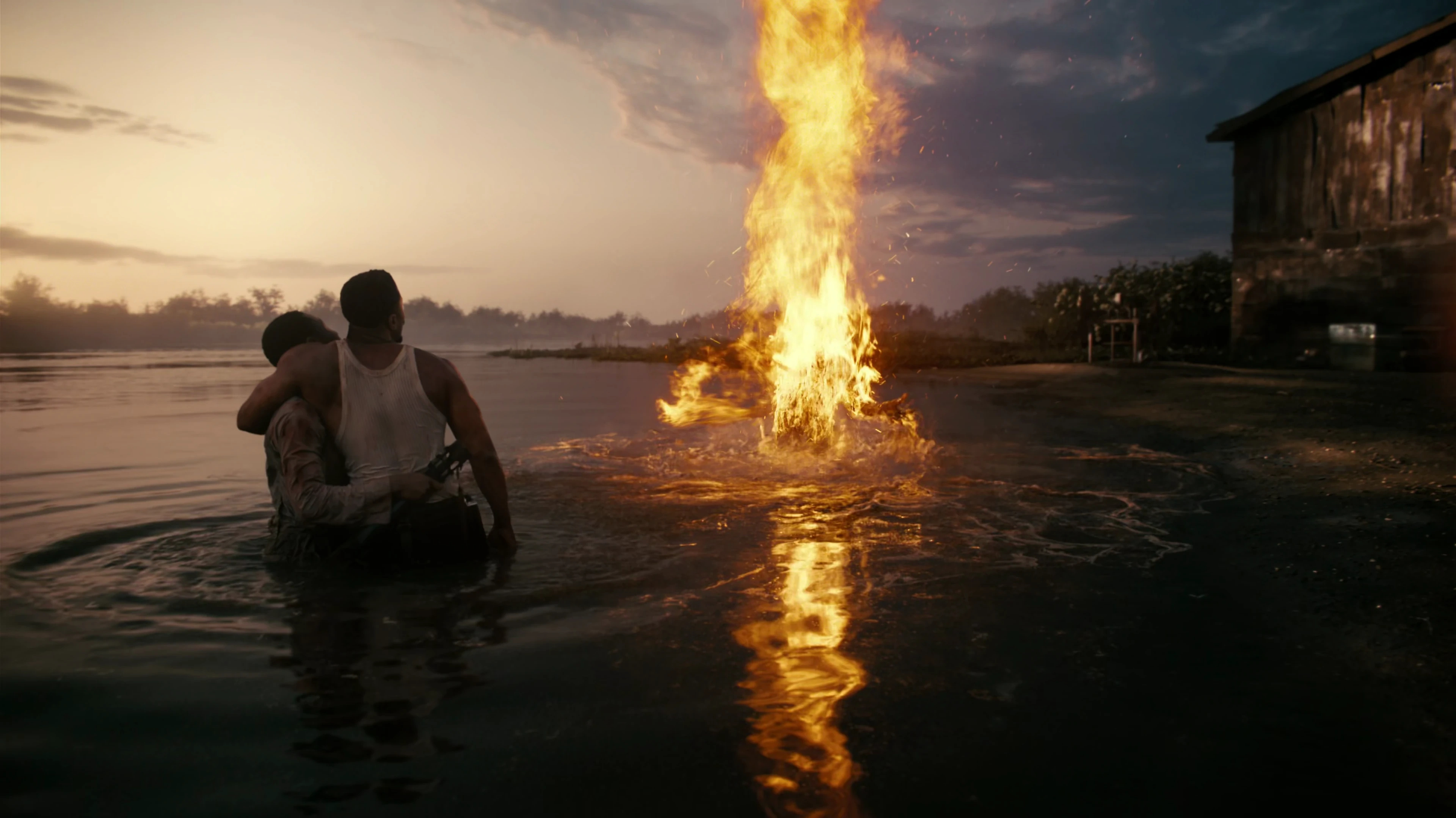
    Still From My Father’s Shadow

    The film begins with two brothers simply being boys, playing with paper action figures, eating together, talking and laughing freely. You didn’t need to be told they were brothers; they showed it. Their father calls them into a room, and seeing how hesitant they are for him to leave again, he decides to take them to Lagos. For the first time, they get to know the world outside their small, familiar environment, experiencing life through their father’s eyes. They witness the parts of Nigeria that feel ordinary yet extraordinary once you really look at them: the way ants move together, the crabs walking along Ajah beach, the long petrol queues that only appeared during fuel scarcity or Christmas, the ever-present religious fanatic in every situation, and the way so many Nigerians lean on “God go do am” as a solution to everything. It was relatable in a way only Nigerians truly understand, but told clearly enough for anyone to feel the story. 

    Cinematography

    The cinematography reminded me of old cassette films my parents and their friends watched before CDs became popular: the warmth, the grain, the slow movement of the camera. Pure nostalgia.My favorite scene was at the beach. In that moment, there was no politics, no struggle, just a father and his sons, living, learning, and being present with one another.My favorite line in the film was when one son confronted his father about never being around. The father replied, “Everything you sacrifice, you just have to make sure you don’t sacrifice the wrong thing.”For me, that was a wake-up call, a reminder that in all my striving and ambition, I must not forget to check up on my people, to be present, to love while I can. 

    I wasn’t born when the Abiola ’93 election happened, but I felt the pain and anger Fola felt. It reminded me of every election I witnessed as a child, the way my parents made sure we all stayed home throughout election weekend to keep us safe. It reminded me of corrupt Nigeria: missing ballot boxes, chaos, confusion, and all the characteristics that make up a Nigerian election.The film ends with Fola, the father, trying to get his children home safely to avoid any trouble caused by the election results. They are stopped for no reason by an agitated military officer who orders their father sitting in the back seat to get down. That scene hit hard, because 30 years later, Nigerians still experience the same brutality, only now it comes in a different font

    called SARS.The film shows how much Nigeria has evolved, and yet how little has truly changed on a larger scale. 

    Another detail I appreciated, which we rarely see in Nigerian films today, is the authentic celebration of life during mourning. In many recent films, when someone dies, everyone wears black, which does not reflect how we actually honour our dead. Here, the film captured that balance: yes, we are sad, but we don’t have to look sad. And the hymn “A o pade leti odo” instantly transported me back to my grandmother’s funeral mass.

    Characters  

    The acting was strong. The side characters played by Greg Ojefua, Patrick Diabuah, and the talented Ụzọamaka who are some of our best actors in Nigeria, so I expected excellence, and they delivered. The boys, played by Godwin Egbo and Chibuike Marvelous Egbo, were convincing. I immediately compared them to two of my friends who are brothers, they had real chemistry. Later, when I learned they are brothers, it made sense. If you’re a cinephile, you could notice some inexperience, especially in moments where they accidentally looked into the camera, but for their first film, they did well. I look forward to seeing them grow. 

    The woman,my favorite character,played by Wini Ẹfọ̀n, was outstanding. She appeared briefly, said nothing, yet delivered everything her character needed to. No crumbs left.And now to the main actor, the man of the hour: Ṣọpẹ́ Dìrísù.There is no doubt that Ṣọpẹ́ is a magnificent actor, but in some of the dialogue, the British accent tried to jump out the same way my h factor tries to jump out when I’m speaking fluent English. In a few lines, it felt like he was announcing his dialogue. If you’re not obsessed with films or Nigerian speech patterns, you might not notice it at all. 

    Direction

    The direction Akinola Davies took made sense. The film carried an indie softness, and considering how different Nigeria is today compared to 1993, the world-building must have been challenging. Yet, they managed to take us back. His attention to detail was clear, he gave us exactly what we needed, without leaving gaps or over-explaining. 

    The storytelling by Wale Davies and Akinola Davies is one for the books. It raises the bar not just for Nigerian storytelling, but for African storytelling. My Father’s Shadow feels like the beginning of our stories being told properly, and I can’t wait to see what African cinema looks like in five years. 

    I feel sad that those of us in the diaspora only get to watch it at film festivals. I hope it lands on streaming platforms next year because I want to watch it again and again. I would rate it a solid 5/5. When someone asks me for a Nigerian movie recommendation, I will shout My Father’s Shadow before they finish their sentence. This story is inspiring, not just because I love films, but because the storytelling itself blew my mind.

    Rating: 5 out of 5.
  • Nigeria at Cannes: My “Father’s Shadow” Becomes First Nigerian Film to Premiere at the Festival

    Nigeria at Cannes: My “Father’s Shadow” Becomes First Nigerian Film to Premiere at the Festival

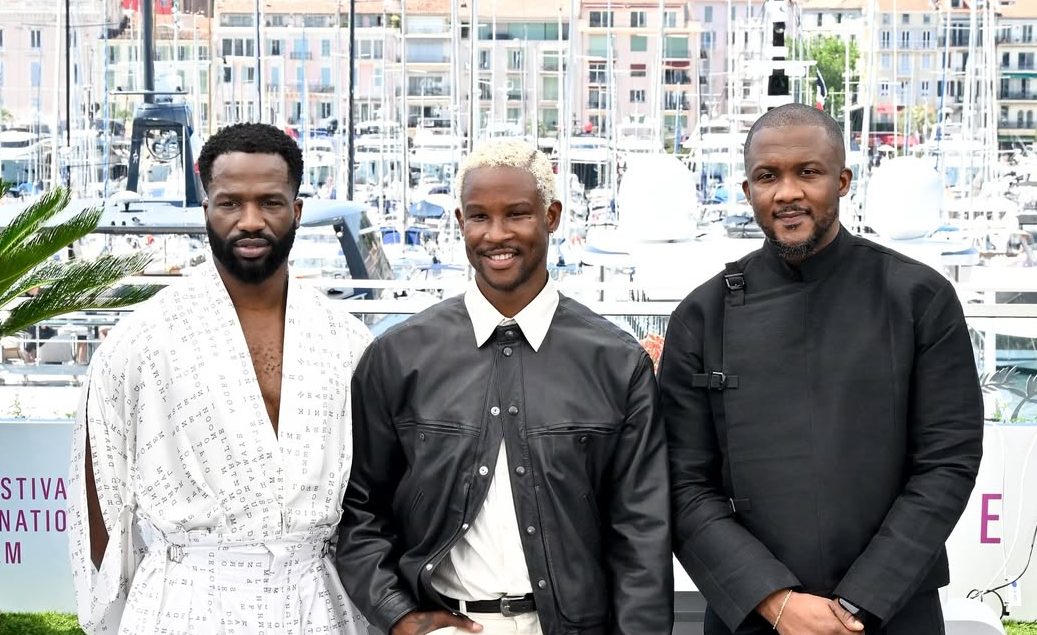
    A Nigerian film, My Father’s Shadow, by Ṣọpẹ Dìrísù, Wale Davis, and Akinola Davis Jr., has officially become a global critic favorite — making history as the first-ever Nigerian film to be screened at the Cannes Film Festival in France.

    A universally relatable story, My Father’s Shadow follows the emotional return of an absent father who suddenly re-enters his sons’ lives and takes them into his care. The film made its big debut at the festival yesterday to love, applause, and a standing ovation from the audience.

    What makes this moment even more powerful is the fact that this is Akinola Davis Jr.’s directorial debut — and launching onto the global stage like this is nothing short of a statement. It confirms the genius we’ve always known was there.

    Now, I haven’t personally seen the film yet, but I already have a few takeaways from this historic moment in the culture. First, that anything is possible. No matter who we are or where we’re from, we can build, create, and achieve what we dream of. That’s the kind of inspiration that fuels every young Nigerian creative to push further. My father’s shadow was also nominated at the just concluded BAFATs here in the UK.