Writen by Frotune Ibeh

The greatest strength of the BBC documentary featuring Major General Godwin Alabi-Isama, filmmaker Meji Alabi, and survivors of the Nigerian Civil War is not that it tells us something new about the war.
It exposes how little many Nigerians understand about it.
Nearly six decades after the guns fell silent in January 1970, the Nigerian Civil War remains one of the most discussed yet least understood events in the country’s history. For some, it is remembered as a failed secession. For others, it is remembered as a fight for survival. For many younger Nigerians, it exists only as a fragment of history, rarely taught in sufficient detail and often inherited through family stories rather than rigorous historical engagement.
The documentary enters this space not as a definitive account of the war, but as something perhaps more valuable: a meditation on memory.
What emerges is not simply a story about Biafra or Nigeria. It is a story about how people remember conflict, how nations process trauma, and how different participants can carry radically different interpretations of the same historical event.
Watching the documentary, I was struck less by the military history and more by the faces behind it.

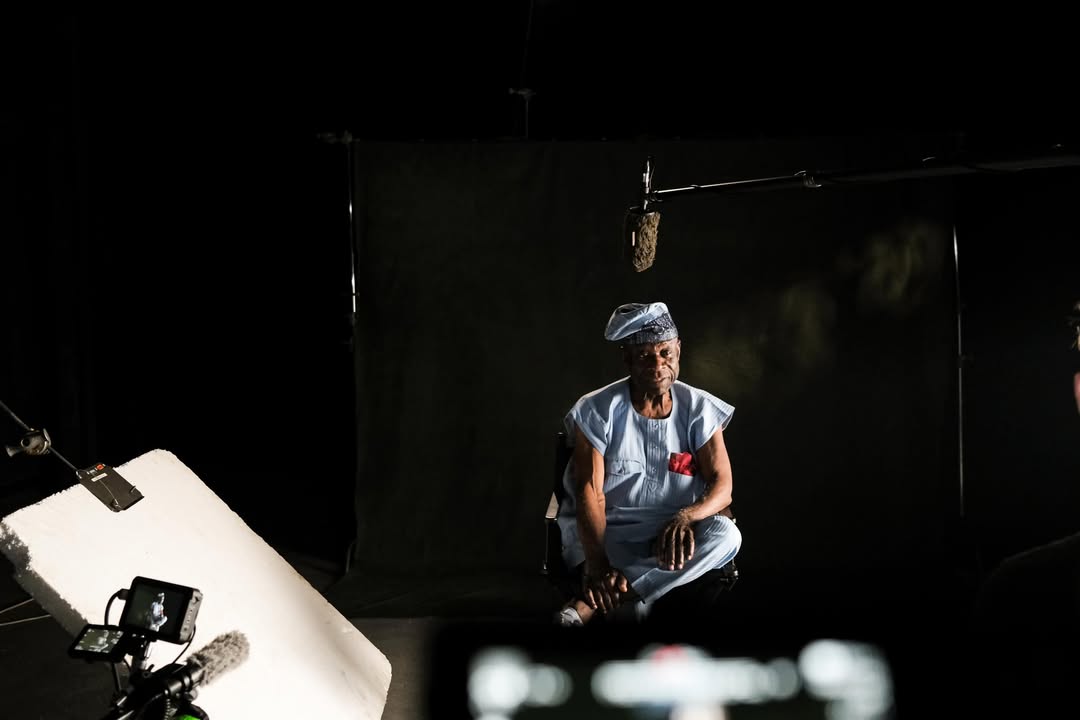
The survivors who appeared on screen were not speaking about abstract political ideas. They were speaking about experiences that continue to live within them decades later. The pain remained visible. It could be heard in their voices, seen in their expressions, and felt in moments where words appeared insufficient to communicate the weight of what they had endured.
Some spoke with grief, others spoke with pride, some appeared haunted by memory, others reflected on military operations with the confidence of men discussing achievements.That contrast may be the documentary’s most important contribution.

History records events, memory records emotion.
The documentary reminds viewers that while wars officially end, they rarely end for those who lived through them. One of the most fascinating figures in the film is General Godwin Alabi-Isama himself. Not because of his military accomplishments alone, but because of what his life represents.
Alabi-Isama’s father was an Ukwuani man from present-day Delta State, while his mother, Alhaja Jeminatu Ajiun Isama, was from Ilorin in present-day Kwara State. To many viewers, this may seem like a minor biographical detail. In reality, it is one of the most historically significant aspects of the documentary.

Before the Nigerian Civil War, the British colonial administration grouped numerous ethnic nationalities into large regional structures. Minority communities that now occupy present-day Delta, Bayelsa, Rivers, Cross River, Akwa Ibom, and other parts of southern Nigeria existed administratively within the Eastern Region through structures such as the Calabar, Ogoja, and Rivers provinces.
This reality complicates many of the simplistic narratives that dominate contemporary discussions of the war.
Too often, the conflict is reduced to an ethnic contest between “Nigeria” and “Biafra” or between “the Igbo” and “everyone else.” History tells a far more complicated story.


The documentary indirectly reminds us that loyalties during the war were not always determined by ethnicity.
There were Yoruba officers who fought for Biafra.
Brigadier Victor Banjo became one of the highest-ranking officers in the Biafran Army and led the famous Midwest offensive that temporarily pushed Biafran forces deep into the Midwestern Region. Major Adewale Ademoyega, one of the “Five Majors” associated with the January 1966 coup, also fought on the Biafran side. Lieutenant Fola Oyewole and Captain Ganiyu Adeleke similarly committed themselves to the Biafran cause.

At the same time, not every person of Eastern origin fought for Biafra.
Major General Ike Omar Sanda Nwachukwu, born to an Igbo father and a Hausa mother, remained loyal to the Federal Military Government and fought against Biafran forces. Ukpabi Asika, an Igbo intellectual, worked with the Nigerian government as Administrator of the East Central State during the conflict. Alabi-Isama himself fought within the Nigerian Army despite his roots within the former Eastern Region.
These examples matter because they challenge one of the most persistent misconceptions about the war.

The Nigerian Civil War was not simply a conflict between ethnic groups.
It was also a conflict shaped by military loyalty, competing ideas of nationhood, regional interests, political convictions, personal relationships, and circumstance.
Alabi-Isama’s story becomes important because he embodies that complexity.
He represents the thousands of Nigerians whose identities did not fit neatly into the categories history often prefers.
In this sense, the documentary’s most compelling figure is not Alabi-Isama the soldier.
It is Alabi-Isama the contradiction.
Yet while the documentary succeeds in presenting personal testimony and human experience, it leaves important historical questions unexplored.

One of its most noticeable limitations is the absence of substantial discussion about the political developments that preceded the war. The coups of 1966, the retaliatory violence that followed, the collapse of trust between regions, and the failed political negotiations that attempted to prevent conflict all remain essential to understanding how Nigeria arrived at war.
The documentary does not meaningfully engage with the Aburi Accord, a notable omission given its significance within many historical interpretations of the conflict.
This is not necessarily a flaw, but it is a choice.
The filmmakers appear more interested in examining memory than in constructing a comprehensive political history.
Whether viewers consider that approach a strength or a weakness will depend largely on what they expected from the film.
As a documentary, however, the decision largely works.
The film understands that history is often most powerful when experienced through people rather than through dates and statistics. Instead of overwhelming audiences with endless exposition, it allows witnesses and participants to speak for themselves. This creates an intimacy that many historical documentaries struggle to achieve.
The involvement of Meji Alabi also introduces an important generational dimension.
The documentary becomes more than a historical record. It becomes a conversation between generations attempting to understand a past that continues to shape the present.
Perhaps the most haunting aspect of the documentary is what it reveals about the cost of war.
The political arguments surrounding the Nigerian Civil War remain contested.
The human suffering does not.
The images of starvation that emerged from Biafra remain among the most recognisable humanitarian images of the twentieth century. Children reduced to living skeletons became symbols of a tragedy that captured global attention and permanently altered perceptions of the conflict.

Watching the documentary, I found myself repeatedly returning to a simple question:
Who benefits from war?
The fighting soldiers? Suffering civilians? Children inheriting the scars? or the Politicians making these decisions?
Yet history repeatedly demonstrates that conflicts often continue long after their human cost becomes undeniable. And that reality remains one of the documentary’s most painful lessons.
At several points, I found myself emotional while watching. Not because the film was attempting to manipulate its audience, but because the testimonies carried an authenticity that was impossible to ignore.
The suffering felt real because it was real.
And perhaps that is why the documentary feels so relevant today.
Nigeria remains a country with an uneasy relationship with its own history. Many young Nigerians know remarkably little about one of the defining events in the nation’s existence. Historical knowledge is often fragmented, politicised, or absent altogether.

The result is a society that frequently debates history without fully understanding it.
For that reason alone, this documentary deserves to be watched.
Not because it provides every answer.
Not because it settles every argument.
Not because it offers a definitive account of the war.
But because it encourages engagement with a history that continues to shape the nation.
The documentary’s greatest achievement is not what it reveals about military campaigns, political leaders, or battlefield strategy.
Its greatest achievement is exposing the inadequacy of the stories we often tell ourselves about the war.
The closer one examines the lives of those who lived through the conflict, the harder it becomes to sustain simplistic narratives about heroes and villains, victims and victors, Nigeria and Biafra.
History, like identity, is rarely that neat.
Nearly sixty years later, Nigerians are still debating the causes, meanings, and consequences of the Civil War.
That may be the documentary’s most powerful revelation.
The war produced few true winners. Its consequences continue to echo across generations.
If there is one lesson modern Nigeria should take from both the documentary and the history it explores, it is this: no political objective, ideological ambition, or national disagreement is worth repeating the horrors that consumed the country between 1967 and 1970.
History’s greatest value is not in remembering the past.
It is in learning enough from it to avoid repeating it.
Leave a Reply