Category: Sports

  • Reading the Game: How Jose Mourinho Actually Wins Matches

    Reading the Game: How Jose Mourinho Actually Wins Matches

    Written by Ejiose Ikuenobe

    A case study in tempo-reading, bold selection, in-game tactical reads, and the impact substitutions Mourinho has used across every top European league he has managed.

    Jose Mourinho’s critics reduce him to a manager who sits deep, absorbs pressure, and grinds out 1-0s. That picture is incomplete. It’s not just that he wins games late; it’s how he gets to that position in the first place. Across four leagues Portugal’s Primeira Liga, England’s Premier League, Italy’s Serie A, and Spain’s LaLiga plus finals in the Champions League, Europa League, and Conference League, the pattern that actually defines Mourinho’s career is a manager who reads a match in real time and is willing to act on that read in more than one way: leaving out a bigger name for a tactically smarter one. This piece tries to cover all of it the selection calls, the mid game tactical switches, the substitutions, and the moments his sides were genuinely on the brink before his reading of the game turned it around.

    Porto is the origin point of “late Mourinho,” but it’s worth being precise about what actually happened there, because it’s a different and in some ways more instructive story than the pattern that defines his later clubs.

    Costinha was not a bench option at Porto. He was Mourinho’s starting defensive midfielder and the anchor of a 4-4-2 diamond, on the pitch for the full ninety minutes in almost every major game across the 2003–04 Champions League run, the famous Old Trafford night included. In the last-16 second leg, with Porto trailing Manchester United and seconds from elimination on away goals, a stoppage-time Benni McCarthy free-kick was fumbled by Tim Howard into Costinha’s path, and he bundled in the equaliser that sent Porto through. It produced Mourinho’s now-famous touchline sprint, and it made him a global name. But it was a starter finishing a chance in the only window left, not a substitute introduced to change the picture.

    What that tie also shows, though, is Mourinho reading a game tactically before it ever got to that stage. In the first leg at the Estádio das Antas, Mourinho had identified that United were weak down their left, where Quinton Fortune was being shielded by Ryan Giggs.

    Porto’s central pair of Maniche and Deco threaded passes that side early, and Dmitri Alenichev set up McCarthy’s first-half equaliser there. Once United had adjusted to defend that flank more narrowly, Mourinho’s side simply switched the point of attack to the other side, where McCarthy beat Gary Neville and Wes Brown to score the winner.

    That’s the piece of the Porto story that tends to get lost behind the Old Trafford drama: a manager identifying a specific mismatch before kickoff, exploiting it, and then re-routing the attack the moment the opponent corrected for it all without a single substitution.

    Porto’s actual bench that season, Ricardo Fernandes, Edgaras Jankauskas, and a late-arriving Carlos Alberto, was there mostly for like-for-like cover, not for pre-loaded, tempo-reading strikes. What Porto did have, and what did carry forward, was the underlying instinct: identify a specific weakness, target it directly, and trust a specific individual to finish the moment when it arrived.

    Mourinho’s two spells at Chelsea produced different squads but the same trick. In the 2013–14 League Cup semi-final second leg against Manchester City, Chelsea were behind and being outplayed within the first minute. At half-time Mourinho withdrew Michael Essien for Demba Ba, a bold, attack-minded change rather than a defensive one and Ba was directly involved in Chelsea’s equaliser within ten minutes of coming on, turning the tie.

    A year earlier, in the EFL Cup win over Bournemouth, it was Eden Hazard introduced from the bench, who scored the only goal with seven minutes left. The through-line across both Chelsea eras is that Mourinho’s most important substitutions were rarely like-for-like or purely defensive; they were attacking reinforcements timed to exploit tiring legs, brought on specifically to change the outcome rather than protect a scoreline.

    At Inter, the “impact player” was Goran Pandev, signed on a free transfer in January 2010 and integrated almost immediately as a rotational forward Mourinho used to change the geometry of a match. Pandev scored a winning goal on his league debut and a title-defining strike in the Milan derby, but his defining contribution came in the biggest game of Mourinho’s career: introduced as a substitute in the Champions League final against Bayern Munich, he helped Inter see out a 2-0 lead and complete the historic treble Serie A, Coppa Italia, and Champions League in a single season, still the only Italian team to have done it.

    Inter Milan also supplied one of the purest examples of Mourinho’s “get out of jail” reputation in Serie A: away from Europe’s biggest stages, at home to a struggling Siena side, Inter trailed 3-2 with two minutes left before Wesley Sneijder equalised from a free-kick and substitute Walter Samuel scored the winner in stoppage time. It’s a smaller game, largely forgotten outside Italy, but it is exactly the kind of unglamorous, tempo-controlled late win that defines the pattern more than the finals do.

    Real Madrid gave Mourinho two of the clearest examples in his whole career of reading a match and acting on it, one through a substitution, one through simple composure under real pressure.

    In the 2012–13 Champions League last-16 second leg at Manchester United, with the match locked in a tight, tactical stalemate, Mourinho introduced Luka Modric at half-time. Mourinho said afterwards that Modric’s introduction changed the dynamic of the game in midfield, and Madrid went on to win 2-1 on the night, a result built around a mid-match adjustment that shifted control in central areas once the opponent had settled into their own rhythm.

    That same tie is also the clearest instance in Mourinho’s career of a genuinely nervy night against a former club, not his own former club, but Cristiano Ronaldo’s. Ronaldo, back at Old Trafford for the first time since leaving United in 2009, had already scored in the first leg at the Bernabéu. In the second leg, United actually moved ahead on aggregate through a Sergio Ramos own goal early in the second half, meaning Real Madrid were, for a stretch of the match, on the wrong side of elimination against their own former target.

    The turnaround came fast: Nani’s sending-off, Modric’s introduction and long-range equaliser, and then Ronaldo set up by Gonzalo Higuaín, scoring the winner against the club that made him a superstar, and choosing not to celebrate out of respect for the crowd that raised him. Madrid went through 3-2 on aggregate. It’s a rare case of Mourinho’s team being genuinely close to going out of a competition rather than merely grinding through it, and it shows the same reading of tempo working under actual duress rather than as a pre-planned script.

    At Spurs, the raw material was different. Mourinho inherited a squad that he transformed during his 17 months tenure from November 2019 to April 2021, which ended without a major trophy despite the fact that there were key notable moments and players’ performances. Spurs reached the EFL CUP final in 2021 guiding the London side to their first domestic cup final in six years. The key to our transformation was that the attacking duo Harry Kane and Son Heung-min finished the 2020-21 season as top scorer and assist provider respectively.

    Instinct was identical. In his first home match in charge, Tottenham fell 2-0 behind to Olympiacos in the Champions League. Mourinho’s response was to bring on Christian Eriksen, at the time out of favour under the previous regime, early in the second half. Eriksen helped turn the match, and Spurs came back to win 4-2. It’s a smaller sample size than his title-winning teams, but the reflex to identify the sidelined player whose skill set specifically punishes a tiring opponent, and introduce him at the moment the game opens up, is unmistakably the same one from Chelsea and Inter, applied to a squad he didn’t build himself.

    United gave Mourinho his most consistent “impact sub” of any club: a teenage Marcus Rashford, who described himself in his own words as United’s super-sub during this period. Rashford scored a stoppage-time winner in his debut season away at Hull after coming on for Juan Mata. He came off the bench again to break the deadlock against Leicester. And in a League Cup tie against Manchester City, it was Mata not a nominal starter that day who scored the only goal after Zlatan Ibrahimović teed him up, avenging an earlier derby defeat. Against Bournemouth, Rashford again struck a stoppage-time winner from the bench.

    Across nearly every version of this United side, the pattern held: a front-line starter would wear an opponent down for an hour, and Mourinho would then release a fresher, sharper option, usually Rashford into space that had only just opened up.

    Roma gave Mourinho his fifth major European trophy and his first continental title with an Italian club outside Inter. In the inaugural Europa Conference League final against Feyenoord, Roma defended for long stretches before Nicolò Zaniolo scored the only goal of the game from Roma’s first shot on target, in the 32nd minute a result built on patience and a single clinical moment rather than territorial dominance. Zaniolo was also at the centre of Roma’s derby drama with Lazio: a disallowed stoppage-time winner against Genoa, and a crossbar-rattling near-equaliser in a derby defeat, both underlining how often Roma’s fate under Mourinho hinged on what happened to that one individual in the closing stages of a match, for better or worse.

    The received wisdom about Mourinho is that he wins ugly. The more accurate description is that he wins by reading a match better than the man across from him through team selection, through in-game tactical switches, and, when those aren’t enough on their own, he will introduce an unknown player a few minutes before the game ends, who decides the scoreline, which we have seen through time against major opponents.

    A 1-0 win manufactured off a 78th-minute substitution is not a lesser tactical achievement than a 4-0 rout scored inside the first half. It is arguably a harder one, because it requires reading an opponent’s physical and psychological decline in real time and having the discipline to wait for the right moment rather than force it.

    He’s a manager who has, across five different leagues and four different generations of players, consistently found the lead that turns a stalemate into three points and had the nerve to wait until the game told him it was time to act on it.

  • Football Beyond Legacy and Prestige an Era of Competition

    Football Beyond Legacy and Prestige an Era of Competition

    Written by Ejiose Ikuenobe

    The  football history and success belonged to a select group of clubs. The names rarely changed. Real Madrid, Barcelona, Manchester United, Liverpool, Bayern Munich, Juventus, AC Milan, Ajax and Inter Milan dominated their domestic leagues and regularly competed for European honours.  Financial instability has also weakened some of Europe’s traditional powerhouses. Barcelona have spent recent years navigating debt, wage restrictions and financial restructuring, while Manchester United and Juventus have faced countless losses and managerial challenges that have limited their ability to dominate as they once did.

    The idea of an underdog winning a major league title was often viewed as a romantic fantasy rather than a realistic possibility. Football’s established powers possessed more resources, attracted better players, and had institutional advantages that smaller clubs could rarely overcome. For example, Barcelona & Real Madrid era of Cristiano Rolando & Lionel Messi respectively winning 10 La Liga titles, and four champions league with Cristiano Rolando winning the champions league for the record three times in a row from 2016 till 2018.

    Yet over the last decade, the football has begun to change.

    The rise of football analytics, advanced scouting networks,  rise of VAR (Video assistant referee), smarter recruitment strategies, improved coaching methods and more sustainable club structures has created opportunities for ambitious clubs to challenge the traditional order. The gap between football’s elite and the rest of the field still exists, but it is no longer as insurmountable as it once seemed.

    No moment symbolized this shift more dramatically than Leicester City’s Premier League triumph during the 2015/16 season.

    Under the leadership of Claudio Ranieri, Leicester achieved what many still consider the greatest upset in modern football history. A club that had narrowly avoided relegation the previous season went on to outperform some of the richest and most successful teams in the world. Jamie Vardy, Riyad Mahrez and N’Golo Kanté became symbols of a team that thrived through collective belief, tactical discipline and exceptional recruitment.

    At the time, many observers dismissed Leicester’s success as a once in a lifetime.   Francesco Guidolin the former Swansea City manager explicitly stated that it is “not easy in the Premier League, you can do it one time (like Leicester) after 20 years”. The assumption was that football’s established hierarchy would quickly restore itself.

    Instead, Leicester’s victory became the first sign of a broader transformation.

    Across Europe, clubs began proving that smart planning could compete with financial superiority. The traditional formula of spending the most money no longer guaranteed success. Football was entering an era where strategy mattered as much as budget.

    Perhaps the clearest modern example is Bayer Leverkusen’s historic Bundesliga winning campaign in 2023/24. For over a decade, Bayern Munich had maintained near total control of German football, winning eleven consecutive league titles. Their dominance appeared untouchable.

    Yet under Xabi Alonso, Bayer Leverkusen produced one of the most impressive seasons in European football history. They not only won the Bundesliga but did so without losing a single league match. Their success was not built on overwhelming financial power but on intelligent recruitment, tactical innovation and a clearly defined sporting vision.

    Leverkusen’s achievement demonstrated that football’s traditional giants could no longer rely solely on history and resources to maintain their position at the top.

    The same trend is visible among many of Europe’s most successful clubs, although in a different form.

    Manchester United continue to search for stability more than a decade after Sir Alex Ferguson’s retirement. Barcelona have spent recent years navigating significant financial challenges while attempting to rebuild their squad. Juventus have experienced multiple transitions both on and off the pitch. Ajax have struggled to maintain the consistency that once made them one of Europe’s most admired football clubs.

    Even Bayern Munich have discovered that domestic dominance can no longer be taken for granted, with previous clubs going head-to-head with them for the league. 

    These clubs remain powerful brands with enormous support around the world. However, their recent experiences highlight an important reality history alone is no longer enough.

    Football’s established powers are now engaged in constant restructuring, adapting to an environment where competitors have become smarter, more efficient and more ambitious.

    At the same time, a new generation of football powers is emerging.

    Manchester City transformed from domestic challengers into one of the defining teams of the modern era through long term planning, elite coaching and a commitment to a clear football identity. Paris Saint-Germain have undergone a similar evolution.

    For years, PSG’s project was often associated with superstar signings and commercial appeal. For example smashing the transfer record to sign Neymar for a record 222 million euros from Barcelona in 2017. 

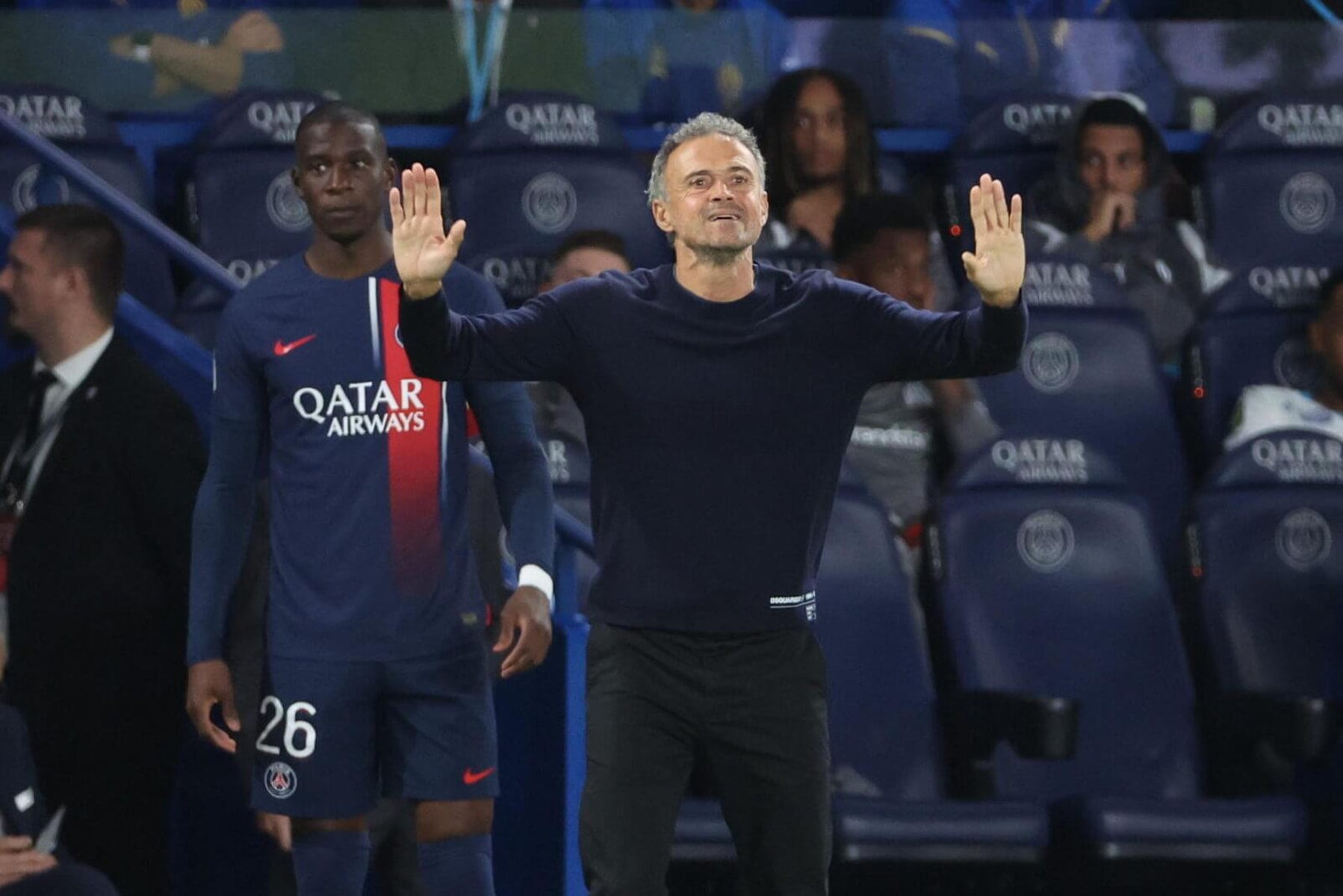
    Despite domestic success, questions persisted about whether the club could achieve sustained European greatness. Former PSG forward was asked in an interview with ESPN about PSG winning the UCL he stated “that they need to grow together to win the UCL “ shortly after his departure from the club. PSG manger Luis Enrique developed the club  into a more complete football team built around structure, collective responsibility and tactical intelligence.

    Their back to back UEFA Champions League victories in 2025 and 2026 have altered perceptions of the club across Europe. PSG are no longer viewed merely as ambitious challengers. They have become part of football’s new elite.

    Perhaps the most interesting aspect of PSG’s rise is what it says about modern football. Success is increasingly determined by sporting strategy rather than reputation. Clubs are judged less by what they achieved twenty years ago and more by how effectively they are preparing for the future.

    This shift is also changing the experience of supporters.

    For fans across Europe’s top five leagues, unpredictability has become one of football’s greatest attractions. Bundesliga supporters witnessed Bayer Leverkusen break Bayern Munich’s dominance. Premier League fans have watched clubs such as Brighton, Newcastle United and Aston Villa Crystal Palace & West ham challenge established expectations such as West Ham United won the UEFA Europa Conference League in 2023, ending a 43 year wait for a major trophy. Manchester United lifted the FA Cup in 2024 by defeating Manchester City, while Chelsea won the UEFA Conference League in 2025. More recently, Tottenham Hotspur captured the UEFA Europa League, while Aston Villa won the Europa League and Crystal Palace secured the UEFA Conference League in 2026.

    Italy provides perhaps the strongest evidence that football’s traditional hierarchy is becoming less rigid. In 2022/23, SSC Napoli ended a 33 year wait for the Scudetto, winning only their third league title and breaking the long standing dominance of clubs such as Juventus, Inter Milan and AC Milan. Two years later, Napoli won the title again, securing their second championship in three seasons and proving their earlier success was not a one off achievement. Meanwhile, Bologna FC 1909 qualified for the UEFA Champions League in 2024 for the first time in six decades and followed that breakthrough by winning the Coppa Italia in 2025, their first major trophy in 51 years.

    The result is a more competitive football landscape where opportunities exist for clubs willing to innovate.

    That does not mean football’s traditional giants are disappearing. Real Madrid remain the benchmark for European success, and clubs such as Liverpool, Barcelona and Bayern Munich continue to possess advantages that most teams can only dream of. Their resources, history and global influence still matter.

    Football is no longer defined solely by history, prestige, or the size of a club’s trophy cabinet. For decades, Europe’s traditional giants relied on their legacy, financial power, superstar players, and elite managers to maintain dominance across domestic and European competitions. However, the modern game is increasingly rewarding something different. Success is now driven by tactical intelligence, innovative coaching, smart recruitment, squad depth, data-driven decision-making, and long-term planning.

    The rise of clubs such as Leicester City, Napoli, Atalanta, Bologna, Bayer Leverkusen, and even the evolution of PSG under Luis Enrique demonstrates that football’s power structure is shifting. At the same time, the financial and sporting challenges faced by clubs such as Barcelona, Manchester United, and Juventus have exposed the limits of relying on history alone. While the traditional giants remain powerful forces, the gap between them and their challengers has narrowed considerably. Football is entering an era where vision matters as much as legacy, where sustainable projects are competing with established empires, and where success is increasingly earned through strategy rather than inherited through reputation.

    The future of the game will not simply belong to the clubs with the greatest histories, but to those with the clearest ideas about what comes next.

  • Top 10 World Cup Songs of All Time

    Top 10 World Cup Songs of All Time

    Written by Emmanuel Moronfolu

    The World Cup is around the corner, and with it comes all the excitement and nostalgia of experiencing one of the world’s biggest football competitions, with 48 national teams competing for the most prestigious title in the sport. One of the defining experiences of every World Cup is its music. These songs have not just served as tournament themes but as art that speaks to dreams, passion, determination, unity, and freedom. The 2026 edition, set to kick off on the 11th of June and jointly hosted across three countries in the United States, Canada, and Mexico, has already seen a wave of official song releases featuring collaborations between artists from all over the world. But while some World Cup songs are good, a few stay timeless, shaping how we feel and giving us hope that the world can be a better place. Here are the top ten World Cup songs of all time.

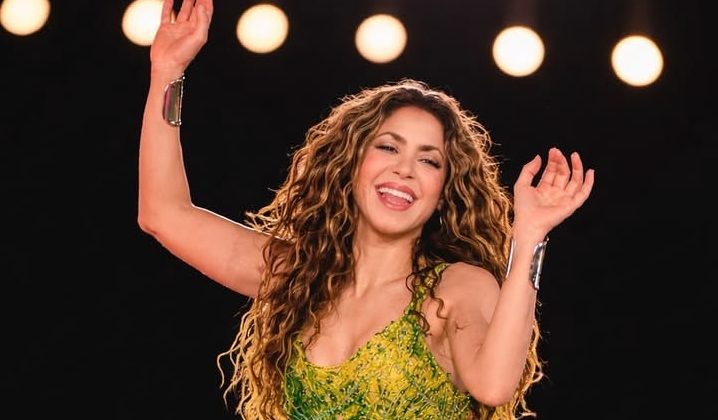
    1. Waka Waka (This Time for Africa) – Shakira (2010)

    From the iconic 2010 World Cup held in South Africa, the first time the competition was ever hosted on the African continent, Shakira’s Waka Waka is in a league of its own. The song does a masterful job of blending great storytelling with themes of pressure, determination, grit, and identity, all wrapped in infectious vocals and brilliant production. It reached number one in fifteen countries, sold over fifteen million digital downloads worldwide, and holds the Guinness World Record for the most streamed FIFA World Cup song of all time. This achievement cemented Shakira as the defining voice of World Cup music. I mean, what is a World Cup song without Shakira?

    2. Wavin’ Flag – K’Naan (2010)

    Though not an official FIFA World Cup song, as it was commissioned by Coca-Cola as a promotional anthem for the tournament, Wavin’ Flag quickly became a global hit and earned its place as one of the most timeless World Cup songs ever made. The song’s themes of freedom, dreams, and ambition are beautifully delivered by the Somali-Canadian rapper with a sincerity that most official anthems never quite manage to capture.

    3. Dreamers – Jung Kook (2022)

    This song from the 2022 World Cup catalogue was special for its incredible chorus and heartfelt storytelling, carried effortlessly by Jung Kook’s soaring vocals. Dreamers communicated exactly what a great World Cup song should feel like, hopeful, anthemic, and universally relatable. It gave the Qatar tournament a musical identity it genuinely deserved.

    4. Un’estate italiana – Gianna Nannini and Edoardo Bennato (1990)

    Un’estate italiana, which translates to An Italian Summer, was written for the 1990 World Cup by two enormously talented Italian artists, built on a composition by the legendary electronic music pioneer Giorgio Moroder. The original track, titled To Be Number One, was written in English but never quite landed the way Moroder had envisioned. He handed it over to the two Italian rock singers, who rewrote the lyrics in Italian and transformed it into one of the most successful Italian songs of all time. Elegant and deeply nostalgic, it topped the Italian charts and remains one of the most beloved tournament anthems ever recorded.

    5. Cup of Life (La Copa de la Vida) – Ricky Martin (1998)

    This one is widely considered one of the most influential World Cup songs ever recorded. Before its release, World Cup anthems were largely known for solemn, soulful songwriting. Ricky Martin’s Cup of Life completely revolutionised what a World Cup song could be, delivering an explosive, brass-heavy, Euro-Latin pop masterpiece that became the blueprint for every modern sports anthem that followed. It did much more than promote a football tournament. It reshaped the sound of late nineties pop music and opened the door for Martin’s international breakthrough in the years that followed.

    6. A Special Kind of Hero – Stephanie Lawrence (1986)

    Composed by the legendary Rick Wakeman, this song carries a deeply nostalgic weight tied to one of football’s most unforgettable moments, Argentina’s triumph over West Germany in the 1986 World Cup, led by the incomparable Diego Maradona. The song captures the spirit of that tournament beautifully, the heroism, the drama, and the magic of watching a generational talent lift the game into something almost mythological.

    7. Nessun Dorma – Luciano Pavarotti (1990)

    Few moments in sporting broadcast history are as powerful as Pavarotti’s rendition of this Puccini aria, which became the defining sound of Italia 90. The piece’s surging climax fused opera and football for a mass global audience in a way that had never been done before. A concert featuring the Three Tenors on the eve of the final only deepened its legendary status and turned it into a worldwide cultural moment. Nessun Dorma was never written for football, but it became football, and that is proof of how the beautiful game can hold the most majestic of art forms.

    8. We Are One (Ole Ola) – Pitbull feat. Jennifer Lopez and Claudia Leitte (2014)

    The official song of the 2014 World Cup in Brazil had an almost impossible job, which was to live up to the energy of the host nation. Released as the lead single for the tournament’s official album, One Love One Rhythm, the track brought together the infectious rhythms of Latin house, samba-reggae, and dance-pop into one stadium-ready package. Pitbull, Jennifer Lopez, and Brazilian star Claudia Leitte delivered a song that felt genuinely celebratory, a sun-soaked anthem that matched the carnival spirit of a Brazilian summer.

    9. Hayya Hayya (Better Together) – Trinidad Cardona, Davido and Aisha (2022)

    This track from the 2022 Qatar World Cup deserves its flowers. What made Hayya Hayya stand out was how it brought together an American singer, a Nigerian superstar, and a Qatari artist, making it a genuine collision of global voices for a global event. Davido’s contribution gave the song an Afrobeats heartbeat that felt fresh and modern, and the message of togetherness landed with warmth and authenticity. It was a reminder that the World Cup, at its best, is a celebration of the world’s music and not just its football.

    10. Live It Up – Nicky Jam feat. Will Smith and Era Istrefi (2018)

    The official song of the 2018 Russia World Cup brought together a diverse trio of global artists with a track built around celebrating life, teamwork, and the joy of the game. Light, upbeat, and undeniably catchy, it closed out the tournament’s closing ceremony in front of a massive global audience and left the stage on a high note.

    What do you think?

  • EVERYONE IS RUNNING RIGHT NOW

    EVERYONE IS RUNNING RIGHT NOW

    Written by Tobi Oke

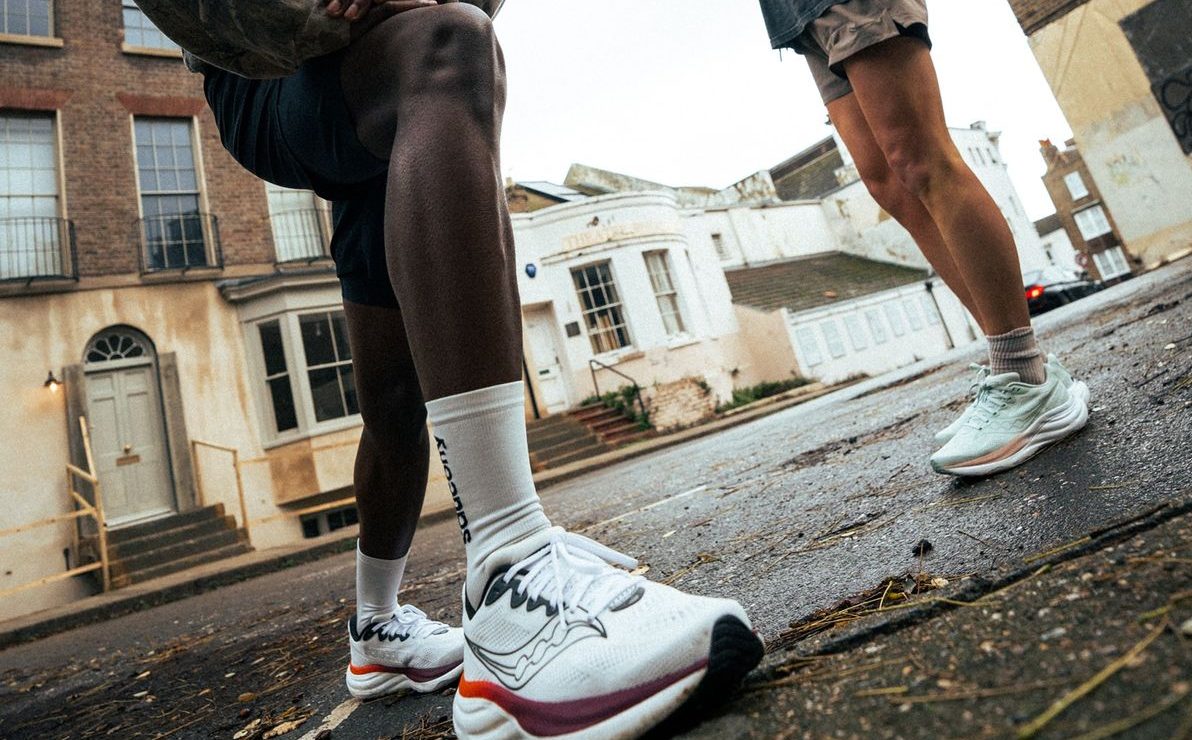
    Somewhere between a pandemic, a burnout epidemic, and the slow exhaustion of being terminally online, something quietly shifted. People started running. Not because a doctor told them to. Not because a New Year’s resolution demanded it. But because the road, the pavement, the morning air before the notifications start, started to feel like the only honest thing left.

    This is not a fitness story. It is a cultural story.

    Running has always existed. But what is happening right now is different. This is the third running boom, and unlike the first two, it is not built on public health campaigns or race registrations. It’s built on community, identity, and a collective decision that the algorithm cannot give you everything. Strava’s own 2025 trend report put it plainly: “Gen Z is logging off and lacing up.” The platform grew from 55 million users in 2020 to over 180 million by late 2025, a 327% increase. That is not a fitness trend. That is a cultural migration.

    The numbers are almost absurd when you look at them directly. In September 2025, nearly 1.1 million people entered the lottery for the 2026 London Marathon, almost double the previous record, for just 50,000 available spots. Getting a bib is now statistically harder than getting into certain universities. People are paying hundreds of dollars in entry fees, investing in GPS watches, subscribing to coaching apps, and travelling across cities just to run alongside strangers. Running began as the simplest sport in the world. It has become one of the most expensive hobbies a person can voluntarily take on.

    But here is what the numbers miss. When Gunna launched the Wunna Run Club, hosting massive free 5K community runs across tour cities globally in partnership with Under Armour, he was not selling fitness. He was selling belongings. When Victony organized the Tanko Run, a 10km run through the streets of Lagos to celebrate a single release, the significance was not just cultural. It was personal. Victony had spent time in a wheelchair recovering from a near-fatal car accident in 2021. Leading thousands of his Outlaws through Lagos on foot was not a marketing activation. It was a statement of survival. When Diplo hosts run events and Travis Barker launches his Run Crew, the throughline is identical. The road has become the new venue.

    Lagos did not need to be convinced. Imagine over 90 runners moving through the streets of Ikoyi in complete silence, each one locked into the same wireless headphone frequency, music only they can hear, bodies moving in sync with a beat the street cannot. That is the Shight Running Club’s Silent Disco Run, Nigeria’s first, and it is just one chapter. The Eko Runners Club has turned Yaba, Ikeja, and Lekki into weekly finishing lines, partnering with streetwear brands along the way. The Access Bank Lagos City Marathon in partnership with the Water brand Aquafina, built an entire campaign around a single Pidgin phrase, “run am with your padi,” because someone understood that community is the product, not the race.

    There is a phrase that has quietly taken root in fitness communities globally: “if it is not on Strava, it did not happen.” That sentence tells you everything. Strava is not a tracking app. It is a social network where the price of entry is physical effort. Your kilometres are your content. Your pace is your personality. 77% of Gen Z athletes reported feeling more motivated to exercise after seeing their friends’ activity on the platform. The dopamine loop is identical to any other social platform. The difference is what you have to do to earn it.

    And the business sitting underneath all of this is enormous. On Running has crossed 3 billion Swiss Francs in revenue. Asics, once considered slightly unfashionable compared to hype-driven competitors, has seen its operating margins climb from low single digits to 17% in 2025. Garmin’s fitness division alone now generates over 2 billion dollars annually. 65% of Gen Z say they are directly affected by inflation, yet 30% plan to spend more on fitness in 2026. A generation under economic pressure is choosing to prioritize this. That is not irrational. That is values.

    What running offers that the internet cannot is deceptively simple. A finish line. A real one. The kind you cross with your body, not your thumbs. In a world where everything is content and nothing fully counts, logging a 10km on a Sunday morning and sharing it with people who were also out there, tired and alive and choosing something real, is its own kind of meaning.

    Everyone is running right now. And the most interesting thing about it is not the distance. It is what they are running toward.

  • Football Has a Coaching Problem Nobody Wants to Admit

    Football Has a Coaching Problem Nobody Wants to Admit

    Written by Tobi Oke

    When Real Madrid confirmed Jose Mourinho’s return to the dugout in 2026, the internet reacted the way it always does: with noise. Fans questioned the decision. Pundits dissected the logic. The football conversation did what it always does: split instantly into camps. But underneath the outrage was a question nobody seemed to want to answer directly.

    If the market was as wide as everyone claims, why is one of the most powerful clubs in the world calling a manager they dismissed over a decade ago?

    That question is the real story.

    There is a widely held belief in football that coaching talent is abundant. That is when results dip, and patience runs thin; there is always someone better waiting. It is the logic behind every trigger-happy boardroom decision, every premature sacking, every mid-season panic appointment. And it is, largely, a fantasy.

    The numbers do not lie. Across Europe’s top five leagues, managerial casualties accumulate every single season with the regularity of a calendar event. Clubs spend millions buying out contracts, absorb transition costs, and reset entire playing philosophies, only to find themselves circling back to the same names. PSG hired Luis Enrique, and what Enrique did was not reinvent the squad; he simply demanded that the dressing room serve the team rather than the other way around. Madrid came back to Ancelotti before eventually turning to Mourinho, and Ancelotti himself now leads Brazil into the 2026 World Cup, the most decorated manager in football history, still very much in demand. Mauricio Pochettino won three trophies at PSG, got sacked at Chelsea, and was immediately handed the job of leading the United States men’s national team into a home World Cup. Even Vincent Kompany, whose Burnley side was relegated in his first Premier League season, was appointed by Bayern Munich the following year. The market, it turns out, has a very short memory and an even shorter list.

    A new generation of coaches has emerged, and they are genuinely exciting. Nagelsmann, Kompany, Arteta, Xabi Alonso, Iraola, Will Still, Cesc Fabregas, Thiago Motta and a host of others. The ideas are sharp, the tactical intelligence is undeniable. But there is a pattern that keeps surfacing at the highest levels, and it is not about tactics. Ruben Amorim arrived at Manchester United off the back of one of the most impressive coaching tenures in recent Portuguese football history. His ideas were clear. His system had worked. Within months, results were collapsing, not because the tactics were wrong in isolation, but because man management at a club drowning in ego and dysfunction is a different discipline entirely. Xabi Alonso, coming off an invincible league season at Bayer Leverkusen, found similar walls at Real Madrid. The game plan survives until the dressing room does not. To be fair, some coaches genuinely underperform, too, and that accountability is real. But it rarely justifies the speed at which clubs pull the trigger.

    This is precisely where experience becomes a different currency. Mourinho, Ancelotti, Conte, Luis Enrique, Guardiola and peers, these are managers who have made mistakes, absorbed the chaos of superstar egos, and developed the specific emotional architecture required to hold a dressing room together when the football gets complicated. Diego Simeone has had his own son Giuliano in the Atletico squad for more than two seasons and still commands the kind of discipline and respect most coaches spend their careers chasing. Didier Deschamps has held the France job since 2012, and the results have spoken consistently enough that the federation has never felt the urge to search elsewhere. That kind of longevity is not stubbornness. It is evidence.

    Football Soccer – France v Republic of Ireland – EURO 2016 – Round of 16 – Stade de Lyon, Lyon, France – 26/6/16 France head coach Didier Deschamps REUTERS/Kai Pfaffenbach Livepic

    There is also a structural conversation worth having. The distinction between a head coach and a manager is not semantic. A head coach operates within a system defined above him. A manager shapes the system. Chelsea’s recent history is a case study in what happens when that line gets blurred. Thomas Tuchel never operated with full autonomy at Stamford Bridge. Maresca faced similar constraints while he had the reins there. The club’s sporting structure routinely overrides the person supposedly running the team. In that environment, even elite coaching talent struggles to function. And notably, Chelsea went years without appointing a manager in the truest sense of the word, until Xabi Alonso’s recent arrival.

    Arne Slot is having a difficult second season at Liverpool. The fan reaction has been predictable. But Liverpool’s reluctance to move on is actually the more interesting story. Because the club understands something the stands do not always accept: finding a genuinely good manager is hard, and replacing one in the middle of a difficult run with an untested alternative is rarely the solution.

    The coaching pool is not empty. But it is nowhere near as deep as the football conversation pretends. The next time a fanbase demands their club sack the manager and bring in someone better, the honest question is always the same one Madrid quietly answered when they picked up the phone and called Mourinho. Better than who, exactly?