Written by Ejiose Ikuenobe

The football history and success belonged to a select group of clubs. The names rarely changed. Real Madrid, Barcelona, Manchester United, Liverpool, Bayern Munich, Juventus, AC Milan, Ajax and Inter Milan dominated their domestic leagues and regularly competed for European honours. Financial instability has also weakened some of Europe’s traditional powerhouses. Barcelona have spent recent years navigating debt, wage restrictions and financial restructuring, while Manchester United and Juventus have faced countless losses and managerial challenges that have limited their ability to dominate as they once did.
The idea of an underdog winning a major league title was often viewed as a romantic fantasy rather than a realistic possibility. Football’s established powers possessed more resources, attracted better players, and had institutional advantages that smaller clubs could rarely overcome. For example, Barcelona & Real Madrid era of Cristiano Rolando & Lionel Messi respectively winning 10 La Liga titles, and four champions league with Cristiano Rolando winning the champions league for the record three times in a row from 2016 till 2018.

Yet over the last decade, the football has begun to change.
The rise of football analytics, advanced scouting networks, rise of VAR (Video assistant referee), smarter recruitment strategies, improved coaching methods and more sustainable club structures has created opportunities for ambitious clubs to challenge the traditional order. The gap between football’s elite and the rest of the field still exists, but it is no longer as insurmountable as it once seemed.
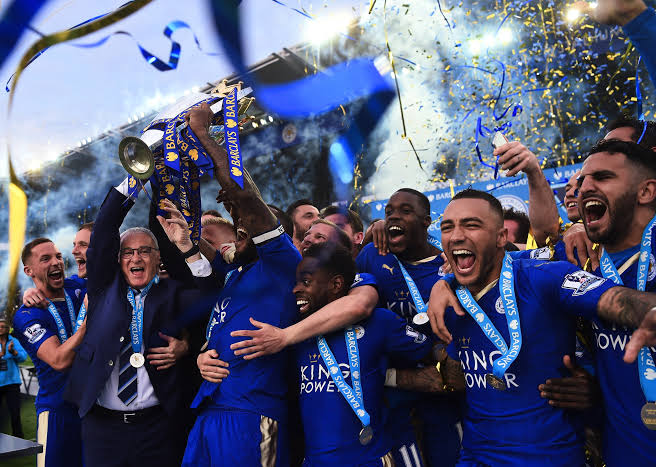
No moment symbolized this shift more dramatically than Leicester City’s Premier League triumph during the 2015/16 season.

Under the leadership of Claudio Ranieri, Leicester achieved what many still consider the greatest upset in modern football history. A club that had narrowly avoided relegation the previous season went on to outperform some of the richest and most successful teams in the world. Jamie Vardy, Riyad Mahrez and N’Golo Kanté became symbols of a team that thrived through collective belief, tactical discipline and exceptional recruitment.
At the time, many observers dismissed Leicester’s success as a once in a lifetime. Francesco Guidolin the former Swansea City manager explicitly stated that it is “not easy in the Premier League, you can do it one time (like Leicester) after 20 years”. The assumption was that football’s established hierarchy would quickly restore itself.
Instead, Leicester’s victory became the first sign of a broader transformation.
Across Europe, clubs began proving that smart planning could compete with financial superiority. The traditional formula of spending the most money no longer guaranteed success. Football was entering an era where strategy mattered as much as budget.
Perhaps the clearest modern example is Bayer Leverkusen’s historic Bundesliga winning campaign in 2023/24. For over a decade, Bayern Munich had maintained near total control of German football, winning eleven consecutive league titles. Their dominance appeared untouchable.

Yet under Xabi Alonso, Bayer Leverkusen produced one of the most impressive seasons in European football history. They not only won the Bundesliga but did so without losing a single league match. Their success was not built on overwhelming financial power but on intelligent recruitment, tactical innovation and a clearly defined sporting vision.
Leverkusen’s achievement demonstrated that football’s traditional giants could no longer rely solely on history and resources to maintain their position at the top.
The same trend is visible among many of Europe’s most successful clubs, although in a different form.
Manchester United continue to search for stability more than a decade after Sir Alex Ferguson’s retirement. Barcelona have spent recent years navigating significant financial challenges while attempting to rebuild their squad. Juventus have experienced multiple transitions both on and off the pitch. Ajax have struggled to maintain the consistency that once made them one of Europe’s most admired football clubs.

Even Bayern Munich have discovered that domestic dominance can no longer be taken for granted, with previous clubs going head-to-head with them for the league.
These clubs remain powerful brands with enormous support around the world. However, their recent experiences highlight an important reality history alone is no longer enough.
Football’s established powers are now engaged in constant restructuring, adapting to an environment where competitors have become smarter, more efficient and more ambitious.
At the same time, a new generation of football powers is emerging.
Manchester City transformed from domestic challengers into one of the defining teams of the modern era through long term planning, elite coaching and a commitment to a clear football identity. Paris Saint-Germain have undergone a similar evolution.
For years, PSG’s project was often associated with superstar signings and commercial appeal. For example smashing the transfer record to sign Neymar for a record 222 million euros from Barcelona in 2017.
Despite domestic success, questions persisted about whether the club could achieve sustained European greatness. Former PSG forward was asked in an interview with ESPN about PSG winning the UCL he stated “that they need to grow together to win the UCL “ shortly after his departure from the club. PSG manger Luis Enrique developed the club into a more complete football team built around structure, collective responsibility and tactical intelligence.
Their back to back UEFA Champions League victories in 2025 and 2026 have altered perceptions of the club across Europe. PSG are no longer viewed merely as ambitious challengers. They have become part of football’s new elite.
Perhaps the most interesting aspect of PSG’s rise is what it says about modern football. Success is increasingly determined by sporting strategy rather than reputation. Clubs are judged less by what they achieved twenty years ago and more by how effectively they are preparing for the future.
This shift is also changing the experience of supporters.
For fans across Europe’s top five leagues, unpredictability has become one of football’s greatest attractions. Bundesliga supporters witnessed Bayer Leverkusen break Bayern Munich’s dominance. Premier League fans have watched clubs such as Brighton, Newcastle United and Aston Villa Crystal Palace & West ham challenge established expectations such as West Ham United won the UEFA Europa Conference League in 2023, ending a 43 year wait for a major trophy. Manchester United lifted the FA Cup in 2024 by defeating Manchester City, while Chelsea won the UEFA Conference League in 2025. More recently, Tottenham Hotspur captured the UEFA Europa League, while Aston Villa won the Europa League and Crystal Palace secured the UEFA Conference League in 2026.
Italy provides perhaps the strongest evidence that football’s traditional hierarchy is becoming less rigid. In 2022/23, SSC Napoli ended a 33 year wait for the Scudetto, winning only their third league title and breaking the long standing dominance of clubs such as Juventus, Inter Milan and AC Milan. Two years later, Napoli won the title again, securing their second championship in three seasons and proving their earlier success was not a one off achievement. Meanwhile, Bologna FC 1909 qualified for the UEFA Champions League in 2024 for the first time in six decades and followed that breakthrough by winning the Coppa Italia in 2025, their first major trophy in 51 years.
The result is a more competitive football landscape where opportunities exist for clubs willing to innovate.
That does not mean football’s traditional giants are disappearing. Real Madrid remain the benchmark for European success, and clubs such as Liverpool, Barcelona and Bayern Munich continue to possess advantages that most teams can only dream of. Their resources, history and global influence still matter.
Football is no longer defined solely by history, prestige, or the size of a club’s trophy cabinet. For decades, Europe’s traditional giants relied on their legacy, financial power, superstar players, and elite managers to maintain dominance across domestic and European competitions. However, the modern game is increasingly rewarding something different. Success is now driven by tactical intelligence, innovative coaching, smart recruitment, squad depth, data-driven decision-making, and long-term planning.
The rise of clubs such as Leicester City, Napoli, Atalanta, Bologna, Bayer Leverkusen, and even the evolution of PSG under Luis Enrique demonstrates that football’s power structure is shifting. At the same time, the financial and sporting challenges faced by clubs such as Barcelona, Manchester United, and Juventus have exposed the limits of relying on history alone. While the traditional giants remain powerful forces, the gap between them and their challengers has narrowed considerably. Football is entering an era where vision matters as much as legacy, where sustainable projects are competing with established empires, and where success is increasingly earned through strategy rather than inherited through reputation.

The future of the game will not simply belong to the clubs with the greatest histories, but to those with the clearest ideas about what comes next.
Leave a Reply