Written by Tobi Oke
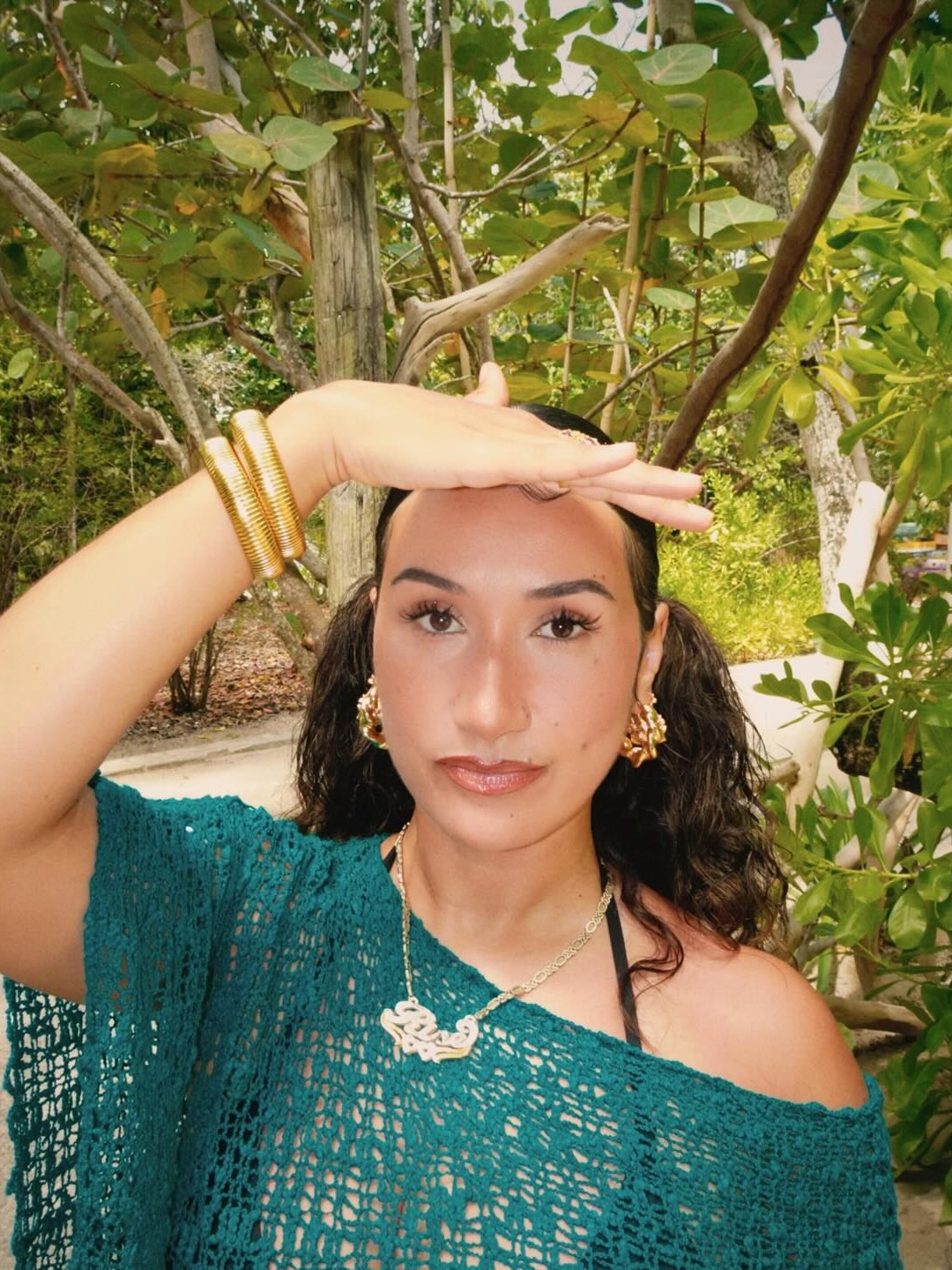
Five albums deep into a catalogue that has been directed outward, to God, to a lover, to her children, to everyone around her who needed reassurance, Gentlewoman is the first time she has turned the full weight of that voice on herself. The title is not ironic. It is instructional. She is speaking to herself the way she has always spoken to others. With tenderness. With patience. With the understanding that becoming something takes time and that the process deserves to be witnessed.

Cleo Sol was born Cleopatra Zvezdana Nikolic in Ladbroke Grove, London, to jazz musicians who gave her a musical inheritance she has spent her career quietly drawing from. She rarely gives interviews. She rarely performs live. The music has always done the speaking, and all five of her solo albums have been produced entirely by her husband Inflo, the man behind SAULT, one of the most deliberately mysterious creative operations in contemporary British music. Their partnership is so tightly woven that separating her voice from his production feels almost impossible. They are the same argument, made from two directions. Inflo deserves his flowers. The arrangements on Gentlewoman are some of the most considered of his career, strings, choir, bass guitar, acoustic piano, harp all moving with a restraint that serves her rather than competes with her. He knows exactly when to fill the room and exactly when to step back. That instinct is what makes this album breathe the way it does.
The argument on Gentlewoman is different from what came before. Rose in the Dark balanced the highs and lows of romantic relationships and personal growth. Mother went deep into the complexities of maternal love and generational healing. Heaven and Gold arrived as surprise doubles in 2023, Heaven centring faith and divine alignment, Gold celebrating family resilience with an upbeat soul warmth that felt complete and generous. Gentlewoman does not try to replicate any of that. It turns inward in a way none of the previous projects fully did.
The album opens with I Only Look to You, and the first words she sings are the most important words on the project. “Finally, I’m looking out for me.” After five albums of pouring herself outward, it sounds like a door swinging the other way. The acoustic piano is spare and deliberate, making room for every syllable. She sings about being torn in pieces, about relearning how to trust, about wasting time where she does not belong. The forgiveness in the chorus is not offered to someone else. It is claimed for herself.
Sweet Thing follows with Inflo’s bass guitar leading into strings, a choir, a harp under David Campbell’s conducting. The scale is enormous but it never crowds her. Force of Love is my definite favourite, a dancehall-influenced track with Rick Nowels on guitar that has a looseness and physical energy the rest of the album does not attempt. It moves differently. Love is personal on this track, not theological, not relational in the usual sense, just immediate and direct. Sentimental Love moves through bossa nova territory with the same natural ease, and it is worth naming that these are not genre experiments. They are extensions of a vocabulary that already knows which words belong where.
Family Ties is where the album shows its sharpest edge. Over a time-waltz Inflo constructs almost entirely alone, she confronts estrangement without sentimentalising it. The lyric “This ain’t family ties” lands not as accusation but as a boundary finally spoken out loud. She gave grace. The cycle held the other person back anyway. She has to be the change. It is a difficult song written with the restraint of someone who has thought about it for a very long time.

Together is a gentle midpoint, familiar territory, and what wins here is not the writing but the production and the way her voice sits inside it. The background vocals are beautiful. The seamless transition from Together into Their Smiles Are Not the Same is the moment the album shifts gear entirely. What follows is the most dramatically beautiful thing she has recorded. Dave Okumu’s guitar enters, then the strings, then the semi-operatic vocals, and around the two-minute mark a full choir arrives, voices layering over each other in a way that feels almost architectural, like a room expanding suddenly to contain something too large for ordinary walls. The melody is an earworm before you have even finished the first listen. The outro of this track alone is worth the price of the whole album.
Honest Talk strips everything back to acoustic guitar and delivers the second verse that is the most quietly devastating writing on the project. “An honest talk with myself. How have I not seen this? Can’t change the direction that somebody’s going in. Insecure people do insecure things. You can have the world. Still feel like something’s missing.” Let Me Cry asks only to be allowed to be tired. These three tracks together form the emotional spine of Gentlewoman, and Inflo honours that by stepping back. The musicians know when to get out of her way.
All Because of Love earns its place as one of the best RnB songs of the year because it does something the genre has largely forgotten how to do with consistency. It goes back to the root. The first half is a woman speaking with full emotional honesty about not wanting to burden someone with what she has been through, the writing lean and precise and genuinely felt. Then the production opens, bass deepens, warmth floods the mix, and the song becomes something celebratory and almost churchy in its joy. It is RnB the way the Isley Brothers understood it, music that carries both pain and gratitude in the same key without either cancelling the other out. Toward the end she stops singing and starts speaking, a quiet message to someone she loves, asking if she has been there for them the way they have been there for her, telling them not to go a day without giving thanks. It is one of the most human moments on the album.
Thank You gives the album its fullest moment of direct conversation with God. Simple, unadorned, exactly what it is. Little Things is the closest she has come to straight soul in a Daptone style and it is a beautiful detour. The album closes with Gentlewoman [Acknowledgement], the shortest track, just keyboard and her voice, a message she is sending to herself as much as to anyone listening. “Gentle woman, I hear you. We are making it through. You’re safe to love again.”

On Gentlewoman, Cleo Sol is not trying to surprise you with where she goes. She is showing you how far she has come and making the honesty of that journey feel like a gift rather than an obligation. It is quieter than Gold and more interior than Mother. It is also more necessary than either. Because what she has made here is not a record for other people. For the first time, it is for herself. And somehow, that makes it feel like the most generous thing she has ever released.
Rating: 8.5/10
Leave a Reply