The London museum stretches over 200 years ? Two centuries of history, two separate museums and one institution that has continued to evolve with the city it represents. That’s quite a story, isn’t it?
You might want to sit with this one for a minute because there’s a little history lesson here. And I promise, it’s a rather interesting one.
Long before it became the London Museum we know today, there were two separate institutions telling different parts of London’s story.


First, there was The Guildhall Museum, established in 1826 in the City of London. Its focus was largely on archaeology, collecting objects unearthed during excavations, including Roman remains. One of its earliest acquisitions was actually a fragment of Roman mosaic found on Tower Street.
Then came The London Museum, established in 1911 and opened at Kensington Palace in 1912. Its collection took a broader look at the city, bringing together paintings, clothing, costumes and everyday objects that offered a glimpse into how Londoners lived.
By 1965, the decision was made to bring their collections together under one institution through the Museum of London Act. The idea was to create a place that could tell a more complete story of the capital, from its earliest settlements to the city it was becoming.
And in 1976, Queen Elizabeth II officially opened the Museum of London at 150 London Wall, close to the Barbican. That building would become its home for the next 46 years, until it closed in December 2022 to make way for a new chapter.


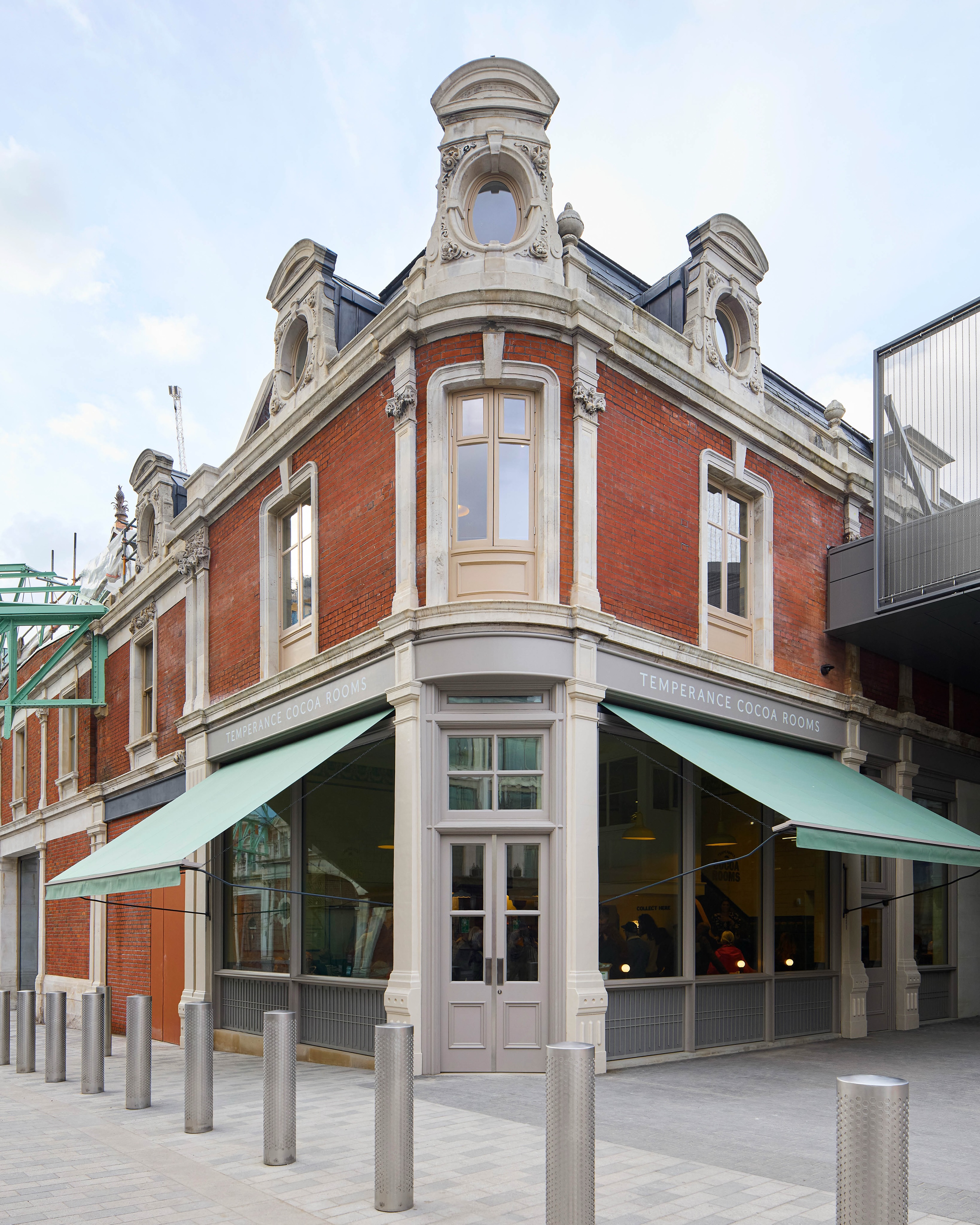
The new £437 million London Museum at Smithfield is preparing to open inside the restored Victorian General Market, giving the historic building a new purpose and the institution a much bigger space to tell London’s story.
But here’s the part I find particularly interesting. The museum isn’t looking at London through its grand historical moments alone. Of course, there’s Roman history, royalty and everything else you’d expect to find in a museum. But there’s also the London shaped by ordinary people, different communities and generations of culture.
Think music, fashion, food, art, migration and the everyday experiences that make a city what it is. And the objects chosen to tell those stories are quite something. There’s a piece of the infamous Whitechapel Fatberg, Tom Daley’s London 2012 Olympic diving trunks and Banksy’s Piranhas artwork, displayed on a police sentry box.
Yes, a fatberg has made it into a museum collection. London really does have stories in the most unexpected places.

Syd’s coffee stall
There’s more to the new space, too. It’s been designed as somewhere people can come together, with room for events, interactive exhibitions and activities that bring music, food and other parts of London’s cultural life into the museum. So, there’s quite a bit to experience beyond walking around and looking at what’s on display.
And that’s an important part of the idea. A city’s history isn’t only found in sculptures, objects, books or dates written down over the years. It’s also in the music people grew up listening to, the clothes that defined a generation, the food that travelled with different communities and the places where people gathered. These are all part of what makes a city what it is, and this new space wants to make room for those stories, too.
So, after nearly 200 years of collecting and documenting London’s past, this next chapter feels like an opportunity to tell an even bigger story. Not just where London has been, but who it is today, the people who make it what it is and those continuing to shape what it becomes.
Leave a Reply