In conversation with Zionne Soule
The intersection where the canvas stops and the sound begins has always been there for those who create with purpose. In a world drowning in constant noise, art remains a culturally purposeful form of resistance, visual memory, lineage and physical manifestation.
When an artist is fully tapped into their creative element, they’re archiving subcultural histories, summoning their ancestors and tuning into something deeper within themselves.
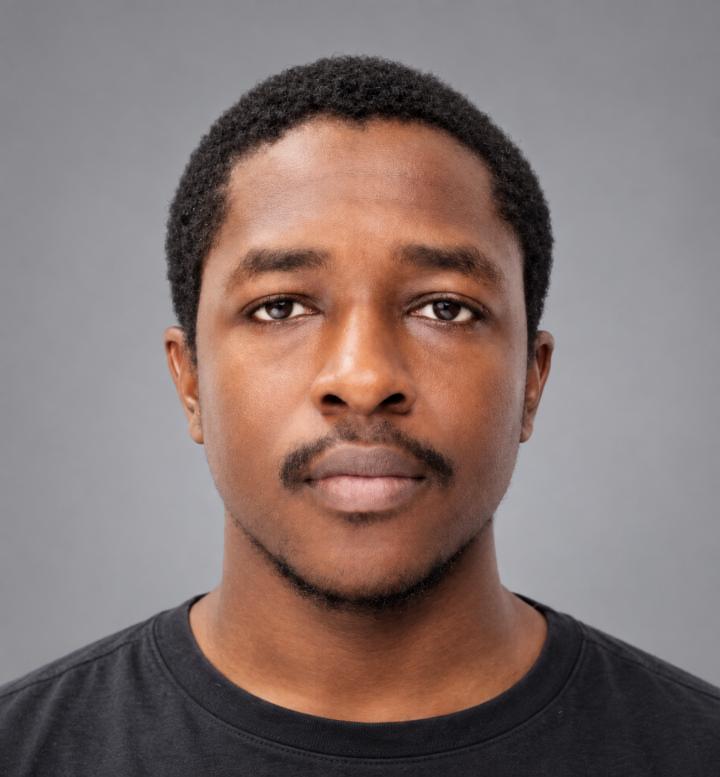
For Bello Kele, art is subliminal translation; from the core of hip hop culture to the raw texture of modern identity, his work carries a spiritual edge. I sat down with him in Abuja to decode the visual rhythms and spiritual frequency fueling one of the most culturally vital visual voices of our generation.
Your work brings together myth, history and contemporary culture. When you begin a piece, are you trying to preserve an existing story, challenge the way we’ve been taught to understand it or create new meaning?
Well, with my pieces, it’s always a reinterpretation and it’s not going to be what has been put out in the world so far, because I bring a new vision to it and hopefully people see it that way.

You gifted J Dilla’s mother an artwork depicting the late music producer in 2009. What moved you to transmute J Dilla’s presence into a visual piece and what did you want the artwork to communicate about the man and his music?
When I did the J Dilla piece, it was to show his versatility and how much he meant to the hip hop culture and music in general. I think he was an inspiring figure and that’s what moved me to create that piece at the time. I was inspired to depict his versatility, along with how he loved Detroit and his passion for hip hop culture till the very end of his life.
When someone stands in front of your work, what do you hope they notice and what might they discover after spending more time with it?
When someone stands in front of my piece, I always want them to have an interpretation of it because I believe art is subjective and I’m always open to my pieces bringing new interpretations. I might have a way I look at the art personally but I always want the viewer to have something new where they see the world with a different lens.
When you draw from mythology and history, how do you navigate the difference between inherited narratives and your own interpretation?
When I begin a piece, I’m always challenging the way we’ve been taught to understand it and create meaning using that. When I draw from myth and history, I navigate the difference between inherited narratives and my own interpretation by intentionally making mistakes in composition of the work; for it’s then that I can take a new path artistically and create something new and unique.
What do you think visual artists and musicians understand about each other that the creative industry sometimes misses?
The similarities between musicians and artists that the industry sometimes misses is they’re both operating on instincts and intuition and these are beliefs that come from being fearless of criticism or rejection from the audience or viewers.
Does any sound, record or musical movement influence the way you work with colour, texture and rhythm?
The sounds and records that inspire me are mostly hip hop, rock, afrobeat and uhh jazz.


When people encounter your work years from now, what do you hope it tells them about the world we’re living in today?
When people encounter my work years from now, I hope it shows them that even in our chaotic times with a little hope; I was still inspired to create art that hopefully inspires and puts a little joy in the world while being an honest critic in our current society.
Are you consciously documenting the present, even when your imagery travels into the past?
I would say yes, because I’m a firm believer that those who forget their past are bound to repeat the mistakes that created their present predicaments.
Painting requires time, attention and a willingness to sit with ambiguity. In these digital times of doomscrolling and short attention spans, do you think the way we consume images today is changing our relationship with visual art?
These digital times we live in definitely changes our relationship with not only visual arts but arts in general, but it’s part of our job description as artists to keep creating work. I’m also of the opinion that we have it easy compared to our predecessors who experienced prosecution, institutional rejection and lack of access to the tools we enjoy today of which the internet is one of them.

How do you create a piece that rewards a deeper look rather than an immediate glance?
This is a very good question of which I’m yet to have a definite answer to; but my creative process is as follows: I create for 3 months within the year everyday, then I step back for like 3 months to edit and view the work with new eyes. I take a 2 month break then I start to process again so within that process hopefully, I’m always praying that within that time I’m able to create pieces that will stay with the viewer and not be something of a fleeting glance.
What changes would you like to see in the way artists are discovered, supported and remembered?
I would like to see that artists are supported by being interviewed, like the way you’re doing with me now, having more digital art shows without being charged high fees of entry and being appreciated for their work and vision, not for going viral.
When you think about your artistic legacy, what do you hope survives beyond the physical paintings?
The way I think of my artistic legacy is to inspire all artists, especially of African origin to create unique and bold works without duplicating what has already been done because most of the famous arts of today were once thought to be strange or terrible until time forced a revaluation of the value within the art world.
When someone encounters your work for the first time, which piece would you ask them to sit with first, and what should they look for when they do?
The piece I would recommend is Conqueror Rides Victory which I created in 2020. The piece is a reinterpretation of Jean Michael Basquiat’s work titled Riding With Death which he created in 1988. The piece also addresses the question of mortality as Basquiat’s piece does but with the twist of overcoming adversities and challenges on the path to a conqueror riding victory.
Arts are records or human consciousness because many years from now, what remains is a living, breathing artefact of innate expression. Bello Kele reminds us that creative expression demands core practice and spiritual navigation; by weaving together mythology, history, music and contemporary culture, his unique practice stands as a catalyst for those seeking depth in superficial spaces.
The message is clear from his point of view: that culture is neither bought nor sold; it is lived, preserved and passed down. The canvas is painted, the vinyls are rolling and the vibration continues to resonate through timelines.
Leave a Reply