Written by Ejiose Ikuenobe
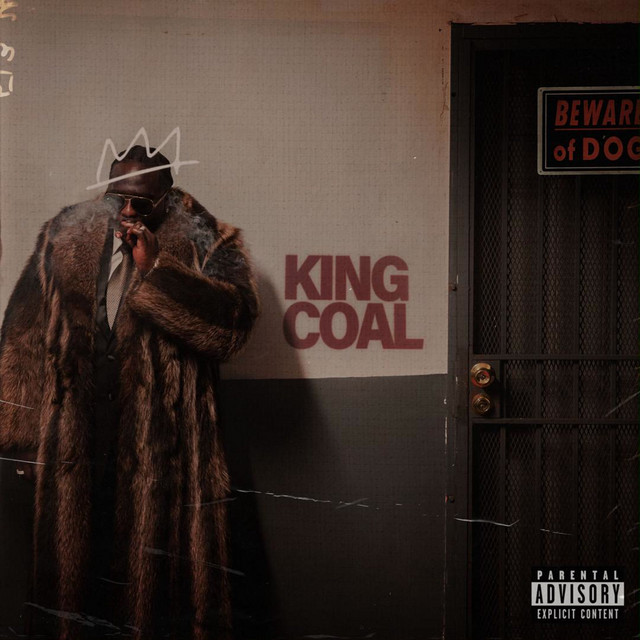
Seventeen years after “Mushin 2 Mo’ Hits” rewired the sound of Nigerian pop, Wande Coal has returned with “King Coal,” a 15-track statement released in June 2026, that plays less like a comeback and more like a coronation. Where his last outing, 2023 “Legend or No Legend,” was preoccupied with proving his relevance, “King Coal” finds him settled as an artist no longer asking for his flowers but simply wearing the crown he’s earned.

King Coal’s Outstanding
The album’s central achievement is tonal. Across its 42-minute runtime, the 15-track project moves between R&B, dancehall, and fuji-inflected sounds without ever feeling scattered. That is a meaningful pivot from the anxious duality that defined “Legend or No Legend.” Wande Coal retools that album’s narrational push and pull here, sounding as though he’s finally settled into his status as one of the genre’s most important figures. It is the difference between an artist arguing his case and one simply presenting his résumé a résumé that includes “Bumper to Bumper” (2008), the breakout single that first announced him as a solo force; “Ololufe” (2009), still regarded as one of the greatest Nigerian love songs ever written; “You Bad,” a Mo’ Hits-era favourite featuring D’Banj; “Baby Hello” (2015), produced by Maleek Berry; “Iskaba” (2018), the street anthem that earned him Best African Contemporary Artist that year; and “Come My Way” (2021), the Amapiano leaning single that soundtracked that year’s “detty December.” That confidence carries through lyrically as well. On “Regard,” featuring Projexx, he is assertive about being given his due wherever he goes, a theme he revisits on the grass-to-grace anthem “Balenciaga.” Elsewhere, the record loosens up. The humorous, drill-adjacent “DEM GO PAY” acts as a reminder of his industry reach, proving his sonic palette remains adaptive and modern rather than nostalgic for its own sake.
One of the most telling collaborations on the album is his reunion with Tiwa Savage on “Must Be Love.” Their chemistry didn’t start here it was set up earlier in the year with “Energy,” a single released in May 2026 that paired Tiwa Savage and Wande Coal with rising Gen Z artist Mavo, a record built around themes of ambition and self belief that bridged three distinct generations of Nigerian music. That single marked the first time the two veterans had shared a record together, and notably used the moment to introduce Mavo to a wider audience alongside two established giants of the industry. Carrying that same energy into “Must Be Love” on “King Coal” shows a veteran still willing to build new bridges rather than simply lean on old ones, proof that even at this stage of his career, Wande Coal continues to grow and continues to make room for the next generation.
His collaboration with Wizkid tells a longer story. The two artists go back to the Mo’ Hits era, when both were coming up under the same stable that shaped modern Afrobeats. After years of fans asking for another pairing, they reunited on “Ebelebe” in 2023, the fourth single from “Legend or No Legend,” and picked the chemistry back up as though no time had passed. “King Coal” continues that lineage with “Oshe,” the album’s closing track, for which Wande Coal traveled to Ghana specifically to record Wizkid’s verse.
Money come mo gbe mi o (hm)
Vibes just dey body, oh (body, oh)
Nothing like k’ó ma jó o?
I like money, ṣá gbé wá bé o
Pulling up, andale, oh (andale, oh)
Move like Poco Lee, oh
Big body, codedly, oh
Nobody fit do am like me, oh
Lyrically, the song sits squarely in gratitude and good- life territory a celebration of success and appreciating life’s blessings and it plays as the natural next chapter in a partnership that has moved from their earliest days together, through “Ebelebe,” to this moment, an ever growing collaboration rather than a one off reunion.
“Gbesunmo,” featuring Ruger and BNXN, is one of the album’s most kinetic moments.
See the girls dem architecture
The way she fine, I want to collect her lecture
No follow them talk, make you follow the director
We giving them the premium, no be sector
Everywhere we enter, na premium package
The way she roll her waist, she fit cause damage
But I don’t care, I go pay the leverage
Pass me the juice and pass me the beverage
Comment allez-vous?
En Français aujourd’hui, what are you doing?
The vibe is moving and the people are grooving
No trace, nobody fit find what we proving.
It trades the record’s more reflective, R&B leaning passages for a harder, club ready energy, with Ruger’s raspy delivery and BNXN’s melodic street pop instincts playing off Wande Coal’s falsetto rather than competing with it. Thematically it leans into flexing and self-assurance money, status, and enjoying the wins in keeping with the album’s broader “settled king” posture, and its tempo and bounce make it one of the more immediately replayable cuts on the tracklist.
“Must Be Love,” featuring Tiwa Savage, sits at the more romantic end of the record. It’s built around a smooth, mid-tempo R&B groove that gives both vocalists room to trade tender, affectionate lines about devotion and being sure of a partner, with Tiwa Savage’s runs weaving around Wande Coal’s falsetto rather than overpowering it. It carries the same warmth that made “Energy” their earlier single with Mavo land as an uplifting, generational bridge, but here the focus narrows from communal energy to something more intimate and one-on-one.
Production
Production is where the album’s confidence really lives. Rather than chasing one trending sound, “King Coal” moves comfortably between Afrobeats, R&B, dancehall, amapiano, and fuji-inflected instrumentation without any single style overwhelming the others. The mix stays clean and mid-tempo heavy throughout, giving Coal’s falsetto and ad-libs room to sit up front instead of getting buried under busy arrangements. It’s a deliberately vocal-forward record: drums and percussion groove rather than dominate, basslines stay warm and rounded instead of aggressive, and the more upbeat cuts like “Gbesunmo” lean into punchier, club-ready low end while the romantic tracks like “Must Be Love” and “Dearly” strip things back to airy, mid-tempo grooves that leave space for melody. That same lightness carried over from “Energy,” his pre-album single with Tiwa Savage and Mavo, produced by Krisbeatz, a bright, contemporary Afro-pop sound that “King Coal” largely keeps up throughout its 15 tracks. The result is a project that sounds current without ever feeling like it’s imitating anyone younger, polished enough for playlists, but built specifically around what Wande Coal’s voice does best.
The Features
Beyond the marquee names, the deep cuts carry real weight. Dera brings a standout contribution on the street-pop anthem “Money,” while Fido adds a playful touch on “Sure for Me” both moments that let the album breathe outside its A-list gravity and hint at Coal’s ear for where the genre is headed next.
Comparison
Measured against his discography “Mushin 2 Mo’ Hits” (2009), “Wanted” (2015), the “Realms” EP (2020), and “Legend or No Legend” (2023) “King Coal” reads as a synthesis rather than a reinvention. It does not chase a new sound the way “Wanted” leaned into slicker pop production, nor does it carry the defensive edge of “Legend or No Legend.” Instead, it pulls from all three genre pillars that have defined his career: R & B, dancehall, and fuji and lets them coexist without friction. The result is a project that highlights Wande Coal’s artistic growth while reinforcing his status as a figure whose influence continues to shape the direction of African music. Critically, the record has landed well. Apple Music frames it as the apotheosis of Coal’s brilliance and method, and outlets covering the dancehall and reggae space have taken note too. DancehallMag described it as arriving not as a comeback or reinvention, but as something rarer a veteran who sounds completely settled in who he is.
Verdict
“King Coal” is not trying to reinvent Wande Coal, it is trying to remind listeners why he never needed to. The falsetto that carried “Bumper to Bumper” and “Iskaba” is still intact, but it is now wrapped around songs that feel unhurried, generous with the spotlight, and confident enough to let Wizkid, Tiwa Savage, Qing Madi, Ruger, and BNXN share the frame without ever losing the thread of whose album this is. It is not a flawless record ; at 15 tracks, a couple of mid-album cuts feel like connective tissue rather than destinations but as a victory lap for one of Afrobeats’ foundational architects, it more than earns its title. A veteran statement that trades urgency for mastery, and mostly wins because of it.
Rating: 6.5/10.
Leave a Reply