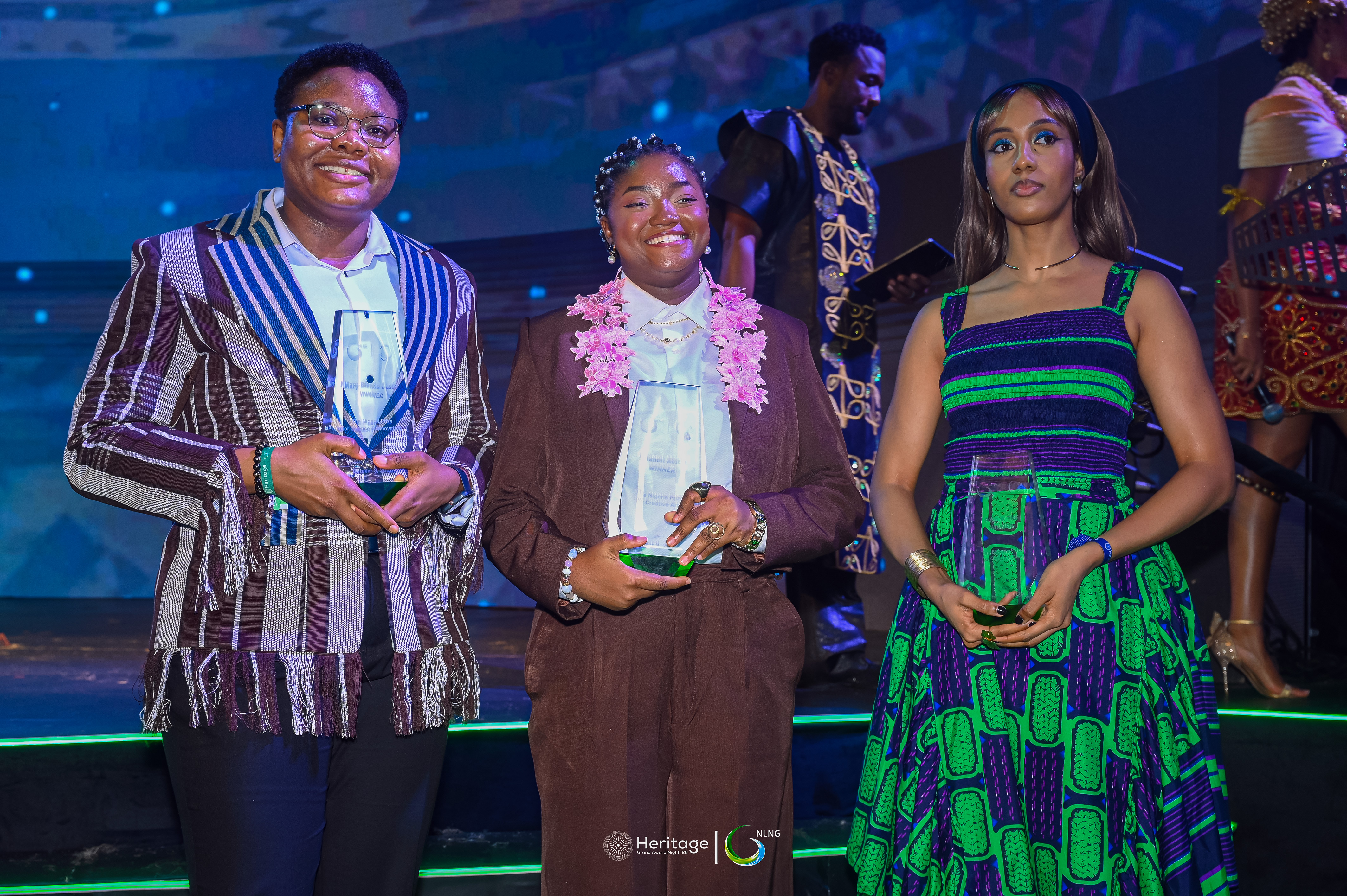
Feranmi Abiola’s Mara Mania has been named a joint winner of the inaugural Nigeria Prize for Creative Arts, putting a spotlight on one of Lagos’ emerging youth-driven music cultures.
The documentary, which explores the rise of Mara music in Lagos, was recognised alongside Peter Oghenetega Oke’s Beyond Tarkwa Bay at the Nigeria LNG Limited Grand Award Night in Lagos on October 9. The two films share the $20,000 prize.
Mara Mania looks beyond the sound itself, following the DJs, dancers and cultural contributors helping shape Mara and examining how music, movement and digital culture are becoming part of a wider story about contemporary Nigerian youth identity.
The film was selected from 98 submissions for the first edition of the Creative Arts Prize, which focused on the theme “Identity.” After an initial longlist of 11 films, Mara Mania was among five documentaries to reach the final stage.
For Abiola, the recognition also reflects the people who trusted her to document their world. At the centre of Mara Mania are figures including Kadima, Azzion the Beat, DJ Khalipa, DJ Cora and dancers Larry, Zenny B, Skilo Richie and King Kong Mara.
It is a significant moment for a film documenting a culture while it is still being built. Mara Mania is not just looking back at where Mara came from. It is capturing where Lagos youth culture is going.
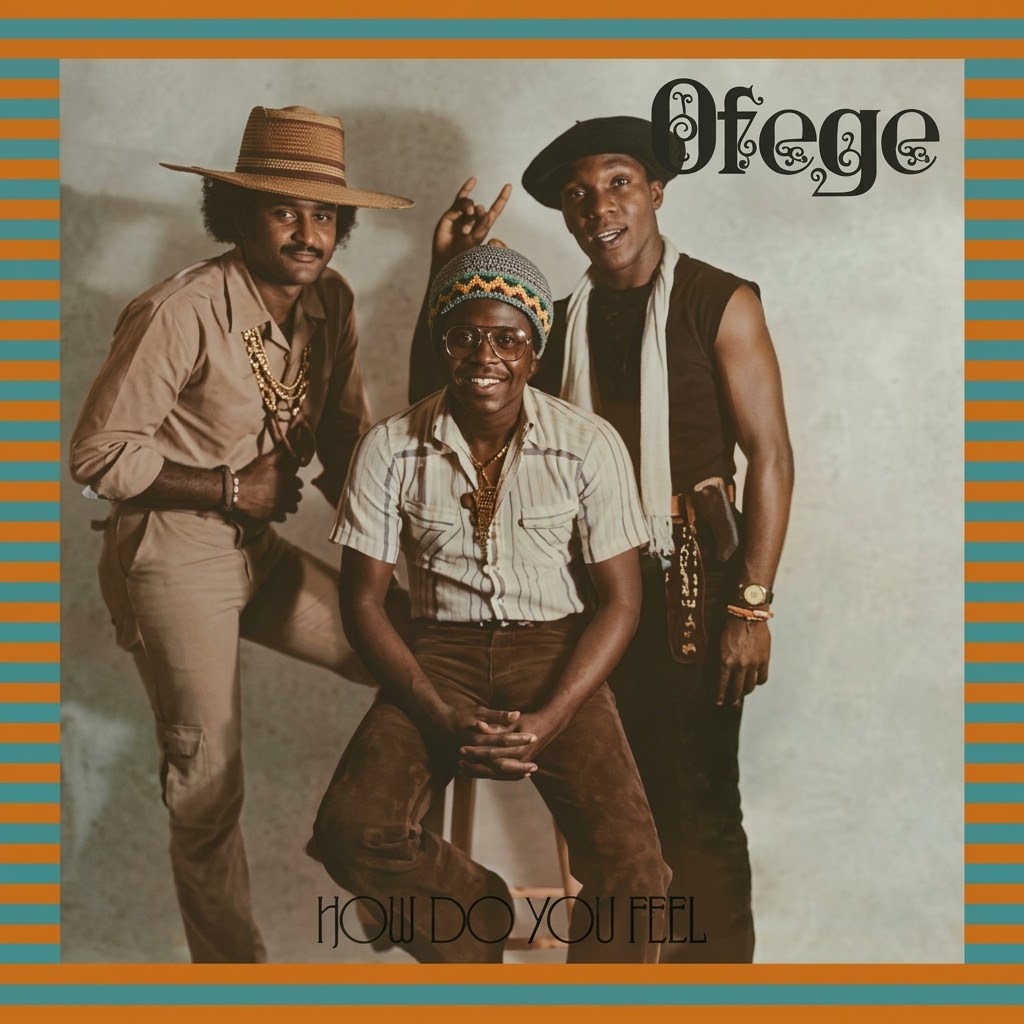
In the early 1970s, Ofege released Try and Love while still in secondary school. The Obalende teenagers fused West African rhythms with psychedelic rock and helped shape a Nigerian sound that history almost forgot.
The band grew out of St. Gregory’s College, where guitarist and vocalist Melvin “Noks” Ukachi and bassist Paul Alade began playing together under the earlier name Hitch Hykers. They later added Dapo Olumide and M-Ike Meme. Their first attempt to audition at a recording studio reportedly ended with advice to return to their studies. They did not.
When they eventually reached EMI, producer and A&R manager Odion Iruoje heard something worth developing. He put the teenagers through intensive rehearsals and brought them into the sessions that became Try and Love.
The result was not a novelty record made by children playing at being rock stars. It was a confident, melodic, and emotionally direct album that fused West African rhythms with the fuzz guitars, soul, and psychedelic textures of 1970s rock. Ofege drew from Santana, Led Zeppelin, Osibisa, and The Funkees, but they did not sound like an imitation of any of them.
Try and Love opens with “Nobody Fails,” a song built on a waltz-like rhythm, bright guitar punctuation, and Ukachi’s youthful vocals. “Gbe Mi Lo” brings more intricate drumming and a majestic guitar solo from session musician Berkley Jones. “It’s Not Easy,” written by bassist Paul Alade, remains the album’s most tender moment: a languid, yearning love song that has since found new audiences through licensing in television.
What makes Ofege remarkable is not simply that they were young. It is that their youth did not limit the ambition of the music. Try and Love carries the urgency of teenagers discovering love, freedom, and possibility, but it is arranged with enough sophistication to hold up more than 50 years later.
They were not alone. Nigeria had a thriving psychedelic rock scene in the 1970s, one that included Blo, The Funkees, and Ofo the Black Company. Yet the story that has travelled furthest internationally is often Afrobeat, leaving bands like Ofege under-discussed despite their influence and quality.
Ofege released The Last of the Origins in 1976, Higher Plane Breeze in 1977, and How Do You Feel in 1978 before fading from the scene after graduation. But Try and Love remains their defining statement: an album made by schoolboys from Obalende that still sounds alive, restless, and completely its own.
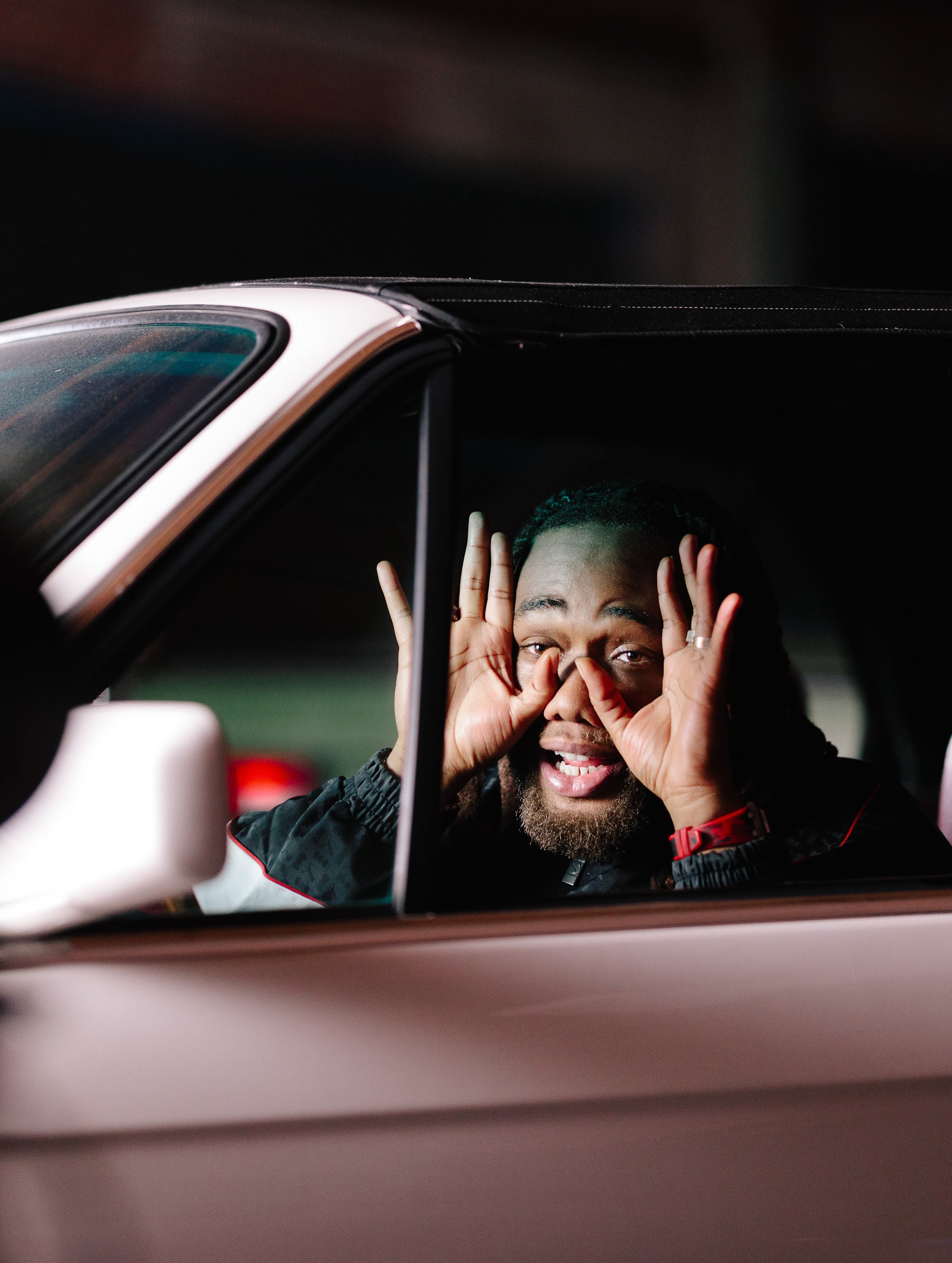
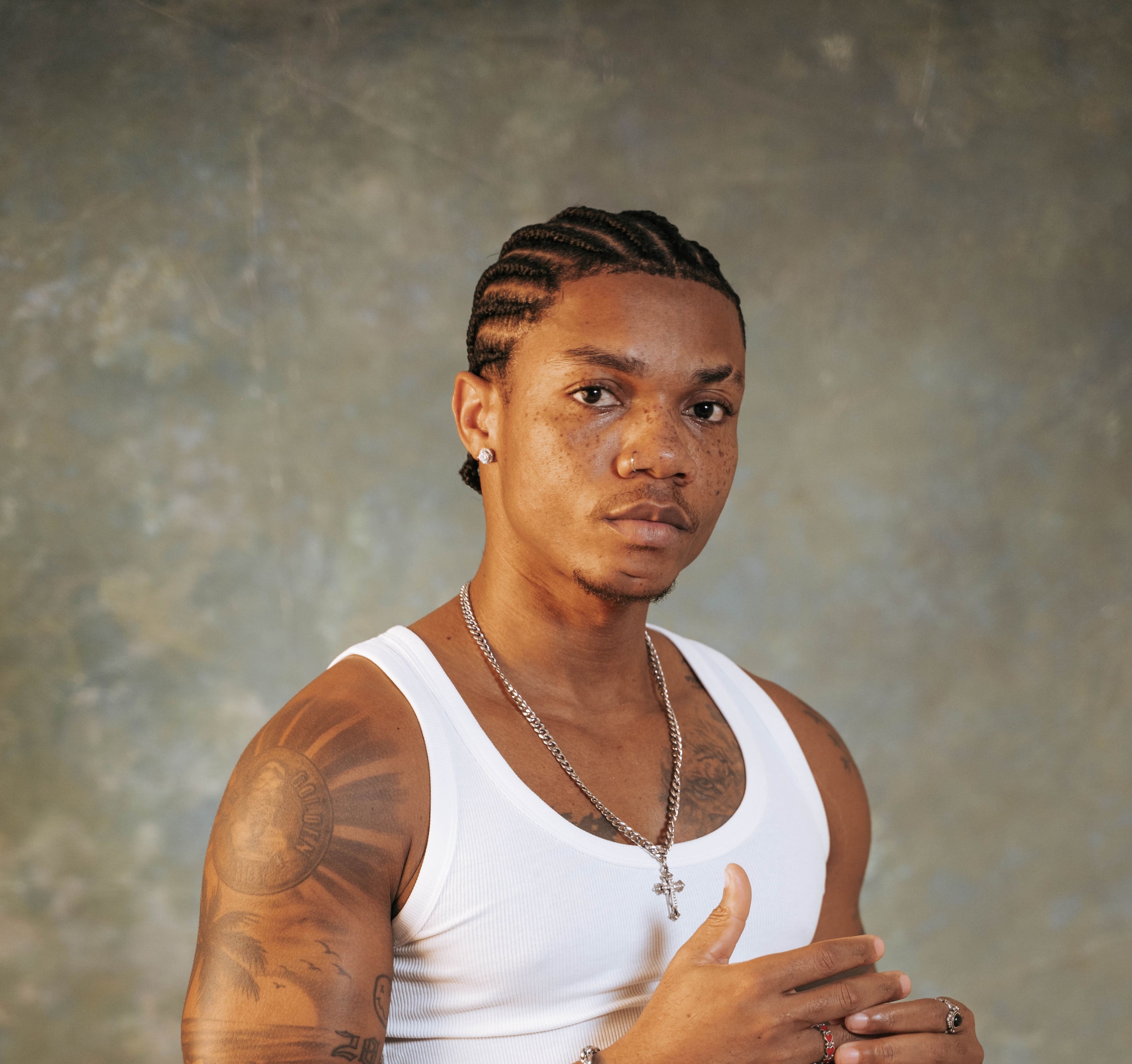
BNXN is in charge, and he wants you to know it. Still In Charge is him saying it out loud.
It is a long way from the kid who used to beg strangers on Twitter for airtime. When those old posts resurfaced and the mockery followed, his reply, since deleted, was that the same telecom company had since signed him. He even started under another name. Buju became BNXN to avoid brand confusion with the veteran Jamaican reggae artist Buju Banton. Thankfully, he was already relatively known, and since then he has put every foot forward in the right direction, building BNXN into the brand it is today.
Back on “Sorry I’m Late,” Daniel Benson sang that “he had never stopped in his life and had no reason to stop now.” His run of projects has been him making good on that line. “Sincerely, Benson” introduced the man behind the name. “Captain” put him in the driver’s seat. “The Game Needs Us”, with Sarz, told the industry it needed him. “Still In Charge” confirms he never left the seat: six songs in about 16 minutes.
He is not subtle about where he thinks he stands. Before release he posted a Pablo Escobar meme from Narcos with six faces on it: his own, Asake, Davido, Wizkid, Burna Boy and Rema. In a listening session he explained that those are the names he considers the top of the industry. Eja Meja puts the second face next to his. It is their first record together, and in a year where Asake has been on a feature run, the linkup lands less as a surprise than a confirmation. Blaisebeatz keeps the drums heavy enough that neither man sounds like a guest.
Online takes the viral line about not being online and turns a quiet stretch into evidence of work. 16 is the spine. It goes back to hustling at sixteen, with WalahiSteph, a university mate, on production, which says something about who has been in his corner since before the money. Deliberate Work opens as swagger, then turns on someone from his business past he says took from him. He never names them, and neither will I. Braggadocio with a bill attached is where “in charge” gets earned, because control means more from a man who has lost some.
Shamaya is the one pure love song. FOLA’s chemistry with BNXN was already proven on the Alone remix and Very Soon, and with sbthaproducer pulling the drums back, FOLA’s cadence is what you hear first. If You Like, produced by Semzi, closes carefree.
BNXN told listeners this started as a deluxe for Captain before he scrapped it. Right call. A deluxe would have been a footnote. As an EP it plays closer to The Game Needs Us, tight enough that nothing needs defending.
My reservation is the online complaint that he reuses the same flows. I do not fully buy it, but I see where it comes from. On a project this short, every hook has to justify its place, and for a man claiming charge, the sound should bend more than it does. Finding new pockets is what presiding looks like, and that is the gap between a very good EP and a great one.
A kid who once begged for airtime now decides when his music arrives and what it says. Still In Charge is that sentence, six songs long.
On Du Cane Road in Hammersmith Hospital Campus, a research institute dedicated to understanding how our genes and environments shape who we become is preparing to turn its walls into an exhibition space. Home in Motion, the MRC Laboratory of Medical Science’s (LMS) largest Black History Month event to date, marks the first time the institute has opened its building to an exhibition featuring external artists.
Responding to this year’s UK Black History Month theme, Honouring Our Communities, the exhibition explores a question that becomes more complicated the longer you sit with it: where is home when home keeps moving?
The project builds on The Gene Home, an earlier LMS initiative inspired by Michael McMillan’s The Front Room, which recreated a Caribbean family’s London living room in collaboration with the Windrush community. The project used a familiar domestic setting to open up conversations about the relationship between genetics, environment, health and identity.
With Home in Motion, that conversation moves into the gallery. Bringing together artists working across photography, painting, textiles, film, sound and digital desigin, the exhibition explores how personal histories, cultural inheritance and the experience of migration shape our understanding of home. The works range from a painting informed by an anonymous survey on the Black experience to the design of an Igbo detective witch for a video game, reflecting the many ways artists interpret identity and belonging.
For the LMS, the exhibition is also an opportunity to bring its research into conversation with the communities and experiences that give it meaning.
I spoke with Tade Elesheku, [Internal comms] and Joshua A Owolabi [EDI committee chair] about the thinking behind Home in Motion, the relationship between art and science, and what happens when a research institute makes room for the stories its walls have yet to tell.
In Conversation with Tade Elesheku and Joshua A. Owolabi:
Q: What led you to start The Gene Home?
A: The Gene Home grew out of Black History Month at the LMS. It was the driving inspiration for the first project. We wanted to talk about our science, how our genes and our environment together shape our health and identity, in a way that started from people’s lives rather than the lab.
Working with the Windrush community, and inspired by Michael McMillan’s The Front Room, we recreated the living room of a Caribbean family in London. It gave us a space where science and personal history could sit side by side.
Q: Has the LMS marked Black History Month every year since?
A: We’ve marked Black History Month in recent years. Last year, we held a talk alongside a celebration featuring food, music, games and a staff-curated playlist. Home in Motion is our biggest event yet, and the first time we’ve opened our building to an exhibition with external artists.
Q: Why an art exhibition, and where do art and science meet?
A: Our research looks at how genes and the environment shape who we become, and home is one of the most powerful environments in anyone’s life. Artists explore that same question in a different language.
An exhibition also brings people into the building who might never otherwise come to a research institute. It’s a chance for our staff to see themselves and their cultures reflected in the place they work. At their best, art and science are both about paying close attention and asking why.
Q: What does Home in Motion mean to the LMS?
A: Home isn’t just a place; it’s something we carry with us: objects, food, music, memory, family. For many in the African and Caribbean diaspora, home has moved across countries and generations, and it keeps changing.
At the LMS, we have staff from all over the world, so the idea that home moves with you and shapes you felt true to us as an institute, as well as to the theme of honouring our communities.
Q: How did you approach the selection process?
A: We ran an open call through Imperial’s staff and student networks, the Students’ Union, our community partners and LSTV’s networks, with a particular focus on up-and-coming and emerging artists.
Each submission was scored independently by two judges on the quality of the work, how it connected to home, memory and belonging, and how it would sit in the space. We then averaged the scores, with a third colleague on hand as a tie-breaker.
Q: What happens to the artworks after the exhibition?
A: The original works will be returned to the artists after the exhibition. Some of the printed works may stay up on the seventh floor for a few weeks so more staff can see them.
We’ll also respect artists’ wishes about their prints. Some have asked for theirs to be destroyed afterwards to protect future editions.
Q: Has anything in the submissions surprised you?
A: The range. We had photography, painting, pen drawing, textiles, film, sound and even 3D character design for games. One artist created an Igbo detective witch for a video game.
Others drew on Nigerian, Ghanaian, Jamaican, Saudi-Nigerian and Gambian roots. Some pieces were joyful, while others were confronting, including a painting built from an anonymous survey about the Black experience. It showed us there’s no single way to tell a story about home.
Q: What do you hope people take away from the exhibition?
A: A feeling of being seen and welcomed, and maybe a new way of thinking about what home means to them.For our staff, we hope it’s pride that their workplace celebrates their culture. For visitors, we hope it’s a sense that a science institute is a place they belong, too.
Q: Could this be the start of something more regular?
A: We’d love Home in Motion to be the start of something. This year has shown us how much talent and appetite there is, so we want to keep building partnerships with artists, communities and organisations like LSTV, and keep finding ways to bring our science and our communities closer together.
Home in Motion takes place on Wednesday, 21 October 2026, from 4 pm to 7 pm at the MRC Laboratory of Medical Science, Du Cane Road, Hammersmith Hospital Campus, London W12 0HS.
A case study in tempo-reading, bold selection, in-game tactical reads, and the impact substitutions Mourinho has used across every top European league he has managed.
Jose Mourinho’s critics reduce him to a manager who sits deep, absorbs pressure, and grinds out 1-0s. That picture is incomplete. It’s not just that he wins games late; it’s how he gets to that position in the first place. Across four leagues Portugal’s Primeira Liga, England’s Premier League, Italy’s Serie A, and Spain’s LaLiga plus finals in the Champions League, Europa League, and Conference League, the pattern that actually defines Mourinho’s career is a manager who reads a match in real time and is willing to act on that read in more than one way: leaving out a bigger name for a tactically smarter one. This piece tries to cover all of it the selection calls, the mid game tactical switches, the substitutions, and the moments his sides were genuinely on the brink before his reading of the game turned it around.
Porto is the origin point of “late Mourinho,” but it’s worth being precise about what actually happened there, because it’s a different and in some ways more instructive story than the pattern that defines his later clubs.
Costinha was not a bench option at Porto. He was Mourinho’s starting defensive midfielder and the anchor of a 4-4-2 diamond, on the pitch for the full ninety minutes in almost every major game across the 2003–04 Champions League run, the famous Old Trafford night included. In the last-16 second leg, with Porto trailing Manchester United and seconds from elimination on away goals, a stoppage-time Benni McCarthy free-kick was fumbled by Tim Howard into Costinha’s path, and he bundled in the equaliser that sent Porto through. It produced Mourinho’s now-famous touchline sprint, and it made him a global name. But it was a starter finishing a chance in the only window left, not a substitute introduced to change the picture.
What that tie also shows, though, is Mourinho reading a game tactically before it ever got to that stage. In the first leg at the Estádio das Antas, Mourinho had identified that United were weak down their left, where Quinton Fortune was being shielded by Ryan Giggs.
Porto’s central pair of Maniche and Deco threaded passes that side early, and Dmitri Alenichev set up McCarthy’s first-half equaliser there. Once United had adjusted to defend that flank more narrowly, Mourinho’s side simply switched the point of attack to the other side, where McCarthy beat Gary Neville and Wes Brown to score the winner.
That’s the piece of the Porto story that tends to get lost behind the Old Trafford drama: a manager identifying a specific mismatch before kickoff, exploiting it, and then re-routing the attack the moment the opponent corrected for it all without a single substitution.
Porto’s actual bench that season, Ricardo Fernandes, Edgaras Jankauskas, and a late-arriving Carlos Alberto, was there mostly for like-for-like cover, not for pre-loaded, tempo-reading strikes. What Porto did have, and what did carry forward, was the underlying instinct: identify a specific weakness, target it directly, and trust a specific individual to finish the moment when it arrived.
Mourinho’s two spells at Chelsea produced different squads but the same trick. In the 2013–14 League Cup semi-final second leg against Manchester City, Chelsea were behind and being outplayed within the first minute. At half-time Mourinho withdrew Michael Essien for Demba Ba, a bold, attack-minded change rather than a defensive one and Ba was directly involved in Chelsea’s equaliser within ten minutes of coming on, turning the tie.
A year earlier, in the EFL Cup win over Bournemouth, it was Eden Hazard introduced from the bench, who scored the only goal with seven minutes left. The through-line across both Chelsea eras is that Mourinho’s most important substitutions were rarely like-for-like or purely defensive; they were attacking reinforcements timed to exploit tiring legs, brought on specifically to change the outcome rather than protect a scoreline.
At Inter, the “impact player” was Goran Pandev, signed on a free transfer in January 2010 and integrated almost immediately as a rotational forward Mourinho used to change the geometry of a match. Pandev scored a winning goal on his league debut and a title-defining strike in the Milan derby, but his defining contribution came in the biggest game of Mourinho’s career: introduced as a substitute in the Champions League final against Bayern Munich, he helped Inter see out a 2-0 lead and complete the historic treble Serie A, Coppa Italia, and Champions League in a single season, still the only Italian team to have done it.
Inter Milan also supplied one of the purest examples of Mourinho’s “get out of jail” reputation in Serie A: away from Europe’s biggest stages, at home to a struggling Siena side, Inter trailed 3-2 with two minutes left before Wesley Sneijder equalised from a free-kick and substitute Walter Samuel scored the winner in stoppage time. It’s a smaller game, largely forgotten outside Italy, but it is exactly the kind of unglamorous, tempo-controlled late win that defines the pattern more than the finals do.
Real Madrid gave Mourinho two of the clearest examples in his whole career of reading a match and acting on it, one through a substitution, one through simple composure under real pressure.
In the 2012–13 Champions League last-16 second leg at Manchester United, with the match locked in a tight, tactical stalemate, Mourinho introduced Luka Modric at half-time. Mourinho said afterwards that Modric’s introduction changed the dynamic of the game in midfield, and Madrid went on to win 2-1 on the night, a result built around a mid-match adjustment that shifted control in central areas once the opponent had settled into their own rhythm.
That same tie is also the clearest instance in Mourinho’s career of a genuinely nervy night against a former club, not his own former club, but Cristiano Ronaldo’s. Ronaldo, back at Old Trafford for the first time since leaving United in 2009, had already scored in the first leg at the Bernabéu. In the second leg, United actually moved ahead on aggregate through a Sergio Ramos own goal early in the second half, meaning Real Madrid were, for a stretch of the match, on the wrong side of elimination against their own former target.
The turnaround came fast: Nani’s sending-off, Modric’s introduction and long-range equaliser, and then Ronaldo set up by Gonzalo Higuaín, scoring the winner against the club that made him a superstar, and choosing not to celebrate out of respect for the crowd that raised him. Madrid went through 3-2 on aggregate. It’s a rare case of Mourinho’s team being genuinely close to going out of a competition rather than merely grinding through it, and it shows the same reading of tempo working under actual duress rather than as a pre-planned script.
At Spurs, the raw material was different. Mourinho inherited a squad that he transformed during his 17 months tenure from November 2019 to April 2021, which ended without a major trophy despite the fact that there were key notable moments and players’ performances. Spurs reached the EFL CUP final in 2021 guiding the London side to their first domestic cup final in six years. The key to our transformation was that the attacking duo Harry Kane and Son Heung-min finished the 2020-21 season as top scorer and assist provider respectively.
Instinct was identical. In his first home match in charge, Tottenham fell 2-0 behind to Olympiacos in the Champions League. Mourinho’s response was to bring on Christian Eriksen, at the time out of favour under the previous regime, early in the second half. Eriksen helped turn the match, and Spurs came back to win 4-2. It’s a smaller sample size than his title-winning teams, but the reflex to identify the sidelined player whose skill set specifically punishes a tiring opponent, and introduce him at the moment the game opens up, is unmistakably the same one from Chelsea and Inter, applied to a squad he didn’t build himself.
United gave Mourinho his most consistent “impact sub” of any club: a teenage Marcus Rashford, who described himself in his own words as United’s super-sub during this period. Rashford scored a stoppage-time winner in his debut season away at Hull after coming on for Juan Mata. He came off the bench again to break the deadlock against Leicester. And in a League Cup tie against Manchester City, it was Mata not a nominal starter that day who scored the only goal after Zlatan Ibrahimović teed him up, avenging an earlier derby defeat. Against Bournemouth, Rashford again struck a stoppage-time winner from the bench.
Across nearly every version of this United side, the pattern held: a front-line starter would wear an opponent down for an hour, and Mourinho would then release a fresher, sharper option, usually Rashford into space that had only just opened up.
Roma gave Mourinho his fifth major European trophy and his first continental title with an Italian club outside Inter. In the inaugural Europa Conference League final against Feyenoord, Roma defended for long stretches before Nicolò Zaniolo scored the only goal of the game from Roma’s first shot on target, in the 32nd minute a result built on patience and a single clinical moment rather than territorial dominance. Zaniolo was also at the centre of Roma’s derby drama with Lazio: a disallowed stoppage-time winner against Genoa, and a crossbar-rattling near-equaliser in a derby defeat, both underlining how often Roma’s fate under Mourinho hinged on what happened to that one individual in the closing stages of a match, for better or worse.
The received wisdom about Mourinho is that he wins ugly. The more accurate description is that he wins by reading a match better than the man across from him through team selection, through in-game tactical switches, and, when those aren’t enough on their own, he will introduce an unknown player a few minutes before the game ends, who decides the scoreline, which we have seen through time against major opponents.
A 1-0 win manufactured off a 78th-minute substitution is not a lesser tactical achievement than a 4-0 rout scored inside the first half. It is arguably a harder one, because it requires reading an opponent’s physical and psychological decline in real time and having the discipline to wait for the right moment rather than force it.
He’s a manager who has, across five different leagues and four different generations of players, consistently found the lead that turns a stalemate into three points and had the nerve to wait until the game told him it was time to act on it.
KiDi has not come down yet, and he says so before I get to my first real question.
“I expected that by now I’ll be down from the high but unfortunately I’m still floating in cloud nine,” he tells me, a week or two after his first solo headline show in London. He is back in Accra, where he lives, but he is clear that the rest of him has not caught up. “My spirit is actually still at the venue. It’s still on that stage, still taking it all in.
“The team jumped on a call for the cover of the second issue of LOOOK, and the KiDi who answers is the relaxed, generous version of an artist whose first headline show in a city he has a soft spot for went the way he hoped.
London, it turns out, was never a normal room. In the videos that circulated afterwards I noticed fans saying they had flown in from Australia and Ireland, and KiDi says the pull went wider. “Not just fans in the UK, fans in Spain, fans in Germany, fans in France,” he says, people who had spent years asking for a KiDi show and treated this one like a road trip. A month or two earlier, on a TikTok live, he had spoken to a fan in London who was about to fly back to America. She had just learned about the concert and decided to stay an extra month to be in the room. “All these things are a blessing,” he says.
I ask if he had a ritual before walking out to around 2,000 people. What he describes is company, not ceremony. Backstage it was his team and a few friends from the media, music playing, nothing staged. “We’re just chilling and hanging,” he says, and that was the whole method. “I felt the love. I felt so much assurance and energy.”
Then I make him play a game. I have been living inside Where Do We Go From Here, his latest album, I tell him, and he gets three guesses at my favourite of its fifteen tracks. He tries Headache, then See Thru, and misses both. After a third try and locking in, he lands on Agreement.
My case for it being my favorite is structural. The album opens in motion, Crazy World into Special Lovin, and three more tracks, Agreement is where it finally lets you sit. It is the bridge that makes fifteen tracks feel like a journey and not a queue, and it is why there is no song on the project I am tempted to skip. KiDi says he is honoured I noticed. Then he tells me something I did not expect. When his team met to plan the video for Agreement, he kept telling them the song would be played for a long time and the visuals had to hold up in twenty years. I tell him I am calling it now, that Tobi from LSTV said so. “I also do believe that,” he says. The song, he adds, “might transcend me” and the album around it.
Only four features sit on the project, from Sarkodie, Kwesi Arthur, Lasmid and AratheJay, and none of them feels parachuted in. That was the brief. His team built the album around the listening journey, asking what each guest would add to a song: the production, the message, the delivery. “Sometimes you hear a collaboration and the song might be good but the collaboration kind of feels out of place,” he says. His test is ten years out. He wants a listener to return to these songs and find “nothing out of place about it.”
Many Nigerians met KiDi through Odo with Davido, so I ask who he would run it back with now. He answers with a restaurant receipt. “It’s such a long list,” he says, the kind of bill that keeps unrolling. Fireboy comes first. Asake gets the most considered pitch: whatever the subject, KiDi hears spirituality and soul in how he interprets it, and “me and him on a song would just be crazy.” Tiwa Savage, Ayra Starr and Adekunle Gold make the list too.
Then the question I knew would test the mood. KiDi was left out of the Artiste of the Year race, and his public response, that he was coming back stronger, struck many people as too calm. He explains that the line is older than this year. “I’ll be back” began the year he was nominated, a favourite, and lost. He won the year after. “It was something I was using to reassure myself,” he says. “It’s not a race, it’s not a fight, it’s not a do or die.” He will clap for the people in the category. He also plans to return next year, and he says it with a grin I can hear: “It’s looking like we are back.” It is a more useful answer than the defiant one fans wanted. The line was never a threat, it was a note to Dennis.
That thread runs into his definition of success, which has changed more than his schedule has. At 22, he says, happiness was always one event away: “If this next song becomes a hit then I’ll be happy. Or if I get this award.” Each time, the thing arrived and the feeling did not. “That fulfillment and that happiness will not come from any destination,” he says. A good dance, he adds, goes backward and sideways as well as forward. “It’s all part of the dance.”
Asked to choose between Sugar, The Golden Boy and the new album, he spends a few seconds being diplomatic, each record had a role to play, and then he stops. “It represents me now,” he says, “my current story.”
The conversation turns to Zane, his son, whose name KiDi carries boldly on his Instagram profile. “Everything I’m doing now, it’s not just for me,” he says. Zane is watching and learning, which cuts both ways for a public figure whose stage performances land on timelines. Some of what he does is art and not for a child to absorb unguided, so he and Zane’s mother guide him through it. Zane, meanwhile, has notes. When Signature came out, he asked why he had not been allowed to design the cover, then asked whether the artwork could be taken down so he could replace it. “That’s not how it works,” KiDi says, “but maybe next time.” KiDi is kinda happy that his son has already picked up something and is already fighting for his space.
If Zane ever says he wants to sing, KiDi answers with a history lesson. His generation did not get this freedom. Any African child, he says, knows the pressure to become a doctor, a lawyer or an engineer. “We didn’t have all this freedom, but the good thing is we’ve learned from all these things.” Whatever he chooses, he will guide and support.
Independence is where KiDi sounds most like a man doing arithmetic. The freedom is real, he says, and so is the workload. A label’s machine is well oiled, and going alone means owning every part of the craft. That is where his team comes in, the people he calls his soldiers. “There’s a reason why these labels exist,” he says, and carrying every task yourself can dilute you as an artist. What stands out is what he refuses to do. A newly independent artist could dunk on the label system. He does not.
I ask for advice on ownership and leverage for any young artist, in Ghana or elsewhere. He opens with a caveat: “What works for Peter might not work for Paul.” Then a method. Look at where you are, the talent you carry and the vision you hold, and ask who can help you get there. If it is a label, go, but be wise in your signings and read the fine print. If it is your own team, do that. Either way, learn everything, because “eventually you will not be in a label system forever.”
He is as generous about home. Kojo Blak and Olivetheboy lead his list of Ghanaian names worth hearing, with a deeper bench of artists and producers he believes the world will reach in due time. Ugly and Tough, Liquidbeatz and Alor G.
The quick fire loosens the room. Accra or London? “London,” he says, “only because I already live in Accra.” Asked what the 2015 MTN Hitmaker version of himself would say seeing him now, he says that boy would not believe his eyes. “I can’t believe girls used to love that boy.” What would surprise fans? He paints, and keeps a sketchbook he used to draw in. It is hard to hear that and not think of Zane and the Signature artwork. “I know where it comes from,” he says. “Sometimes your kid takes something from you. It’s a proud moment.”
One word for Where Do We Go From Here? He gives me one that is technically two. “WORLD WIDE.” It is not only the music travelling. “I want to be on stages around the world performing. I just love being on stage.”
It would be easy to catch him in a contradiction. A man who says no destination can make him happy is still floating a week or two after his first solo headline show, and he sounds in no hurry to land. Somewhere around that word, worldwide, I stop reading it as one. London was not a destination. It was a room, and he is staying in it for as long as it lasts, which sounds a lot like the joy in the journey he says he is learning. His body is in Accra. His spirit, by his own account, is still on that stage, and from the way he says worldwide, it is already scouting the next one.
By the time you finish Lusanda’s By The Time I Wake Up, something has shifted. Not because the EP attempts to overwhelm you with scale, but because it understands the value of restraint. Across three tracks, the South African singer and trained ballerina turns inward, works through reflection and uncertainty, and eventually arrives at a place of release. The project is brief, but its emotional arc is carefully considered.
Lusanda’s background in ballet feels particularly relevant here. Ballet is built around precision, discipline and the ability to make demanding movements appear effortless. Those qualities are present throughout By The Time I Wake Up, a project produced entirely by Anoop D’Souza. Rather than relying on excessive production or unnecessary embellishment, Lusanda allows her greatest strength to remain at the centre of the music: her voice. Warm and controlled, it carries a remarkable amount of emotional weight without needing to force the listener into feeling anything.
“Progress” opens the EP with a sense of space. The production gives Lusanda enough room to move through themes of self-discovery and reflection, particularly the strange experience of looking back and realising that growth was happening even when it did not feel visible. The song is less about a dramatic breakthrough than the quiet recognition that comes afterwards. When she sings “suddenly I see,” the moment feels less like revelation and more like finally understanding what the journey has been doing all along.
The title track, “By The Time I Wake Up,” is where the project finds its emotional centre. A guitar enters within the first few seconds and remains a steady presence throughout, giving the song a grounded pulse while Lusanda’s vocals move around it with remarkable ease. Neither the production nor the vocal performance competes for attention. Instead, they create a balance where each element knows when to step forward and when to leave space.
That balance gives the song its emotional pull. The writing traces an internal movement towards clarity and hope, while the vocalising towards the end becomes one of the EP’s most memorable moments. It is the kind of performance that rewards a replay because its impact comes from feeling rather than spectacle. There is also something versatile about the song’s construction. It could sit comfortably in the intimacy of a quiet evening at a bar or expand naturally onto a festival stage without losing what makes it work.
“Lunchbox,” featuring fellow South African producer iam6teen, changes the temperature. After two songs centred on reflection, growth and healing, the EP finally exhales. The snare and toms give the track a different physicality, creating a sense of movement and release. If the first two tracks are concerned with the work of becoming, “Lunchbox” is about what happens when that internal work begins to show up in the outside world.
Its central idea is simple but effective: the freedom that comes from being completely yourself around another person. Lusanda asks whether she can be carefree in their presence, and the question gives the song its warmth. It becomes the most liberated moment on the project, not because the subject matter suddenly becomes more complicated, but because the music no longer needs to carry the weight of introspection.
That is ultimately what makes By The Time I Wake Up work. It does not attempt to stretch three songs into something larger than they are. Instead, each track has a clear purpose, and together they form a concise progression from reflection to recognition to release. The EP’s brevity becomes part of its strength.
Lusanda does not waste a single second. She arrives with a clear sense of who she is, a voice capable of carrying the project, and enough restraint to let the music breathe.
Lusanda was already awake. This EP just proves it.
Nigeria’s relationship with power has always been complicated. The World Bank’s latest Energy Progress Report puts the number of Nigerians without access to electricity at 86.8 million in 2023, the largest access deficit of any country and the third consecutive year Nigeria has topped that ranking. For those who are connected, reliability remains another part of the problem, with households and businesses often turning to generators and other alternatives when the grid fails.
In Lagos, where nights can move from dinner to drinks to a party and then somewhere else entirely, that anxiety around power has found a smaller, more personal version.
The moment your phone drops to 5% and you still have somewhere to go, your Bolt has not arrived, someone is calling, someone else wants your number, you have photos to take, people to find and a way home to arrange and suddenly, a small battery icon popping up on your screen becomes the most important thing in the room.
It is against that backdrop that INA WA, a young Lagos company, has chosen to work on a much smaller problem: the phone in your pocket.
Its power-bank rental stations have appeared at weddings, festivals, beach days, parties and corporate events, giving guests portable power without the familiar search for a socket. But there is a bigger idea behind the charging stations. INA WA sees the service as an entry point into a much wider relationship with energy, starting with something as simple as making sure a dying battery does not end the night.
The name itself carries that idea.“INA WA means ‘bring the light’,” in conversation with LSTV World Wide. The phrase, Adenijo Bello, Co-Founder, INA WA, explained, is rooted in a feeling familiar to Nigerians: the excitement that moves through a neighbourhood when electricity finally returns.
“We want to ensure that you always have that feeling wherever you go.”
For INA WA, a phone running out of battery creates a version of the same anxiety as a power outage. “It’s like comparing the light going off to the battery going low on your phone,” Bello explained. “It’s basically the same feeling.”
That connection between the name and the service also creates an unexpected opening for conversation. People often encounter INA WA without immediately knowing what it is or how it works. The name itself is enough to make them stop.
“What is INA WA? What happens if somebody doesn’t return the power bank? How do I pay? How do I know when to return it?” Bello noted.Those questions have become part of the brand’s story. What initially sounds like curiosity around an unfamiliar name becomes an introduction to the service, and, according to INA WA, those interactions have helped keep the business moving beyond the immediate need it was created to solve.
The younger crowd was always an obvious audience. Clubs, parties and festivals were natural territory. But one of the moments that stayed with the team came from a very different customer.
At INA WA’s first wedding after-party, a woman in her seventies walked up to one of the charging stations carrying an old mobile phone. It was neither an iPhone nor an Android device. She needed the older micro charger, something the team had not expected to see someone ask for.
The team helped her rent a power bank using an email address and watched as she connected the phone.
“Just watching the process of her plugging in the phone and seeing the smile on her face, like, ‘Ah, it’s my cellphone,’ it was so cool,” Bello recalled.
The moment challenged the assumption that the business belonged only to young people moving through Lagos nightlife. What INA WA was really providing was not simply a way to charge a phone, but a way to remain connected.
That distinction becomes important in a city where so much of everyday life now runs through the device in your hand. Your phone is your camera, your map, your wallet, your social feed, your contact list and, sometimes, the only way to get home.
So when the battery dies, you do not just lose access to Instagram or WhatsApp. You can lose access to the practical and social infrastructure around you.
INA WA discovered another version of that dependence at an early event, where the oldest person in the crowd was about 24. The team expected guests to rent power banks when their batteries were running low. Instead, some people wanted to keep their phones at 100% for the entire night.
“They weren’t paying to charge their phone for 30 minutes. They wanted to charge their phone the whole night. They were paying for two hours straight, three hours straight,” Bello said.
He found it amusing at first, but there was something revealing in the behaviour.
“These guys saw INA WA as a means to stay alive,” Bello observed. “Their lifeline was directly connected to the phone.”
For a generation whose social lives, movements and communication are heavily tied to their phones, the description is not as dramatic as it first sounds. A dead phone can mean a missed call, a lost contact, a failed ride request or leaving an event earlier than planned.
INA WA says it has seen exactly that happen. Guests with low batteries have started preparing to leave because they could no longer request a Bolt or wait for one to arrive. On some occasions, the company has simply opened its power banks to people who needed an emergency charge.
“If your battery is at 1%, I don’t want them to leave. Let them charge their phone to 15%,” Bello emphasized.
For the company, those moments have become part of what it believes the service should mean. The business may charge for its rentals, but the team does not see every interaction through the lens of a transaction.
“Giving back to society has never and will never cost us anything,” Bello reiterated.
For now, the business goes where people are. Its stations remain mobile, moving between parties, weddings, festivals and corporate events whenever the company is called in. But INA WA wants that to change.
The company hopes to begin deploying its stations permanently before December 2026, placing them in clubs and venues that regularly host people. Instead of waiting for an event organiser to bring INA WA in, guests could simply know that the service is already there.
“If you have events one, two, three, four, five days of the week, we’re deploying permanently so it’s no longer, ‘We need INA WA here.’ It’s already there and ready for everyone that needs us,” Bello explained.
It is a small change in distribution, but a significant one in the company’s larger ambition. The goal is to make access to power feel less like something you have to remember to look for and more like something that is simply available.
And that ambition extends far beyond phones.INA WA says it is registered as an energy business and wants to eventually become part of the wider push towards reliable, renewable energy in Nigeria. The company sees the power-bank service as an early step towards a future where its customers can use INA WA for much more than keeping a phone alive.
“We want to be a part of that change,” INA WA said of Nigeria’s energy challenges. “We want to be able to bring reliable, renewable energy across the board.”
Its longer-term vision follows its users as they grow. Today, it may be a phone. Tomorrow, it could be a laptop, a car, a home or an event centre.
“We don’t want it to be a brand that, okay, you’ve used today and tomorrow you no longer need,” INA WA explained. “As you grow, you’re no longer thinking about charging your phone. You’re thinking about charging your cars. You’re thinking about charging your laptops. You’re thinking about powering your houses, your event centres.”
It is an ambitious leap from a power bank rented at a Lagos party to a broader renewable-energy business. Whether INA WA can make that transition remains to be seen. For now, it is building the business one event, one station and one low battery at a time.
The company’s ambition is to make INA WA mean more than a charging service. It wants the name to become shorthand for energy itself, in the same way “Jacuzzi” has become a familiar name for a hot tub.
“That’s the point,” Bello confirmed.
Perhaps that is why the company’s story begins with something as ordinary as a dying phone, because in Lagos, staying powered is rarely just about electricity, it could be about staying long enough to take the picture, experiencing the peak of the night out, or long enough for the ride to arrive.
INA WA Is Building a New Kind of Power Culture in Lagos
A film adaptation has one essential job. Not to summarise the book it comes from. Not to recreate it scene by scene. Its job is to translate the emotional and thematic truth of the source material into a visual language, to honour the argument the book is making, not just the events it describes. When that translation is done well, the film becomes its own thing while remaining faithful to what the book was actually about. When it is done poorly, you get something that looks like the book but means something else entirely.
Nollywood is at an interesting and consequential moment in its relationship with Nigerian literature. The adaptations of Nigerian literary works are finally happening, money is being spent in volumes, serious names are attached, and the ambition feels real. The question worth asking, as these projects arrive one after another, is whether the films are being faithful to what the books were actually saying or whether the director’s vision of how the book should look is quietly overriding what the book was actually about.
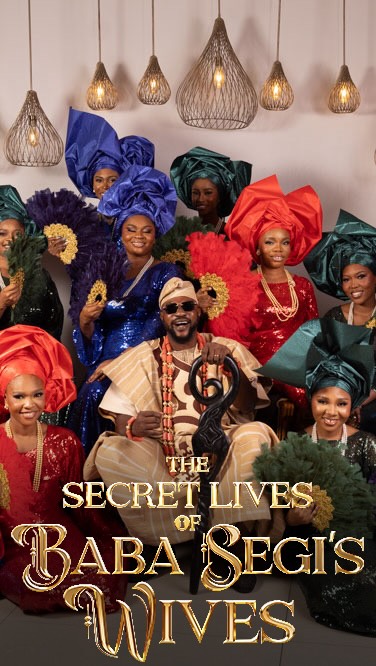
Lola Shoneyin published The Secret Lives of Baba Segi’s Wives in 2010 and spent the next sixteen years watching it become one of the most discussed, most taught, most argued-over Nigerian novels of its generation. Not because it is a story about polygamy, but because it is a story about what polygamy reveals. About class, survival, about women who have no good options navigating the hands they are dealt.
The three original wives have spent years sleeping with other men to produce children their infertile husband believes are his, because their security depends entirely on remaining in his household. Bolanle, the fourth wife, the university-educated outsider, is the disruption that makes all of this visible. She is the one who walks free at the end, not because she is morally superior, but because she is the only one whose education gives her somewhere else to go. That is the argument of the book. Not drama. Not a catfight. The specific way that class and economic dependence shape what women will and will not say out loud.
When the teaser arrived, the internet started asking a question it has asked before. The visuals were lush. The interiors were opulent. The wives were styled. Was this a film about what the book is about, or a film about how the book looks?
That question has precedent in Nigerian adaptation history. Swallow, adapted from Sefi Atta’s novel by Kunle Afolayan, is a story about 1980s Lagos under military rule, about two women navigating poverty, corruption, and the moral costs of survival in a system that offers them almost nothing.
What happened in its reception is instructive. The conversation gravitated heavily toward the visual achievement, the period accuracy, the costume design, the colour grading that made 1980s Lagos feel immersive and beautiful. These are legitimate achievements. But the book’s central argument, about how economic pressure pushes people toward choices they would not otherwise make, about the specific brutality of survival under a military government, got quieter in the conversation than the aesthetic did. The look absorbed the argument.
Elesin Oba, Biyi Bandele’s adaptation of Wole Soyinka’s Death and the King’s Horseman, faced a different but related challenge. Soyinka’s play is about colonial disruption of Yoruba cosmology, about what happens when an external power interrupts a ritual that a community understands to be essential. Bandele’s film is visually serious and culturally rooted, and it received significant critical attention. But the core tension in how to translate a work so deeply embedded in Yoruba theatrical tradition into a film format for a global Netflix audience is a real one. What you gain in reach you risk losing in specificity.
Children of Blood and Bone, Tomi Adeyemi’s novel rooted in Yoruba mythology and produced by Paramount for a 2027 release, has already become a conversation about exactly this tension. The film has a cast that includes Thuso Mbedu, Damson Idris, Viola Davis, Cynthia Erivo, Richard Mofe-Damijo, and a soundtrack carrying Tems, Burna Boy, and Ayra Starr. The Nigerian musical representation is real and significant. But music is one layer of a world. Who built what the fictional kingdom of Orisha looks like? Whose visual imagination drew the architecture, the spiritual spaces, the specific texture of a Yoruba-rooted fantasy world? Adeyemi has publicly distanced herself from the production without specifying her reasons. Whatever happened, the fact that the author who built this world from scratch has separated herself from its adaptation before it reaches cinemas is a signal worth sitting with.
This is not an argument that Nollywood or Hollywood should stop adapting Nigerian literature. The money, the reach, and the production infrastructure that come with serious adaptation are things Nigerian storytelling deserves access to. The argument is about what adaptation is actually for.A book that is about class should produce a film that grapples with class.
A book that is about survival should produce a film that makes you feel the weight of what survival costs. A book about women trapped by economic dependence should produce a film that shows you the trap, not just the house the trap is set in. When the marketing and the visuals lead with the aesthetic, with the beautiful compound, the styled women, the opulent interiors, the period-perfect costumes, it is not always a sign that the film has failed the book. But it is worth asking whether the film is selling the argument or selling the look.
The Baba Segi’s Wives adaptation has serious signals in its favour. Daniel Oriahi is a serious director. The decision to shoot predominantly in Yoruba is a meaningful authenticity choice that Mo Abudu has spoken about publicly. Lola Shoneyin herself is a producer on the project. The TIFF Centrepiece selection suggests the film has been taken seriously at the highest level. These are not the hallmarks of a production that does not care.
But the question the teaser opened is a legitimate one, and the pattern that surrounds Nigerian literary adaptation makes it worth asking. Not as an accusation. As a standard.
The book has been waiting sixteen years for this film. December will tell us whether the film was waiting for the book, or just for the rights.
Created with RNI Films app. Profile ‘Agfa Optima 200 v.3’
Over a Google Meet call slated for an hour, the leader of the Outlaws joins us at exactly 1:30 p.m. sharp, sounding remarkably relaxed. There is no sense of ceremony to it. No stiff introductions or carefully rehearsed answers. Within minutes, what was meant to be an interview begins to feel more like a conversation between people catching up.
And, gracefully, we let it.
By the time we really get into it, Victony has already settled into the room.
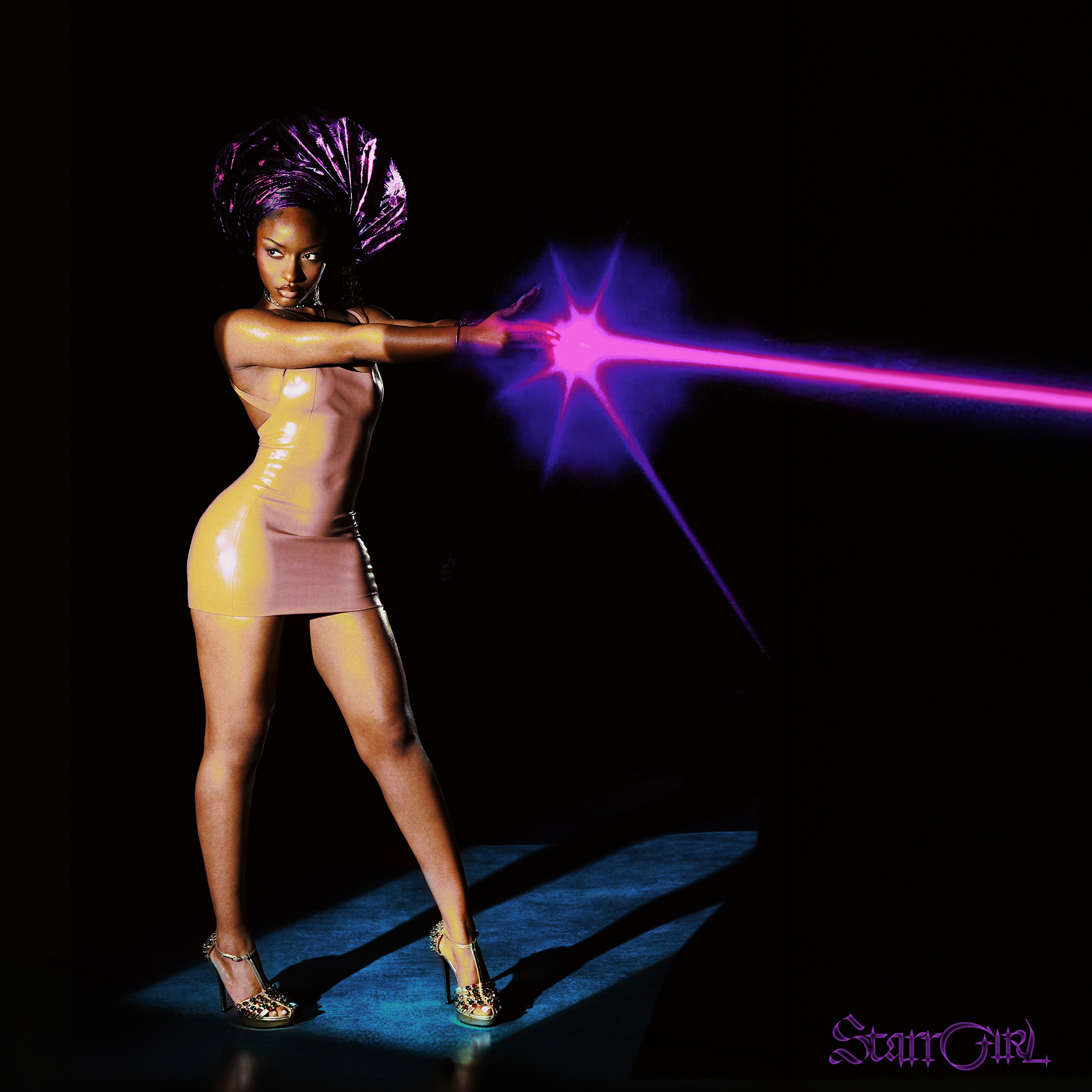
Starlife has been out for a few days now, which means the wait is finally over. The songs are no longer just his. They’re being played in cars, at parties, through headphones, onstage and, inevitably, debated across charts and timelines. After months of anticipation, the album has left the safety of his hands and entered the world.
So, naturally, we start there.
How is he feeling? He laughs, thinks for a moment, and the conversation begins to open up. Soon, we’re talking about the album, but also everything that came before it: Outlaw, Stubborn, Very Stubborn, the accident that became an indelible part of his story, the people who helped shape this new chapter, and the freedom he seems to be finding in it.
For our first Loook Issue, powered by LSTVWW, London, Victony sat with us to talk through that evolution, what it took to get here, and what it feels like to finally enjoy the life he spent years fighting for.
He has spent his whole career chasing one thing, and he’ll tell you himself if you ask him plainly enough. Not excellence, not a lane, not even a sound. Freedom. From Outlaw’s early defiance through the open wounds of Stubborn and Very Stubborn, each era has been another version of that pursuit, a young artist finding new and increasingly honest ways to express himself.
Starlife feels different. The fighting has quietened a little. The trauma isn’t gone, but it no longer has to take centre stage. Instead, Victony is choosing to look around, take in the view and enjoy the life he spent years fighting to reach.
Maybe that’s the easiest place to begin: not with where he is now, but with everything it took to get here. Because Starlife doesn’t exist in isolation. It carries traces of every version of Victony that came before it, even as he seems increasingly comfortable leaving some of them behind.
Starlife is out now, but I want to rewind a little. When you look at the journey from Outlaw to Stubborn, Very Stubborn and now STARLIFE, what has that transition actually felt like for you
It’s me just growing right as a person, learning and learning, and I feel like there’s been so much real life reflection in the music, right from Stubborn to Very Stubborn, and to star life, it kind of just shows you where my head space is at, but overall it’s just been me, it just felt like growth, to be honest, through this different process, so yeah.
Starlife feels very different in spirit. There’s a looseness to it, almost like you’re allowing yourself to enjoy the view a little more. Was that something you consciously felt while making it, or did you only recognise it when the album was finished?
Yeah, I think it came from the song, Starlife.
You know, when we made the song Starlife, it somehow just happened to be, like, the core of everything that I was making, you know, very unintentional. But long story short, we wanted to do an EP first, and we decided to call the EP Starlife, I don’t know why to be honest. I guess it just connected and resonated with us at the time, the way the song was and with a couple songs at the time, you could feel all the elements of other songs in Starlife, so it just became the core of everything we were trying to build and then we transitioned into a mixtape it was still going to be called Starlife and finally transitioned into an album, it didn’t change the name.
Seems like you made Starlife before Slick and Fresh was that the case?
Yes, Slick was the last song we made and that’s what made me decide, you know what, let me turn this into an album. Because to be honest, till June, July, it was supposed to be a mixtape.
I feel like you could still get that mixtape energy from the rollout and how quick we went to put out the album.
I decided to turn it into an album because I wanted people to take the music very serious, because time and effort had gone into production, writing and making sure, like, everything sounds good. And I felt like, yeah, this is above mixtape, feels like an album, but everything else around the energy surrounding the release of this project has been very, very mixtape, I won’t lie.
How long did it take you to get the full album, the 15th track?
I’d say about 7 months, yeah.
That took a while. Interesting.
If you zoom out and look at the journey, there’s a pretty striking progression: Outlaw, Stubborn, Very Stubborn, and now STARLIFE. Each title feels like it captures a different version of you. When you look back at those eras, what do you see?
I mean the goal has always been the same, I felt like all I have always wanted for myself in this life is to be really free, and so every version of myself that I look at is just me making an attempt to be free, it’s just been in that chase for freedom.
So, when you look at Stubborn, it’s like the same thing, and the process for putting out Stubborn is very, very similar to STARLIFE, actually. It started up the same way. It was meant to be an EP and then it turned into an album.
It’s just like, I don’t care, these are the best songs that I have, I’m going to put them together and put out an album regardless of what is expected.
[He pauses for a moment.]
So, to be honest, I just see different versions of myself that just really wanted to be free.
But, obviously, in these three eras of my career, I’ve been in different situations. I’ve fought different battles, I’ve survived different things and I’ve been in different headspace, but it’s still the same kid, just growing, it couldn’t have been any different, based on the people in my life and then the car accident that I dealt with, I mean it’s just me, it’s just freedom, you know.
Yeah I mean, anyone that pays attention will see the artistic journey and I think yours is very evident.
You mentioned Slick, was the last song you made on the album. While making, did you think it was going to be this massive?
No, no, no. I didn’t, to be honest. I mean, I knew it was a good song, right from making it, I remember I was so excited.
I had doubts, just little doubts.
I mean, Slick, Slick, the way the chorus was repetitive, I didn’t know if Nigerians were going to fuck with it. It was just very new. Even when I sent it to my Manager at the time, he was already fed up, because I would do this every week where I’d send new songs.
And it’s like, oh, we have to figure out the thing again. And that’s why we kept moving, like, from EP to mixtape to album.
So when I sent him Slick, It just felt like too much at the time, for him to process. And I was like, you know, let me just actually chill on this record a little bit. So I think I was planning the shoot for “who this”, and then I played some songs for my videographer and he’s like, “yeah, this is the one, these songs are crazy, it just really puts you, like, in your own lane.”
And once I heard that, it sparked something in me again. Because that’s really what I wanted to do with this project. To show people what, Victony is capable of and do things, only Victony can do. So once I heard that, I started, like, getting into that zone again.
I just started playing the record again. I fell in love with it again and I became excited. I say this to say that I didn’t really have the chance to think about what it was going to do.
It was just that battle of, oh, am I going to put this out? Am I not going to put this out? Just based on everything that was going on at the time. Until I got to a place where I was excited enough to think about the visual, shoot and just put it out, that’s where it stops, but enough in terms of what is it going to do or not, to be honest I didn’t know, I just liked it.
You just said “ you want people to know what Victony is capable of” and I came across a video of you recently rapping, you used to be a rapper, also found out that you drew the cover art for outlaw, that just shows that there’s a lot to the name Victony, are we going to see a Victony rap song?
I think I know the video you’re talking about.I was cringing at that video.
[Laughs]
No, I doubt, I doubt I’m ever going to be rapping again. I think I found what I’m good at and I’ll just stick to it. But, I mean, you can always just hear, like, the hip-hop influence in my music, one way or the other.
Like on Starlife, even with the intro song, you hear some, some rap influences, same thing with Slick, right on the hook, and same thing with, Typo and 2Fresh.
So, I think with Starlife, I try to just show that side of me, which I’m always going to do, in my music, even though I’m a singer, but you’ll be able to tell with, like, certain cadences or, just rhythm or my flow choice or what not, that it is slightly different from, a regular Afrobeat artists.
So, but in terms of, like, rapping, rapping for real, I don’t know. I’m not sure.
[We both laugh]
STUBBORN, had international footprints with features with Teezo Touchdown & SAINt JHN. On STARLIFE you came back home why was it important for you to feature more Nigerian artists on this?
To be honest, I think it was from me trying to just do this quickly. Because Starlife is a very short phase. It’s not something that I wanted to overemphasize. And that meant doing music with the people that I have genuine relationships with. I got the verses from everybody, really quick. I also knew, these guys would really kill this. I could hear them in that soundscape.
I also wanted it to be genuine, because I wasn’t going to text anybody or wait for my label to reach out to anybody. Personally, I didn’t care about that in this process. I just believed in the music so much. And I wanted people that I could talk to and people that I can get real time feedback from.
And that’s what, really, really empowered that decision to just bring it home. It’s just wanting to be really authentic.
Like I said, Starlife is me, really, really, stepping into myself and doing the things that really makes me happy as a person, and the things that I have easy access to that make me happy.
And that’s the thing about my relationship with Baby Boy AV. That’s somebody I spend time with every day, same thing with YKB, YKB will come to my house and stay for a week or something. I go to Blaqbonez’ house every other day, and then, if I want something from Bnxn, he’s one text away.
I had, multiple sessions with Young Jonn at the start of the year. So, these were verses that I could just stretch out my hands to get, and I knew, they would also put in effort because of their level of respect from me.
But it wasn’t an intentional thing for it to be, like, oh, just only Nigerian features. It just worked out that way because of where I was and how I was just thinking about the process.
This sounds like Starlife is more like a family thing.
Exactly
Hmmm…What does the era Starlife really mean to Victony currently?
“Starlife” is me talking about the life I’m living right now, but at the same time, it’s also me manifesting the life that I desire. It’s still me fighting for myself, in a sense. Like, in this life, I’m going to be happy. I’m going to get all the good things in life. In contrast to my previous project, Stubborn. It was really personal, and that was also a step in that direction of wanting the best for myself, wanting to step in a very, very positive direction, wanting to step into the light.
And with Very Stubborn, it was trauma dumping on those records, like, being very open and vulnerable to the fans. And just releasing everything that I’ve held in for so long.
Starlife is a very different project from that, but it’s still a step in that direction. It’s, like, I’m not going to focus on the negative side of my life now, even if I still battle with those things, every now and then. Starlife is still a fight for my life, to be honest, but in a very, very different direction, it’s me saying, I’m going to step into my happy place.
This year, I have recorded over a hundred songs, to be honest, all just talking about the same thing, and if I put out a hundred of them, it wouldn’t sound any different from what is on Starlife.
And that’s how much energy I put into it, just making sure, like, I’m focused on the positive things, I’m not talking about anything negative.
This era is less about excellence or trying to prove, being the best artist or what, or trying to have the album of the year.
But it’s really about what I want for myself and that’s why I made these records, just to have fun with my friends, with my fans. You know, I made these records for my shows also.
Interesting….Your relationship with Ozedikus seems to have become a big part of the Starlife story. You both have worked on a series of songs about 13 or more? You made “FRE$H,” then “SLICK,”. What do you remember about making these two records? And at the time, did you have any idea you were sitting on something that would become this big?
Actually, I didn’t. This year, making music, One thing I wanted was to allow the music lead, and that’s why I hit up so many producers at the start of the year. I didn’t have a particular direction, I was just making music out of curiosity, I let myself just be in those sessions. I really wanted to tap into different people’s worlds. And with Ozedikus that was the case, I hit him up and I’m like, “bro, let’s have a session”, and to be honest, I didn’t even know what to expect.
Like, my friend at the time, he was just helping me, reminding me of producers in the game. He’s like, oh, you should work with this person, you should work with this person. So at the time, he was like, okay, let’s work with Ozedikus now.
Then I hit him up and, you know, Fresh was the first beat I heard when I went to the studio that day. And yeah, we made the song, we made three songs that night.
I just tried to do a session with him every week. Because, one thing I also wanted to do was to be musically sound.I have as many songs with Ozedikus as I have with PPrime, & Rage.
I know I have at least ten songs with almost every producer that I’ve worked with this year. So music to me was, similar to ,attending the gym, but, I mean, as much as it was I had to keep recording.
I also have something special with Ozedikus, with the way he records me, the way he works my vocal stack. He could immediately see the idea or see the end, from the beginning during sessions, and I think that’s what stood out, with Ozedikus. That’s what happened with Fresh, and that’s what gave me the confidence to keep working on more unique ideas with him. Because he knows how to get it done, and just start tailoring it to what you have in mind.
So with Slick, it was unique, because he sent me a different beat and went to the studio, we tore it down, I did the reference, and had the girls come in and another day, we did the second verse.
I mean, Slick is one song that, you know, we took time to produce, and that’s so funny because the song is very short compared to the time we used to produce it.
Quickly, I want to take a step back and appreciate the team behind STARLIFE, from the management team to the creative team (the stylist to the photographers etc), & producers and everyone that worked hard to portray this version of you.
Ten years from now, when people talk about Victony, what do you hope they remember beyond the songs?
I want them to remember me for my authenticity, I want them to be inspired by how much of myself I was. I want them to look at me and not care about what people think about them.
[A brief pause. We sit with that for a moment before circling back to Starlife.]
Back to Starlife, you made mention that Starlife is a short phase. What should we expect from Victony after Starlife?
I mean, it’s just going to be growth still. I feel like I’m learning faster and I’m growing faster and that’s why I’m quick to realize what I want for myself. I think you should expect a more matured version of me, a grown version. And that’s what you’re always going to keep getting.
QUICKFIRE QUESTIONS
Lagos or London?
Lagos.
Starlife Album Art or Stubborn Album Art?
Starlife Album Art.
I hope you ain’t picking STARLIFE because it’s out
No, no, no, no.
I feel like the album art is the deepest part of the whole thing. In it you see me as a kid with accessories like that, the big chain and the big hats, something that’s meant for, an adult. It just passes a message, what I carry inside me is bigger than I am. So, to me, like, every time I look at that cover, it reminds me of something deep.
Rapping or Singing?
Singing.
Morning or Night?
It depends, though. Okay, let’s just go with morning, because of how I’m feeling today.
Naija Babes or Yankee Babes?
Naija Babes oo
Gamer or Movie Fan?
Movie.
Movies or Football?
I don’t watch football.
You don’t watch football?
[Smiles]
No, I don’t.
Oh, gosh! Outlaws need to know this one.
[we both laugh]
What’s your favorite country to stay asides Nigeria.
U.S
Is the album going on the road? Are you going on tour?
Definitely, definitely, definitely. Next year.
Would Africa be experiencing it? Because there’s a rise in more artists coming home to do more shows in Africa with their album.
Yeah, of course. Benin, Lagos, Abuja, Ghana, Possibly Uganda, Kenya.
Six tracks, and not one of them sounds like an artist still processing pain out loud. This is Sherif comfortable enough to talk about ease, love, and ….
Blacko opens like a man who has made peace with his own weight. More confident, steadier in the pocket, and maybe that peace comes loaded with a run that has been building quietly, a feature on Davido’s “Amazing Grace,” then “Cry” with Llona, both moments where he showed up in someone else’s world and still left fingerprints behind. Sun Sherif Vol. 1 feels like where that momentum lands. Six tracks, one title that tells you everything before you press play. Not hiding from the light this time. Stepping into it.
Espresso opens things on admission rather than apology. Sometimes he spends more than he makes just to feel something these days, he says, and it is the kind of line the old Sherif might have buried under guilt. Here it just sits there, honest, unbothered by its own honesty, the grind and the loneliness that comes with it laid out plainly.
Run Around slows the pace down, piano leading the way into something more guarded emotionally. This is Sherif working through the walls he puts up in romance rather than the walls he puts up against the world, a quieter kind of vulnerable.
Forever with AratheJay picks the energy back up, dynamic and rewarding, a man enjoying the fruits of the work rather than questioning it. It also marks the first time Sherif has brought a Ghanaian artist onto one of his own projects, after years of either going solo or leaning on Nigerian collaborators, a small but deliberate widening of his circle.
Jolie is the early favorite on this first listen. Calm, introspective, the sound of someone genuinely settled rather than performing settlement. It carries the project’s emotional center without straining for it. Frontline is where he reaches back into his Nigerian bag, a subtle Lagos reference and a sharp “omo iya mi” dropped into the track. Fierce, assertive, proof the calm has not softened the edge.
Love Again closes with Full Blown, the Trinidadian duo bringing funky, melodic instrumentation that gives the record a different texture from everything before it, warm and slightly island-leaning, the perfect backdrop for a song about finally letting acceptance in. Shoutout to Full Blown, they understood the assignment.
Six tracks, and not one of them sounds like an artist still processing pain out loud. This is Sherif comfortable enough to talk about ease, love, and what fame has actually cost and given him. He is not just surviving anymore. He is glowing, and for the first time in a while, he knows it.
On his new seven track EP titled “For A Good Time”, the British Nigerian star trades introspection for a passport, calls in Jorja Smith. There’s only one feature on Odeal’s new EP, and it says something that he chose Jorja Smith. Not a rapper for a bounce record, not a hype name for a headline Jorja Smith, whose whole career has been built on restraint, on knowing exactly when to hold a note back. For A Good Time looks, on paper, like an artist letting loose. Underneath, it’s still Odeal being careful about who he lets into the room.
The seven track project arrives as a clear pivot for the British Nigerian singer, songwriter and producer. His last two EPs The Summer That Saved Me and The Fall That Saved Us, both released in 2025 were set inside Lustropolis, the fictional emotional world he has been building since 2024, and both were preoccupied, in different ways, with heartbreak and the fallout of it. For A Good Time… was reportedly assembled during a run of writing camps across Medellín, Los Angeles and London, three cities with three very different rhythmic instincts, and for the first time in a while, Odeal steps outside the metaphor entirely and simply lives in the present tense.
The timing helps. Odeal comes into this project off arguably the biggest stretch of his career a sold out night at London’s O2 Academy Brixton, headline dates across the UK, Europe and Australia, a Stormzy feature on “24 Hours,” MOBO wins for Best R&B/Soul Act and Best Newcomer, a BET Award nomination and Billboard’s African Rookie of the Year honour. For A Good Time lands less like an artist chasing momentum and more like one who has earned the right to exhale.
The Sound: Where R&B Meets The Dancefloor
Production has always been where Odeal quietly outworks his peers, and this EP continues that streak while pushing his palette somewhere new. The lyrics on opener “Rush” lyrics and its follow-up “Get Down” lean on low, smooth instrumentation built to flatter his voice rather than compete with his voice. Warm bass understated percussion, and spacious arrangements give his vocal runs room to breathe, keeping the production sleek without stripping away its intimacy.
“Rush” lyrics
“If we rush, there’s not enough, to make me stay,but when we touch, nothing matters, let the world wait”.
It’s a texture longtime listeners will recognise from The Summer That Saved Me, an EP that drew on a wide production bench including P2J and GuiltyBeatz, blending Afrobeats percussion with lush, unhurried R&Bchords. Odeal hasn’t abandoned that DNA here; he’s just pointed it somewhere lighter.
The clearest sonic leap on the project is “Bluey Vitton,” which trades that smoothness for an uptempo, Amapiano- inflected pulse: log drums, a rolling bassline, house adjacent momentum making it arguably the most club-facing record Odeal has released to date. It’s also, by some distance, the EP’s best evidence of his range: a Nigerian dance idiom filtered through a British R&B voice, delivered with enough confidence that it never reads as a detour. To this critic’s ear, the title does some quiet work of its own, evoking the early-2000s culture of luxury-brand name-dropping, though that remains an interpretation rather than a stated intention from Odeal. And it lands as clever rather than gimmicky once the beat actually drops.
At the emotional centre of the EP sits “Coming Home,” the project’s only feature, with Jorja Smith, produced by P2J the same hand behind some of Odeal’s most affecting work on “The Summer That Saved Me. It’s a useful throughline: P2J’s production has become something of a constant across Odeal’s catalogue, the connective tissue between his more introspective ballads and his brighter, rhythm forward material. Here, lush R&B chords sit over a gentle Afrobeats undertow, and Smith’s voice threads through Odeal’s without either artist crowding the other. Set against the moodier, string laden textures that opened “The Fall That Saved Us“, a record more interested in sitting with discomfort, “Coming Home” feels like sunlight through a window that used to stay shut.
“After The Club” follows with a nice touch: an interpolation of Craig David’s 2001 hit “Rendezvous” tucked underneath its groove Craig David and Mark Hill, who wrote and produced the original, are both credited as writers on the new track. It’s a small, well placed reference that rewards listeners who grew up in that era of UK R&B without ever feeling like a gimmick. It’s the kind of detail that only lands if you’re paying attention, which is very much the point with Odeal he rarely puts anything on a record by accident. The closing run of “Love n Hate” and “TryingThings” pulls the tempo back down into the low, unhurried instrumentation that has always been his comfort zone, steering the project toward vulnerability just as it winds to a close. “After The Club” lyrics
“that you come, come with me now it’s half past 3 after the club and it’s her, you and me your choice was to leave with me tonight and pleasure indeed”.
Storytelling, From The Cover Art Down
What continues to set Odeal apart from his contemporaries in the Nigerian and British R&B space is how deliberately he treats a project as a total object, not just a collection of songs. That instinct is on full display here. Each of the seven tracks arrives with its own visualiser, extending the EP into a small cinematic world rather than treating visuals as an afterthought. The project also introduces Bluey, a character pulled directly out of “Bluey Vitton” who embodies the EP’s spontaneous, slightly reckless spirit, a piece of world building that mirrors what he did with Lustropolis, except in service of joy this time rather than grief.
That same intentionality runs through the writing. Odeal has built a reputation, project after project, on storytelling that rewards patience songs that read as simple on a first pass and reveal more careful detail on repeat listens. For A Good Time is no exception. Even at its most carefree, the lyricism still carries his fingerprints: specific, image driven, unwilling to settle for a generic hook when a more particular one is available. It’s part of why Odeal’s music tends to resist easy categorisation alongside other Nigerian R&B voices his songs ask to be sat with rather than skimmed, even when the subject matter is a night out rather than a heartbreak.
Sequencing And Verdict
Structurally, For A Good Time is one of the more confidently sequenced EPs Odeal has put out. Each addition blends into the next without ever feeling like padding, and the seven track runtime works in the project’s favour long enough to build a full arc, short enough that nothing overstays its welcome. It plays out almost like the itinerary of one long night, opening on the nervous energy of getting ready and closing somewhere far more vulnerable than where it started.
It won’t convert anyone who found Lustropolis’s melancholy more compelling than this newer, sunnier register, and a small handful of the deeper cuts lean closer to pleasant than essential. But as a statement of range proof that Odeal can chase a good time on record without abandoning the storytelling instincts that built his following it succeeds. For A Good Time is not the project that will define Odeal’s career, but it is the one that confirms he has more than one register worth paying attention to, and that even his lightest work still asks to be listened to closely.
Whichever way it’s ranked against the Lustropolis run, For A Good Time does what a good summer EP is supposed to do: it makes the case for its own mood without abandoning the craft that got Odeal here. Seven tracks, one clear feature, a handful of smart production choices, and an artist confident enough to sound this unbothered without sounding careless. That’s a harder balance to strike than it looks, and For A Good Time mostly gets there.
The talent has never been the argument. His songwriting, his melodic instinct, his ability to make something feel genuinely personal without losing its broad appeal…
Two years ago, a video stopped my scroll. A guy in a corporate shirt, singing. Not performing, not trying. Just singing, with the kind of ease that makes you suspicious. Like he already knew something you did not. I did not know his name yet. I just knew I was going to find out.
Then Folake dropped and the suspicion became a certainty.
Fast forward to now, the question Popstar – Side A is quietly answering in 2026 is a different one. Not “who is this,” but who is this becoming, and is it happening fast enough?
The talent has never been the argument. His songwriting, his melodic instinct, his ability to make something feel genuinely personal without losing its broad appeal, all of that is intact and visible on this project. What has been harder to name is why someone with his level of ability, his styling thanks to Fadil, his creative direction courtesy of Anike, and his ear for a song, has not yet seized the room in the inescapable way his talent suggests he should. Popstar – Side A is him responding to that question by refusing to wait for permission. The title is a declaration. Everyone does not have to agree. He knows who he is, and there’s still so much more to him than what we heard on this project. Which is exactly why I’m already waiting for Side B.
The project opens with Chaos, and it is a fitting starting point. He is singing about a rollercoaster life he is not driving, asking the people around him to understand his inconsistencies while he figures things out. It is not the strongest narrative hook, but it sets the emotional register correctly. This is an artist in the middle of becoming, and he is choosing to document that rather than perform the finished version.
Isn’t It Beautiful carries soulful choral vocals over a funk-inspired beat. The writing is warm if not particularly revelatory. Simone reaches for something more western in production, almost Weeknd adjacent, and it is the project’s most uncomfortable stretch. You can hear him on unfamiliar terrain, and it shows. But Deliver Me pulls things back immediately, mid tempo Afropop with shakers and an acoustic guitar, and on the second verse he is entirely in his element.
Multiple thoughts woven together, love, aspiration, a little flexing, all delivered with the cadence of someone who genuinely enjoys the craft and I definitely enjoyed this one. That song deserves more than it will probably get.
Then Uche Jombo arrives and it is the record that holds the project together in the public imagination for good reason. Sampling Wizkid’s Don’t Dull was not an obvious move. Nobody had touched that record in the years since it helped reshape Nigerian pop, and the way Taves approached it tells you something about his taste. He does not replicate Wizkid’s looseness. He brings his own energy and lets the sample breathe underneath it. The result is a song that honours the lineage it is borrowing from while sounding entirely like him. That is harder to do than it looks.
The back half of the project moves through Preaching, which is introspective without being particularly urgent, Space, which is old school earnest RnB that rewards his day ones, and Take Me Away, which closes things with soft piano and drum rolls and a gospel-tinged quality that gives the project an ending that feels considered rather than tacked on.
Production across the board is neat. Spax, OG Sterling, Arie, and Synx bring enough variety to keep the project from feeling monotonous, and the Samklef sample on Uche Jombo shows the kind of instinct for sonic heritage that sets confident artists apart. He also wrote every single song on this project himself, which is not a flex for its own sake but a statement about what these songs are and where they come from.
Here is where the honest criticism lives. Popstar – Side A does not fully do what its title promises. The songs are solid, occasionally excellent, but rarely startling. Compared to some of what he has released previously, this does not feel like an escalation. It feels like a holding pattern dressed in confident branding. The rollout was arguably stronger than the project, with listening parties in Lagos and Ibadan and a visual identity that finally matched the artist he has been presenting himself as. Side A suggests Side B is coming. That is either the right move or a way of managing expectations. Time will settle which.
What is undeniable is that the foundation is real. The talent is real. And Taves is one compelling project away from the moment that makes his self-given title feel inevitable rather than aspirational.
Emotion is indeed a dialect of the soul. When sounds transcended boundaries and moved in frequencies, the human spirit resonated long before grammar was invented. I was having a musical discussion with a friend and he described his experience about listening to music without understanding the language; He was driving through a silent night carrying a weight he couldn’t quite articulate when a song played through the speakers and it effortlessly pulled lonely tears from his eyes. When he translated the lyrics, it painted an intimate picture of what he was passing through.
That’s the sacred alchemy of music. It doesn’t ask for permission or require a dictionary, sometimes it arrives with translating energy in motion. In a culture obsessed with meaning, there is a quiet solace in natural mystery.
Music will find you when you didn’t know you needed it, saying what your heart can’t describe. In some cases, not understanding the song is intentionally enjoying the vibrations felt, because beyond language barriers lies a world of transcendent artistry and we need to give these voices the space they deserve on our playlists. How often do you listen to songs that aren’t in English? Let’s check out some.
AMADOU AND MIRIAM
Amadou Bagayoko and Mariam Doumbia’s sound was beyond audible, it was visionary. They were fondly addressed as The Blind Duo of Mali (Le Couple Aveugle du Mali). They crafted a sound that blurred the lines between ancient West African storytelling and electrically charged psychedelic blues. Singing in French and their native Malian language, Bambara (also known as Bamanankan), they transformed personal hardship into a universal language of resilience, romantic devotion, and radical joy.
Mariam lost her sight at age five due to untreated measles, finding her passion for singing almost immediately, where she began performing at local events when she was six. Amadou lost his sight at 15 to congenital cataracts. His love for instruments developed at a tender age and he channeled that passion for rhythm through flute, percussion and electric guitar. As a teenager, he earned himself a slot in the legendary Les Ambassadeurs du Motel de Bamako band alongside Malian icon Salif Keïta.
He crossed paths with Mariam in 1975 at Bamako’s Institute for Young Blind People (L’Institut des Jeunes Aveugles) playing together in the school’s Eclipse Orchestra. What began as a musical partnership blossomed into a lifelong romance. They got married in 1980, merging their artistic spirits into an eclectic frequency, with Amadou’s guitar weaving riffs inspired by Jimi Hendrix, Eric Clapton, Led Zeppelin, and Pink Floyd into fascinating Bambara rhythms, and Mariam’s vocals grounding their sound in pure authenticity.
In 1998, their breakout song Mon Amour, Ma Chérie brought them international acclaim, but their 2008 track Sabali, from their Welcome to Mali album solidified their place in iconic history. The track’s ethereal synth line and Mariam’s meditative chant caught the ears of musicians. On Nas and Damian Marley’s joint album Distant Relatives released in 2010, they sampled Sabali on one of the popular songs on the album, translating the song’s core message as Nas noted:
“Sabali, that’s patience. That’s what the old folks told me.”
Maroon 5 sampled the blind duo’s Sabali on their 2012 track Wipe Your Eyes from the deluxe edition of their fourth studio album, Overexposed. Sarz and BNXN also sampled their 1990 song Ko Neye Mounka Allah La from the couple’s Le Couple Aveugle Du Mali Vol. 2 album on their Back Outside track from The Game Needs Us album released April this year.
Following Amadou’s passing in 2025 at the age of 70, DJ Snake released a reimagined tribute to Sabali, ensuring the couple’s sonic lineage continues to reverberate across modern dance floors. Amadou & Mariam proved that when eyes close, the soul listens harder; leaving behind a legacy that continues to heal, unite, and elevate listeners across every continent.
EMEL MATHLOUTHI
To hear Emel Mathlouthi sing is to understand that music is a weapon of grace, protest and mental emancipation. The Tunisian born and New York based royalty channels the foundational truth spoken by Nina Simone and Fela Anikulapo Kuti: that an artist’s true duty is to reflect the times and she took that concept personally. She sings predominantly in Arabic while weaving threads of French, Spanish, and English across electric pop and orchestral instrumentals, with her voice surpassing intellectual translation to speak directly to the soul.
In 2008, after her politically charged songs were banned from Tunisian airwaves by the President during that regime, Emel fled to Paris on a self imposed exile to sharpen her craft. When the Jasmine Revolution erupted in 2010, her viral anthem Kelmti Horra meaning My Word Is Free became the unofficial anthem for the Arab Spring. She performed the acapella version of the song in the middle of a massive crowd in Tunisia at the Avenue Habib Bourguiba. The cultural impact of that song earned her the Voice Of The Tunisian Revolution. She dedicated her first album to social and political freedom.
In 2015, Kelmti Horra brought her to the Nobel Peace Prize Concert stage. Surrounded by a full orchestra, she offered a masterclass in universal dialect, delivering a performance that transcended basic understanding.
Reflecting on that performance as one of the highlights of her career, she tells The New Arab:
“Simply, it was magical, singing on a beautiful and very wide stage with a full orchestra would be any artist’s dream, and there I was, singing something I wrote in a language that was foreign to many audiences but that yet spoke to the whole world, because it’s the language of emotions, the language of the inside.”
In 2024, she released a collaborative feminist manifesto album called MRA meaning WOMAN in Arabic, where she featured women on the whole album; from the artists to the production crew. Nigerian rap powerhouse, Eva Elohor Alordiah was featured on a track titled IDHA from the album, sung in Arabic and English. Emel continues to redefine global sound because she stands as living proof that where language builds walls, pure, unbridled frequency tears them down.
FATOUMATA DIAWARA
In many ways, Fatoumata Diawara is the origin of this entire piece; the catalyst that demands we listen beyond the boundaries of translation. To hear the soulfully soothing Malian Empress sing in Bambara is to witness a voice that refuses to compromise her freedom, carrying an innate and rugged individualistic grace that transcends beyond the noise.
Her story reads like a cinematic act of defiance. In 2001 at just 19 years old, Fatoumata fled her home in Mali for Paris, escaping an arranged marriage to pursue an unwritten future. She later joined a theater company Royal de Luxe as an actress. Music wasn’t her primary focus until the company’s director overheard her singing for fun backstage during a rehearsal. Captivated by the ethereal nature of her voice, he immediately shifted her role to a featured vocalist for the group’s live performances.
Treachery transmuted to trajectory. She taught herself how to play the guitar and began to perform in local Parisian cafes, eventually catching the attention of Malian legend, Oumou Sangaré. After singing backup for Sangaré for sometime, Diawara earned a record contract with World Circuit Records, releasing her electrifying 2011 debut album Fatou and its breakout anthem Sowa. Singing in Bambara, she fused traditional Wassoulou rhythms with electric desert blues, funk, and folk; creating an ancient and contemporary sound.
By the time she released her second studio album Fenfo, that included the breathtaking anthem Nterini which is one of my personal favorites. Her global frequency was undeniable.
She also recorded with Ms. Lauryn Hill for Jeymes Samuel’s The Harder They Fall movie soundtrack titled Black Woman released in 2021. In 2023 she had a song with the late neo soul legend, Angie Stone titled Somaw from her London Ko album.
Fatoumata proves that when an artist follows their passion with absolute, unwavering conviction, their native tongue becomes a universal lighthouse. She doesn’t just sing in Bambara; she speaks in pure, resonating vibration.
LES NUBIANS
From the Afropean architects of soul, there’s a distinct frequency that occurs when bloodline harmony meets cultural displacement. For sisters Hélène (1975) and Célia Faussart (1979), the Grammy nominated duo’s music have always been about bridging worlds. Born in Paris to a French father and Cameroonian mother before relocating to Chad in 1985, the sisters were teenagers in the crossroads of the African diaspora, spending their adolescence deciphering jazz records and layering their voices into seamless, resonating harmonies.
Adopting a name that pays homage to the ancient African Kingdom of Nubia while honoring their dual heritage, they redefined global R&B with their 1998 debut album, Les Nubiennes. Led by their breakout single Makeda, they introduced the world to an intriguing blend of hip hop, soul and traditional West African storytelling. Existing as modern day griots, their soulfully melodious French phrasing carried weight; celebrating Black womanhood, Pan Africanism and sovereign identity with an effortless flow of rhythms.
American hip hop royalty, Talib Kweli caught the vibration almost immediately. When him and Hi-Tek (called Reflection Eternal as a duo) collaborated on their Train of Thought project, the sisters delivered their verses entirely in French on Love Language proving that intimacy and lyricism transcended translation. Their global recognition expanded through iconic collaborations with Yasiin Bey (Mos Def), Black Thought, the Black Eyed Peas, and an electrifying tribute to Fela Anikulapo Kuti where they collaborated with Senegalese artist Cheikh Lo on RED HOT + RIOT: THE MUSIC + SPIRIT OF FELA KUTI compilation, performing a cover of his timeless classics; Shakara and Lady. They also featured Talib Kweli in 2003 on their Temperature Rising track from their Step Forward album. The duo proves that French isn’t just a European language; it’s a catalyst for diasporan pride and timeless Afropean soul.
LIJADU SISTERS
Before modern Afrobeats dominated global airwaves, the identical twins and queens of Yoruba psychedelic funk, Yeye Taiwo and Kehinde Lijadu were already fusing Yoruba philosophy with psychedelic rock and disco. They were born in Jos, raised in Ibadan and shared the radical music DNA of their second cousin Fela Anikulapo Kuti. The twin dynamo became the beating heart of Nigeria’s pop music scene.
Singing in telepathic twin harmony, their 1968 breakout song Iya Mi Jowo announced two young women who refused to be shoved to the background in a male dominated industry. When legendary drummer Ginger Baker arrived Nigeria in the early 70s searching for raw talent and soul, he was so blown away by their stage presence and vocal harmony that he recruited them into his band named Salt, bringing their Yoruba infused funk to international stages.
Their sonic vault remains a foundational catalyst for modern hip hop and Afrobeat. The classic masterpiece Orere-Elejigbo from their 1979 album Horizon Unlimited was sampled by Nigerian Afro pop duo, Black Tribe in 2001 on their song Nino. Nas sampled their Life’s Gone Down Low from their 1976 album Danger on his Life’s Gone Low from his 2006 EP: The Prophecy, Vol 2: The Beginning of Nas. Orere Elejibo also reincarnated decades later as the foundation for Ayra Starr’s 2021 hit Sare from her self titled EP released in 2021.
The Lijadu sisters prove that Yoruba vocal traditions weren’t museum pieces; they could electrify stadiums and carry resonating soul across borders.
LES FILLES DE ILLIGHADAD
Deep in the quiet expanse of the Sahara in a secluded village in Central Niger, Les Filles de Illighadad (The Daughters of Illighadad) are quietly revolutionizing desert blues. Singing in Tamasheq language, the collective founded in 2014 by lead vocalist and guitarist Fatou Seidi Ghali, she reclaims ancient Saharan heritage by shattering a generational gender barrier. In Tuareg culture, the guitar was historically reserved for men, but Fatou secretly taught herself to play on her brother’s instrument, becoming the first Tuareg woman to play the guitar professionally. The cultural themes of their songs are focused on life in the desert, family values, healing and spirituality. They’re keeping their culture alive through the power of music.
Their self-titled 2016 debut album captures this communal energy in its unadulterated form on a 17 minute track Tende, drawing in the listener to feel the raw energy when the Instrumentals begin with claps followed by drums, chants and echoes of laughter. The song is named after the traditional Tuareg water drum (made from goat skin) and the women led musical originality distinctive to Niger. Another song on the album worth listening to is Telilit, explored by avant garde techniques, keeping their ancient traditional sound alive in history’s timeline.
Les Filles de Illighadad shows listeners that true resonance needs no translation. You don’t need to speak Tamasheq to feel the ancient power of women keeping their culture alive through authentic frequency.
ACCHI MELLO
Hip hop has always been built on regional identity, but Osaka’s Acchi Mello treats local dialect like a heavyweight global weapon. A multitalented, independent rapper, lyricist, music director, and street dancer who launched his musical career in 2024 with a sound that transcends linguistic borders; fusing drill, trap and electronic instrumentals, he effortlessly blends Japanese language, kansai dialect, french and (english for mostly hooks), weaving a seamless flow of languages into one track.
He leans into street realism and the emotional weight of urban survival on Lost, a track from his 2024 debut project NO MELLO, delivering a razor sharp social commentary, strictly in Japanese language.
He released another album Vanquish in 2025 and one of the tracks that stood out is Don’t Count Me that focused on mental resilience and transformed personal introspection that became an anthem for the misunderstood.
Acchi Mello is proof that the future of hip-hop doesn’t need a translation matrix. By rejecting standard phrasing in favor of his raw dialect and fusing in European drill vibrations, he creates a cross cultural friction that feels electric. He isn’t just rapping; he’s building a bridge between global subcultures, one multilingual bar at a time. His recent collaborative EP with French rapper, Jewel Usain titled Aniki, mon frere, Knock Knock is worth listening to!
MAKOMA
For anyone like me whose earliest musical memories were soaked in the warmth of African gospel, Makoma holds a timeless and sacred sanctuary in the soul. Hailing from the Democratic Republic of Congo, this family collective proved early on that music doesn’t require a translation to uplift the spirit; it requires unyielding cadence and undeniable rhythm. Long before many of us understood a single word of Lingala, their infectious arrangements and soaring melodies offered a universal language of joy and good vibrations.
At the centre of that magic was lead vocalist Nathalie Makoma, whose magnetic, soulfully soothing, and deeply passionate voice could light up a room in seconds. On songs like Mwinda, Moto Oyo, Natamboli, and Napesi, from their 1999 album Nzambe Na Bomoyi, her vocal delivery carried a praise filled intensity that transcended intellectual comprehension directly to the soul. From her point of view, Lingala wasn’t just a local dialect, it was an instrument of pure emotion.
When internal rifts and financial strain led Nathalie to depart for a solo career in the Netherlands in 2004, it left a void in global gospel. But bloodlines and shared creative destiny have a way of pulling artists back to their roots. After a 20 year hiatus, the Makoma dynasty finally reunited, reclaiming their crown with their track Tempelo Na Ye released October 2025. The project brought decades of listeners full circle, proving that true harmony, from family, faith, and spirit is timeless.
TIKEN JAH FAKOLY
I call him the Rastafarian Ivorian and the thunder of West African roots. Born Moussa Doumbia musically known as Tiken Jah Fakoly is a force to reckon with in the upliftment of the consciousness culture. He stands as a warrior of conscious reggae whose voice carries the political and spiritual weight of a continent. When corruption and civil strife threatened to consume his homeland in the early 2000s, he made his microphone louder. His uncompromising musical comments on political hypocrisy and imperial exploitation made him a target of death threats, forcing him into exile in Bamako, Mali, in 2003 where he stayed for almost 2 decades. It didn’t quiet his crusade, it expanded his musical sanctuary.
Singing in French and his native dialect Dioula (also known as Dyula), Fakoly took the heartbeat of Jamaican roots reggae and fused it into the acoustic soul of West Africa;
with the basslines and guitars seamlessly intertwined with the mystical sound of the ancient stringed kora, the resonance of the balafon, and the earthy feel of the djembe drum.
On defining milestones like his 2002 eponymous studio album Françafrique and his Plus rien ne m’etonne track released in 2004 from his Coup de Gueule album, he turned the recording booth into a historic time machine, connecting ancestral African history with modern sociopolitical rebellion. He pioneered a distinct style called mandingo reggae.
You don’t need a fluent command of Dioula or French to be shaken by his delivery. His vocal authority carries the same energy that once burned through Bob Marley and Peter Tosh, proving that roots reggae is a global vibration. Fakoly uses his art as both a mirror for systemic injustice and a shield for the displaced, reminding us that when consciousness is backed by rhythm, it speaks in a frequency power can never tame.
RZO A BANCA
From my point of view, this Portuguese speaking hip hop group carries the spirit of Staten Island’s Wu Tang Clan, born in the concrete jungle of São Paulo, Brazil. (Rapazida da Zona Oeste) shortened as RZO meaning the Homies From the West Zone is similar to the name of Wu Tang’s de facto leader, Rza.
The group’s logo on their spotify account is also the official Wu Tang Logo. The group was established in 2023 by Dj Negro Rico (a former member of the original RZO group, originally formed in 1987.
The legendary hip hop collective carries an electro charged gritty energy that hits like a physical strike. They channel that raw street realism of the favela that are anchored by heavy boom bap drums and sharp Portuguese lyricism that demands no translation to convey the unfiltered energy.
Their musical kinship with the Wu-Tang Clan is impossible to miss; from their production style that echoes RZA’S sampler alchemy to their collective conscious mentality, Rzo A Banca operates as a movement bound by street philosophy, social commentary, and survival. They weren’t just influenced by Western hip hop, they absorbed its elements with precision, remaking them in the image of São Paulo’s West Zone and serving as the breeding ground for Brazilian rap royalty like Negra Li and the late Mauro Mateus dos Santos, musically known as Sabotage.
You don’t need to understand Portuguese to feel the gravity of their sound. The instrumentals pulse with a menacing, neck snapping grit that cuts through language barriers. The collective proves that true hip hop is a global communing avenue for unity, resilience and consciousness. When the drums are this hard and the conviction is this pure, the spirit often speaks the same vibrational language everywhere. Their recent single Eles Não Fazem Nada is a good listen.
To limit our musical palette strictly to the words we comprehend on paper is to intentionally close our ears to nine tenths of the world’s emotional depth. Whether through the desert blues of Niger, the electric drill of Japan, the sacred harmonies of the Congolese gospel collective, these artists remind us of music’s ultimate truth, that feeling is a universal dialect.
When we let go of the need for literal translation, we step into that universal dialect. We allow the rhythm to tell the story, the vocal timbre to reveal the emotion, and the spirit of the artist to meet us halfway. Language may define our borders, but frequency is how we remember that we are all wired to feel the exact same things.
There is a particular kind of Lagos evening that only makes sense if you understand what it means to be in demand. The kind where your phone has not stopped since morning, where the calendar is stacked, where every notification is someone asking for a piece of you because something you made has started moving in ways you could not have predicted even six months ago. That was the evening I spoke with Solana.
She joined the call warm and unhurried, which said something on its own. Because by the time we spoke, Okunkun had already done what it did to the internet, and for someone whose evenings were probably now filling up with performance requests and booking enquiries, the version of Solana I met was remarkably unbothered by all of it. Present. Curious. Laughing easily. She had somewhere to be after us, her manager was already circling, and she gave us the time anyway.
That detail, more than any single thing she said, is what stayed with me.
Before the timeline found her, before the reposts and the booking requests and the people from countries she has never visited telling her they cannot stop listening, there was just a girl from Lagos making music that felt true to her. Music rooted in Yoruba, in heritage, in the specific texture of a culture that does not need translation to be felt. She was not building a movement. She was just building her sound.
But movements have a way of forming around the right kind of honesty. And somewhere between the first viral reel and the internet’s attempt to explain what it was hearing, a word appeared. Yorupop.
It spread the way these things do, in comments, in replies, in the shorthand of people who needed something to call what Solana was doing. Contemporary pop sensibility fused with Yoruba language and cultural identity. A bridge between the traditional and the present. Between where African music came from and where it is clearly going. The internet named it. Solana became its face.
Her full name is Ogunlana Busolami Habibat. Her stage name came from two pieces of herself, Sola from her first name, Lana from her last name. Simple, personal, and quietly telling of how she moves through everything else. She does not reach for something external to define her. She takes what is already there and shapes it into something that sounds right. Yorupop, it turns out, works exactly the same way.
She is calling in from Lagos, and when I ask her to paint me a picture of where she is, she almost laughs at the question before answering simply. Lagos. Nigeria. Which, given everything that has happened around her recently, feels like the right kind of grounding.
“It has been super great,” she says when I ask about life since Okunkun landed. “It went from zero to a hundred and something. The support has been insane. So many people reaching out. Just a really great experience so far.”
The thing about that sentence is how understated it is for what actually happened. Okunkun did not gradually find its audience. It detonated. Within hours of her second Instagram post, she was watching the views climb and refreshing in disbelief. A thousand. Two thousand. More. She kept asking herself what was going on. The answer, as it turned out, was that she had been right all along about a song that the industry had spent three years telling her was wrong.
Because Okunkun is not a 2026 song. Solana wrote and recorded it in 2023. She played it for people in the music space. The responses were consistent and discouraging. “They told me, I don’t really think Nigerians are listening to this. This is not a Nigerian sound. I had so many rejections on this song.” She pauses before she continues, and in that pause you can feel the weight of three years of doubt.
“When you have gotten so many rejections, you start feeling like, am I making the right thing here? But I knew this was a really great record. So I was just feeling, you know what, I am just going to put it out. Whatever happens, happens.”
What happened was the timeline. What happened was Yoruba-speaking and non-Yoruba-speaking fans alike stopping mid-scroll to ask who this was. What happened was Ayra Starr, Tiwa Savage, and Tems all pressing repost on the same song within days of each other. What happened was people from countries that have never produced a single Afrobeats record messaging Solana to tell her they could not stop listening even though they did not understand a word she was singing.
“That is what music is supposed to do,” she says. “It is supposed to bring people together. An invitation into indigenous culture. When you listen, you are just in that headspace, enjoying another culture.”
The cultural conversation around her sound has taken on a life of its own. People online have called it Yorupop.The Lijadu Sisters have been invoked repeatedly in comments and replies, the word reincarnation appearing more than once. Solana receives the comparison with genuine warmth and immediately, gently, steps around it.
“I would not say my sound is Yorupop. Yorupop is just another expression of who Solana is. It is part of the things that make me. When I was recording, I was just creating something that connects to my heritage, my present generation, my childhood. Yoruba is the language I know,so I am going to express myself in it. But my general sound is not Yorupop. It is just another extension of who I am as an artist.”
As for the Lijadu Sisters, she is honoured. But she was not tapping from them as a source. She was just being herself, and the lineage found her.
That line between intention and instinct runs through every part of her creative process, including the part most people do not know about yet. Solana and Killertunes have been working together since 2019. Seven years. Almost every song in her catalogue carries his fingerprints. His brothers are part of her management team. She uses the word family without any performance in it, because that is what it actually is.
“We have worked for so long that we understand each other’s creativity,” she says. “We understand each other’s sound. We literally just flow. And there is so much stuff we have that people have never heard. They will be like, what.”
The EP dropping in October is fully produced by Killertunes. Seven songs. No features. Just the two of them, and whatever they have been quietly building together since before most of her current listeners were paying attention.
Even the visuals, which have drawn their own wave of admiration and dissection online, come from the same unhurried place. I ask her about them because the short-form content around Okunkun feels considered without feeling controlled, and she almost laughs at the implication of a grand strategy behind it.
“It is literally a family thing. His brothers, his wife, me. We just drive around and look for places to shoot. We dress up, we find somewhere, we shoot. We are just living our lives. So when people are like, how did you plan this, we are just being our normal Tuesday.”
There is something quietly radical about that. In an industry that rewards the performance of strategy, Solana and her people have built something that looks effortless because it largely is. Not careless. Genuine. And the authenticity, she is clear, is not something to abandon now that it is working.
“It is the authenticity that drew people in. So why should I stop that?”
Before we wrap up, because her manager is already waiting and the evening is filling up, I mention that I play COD and she plays Fortnite and we should probably sort something out. She laughs with a confidence that does not need to explain itself.
“If you come to me in Fortnite, you are going to cry.”
I kind of believe her. Well until she proves it anyway.
The EP drops in a few weeks. Seven songs. No features. Just Solana, Killertunes, and whatever happens when an artist stops asking for permission and starts trusting her instinct.
Whatever happens, happens. It has been working out well so far.
Welcome to the school of Ayra Starr. This is Year 3 , 16 courses , with a run time of 46 minutes. Co-lecturers include Dr Kwn, Prof. Wizkid, Dr Theodora, Dr Rema, Prof. Zayn, and Prof. Danny Ocean.
The Erudite Prof Starr explores a range of sounds that allows her to show off range, skill, storytelling and just share exceptional talent. From Afrobeats, to R&B, contemporary pop, dancehall, and finally house. Prof Starrexplores all of these to produce her most cohesive body of work yet. Welcome to Starr Girl 301!
Most of the writing still runs through Ayra herself, credited under her birth name Oyinkansola Sarah Aderibigbe, but the room around her has gotten a lot bigger: Ilya Salmanzadeh, Amanda Ibanez, Mason Tanner, Malika Hamza, Jerry Duplessis, and Wyclef Jean all show up somewhere in the credits. It’s a more international writers’ room than the one behind “19 & Dangerous” or “The Year I Turned 21,” and the polish that comes with it hasn’t cost her anything, her voice and her Nigerian identity still come through clearly.
STARRGIRL
STORYTELLING AND OVERALL MESSAGE
Set next to her debut “19 & Dangerous” (2021) and sophomore effort “The Year I Turned 21” (2024), “Starr Girl” plays like an artist finally growing into herself rather than performing growth for the cameras. It’s not flawless, but it’s genuinely hard to point to a real miss across sixteen tracks, and the production holds a consistency her earlier work sometimes lacked. Her voice sounds more settled too, moving between sultry restraint on the slow cuts and a brighter, more playful register on the pop moments without either one feeling like a costume.
That consistency isn’t just sonic. With a second Grammy nomination landing earlier this year, the title reads less like Starr crowning herself and more like a statement of something that’s been obvious since “Bloody Samaritan” broke her out in 2021. By her own account, the album is about “existing in multitudes,” and that idea is what keeps a project this scattered from falling apart. It shows up in language as much as sound she moves between English, Pidgin, and Yoruba, and lets some Spanish slip in on the “Hot Body” remix, so the cosmopolitanism is audible in how she says things, not just what she’s saying them over.
SEQUENCING
The album opens on “Dangerous,” a moody, mid-tempo statement of intent, before “Amazing,” featuring kwn, lifts the mood into brighter pop territory. “Gimme Dat” reintroduces her Grammy nominated Wizkid collaboration, and the run of “Pressure,” “Tornado,” and “Midnight in New York” settles into the album’s most emotionally textured stretch, blending Afrobeats percussion with R&B restraint. “Hot Body” and “Ms. Paper,” featuring Theodora, bring the tempo back up before “Dance” and “Where Do We Go” close the midsection with two of its most immediate pop moments. “Who’s Dat Girl,” featuring Rema, and “Misunderstood” pull the mood back inward, “Letter to God” is the record’s most reflective turn, and “Heaven Baby,” featuring Zayn, alongside “Treasure,” winds things down before the “Hot Body” remix featuring Danny Ocean closes on a victory lap. It reads less like a rigid three-act structure and more like a mood board tension, brightness, reflection, tension again which tracks with how Starr describes the album herself.
TRACK BY TRACK: WRITING AND PRODUCTION
“Dangerous” opens on a nod to Mobstarr, her fan community, a reference she reinforced when the album was previewed for fans at a Tape Lagos listening event in April 2026. Beyond that, the verses are pure declaration Starr staking her claim on her own business command and the speed of her success before anyone else gets a word in. Production stays clean behind the vocal, and it’s an efficient, confident way to open the record.
“Amazing,” with kwn, is lighter and more playful, closer to comedy than seduction, with kwn’s own verse playing coy about being pressed for time a palate cleanser after the weight of the opener.
“Gimme Dat” was never going to surprise anyone after its Grammy nomination and its status as Starr and Wizkid’s first reunion since the 2022 fan favourite “2 Sugar.” It samples Mary J. Blige and Wyclef Jean’s 2000 single “911,” which explains the sprawling writing credits Starr and Wizkid alongside Adekunle Oluwaseyi, Elvis Akujobi, Richard Imaekhai, Fred Daniels, Edafe Gabriel, Olusola Mayowa, Aniekeme Akpan, Jerry Duplessis, Katia Cadet, Mary Brown, and Wyclef Jean himself. Lyrically it leans on Pidgin, building its come on around “awoof” something got for free, unearned as Starr sets her own terms before any deal gets sealed. Vybe0 and Mikababeatz keep the production in a groove-first Afrobeats pocket, the interpolated hook giving it an early 2000s R&B backbone under the Afrobeats surface the clearest case on the album of Starr reaching outside her own lane for source material.
“Pressure” leans on background vocals from Leon Thomas, whose falsetto threads through the mix without pulling focus, landing closer to pure R&B than almost anything else here. “Tornado,” produced by Skillies, Shizzi, and RiotUSA, carries Latin tinged percussion and extra vocal texture from Fola and Donel Mangena, pushing briefly into dancehall Afrobeats crossover territory. Its boasts go further than most of the record’s, drawing an audacious comparison to Anini, the Nigerian outlaw who became a folk anti-hero in the 1980s a strange, memorable flex inside an otherwise straightforward one.
“Midnight in New York,” co-written by Starr with Andre, Kadu, and Donel Mangena, is produced by London, Starr, and Matt James, and mixed by Johnny Drille, her fellow Mavin signee. Where “Dangerous” is declarative, this one is loose and unattached, a no-strings encounter over wine with a stranger rather than anything built to last. It’s one of the album’s most atmospheric records, built for a late night mood rather than the dancefloor, and the only song where Starr’s own production credit sits next to her writing credit. Drille’s mixing also spans “Hot Body,” “Dance,” “Who’s Dat Girl,” “Heaven Baby,” and “Treasure,” giving “Starr Girl” a sonic throughline her last two albums didn’t quite have.
“Hot Body” keeps the tempo up in uptempo Afrobeats territory, though its title hook is arguably the weakest part; the verses do the heavier lifting, trading in luxury car imagery and the feeling of being watched from a distance. The Spanish language remix that closes the album, featuring Danny Ocean, keeps the same swagger but reframes it as a bilingual duet rather than a solo brag. “Ms. Paper,” with Theodora, is a smoother R&B-leaning duet Theodora folds French inflected wordplay into her verse alongside the English and it benefits from the two voices sitting close together. “Dance” is one of the record’s clearest statements of self-acceptance, its lyric built around being content with who she already is, its bounce edging toward the house influence running faintly through the album.
“Where Do We Go,” written by Starr with Ilya Salmanzadeh, Amanda Ibanez, Mason Tanner, and Malika Hamza, produced and arranged by Salmanzadeh, is an Afropop detour built on a pulsing bassline, playing out as a hesitant push-pull between two people told through a shared-commute metaphor rather than a direct confession. “Who’s Dat Girl,” featuring Rema and written with Nwamu Chukwudebem, Promise Ekpe, Divine Ikubor, and Nilusu Nisanka, is produced by Ragee and The Elements. Rema’s verse leans on pop culture wordplay fashion, cartoon villains, prison break plotlines while Starr’s own verse reaches for something heavier, invoking Ken Saro-Wiwa, the Nigerian writer and activist executed in 1995, an unusually weighty touch inside an otherwise flirtatious song.
The back half turns inward. “Misunderstood” is one of the most reflective solo cuts, told in the third person about a woman written off by everyone around her who refuses to shrink for it, a quieter turn from someone who’s spent five years being talked about as much as listened to. “Letter to God” follows in the same register, built around piano, bass, and a full-band crescendo, as Starr addresses a precarious but worthwhile love directly to God; it’s the closest the album comes to gospel-inflected balladry. “Heaven Baby,” with Zayn, strips the percussion out entirely for a classic piano led duet, Starr’s voice against Zayn’s falsetto on a song about instant attraction. It’s the album’s most obvious reach for a global pop audience, and while it doesn’t always sit as naturally as the Afrobeats-rooted tracks around it, it’s a reasonable bet for an artist actively building a Roc Nation-backed international profile.
“Treasure,” also mixed by Drille, closes the reflective run with a vocal delivery that echoes “Dangerous” back at itself, each syllable seeming to hold up the next rather than resolve cleanly, a small structural rhyme that bookends the album. From there, the “Hot Body” remix with Danny Ocean sends the record off with a Latin Afrobeats crossover that’s become increasingly common across the genre, a victory lap rather than a comedown, and a smart way to close a project that spends its second half getting quieter.
STANDOUT TRACKS
“Misunderstood,” “Dance,” “Pressure,” “Gimme Dat,” and “Hot Body” are the five songs that best justify the run time, each one making its case independent of its features or where it sits in the album’s arc.
“Starr Girl” isn’t a perfect album, but it’s Ayra Starr’s most assured one. The production is more unified than “19 & Dangerous” or “The Year I Turned 21,” the writers’ room is bigger without diluting her voice, and the sequencing gives the record real emotional movement instead of a flat run of singles. Where it loses points is ambition that sometimes settles for polish over risk; a handful of mid album tracks play it safer than the opening run promises. Still, two years and two Grammy nominations on, with a title that finally matches the moment, Ayra Starr has certified her accolades as a star.
The first thing you notice about Luchong’ studio is not the paintings.
It is the feeling.
“My studio is a soothing space,” Luchong says. “It is designed intentionally to calm my nerves and relax my mind, so my creativity has a safe space to flow. My choice of colour, inspiration images, objects, wall fixtures, etc, is all intentional to fit this mood.”
Tucked away in Norwich, the space carries a quiet rhythm that immediately softens the pace of the carefully against the walls. Canvases wait patiently in different stages of completion. Favourite paint brushes sit within easy reach beside jars of paint, while a laptop, speakers, headphones and a bottle of water occupy familiar places nearby. The room feels lived in, but never crowded.
It feels more like an emotional refuge than a workspace.
“My studio is a soothing space,” Luchong says. “It is designed intentionally to calm my nerves and relax my mind, so my creativity has a safe space to flow. My choice of colour, inspiration images, objects, wall fixtures, etc, is all intentional to fit this mood.“
Just before our conversation, she had stepped away from a painting she is particularly excited about. Like many of her recent works, it already has an accompanying sound piece slowly taking shape alongside it. Yet this one feels different.
“It stands out to me because of the particular emotion it carries,” she says. “It’s a tough one.There is something revealing about that response.For Luchong, paintings are never simply images. They carry emotional weight. They hold conversations. They become companions that continue revealing themselves long after the final brushstroke has dried.
Perhaps that is why her work resists quick consumption.In a culture increasingly conditioned to scroll, skim and move on, Luchong asks something far more demanding of her audience.Pause, stay and Look again.At first glance, her paintings are striking for their beauty. Rich colours sit comfortably beside textured surfaces. Sculptural jewellery and carefully layered materials create portraits that immediately command attention. Their visual elegance is undeniable.But beauty is only the beginning.
I think the first thing people notice about my work is how beautiful it looks, the faces, the colors, the jewelry,” she says. “The gaze is often secondary, which is actually intentional because the goal is to get people to pause and look deeper, but sometimes people can miss this, focusing on the beauty and not the emotion that rests in the gaze.”
That distinction lies at the heart of her practice. Her paintings do not ask to be admired only, they are asking to be listened to.Long before Luchong understood this herself, the signs were already there.Growing up, she occupied an interesting space between company and solitude. She enjoyed people, but she also protected moments of being alone. It was a balance that others sometimes misunderstood.
“I was a generally reserved child. I wouldn’t say I was quiet or shy, people often misunderstood that and would peg me for a shy child, but I wasn’t, I just had selective energy. Moments when I liked to play, interact with people, and times when I wanted to be left alone. I enjoyed my own company a lot.“Those quiet moments became fertile ground for curiosity. Her older sister still laughs about one particular childhood habit.
“When I was much younger, maybe four or five years old, if you couldn’t find me or didn’t hear my voice, look for me immediately because I would most likely be ‘destroying’ something.“Luchong smiles as she tells the story. Paper, boxes, slippers, almost anything within reach could become material for experimentation. Years later, her sister would realise those small acts of destruction had never really been destruction at all.“She always wondered why,” Luchong says.
“Years later she tells me she now understands it was my creative side showing up.”Looking back, the evidence was everywhere. She built miniature houses from Indomie cartons. She played endlessly with clay. She sewed clothes for dolls. Schoolbooks quickly filled with drawings that had little to do with whatever lesson was being taught that day. Even the family computer became another creative tool, where she spent hours exploring Paint and CorelDRAW long before digital illustration became commonplace.“It genuinely made me happy”.
Yet making things was only one half of what would eventually become her artistic language. The other half was observation.One memory, in particular, has remained with her.“The first time I noticed and understood a facial emotion in someone, I think I was about 8 or 9. I think subconsciously since then I started to pay attention to what people’s faces were saying, not always what they said, and especially when they weren’t speaking at all. I generally like to observe things.”
“The first time I noticed and understood a facial emotion in someone, I think I was about 8 or 9. I think subconsciously, since then, I started to pay attention to what people’s faces were saying, not always what they said, and especially when they weren’t speaking at all. I generally like to observe things.”
It is a remarkable thought because it quietly explains so much about the work she creates today. The lingering gaze, restrained expression, quiet posture, the emotional tension that exists beneath stillness. Edited conversation observation may be where Luchong’s work begins, but its craft is what gives it form. When asked how her paintings come together, the intuition people often associate with her work quickly reveals itself as something far more deliberate.
Every piece is built through a series of careful decisions, revisions, and layers that slowly find their place.“My process usually begins with an emotion I feel personally, or sometimes sense from interacting with other people,” she says. That emotion becomes the starting point. It sends her searching, sometimes instinctively, for an image that carries the same feeling. But that image is never the final destination.“That first image usually isn’t the reference for the entire painting. Instead, it helps me decide the composition and the dimensions of the canvas.” From there, the work expands. She gathers fragments from multiple sources, blending them with details that exist in her imagination until something entirely new begins to emerge.“I rarely work from a single image; most paintings are built from at least five different references, combined with elements from my imagination. I might take an impression of a face from one image, clothing from another, jewellery from somewhere else, and develop the rest as I work.”
Long before the first brushstroke lands on canvas, there’s a quieter kind of work unfolding behind the scenes. She often stretches her own canvases, primes them, sands every surface, and prepares them with the same care that eventually shows up in the finished painting.
Nigerian alternative R&B artist Ekene chooses to tell a story about himself across 7 tracks and in just over 20 minutes, he creates a deeply personal body of work that examines heartbreak, faith, family and identity with a level of honesty that feels both intimate and unsettling. Ekene focuses on the quiet moments that often leave the deepest scars: the relationship that lingers long after it should have ended, the faith you’ve inherited but no longer fully understand, and the younger version of yourself you wish you had listened to sooner.
Ekene for the first time, in “Little Us” serves as both an introduction and a statement of intent. The Lagos born singer has steadily built a reputation through his emotionally charged songwriting and alternative approach to Afrobeats and R&B. Ekene has always leaned toward vulnerability. His music often feels less like performance and more like reading pages torn from a diary. That quality remains central to “Little Us”, but here it is delivered with a greater sense of purpose and artistic maturity than ever before.
Little Us
The emotional core of the EP lies in its understanding that not all love stories are meant to survive. This isn’t a project about dramatic betrayals or explosive endings. Instead, it explores the quieter pain of realizing that something you love can no longer hold its shape. Throughout the record, Ekene repeatedly returns to the uncomfortable space between holding on and letting go. Whether he is addressing a romantic relationship, his relationship with faith, or even his younger self, the question remains the same: what happens when love exists, but the future doesn’t?
That bittersweet tension reaches its peak on “Relations,” the project’s emotional centerpiece featuring Braye. Rather than presenting heartbreak as a clear cut conflict, the song thrives on uncertainty. The lyrics
Every smile was a story that I couldn’t say
Every lie was a lazy decision I made, ohh
Now all I remember was moments that filtered down into nothing to me
“
Not a day in the wind in my fluttering sleep
And when we feel like we’re stuck in these waters
Trying to escape the madness of the mundane
And do you feel like we’re bodies or lovers?
Lying to ourselves that what we had is the same”
wrestle with questions many people have asked themselves in failing relationships. Are we staying because we still love each other, or simply because we’ve invested too much to walk away? There are no easy answers, and that ambiguity is what makes the track resonate. Ekene understands that some of life’s most painful moments aren’t defined by anger but by hesitation. The result is a song that feels painfully familiar, capturing the emotional exhaustion of trying to save something that may already be beyond repair.
What makes “Little Us” particularly compelling is its willingness to extend those themes beyond romance.
Lullaby
On “Lullaby,” one of the most vulnerable songs on the project, Ekene draws inspiration from the experience of witnessing a loved one’s struggle with Alzheimer’s disease. His plea feels raw and human, transforming personal grief into something universally recognizable. The lyrics
I blame it on caution I put it on Christ
How could I ignore them I saw the signs
You walk on all fours now, you’ve lost your sight
And I’m moving on forward your left behind
Can you make sense out of it?
How your here but your out of it
Do I seem so anonymous
Mum please snap out of it
Don’t be scared I’m your son
It should be so obvious
Not your fault on the count of this
I know your memories counterfeit.
It’s a reminder that loss doesn’t always arrive through death; sometimes it comes through watching someone slowly drift away while remaining physically present. The emotional weight of the song is heightened by its restraint, allowing the lyrics to carry the burden rather than overwhelming the listener with excessive production.
Epiphany” and “4 Square Ft
Faith also occupies a significant place throughout the EP. Songs like “Epiphany” and “4 Square Ft.” explore the complicated relationship many young people have with religion, particularly those raised in deeply religious environments. Rather than rejecting faith outright, Ekene approaches it with curiosity and doubt, questioning whether the beliefs he holds are genuinely his own or simply inherited from those around him. The use of gospel inspired melodies and church imagery adds another layer to these reflections, creating a fascinating tension between reverence and uncertainty. These songs do not offer definitive conclusions, but they succeed in capturing the confusion that often accompanies personal growth.
On Production
Sonically, “Little Us” continues to position Ekene outside the mainstream center of contemporary Afrobeats. While elements of Afrobeats remain present, the project is more closely aligned with alternative R&B pop and singer songwriter traditions. The production often favors atmosphere over momentum, creating space for reflection rather than movement. The arrangements remain understated, allowing emotions to unfold naturally. This minimalist approach won’t appeal to people searching for instant gratification, but it serves the project’s themes remarkably well. Every instrumental choice feels designed to support the storytelling rather than distract from it.
Pen On Little Us
The EP’s greatest strength, however, lies in its songwriting. Ekene has repeatedly described songwriting as a form of diary keeping, and nowhere is that philosophy more evident than on “Little Us”. His lyrics are specific enough to feel authentic yet open enough for people to project their own experiences onto them. Whether reflecting on lost relationships, personal ambition or spiritual uncertainty, he avoids over-explaining his emotions. Instead, he trusts that you will fill in the spaces between his words. That trust creates a sense of intimacy rarely found in contemporary pop music.
For those familiar with Ekene’s earlier releases, “Little Us” also represents a significant step forward in his artistic evolution. The vulnerability that first drew attention to songs like “Lullaby” remains intact, but it is now paired with greater confidence and cohesion. Earlier work often felt like isolated snapshots of specific emotions. Here, those emotions are woven into a complete narrative. Likewise, “Red Benz” demonstrated his ability to build entire worlds from ordinary moments, turning a simple image into a powerful symbol of longing and possibility. ‘“Little Us” expands on that strength, showing an artist increasingly comfortable with allowing themes and ideas to develop across an entire project rather than relying on individual songs to carry the weight.
Perhaps the most impressive achievement of “Little Us” is its refusal to rush toward resolution. In an era where many artists package emotional struggles into neat lessons or triumphant conclusions, Ekene chooses uncertainty. He understands that growth is rarely linear and that healing often begins with acknowledging uncomfortable truths rather than overcoming them.
My Verdict
The EP doesn’t promise closure because life rarely does. Instead, it invites people to sit with their doubts, regrets and unanswered questions.
By the time the project reaches its conclusion, “Little Us” feels less like a collection of songs and more like a letter addressed to multiple versions of the same person; the child who dreamed without limits, the young adult struggling to find direction, and the artist learning to trust his own voice. It is an exploration of relationships that couldn’t survive, beliefs that no longer fit and ambitions that refuse to disappear.
Hello beautiful mind, how are you doing today? If you’re a man reading this, you’re in the right place and this is a safe space. How often do you check in with your mental health? You’re a woman reading this and you have men in your life; perhaps your brother(s) cousin(s), partner or friend(s)? How often do you check in with them to know how they’re really feeling? Not the usual “I’m fine. or “I’m okay” because these phrases have gently carried absorbed abyssal pain. Some go to the extent of unaliving themselves because they’re extremely misunderstood and can’t take the internal mayhem anymore. A research from the National Centre for Injury Prevention and Control (a United States agency) under the Centers for Disease Control states that sucicide rate of men in 2024 was nearly four times higher than the rate of women.
This goes out to the men that keep their feelings consciously or unconsciously locked up; we see you and we’re here for you. Unlike generations before, these men are now more expressive about their feelings. Using the transformative power of music as a catalyst, which has silently been a quiet refuge, giving a voice to feelings many men find difficult to express, artists have transmuted their sounds into spaces where pain, hope and healing intersect. They nudge other men to understand their feelings, confront their inner battles, embrace those uncomfortable vulnerable moments and find comfort knowing that someone else has walked a similar path. While they’re a whole lot of songs, let’s cite these striking examples together:
On Show Dem Camp’s Duade song, featuring soulful melodies from Ghanaian singer, Cina Soul off their Clone Wars Vol. IV: These Buhari Times album released in 2019, Tec describes how being a man felt like during his formative years on the song’s intro:
“I don’t think we realise what this crazy place does to our psyche man, you know like; we don’t even have any outlets to talk. Over here we feel like being a man means, we have to swallow everything, chest everything, keep it inside. When I was young they used to ask me, what are you doing in the kitchen? or guy why are you crying? Are you a child? Are you a baby? That’s real stuff they used to tell us. So you grow up thinking that you can’t talk to anybody, you can’t be vulnerable, you can’t express yourself to anyone, and in this crazy jungle that we live in again. This mad type of society where you really need to talk, you need to find ways to express; to open up emotionally. You know, they view it as some kind of weakness. It’s mad”
Those feelings of unsung victories and sacrifices, yet no one to celebrate them or at least see beyond their “tough” outlook. In some cases, some of these men display toxic masculinity, wanting to look strong all the time even when they’re internally falling apart. A whole lot of expectations are placed on them but none of these expectations require them to be human, to just be. Everyone needs an outlet somehow, because emotion is energy in motion. If those repressed emotions are not approached with patience and grace, they tend to spill out in unhealthy ways because those negative energies can’t be destroyed, only transmuted.
That’s generational conditioning and that cycle is gradually getting broken with constant learning, unlearning and relearning.
Kendrick Lamar describes how his father responded to his vulnerable state when he was young on Father Time released in 2022 off his Mr. Morale and The Big Steppers album that explored themes of healing, identity, generational trauma, mental health, self love, preservation and forgiveness.
“If I cried about it, he’d surely tell me not to be weak
Daddy issues, hid my emotions, never expressed myself
Men should never show feelings, being sensitive never helped”
On the intro to the song, Whitney Alford, (his fiancee) urged him to go for therapy and he displayed a traditional masculinity feeling , “real men don’t need therapy” . Sometimes the bravest thing you can do is accept that you need help. It’s not embarrassing, please.
Jah Digga, the English poet and rapper from Nottingham tells listeners on his 2025 viral song, Broken Blokes featuring Jackson Walker how it feels to be a man from his point of view, using the video representation to portray tearful eyes, crying out for help through a simultaneous flow of expressive emotions. Surprisingly and amazingly, the song resonated with men so deeply it gave him more visibility, which was also how I discovered it. The song carefully describes men’s mental health and the ‘hard guy’ stigma they face in the society.
If you’re a man reading this, take a deep breath before you answer these questions. Looking at your thoughts in slow motion, do you capture suppressive or expressive feelings? How often do you embrace vulnerability? Do you see it as a strength or weakness? When you’ve answered these questions honestly, it should serve as a reminder to declutter your mental space, at least once in a week.
“The expectation of men to be the strong one is a hell of an expectation, it’s actually terrible; because what do you do with all the real human vulnerability? and then it goes back to what we started off talking about, you have to become the superhero, the big muscle man and you aren’t, you’re just a person. Some of you are strong and some of you are weak, you’re just a person and a full person has all the vulnerability in the world. We need men’s liberation, to liberate men from the shackles of having to be a warrior and perfect and a soldier and a killer and a big strong muscle man; to just be a person.”
The above statement was an excerpt from a conversation between M.I Abaga and South African entertainment journalist and podcaster Caryn Solomon on the outro of Do You Know Who You Are? Take Some Time and Meditate on You track featuring Tay Iwar off his A Study on Self Worth: Yxng Dxnzel album released in 2018 that explored themes of Identity crisis and mental health.
On Mick Jenkins’ Stress fracture track from his Pieces of A Man album released in 2018, inspired from American jazz poet (Gil Scott Heron’s) debut solo album title of the same name, he feels he has no one to talk to because he has long internalized and normalized stress, wearing the tough guy persona like a perfect fit, suppressing those feelings:
Who do I run to?
The papers in frontal the pain that is subdue”
He comfortably leans on the shoulder of his vices to feel emotionally lighter. From his lens, it’s more comfortable to wear the charade of success because he believes it fills the void of those suppressed feelings. He wants to know the reason why he should really care about his feelings when he’s been taken advantage of when he shows his true self.
Discernment should be a necessary practice when attempting to open up to anyone. Because honestly? Some people just want to silently make a mockery of you when you’re speaking from the heart.
Jamaican-American singer Masego released Breathe as the lead single from his recently released album, Fix Your Face. Coated in soulfully resonant melodies, the song feels like a quiet anthem for men to feel seen, especially on their mental health month (when the song was officially released). Rather than masking pain, Masego asks for something simple: the space to breathe, to grieve, and to move through loss without rushing toward resolution. He embodies both resilience and renaissance, embracing his emotions with honesty and recognizing them not as weakness, but as a phase to be lived through.
On Ab-Soul’s Do Better song featuring Zacari off his Herbert album released in 2022, he describes the battles many men fight in silence. Beneath the layers of the song, it reveals verses that unravel the weight of grief, depression, regret, and the overwhelming pressure to keep moving even when everything inside feels broken. It reminds listeners that real strength isn’t found in pretending to be okay, it’s found in intentionally choosing to face the pain, asking for help when needed, and making the quiet decision to do better daily. Sometimes, survival is the bravest thing a man can do.
Do Better carries even more weight when placed alongside his own story. On the same album which arrived after years of his silence in the music scene, he revealed on Gotta Rap that he attempted suicide.
“I even tried suicide and I don’t know why
I know better than most that the soul don’t die”
As aware and conscious as the black lip pastor is, he still wanted to off himself? That was really gobsmacking to me and it brought me toward one realization, that mental health issues don’t have a face, it affects anyone regardless of how “stable” and “put together” they may outwardly look. Rather than hiding that painful chapter, he transformed it into art, using alchemy. These aren’t just reflections on mental health, they are expressions of a man returning from a dark place, choosing vulnerability over silence, and reminding listeners that healing begins the moment you decide your story isn’t over.
No one can conquer or navigate internal struggles alone, which is why a community of like minded individuals is very essential to undo these conditionings
An instance of that community-like support system of men was portrayed in the drama series (The Chi) on an excerpt from Season 6 Episode 4 titled Boyz II Men where Victor/Trig, played by Luke James brought men together around the neighborhood so they could talk about their internal struggles in a judgement free zone and giving each other grace while at it. That scene was used to celebrate Men’s Mental Health Awareness Month and also serves as a reminder that men deserve to be seen even after the awareness month.
Horror has always been the genre Hollywood used as a safety net. Low budgets, reliable returns, disposable enough to greenlight without much risk. For decades, that is how the industry thought about it. Then 2025 happened, and the math changed permanently.
Still from “Sinners” with Michael B Jordan by Ryan Coggler ( 2025)
The numbers from the last eighteen months read less like a genre trend and more like a correction. Sinners. Final Destination: Bloodlines. The Conjuring: Last Rites. Each one crossing hundreds of millions of dollars worldwide. Each one reminding the industry that audiences had not stopped showing up for horror. They had simply been waiting for horror to stop playing it safe. And then two films arrived in the same summer that did not just confirm the trend. They rewrote what the trend was even capable of.
Still from “Get Out” By Jordan Peele (2017)
Obsession, directed by 26-year-old Curry Barker on a budget of 750,000 dollars, has crossed 400 million dollars at the worldwide box office, making it the highest-grossing film in Focus Features’ entire history. It became the first film since 1982 to increase its box office numbers in both its second and third weekends outside of the Christmas window. A week after Obsession was still climbing, Backrooms arrived. Directed by Kane Parsons, a 20-year-old who started making films on YouTube at 16, it opened to 118 million dollars worldwide in its first weekend, the largest debut in A24 history, more than tripling the studio’s previous record. Parsons became the youngest filmmaker in cinema history to top the box office. Both films are now streaming. Both were made for under 11 million dollars combined. The return on investment is not a statistic. It is an argument.
Kane ParsonsCurry Barker
Hollywood heard it. Curry Barker has since signed a rich eight-figure deal with Universal and Blumhouse-Atomic Monster for his next original film, before he even pitched it. He already has two more projects in development beyond that, including a Texas Chain Saw Massacre reboot for A24, and has confirmed he has ideas for an Obsession sequel. The industry is not just rewarding these directors with attention. It is locking them down before they can go anywhere else.
What is happening here is not an accident. It is a pattern with a pipeline, and the pipeline starts on YouTube.
Jordan Peele shocked the world with Get Out in 2017 and proved that horror could carry the weight of a cultural argument without losing a single dollar of commercial appeal. Zach Cregger extended that logic with Barbarian and Weapons. Danny and Michael Philippou jumped from YouTube sketch comedy to Talk to Me and Bring Her Back for A24. Mark Fischbach, known online as Markiplier, self-directed, self-financed, and distributed Iron Lung, which grossed 50 million dollars against a 3 million dollar budget. Now Barker and Parsons have made the argument definitive. Blumhouse‘s Jason Blum put it plainly: YouTube is a new place to look for the next generation of groundbreaking talent. The list could go on and on.
Jordan Peele
But the more interesting question is not who is making these films. It is what the films are actually doing, because the genre is no longer operating the way it used to.
Horror has historically relied on the external threat. The monster at the door. The killer in the basement. The supernatural force you cannot explain. What Obsession, Backrooms, Sinners, Weapons, and even the From series on television are doing is something different. The horror has moved inward. Obsession traps you not with a monster but with a question: could someone you know, could you yourself, be tempted to do what Bear does? The film follows a shy music store employee who makes a wish to win his crush’s affection and discovers that what he asked for is far worse than rejection. Barker has described it as a tragic story grounded in the realism of consent, male loneliness, and the gap between who we perform ourselves to be and who we actually are when nobody is watching. The most frightening thing the film poses is not whether the supernatural is real. It is how quietly ordinary the horror at its centre actually is.
The gatekeeping is collapsing in real time. The person who makes the most unsettling horror film of your year may be someone who first learned to understand tension, timing, and audience expectation by making content for a camera in their bedroom. They studied what made people stop scrolling, what made people rewatch, what made people send something to a friend at midnight with no explanation. That education is not the same as film school. But for this particular genre, at this particular cultural moment, it may be more useful.
Backrooms and Obsession are both streaming now. The films that started on the internet have returned to it, and the audiences that found them in cinemas are finding them again. The cycle is not closing. It is compounding.
Backrooms and Obsession are both streaming now. The films that started on the internet have returned to it, and the audiences that found them in cinemas are finding them again. The cycle is not closing. It is compounding.
Horror has always known something the rest of Hollywood periodically forgets: fear does not need a large budget to be convincing. It just needs to be true. And right now, the people who understand what is true about what we are afraid of are coming from places the industry spent years not looking.
Seventeen years after “Mushin 2 Mo’ Hits” rewired the sound of Nigerian pop, Wande Coal has returned with “King Coal,” a 15-track statement released in June 2026, that plays less like a comeback and more like a coronation. Where his last outing, 2023 “Legend or No Legend,” was preoccupied with proving his relevance, “King Coal” finds him settled as an artist no longer asking for his flowers but simply wearing the crown he’s earned.
King Coal’s Outstanding
The album’s central achievement is tonal. Across its 42-minute runtime, the 15-track project moves between R&B, dancehall, and fuji-inflected sounds without ever feeling scattered. That is a meaningful pivot from the anxious duality that defined “Legend or No Legend.” Wande Coal retools that album’s narrational push and pull here, sounding as though he’s finally settled into his status as one of the genre’s most important figures. It is the difference between an artist arguing his case and one simply presenting his résumé a résumé that includes “Bumper to Bumper” (2008), the breakout single that first announced him as a solo force; “Ololufe” (2009), still regarded as one of the greatest Nigerian love songs ever written; “You Bad,” a Mo’ Hits-era favourite featuring D’Banj; “Baby Hello” (2015), produced by Maleek Berry; “Iskaba” (2018), the street anthem that earned him Best African Contemporary Artist that year; and “Come My Way” (2021), the Amapiano leaning single that soundtracked that year’s “detty December.” That confidence carries through lyrically as well. On “Regard,” featuring Projexx, he is assertive about being given his due wherever he goes, a theme he revisits on the grass-to-grace anthem “Balenciaga.” Elsewhere, the record loosens up. The humorous, drill-adjacent “DEM GO PAY” acts as a reminder of his industry reach, proving his sonic palette remains adaptive and modern rather than nostalgic for its own sake.
One of the most telling collaborations on the album is his reunion with Tiwa Savage on “Must Be Love.” Their chemistry didn’t start here it was set up earlier in the year with “Energy,” a single released in May 2026 that paired Tiwa Savage and Wande Coal with rising Gen Z artist Mavo, a record built around themes of ambition and self belief that bridged three distinct generations of Nigerian music. That single marked the first time the two veterans had shared a record together, and notably used the moment to introduce Mavo to a wider audience alongside two established giants of the industry. Carrying that same energy into “Must Be Love” on “King Coal” shows a veteran still willing to build new bridges rather than simply lean on old ones, proof that even at this stage of his career, Wande Coal continues to grow and continues to make room for the next generation.
His collaboration with Wizkid tells a longer story. The two artists go back to the Mo’ Hits era, when both were coming up under the same stable that shaped modern Afrobeats. After years of fans asking for another pairing, they reunited on “Ebelebe” in 2023, the fourth single from “Legend or No Legend,” and picked the chemistry back up as though no time had passed. “King Coal” continues that lineage with “Oshe,” the album’s closing track, for which Wande Coal traveled to Ghana specifically to record Wizkid’s verse.
Money come mo gbe mi o (hm)
Vibes just dey body, oh (body, oh)
Nothing like k’ó ma jó o?
I like money, ṣá gbé wá bé o
Pulling up, andale, oh (andale, oh)
Move like Poco Lee, oh
Big body, codedly, oh
Nobody fit do am like me, oh
Lyrically, the song sits squarely in gratitude and good- life territory a celebration of success and appreciating life’s blessings and it plays as the natural next chapter in a partnership that has moved from their earliest days together, through “Ebelebe,” to this moment, an ever growing collaboration rather than a one off reunion.
“Gbesunmo,” featuring Ruger and BNXN, is one of the album’s most kinetic moments.
See the girls dem architecture
The way she fine, I want to collect her lecture
No follow them talk, make you follow the director
We giving them the premium, no be sector
Everywhere we enter, na premium package
The way she roll her waist, she fit cause damage
But I don’t care, I go pay the leverage
Pass me the juice and pass me the beverage
Comment allez-vous?
En Français aujourd’hui, what are you doing?
The vibe is moving and the people are grooving
No trace, nobody fit find what we proving.
It trades the record’s more reflective, R&B leaning passages for a harder, club ready energy, with Ruger’s raspy delivery and BNXN’s melodic street pop instincts playing off Wande Coal’s falsetto rather than competing with it. Thematically it leans into flexing and self-assurance money, status, and enjoying the wins in keeping with the album’s broader “settled king” posture, and its tempo and bounce make it one of the more immediately replayable cuts on the tracklist.
“Must Be Love,” featuring Tiwa Savage, sits at the more romantic end of the record. It’s built around a smooth, mid-tempo R&B groove that gives both vocalists room to trade tender, affectionate lines about devotion and being sure of a partner, with Tiwa Savage’s runs weaving around Wande Coal’s falsetto rather than overpowering it. It carries the same warmth that made “Energy” their earlier single with Mavo land as an uplifting, generational bridge, but here the focus narrows from communal energy to something more intimate and one-on-one.
Production
Production is where the album’s confidence really lives. Rather than chasing one trending sound, “King Coal” moves comfortably between Afrobeats, R&B, dancehall, amapiano, and fuji-inflected instrumentation without any single style overwhelming the others. The mix stays clean and mid-tempo heavy throughout, giving Coal’s falsetto and ad-libs room to sit up front instead of getting buried under busy arrangements. It’s a deliberately vocal-forward record: drums and percussion groove rather than dominate, basslines stay warm and rounded instead of aggressive, and the more upbeat cuts like “Gbesunmo” lean into punchier, club-ready low end while the romantic tracks like “Must Be Love” and “Dearly” strip things back to airy, mid-tempo grooves that leave space for melody. That same lightness carried over from “Energy,” his pre-album single with Tiwa Savage and Mavo, produced by Krisbeatz, a bright, contemporary Afro-pop sound that “King Coal” largely keeps up throughout its 15 tracks. The result is a project that sounds current without ever feeling like it’s imitating anyone younger, polished enough for playlists, but built specifically around what Wande Coal’s voice does best.
The Features
Beyond the marquee names, the deep cuts carry real weight. Dera brings a standout contribution on the street-pop anthem “Money,” while Fido adds a playful touch on “Sure for Me” both moments that let the album breathe outside its A-list gravity and hint at Coal’s ear for where the genre is headed next.
Comparison
Measured against his discography “Mushin 2 Mo’ Hits” (2009), “Wanted” (2015), the “Realms” EP (2020), and “Legend or No Legend” (2023) “King Coal” reads as a synthesis rather than a reinvention. It does not chase a new sound the way “Wanted” leaned into slicker pop production, nor does it carry the defensive edge of “Legend or No Legend.” Instead, it pulls from all three genre pillars that have defined his career: R & B, dancehall, and fuji and lets them coexist without friction. The result is a project that highlights Wande Coal’s artistic growth while reinforcing his status as a figure whose influence continues to shape the direction of African music. Critically, the record has landed well. Apple Music frames it as the apotheosis of Coal’s brilliance and method, and outlets covering the dancehall and reggae space have taken note too. DancehallMag described it as arriving not as a comeback or reinvention, but as something rarer a veteran who sounds completely settled in who he is.
Verdict
“King Coal” is not trying to reinvent Wande Coal, it is trying to remind listeners why he never needed to. The falsetto that carried “Bumper to Bumper” and “Iskaba” is still intact, but it is now wrapped around songs that feel unhurried, generous with the spotlight, and confident enough to let Wizkid, Tiwa Savage, Qing Madi, Ruger, and BNXN share the frame without ever losing the thread of whose album this is. It is not a flawless record ; at 15 tracks, a couple of mid-album cuts feel like connective tissue rather than destinations but as a victory lap for one of Afrobeats’ foundational architects, it more than earns its title. A veteran statement that trades urgency for mastery, and mostly wins because of it.
Collin Sekajugo’s Stock Image 017 – I Own Everything, 2019–22.
Something interesting happened in Venice in 2022. Uganda arrived at the Biennale for the first time, with a pavilion called Radiance: They Dream in Time (A Biennale is an international art exhibition held every two years, with Venice being the most prestigious one globally), and walked away with a Special Mention from the jury for best national participation. The art world clapped, wrote a few things, then turned its head to whatever came next. The artists went back to Kampala and kept working. That second part is the more important story.
Ugandan art is not a discovery. Framing it that way comes across as lazy and a bit insulting. What is actually happening in Kampala right now is a generation of artists doing genuinely original work, who built their own infrastructure when nobody built it for them, and who are getting their work into serious international rooms without apologising for where they come from.
The Artists
Acaye Kerunen
Acaye Kerunenis the clearest proof of this. She was in that Venice pavilion, and since then she has been signed by Pace Gallery, one of the most renowned galleries in the world. In January 2025, she had her first solo show in the UK, at Pace London, titled Neena, aan uthii. In Alur, her language, it means “See Me, I Am Here.” The title is not poetic decoration. It is a position statement. The show brought together textile sculptures, sound installations, and live performance, all built from materials she sources in Uganda: raffia, banana fibre, palm leaves, dried banana rind, sisal, sorghum stems. She makes these works in collaboration with communities of women across Uganda, many of whom depend on the same ecosystems that provide the materials.
Neena, aan uthii. In Alur; Images from Pace Gallery
What Kerunen is doing takes a second to fully land. Weaving and textile work in Uganda, and across much of East Africa, was historically classified under colonialism as women’s domestic craft, meaning it was invisible as art by definition. Kerunen picked that up and walked it into the most expensive gallery real estate in London.
The banana fiber is not atmospheric. It is the argument itself. Her entire practice is about dismantling the colonial and patriarchal logic that told women in this region that what their hands made was functional, not creative. She is not making that point abstractly. She is making it with her hands, in the actual material, in front of the actual institutions.
Woman with two lovers,2020 by Ian Mwesiga
Ian Mwesiga is doing something different with oil paint on linen. He paints figures, usually alone, caught inside environments that feel nearly right but keep going slightly wrong. A man standing thigh-deep in water. A forest interrupted by a “Dead End” sign. Autumn leaves scattered across a landscape that has no business having autumn. The figures in his work occupy worlds whose rules keep shifting, where something beautiful is always one degree away from becoming threatening. He has described his process as catching sensations that pass through the mind before they can be pinned down, ideas that appear while walking or sitting, things felt but not quite seen. That sounds abstract until you stand in front of the paintings, and then it sounds exactly right.
Ian Mwesiga, Tales of the moonlight girl (2023). Courtesy: Courtesy of the artist and Mariane Ibrahim Gallery.Breakfast, 2019
His interest in painting Black identity this way began with a specific moment. In 2015, he visited the Uganda Museum and came across colonial photographs of Black people, staged in undignified postures for a foreign audience. The uncanniness in his paintings, that quality of being in a world not built for you, has a direct line back to that afternoon. He has shown at the FLAG Art Foundation in New York and works with Mariane Ibrahim Gallery. He is building a major international career without leaving Kampala.
Odur Ronald
Odur Ronald grew up in Katwe, one of Kampala’s low-income neighbourhoods, collecting and reselling metallic scraps. When he decided to make art, paint and canvas were not options he could afford. He found a YouTube video of someone embossing a soda can. He started doing the same with aluminium sheets. That practical constraint became his entire visual language. His sculptural installations are made from hammered aluminium pieces stitched together with copper wire, forming silver objects: televisions, chairs, slippers, passports dangling from ceilings.
Waagawulidde (2024)
His 2024 installation Waagawulidde, which means “Have You Heard It?” in Luganda, reconstructed the atmosphere of Uganda’s 2020 election violence using aluminium screens projecting “No Signal” and “No Vision,” embossed bullets scattered on a woven mat, overturned chairs, and a brass band playing the national anthem live. The anthem was intentional. That contrast between national grandeur and evidence of state violence is what the whole piece is doing. His work is in the Liverpool Biennial. He got there from Katwe, with aluminium.
Xenson (Samson Ssenkaaba)
Xenson, whose full name is Samson Ssenkaaba, operates across sculpture, installation, painting, performance, poetry, and fashion simultaneously and makes it look like a coherent position rather than restlessness. His work is rooted in a deep suspicion of colonialism and what it did to African self-perception, and he has spent over two decades pulling at that thread through whatever material his environment offers. In his 2024 exhibition Olidde Mupipa, held at the Nairobi Contemporary Art Institute, his first institutional solo outside Uganda, he built sculptures and installations from repurposed steel barrels, objects that begin their lives storing oil and wine for wealthier economies before being broken down and repurposed in poorer neighbourhoods as dustbins and charcoal stoves. That journey of the object, from valuable container to discarded utility, is the argument.
Olidde MupipaOlidde MupipaOlidde Mupipa
The exhibition was also his first solo at an East African institution outside his own country, which says something about how slowly the region’s art infrastructure has historically moved. He was also among the artists in Uganda’s 2024 Venice Biennale pavilion. Xenson has further built his own art space in Kamwokya, Kampala, specifically to nurture younger artists coming behind him. That act of institution-building, of not waiting for someone else to create the room, is as much a part of his practice as the work itself.
Sanaa Gateja
Sanaa Gateja has been doing something so quietly rigorous that the art world took a long time to fully reckon with what it was looking at. Known in Uganda and increasingly beyond as the Bead King, Gateja creates large-scale abstract works from rolled recycled paper beads, assembled into compositions that hold modernist grid logic and traditional Ugandan craft traditions inside the same frame without one collapsing into the other.
Blossoming, 2021 (Paper beads on hand-woven raffia)
The work is visually immediate, dense with colour and surface, but the deeper you look the more the structural thinking reveals itself. He was among the artists in Uganda’s 2024 Venice Biennale pavilion curated by Kerunen, Wan Acel | Tuli Bamu | Turibamwe | We Are One, a thirty-one artist exhibition examining collective memory and materiality across intergenerational Ugandan practice. Gateja has also invested significantly in community development through his craft, training artisans and building economic structures around his practice. The work and the community are the same project.
Voices of Peace” (2023), paper beads on barkcloth
My Conviction
What ties these five artists together is not style or medium or even generation. It is a quality of conviction. Each of them is making work that answers to an internal logic, not to what the international market has decided African art should look like or say. Kerunen’s woven declarations, Mwesiga’s disquieting figures, Odur’s silver reconstructions of political grief, Xenson’s postcolonial object theatre, Gateja’s quietly monumental bead compositions- none of these is translations made for a foreign audience. They are original statements made from a specific place, at a specific moment, by people who know exactly what they are doing.
Sanaa GatejaXenson Odur RonaldAcaye KerunenIan Mwesiga
That is ultimately what makes this generation of Ugandan artists worth sustained attention rather than a passing glance. The most interesting art being made anywhere tends to come from people who are not particularly anxious about whether the world is watching. It comes from people who are too busy working to perform availability. Kampala has always had those people. The difference now is that the rooms they are entering are large enough for the rest of the world to see them clearly, and the work, it turns out, has always been ready for that moment.
The internet culture is not going anywhere; except the world goes on an unannounced reset. You know the world needs that, right? We do not mean this in a bad way.
Before the gargantuan use of the internet, people lived in the moment, fully. They were accountable for their minds and feelings, the distractions were minimal and could be managed. But in these times, it has become increasingly difficult to find those subconsciously wiped out memories due to an influx of constant notifications and the mental compulsion to always be connected, oftentimes without reason.
In 2002, 9.4% of the world’s population used the internet for approximately 46 minutes daily. As of April 2026, approximately 73.8% of the world’s population uses the internet, equivalent to roughly 6.12 billion people, with an average screen time of over 6 hours daily. Facebook alone crossed 3 billion monthly active users. TikTok, a platform that didn’t exist before 2016, now commands over 1.9 billion users. YouTube reports over 2.7 billion logged-in users monthly.
During the lockdown, the pandemic pushed quite a number of people to the internet space. Major platforms like Facebook, Netflix, Youtube and Tiktok reported a surge in user engagement during that period; which has helped in many ways by creating multiple income streams for creators to earn from their craft through brand influencing, members only subscription, digital products and other avenues for revenue.
This same internet has also helped shy people who can’t approach their potential partner in a public space find love without meeting physically; we see these occurrences, especially on tiktok where one finds love from a different part of the continent, all because of the power of the internet; where you can travel to destinations from the comfort of your home.
In April, 2020, Lady Gaga curated a lockdown benefit virtual concert called One World: Together at Home organized by the Global city of New York to help support the frontline healthcare workers and the World Health Organization that featured over 100 artists, comedians and public figures. We had Alicia Keyz, Burna Boy, Idris Elba and Sabrina Elba, David Beckham and Victoria Beckham and Sam Smith amongst many others.
The internet is an infinite university with a bottomless pool of information where you learn till you’re tired; that’s if you research correctly and try to intentionally reduce the unnecessary noise on your feed. This article is a reminder to find some sort of balance in this digital world, creating an atmosphere where you can just be without the digital distractions and consciously identifying the downsides of all the ‘blessings’ and easy lifestyle technology has given us. And guess what? You’re not missing out on anything!
The framework of daily human attention has been quietly and completely restructured. What makes this moment particularly interesting is where the weight lands. Gen Z, the first generation to fully inherit a digital world, are feeling it in ways that are hard to place and even harder to log off from; but they are not alone. The older generation who were raised without any of these have been pulled in just as deeply, often without realizing. They mostly view it as technology making life better in an advanced world. They spend hours on Facebook or disappear to YouTube rabbit holes and when confronted about it, they struggle to explain why. At least the Gen Z’s have the term to describe the tension; the generation before them live inside it, quietly bewildered by a device that somehow has more control over their time than they do.
Something is gradually shifting in the generation that grew up in the technological world. We bring this to your keen notice because there’s a constant battle for your attention; the distractions are strategic and infinite, with the incumbent of digital warfare. We’ve been able to take an intentional step back to observe the pattern of mind control and crowd mentality. Media dependency has almost gone beyond repair; the internet space is a crowded asylum where chaos and comfort share the same room; where the lost search for a sense of belonging and lose themselves in the process.
Not because the internet is new. Not because the conversation about screen time and mental health has not been had before. But because most of those conversations happen around Gen Z rather than with them. Experts, parents, researchers, and think pieces all weigh in on what the internet is doing to young people. More often than not, we ask superficially without getting a profound response.
We wanted the unfiltered version. Not the polished answer someone gives in a panel discussion, but the kind of statement you utter when someone asks you directly and you answer from your chest. We were unsure of what we would find. Some responses confirmed what we already felt. Others stopped us mid-read. Taken together, they paint a portrait of a generation that is not lost, not addicted in the way the headlines suggest, but genuinely trying to negotiate a life that is half online and half human, with no real navigator for how to do that well. That felt worth documenting.
To clearly understand this technological tension from diverse perspectives, a journalistic research was conducted on the Gen Z demographic, where they expressed their unfiltered views, genuinely reflecting on what the internet gives and takes from them.
What does the internet genuinely feel like for you right now?
Mention one thing it gives you and one thing it takes from you
Awards are strange things to build a culture around. They cannot measure art the way a stopwatch measures a sprint, yet every year an institution stands up and insists on doing exactly that. For almost twenty years, that institution in Nigerian music has been the Headies. Long before Afrobeats filled arenas in London and sold out stadiums across continents, the Headies was already in the room, documenting, naming, and occasionally arguing about who deserved the flowers first.
That history earns it the right to be taken seriously. It also earns it the right to be criticised seriously, which is different from being dismissed. You criticise what you believe is worth saving.
Start with what it got right, because the receipts are genuine. The Next Rated award, since Asa won the very first one in 2006, has functioned as a national co-sign for emerging artists who had talent but no leverage yet. Davido drove off in a Hyundai Sonata before “Davido” meant what it means today. Sean Tizzle got a Hyundai Tucson. Mr Eazi got an SUV. By 2022 the prize had become a Bentley Bentayga. These were not just trophies. They were public declarations that someone in the room had bet on you before the streaming numbers caught up. Veterans like Wasiu Ayinde Marshall and Femi Kuti were inducted into the Hall of Fame, work was archived, careers were marked. For an entire generation, staying up past bedtime to watch the Headies was not unusual. It was expected.
So what happened?
The first real crack showed in 2013 when Burna Boy stormed off after Sean Tizzle won Next Rated, an early sign that the trust between artists and organisers was thinner than the glamour suggested. Then came January 1, 2016, the night most people point to as the real turning point. Reekado Banks, signed to Don Jazzy‘s Mavin Records, won Next Rated over Olamide‘s protégé Lil Kesh. When Olamide’s own artist Adekunle Gold won Best Alternative Song minutes later, Olamide grabbed the mic, declared the Next Rated award belonged to Lil Kesh, swore live on television, threw his cup, and walked off stage with his middle fingers raised. Don Jazzy, accepting his own Special Recognition award shortly after, fired back on stage: “Egbon Olamide, if you want the car, come and collect it.” Olamide spent the night tweeting insults at Don Jazzy. It took Africa’s richest man, Aliko Dangote, hosting both of them at his Lagos home days later, to broker peace between two label bosses over an award show disagreement. That is not the behaviour of an institution fully in control of its own credibility, and it is not the behaviour of artists treating the platform with the respect they expect it to show them.
Tekno added his own chapter later that same year. Nominated for Next Rated despite already having hits to his name, he mocked the nomination on Instagram, “Next rated after how many years, let’s be honest please,” then refused to participate in the mandatory promotional activities tied to the category’s sponsor. He was disqualified. The artist who felt the award was beneath him chose public defiance over quiet withdrawal, and the institution chose to enforce its own rules rather than bend for a star.
Then came 2019, the year everything converged. Naira Marley watched Zlatan lose Next Rated to Rema and tweeted, “Legwork bigger than headies2019,” a line that landed because it captured exactly how disposable many artists had started to feel the award was. That same weekend, Wizkid sold out the O2 Arena in London with Starboy Fest, his first time filling the 20,000-capacity venue, on the same night as the Headies ceremony in Lagos. Tiwa Savage, Olamide, Reekado Banks, Maleek Berry, Fireboy DML, and Naira Marley himself were all in London instead of Lagos. The Headies, that night, was visibly short on the star power it depends on to feel relevant, while the bigger spectacle was happening four thousand miles away with most of the same names.
The ceremony left the country entirely after that, holding its 15th and 16th editions in Atlanta. It returned to Lagos in 2025 for the 17th edition, themed Back to Base, and the homecoming was meant to be symbolic, a chance to prove the institution could fix itself at home. It did not go cleanly. The ceremony ran so far behind schedule that organisers abruptly ended the night without ever announcing four major categories, including Best R&B Single and Best Collaboration. Several winners did not even receive physical plaques, reportedly due to a shortage. Shallipopi, who won Best Rap Single, was handed a handshake instead of a trophy on stage, visibly upset, and was reported afterward to have said he would never attend the Headies again. The homecoming meant to prove something instead became its own case study in what still needed fixing.
Ayra Starr‘s history with the institution captures the more recent texture of this tension. In 2023, she won Best Female Artiste at the ceremony held in Atlanta, but the category was never announced on stage. She rejected the award publicly, writing that she would never be grateful for winning something that was not even deemed worth announcing, and pointed to Tiwa Savage and Tems as artists who deserved better than that nonchalance. A year later, while she was in New York, Animashaun personally invited her to attend and receive an award, offering to book her a business class ticket. She insisted on a private jet or nothing. When the organisers presented her award online instead, she accused them of doing so because she was a woman.
Both moments are worth holding at once, because they cut in opposite directions. The Headies failing to announce a major female category onstage was a real institutional failure. Ayra Starr demanding a private jet for an award she already had reservations about was a real demonstration of exactly the kind of detachment Naira Marley’s tweet was pointing at. Neither side comes out of that exchange looking entirely fair.
Which brings the conversation to now. The 18th edition, marking the Headies’ 20th anniversary, will be held in Toronto. Speaking on Arise TV, Animashaun framed the decision around elevating the platform to genuine global scale while solving a sponsorship bottleneck that has limited what the ceremony can do domestically. He announced a dual-city structure, simultaneous programming in Toronto and Lagos, designed to keep the local audience engaged even with the main stage abroad, and addressed long-standing criticism around plaque quality and artist dissatisfaction.
The funding argument deserves to be taken seriously rather than dismissed as excuse-making. Animashaun has pointed out that most major global award platforms run on four or five revenue streams while the Headies has leaned on essentially one, sponsorship, and compared the situation to the Grammys, which benefit from institutional backing strong enough that Los Angeles fought to bring the ceremony back after a temporary pandemic-era move to New York. His underlying question, what events are actually part of Nigeria’s own cultural DNA in the way the Grammys are part of LA’s, is fair and uncomfortable in equal measure.
But listening to him repeat that explanation across multiple interviews raises a different question: is this an institution genuinely adapting in response to feedback, or one that has settled on a single talking point and is rehearsing it. The reasoning sounds consistent. What is less clear is whether the actual experience on the ground, the production quality, the plaque issues, the onstage chaos that has embarrassed winners like Ayra Starr, is improving at a pace that matches how confidently the funding argument gets repeated. Saying the right things in an interview is not the same as the ceremony itself getting visibly better.
And the infrastructure argument has a real complication sitting inside Nigeria right now. The newly refurbished Wole Soyinka Centre for Culture and Creative Arts, formerly the National Theatre, will host Dave’s debut Lagos headline shows in October, the closing dates of a world tour that has already sold out venues across Europe, North America, and South Africa. If a venue inside the country can anchor a cultural moment of that scale, the claim that Nigeria simply lacks adequate infrastructure becomes harder to accept without more nuance. The deeper gap may not be physical space at all. It may be the absence of state-level partnership, the kind that turns a cultural institution into protected civic identity rather than a line item that depends entirely on whichever sponsor shows up that particular year.
None of this means the Headies should be abandoned. There is no other African music award with this much documented history, this much symbolic weight, this much memory of who Nigerian music was becoming before the rest of the world noticed. Walking away from it would cost the culture far more than another flight to another city ever could. The argument has never been to tear the institution down. The argument is that twenty years in, both sides of this relationship, the organisers and the artists they exist to celebrate, owe each other more consistency than either has shown.
The Headies remains Africa’s biggest music award. Whether it remains Africa’s most trusted one is genuinely in question, and that question will not be settled by another plane ticket or another well-rehearsed interview answer. It will be settled by an institution willing to fix what keeps embarrassing its own winners, viewers and by an industry willing to show up for a platform with the same seriousness it expects that platform to show up for them.