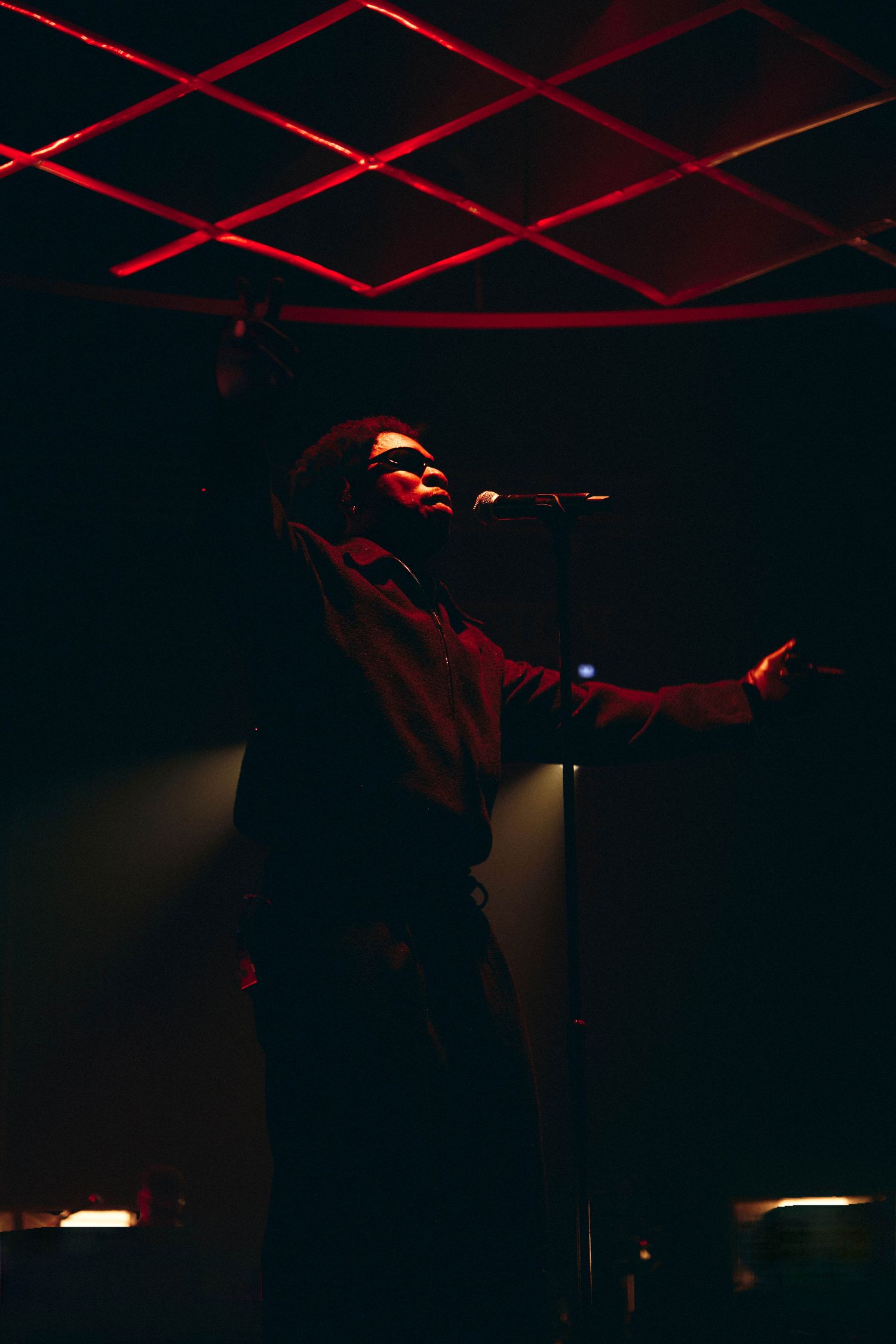
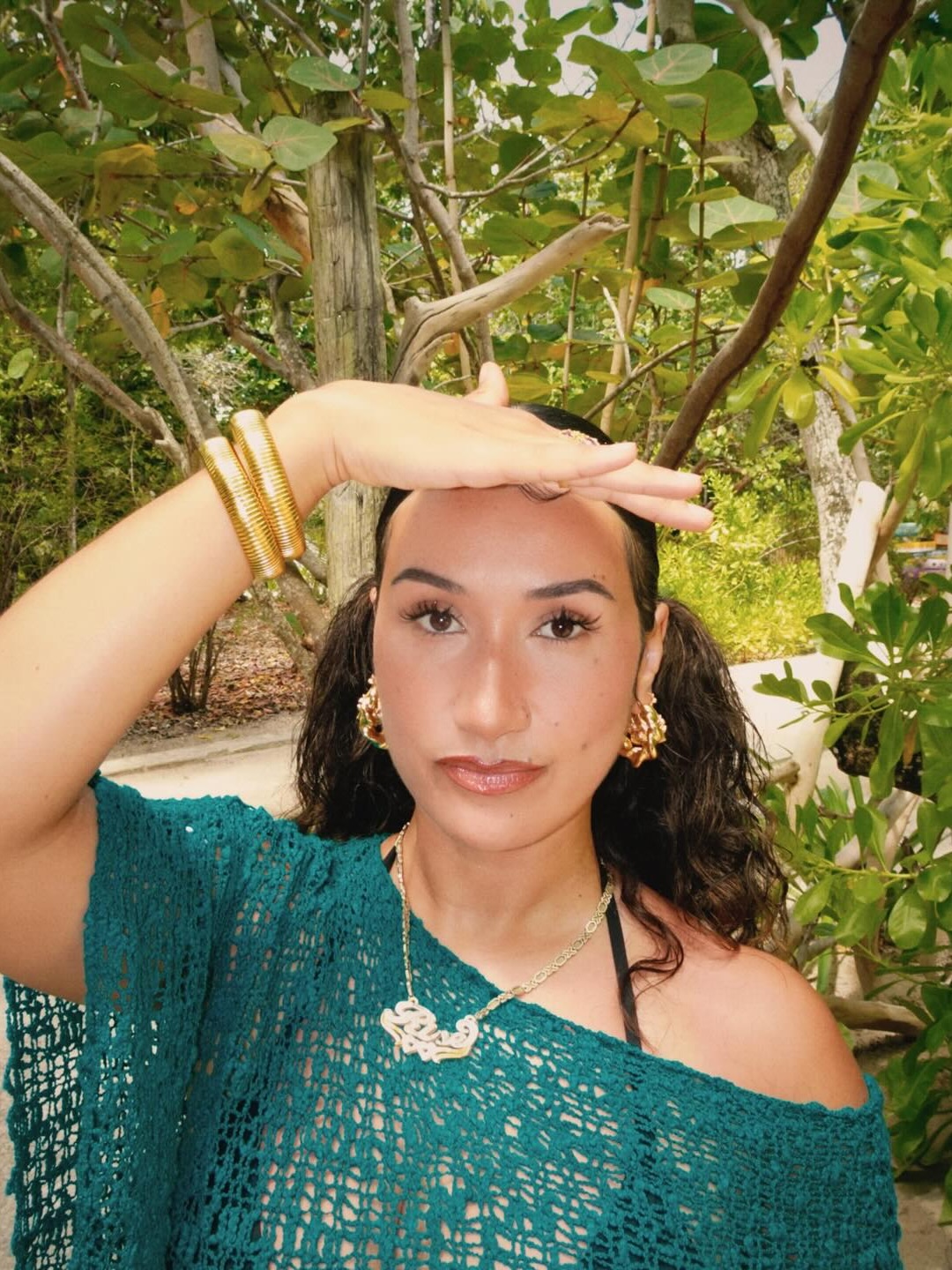
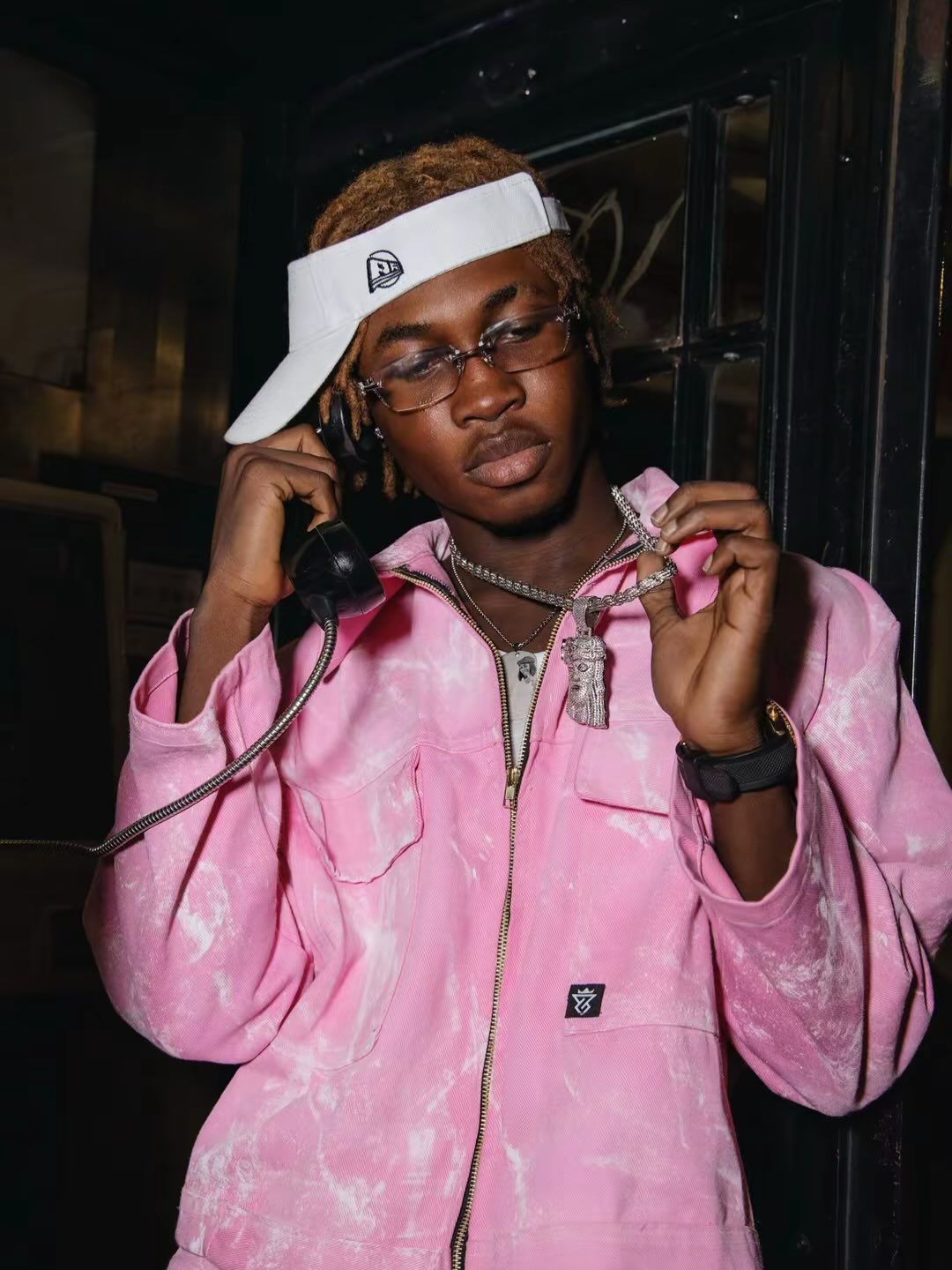
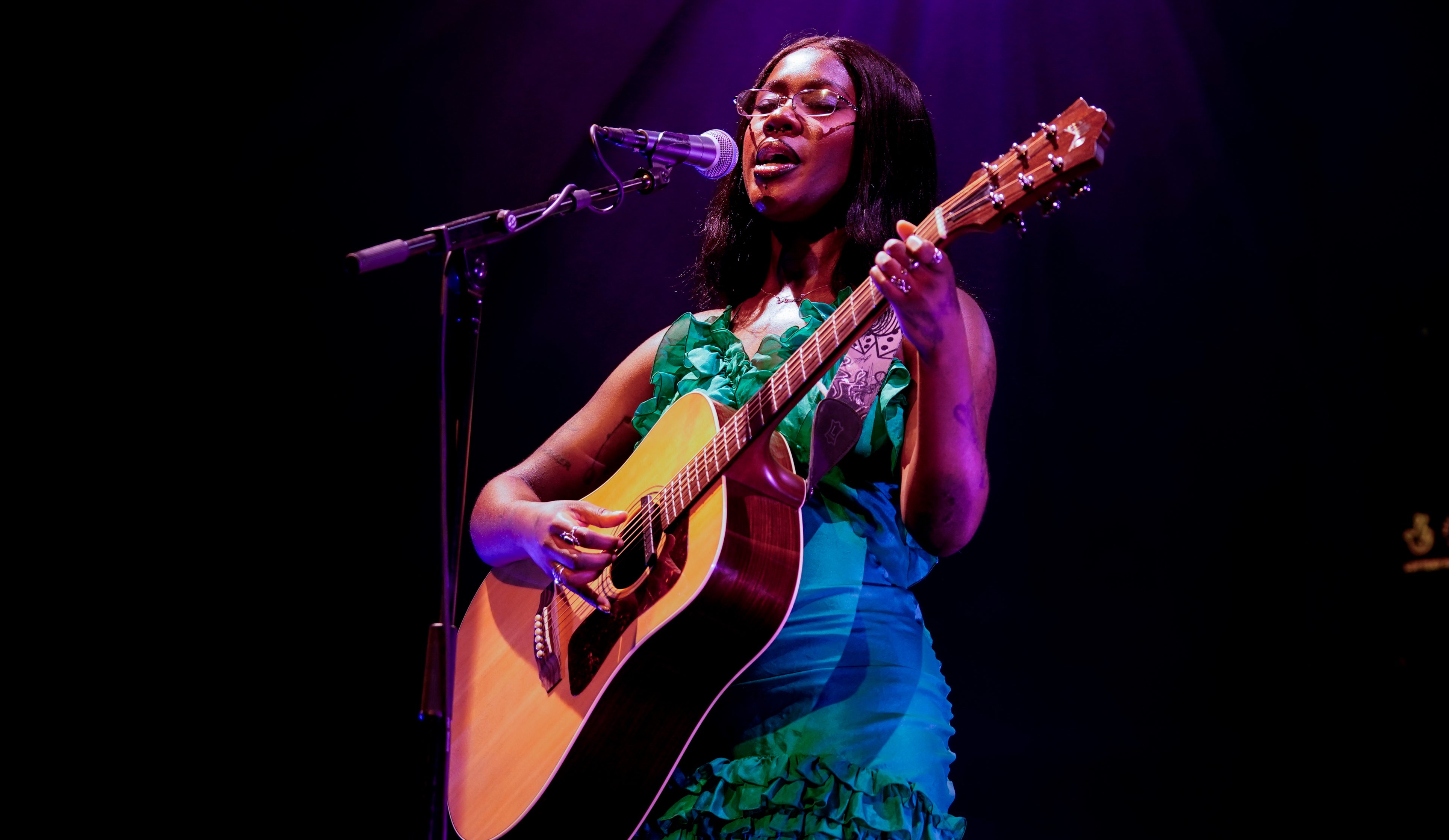
Mannywellz and Odeal are getting together for ‘Cry On You’, a new collaboration bringing two distinct R&B voices into the same space.Out October 23, the single connects Mannywellz, the Nigerian-born, US-based singer known for blending R&B and soul with African influences, with Odeal, whose growing catalogue has made him one of the UK’s names to watch in contemporary R&B.
For Mannywellz, the release follows Small Chops, his seven-track June EP exploring different stages of romance, and builds towards his forthcoming full-length album. His previous work includes ‘Peace’ featuring Tems and ‘How It Feels’ with Wale, while Odeal brings his own perspective to the collaboration.
With both artists moving between R&B, soul and African influences, ‘Cry On You’ brings their musical worlds together for a new release worth keeping an ear on.
Students, university workers and supporters have taken to the streets to oppose President Javier Milei’s government over cuts to university funding. They are demanding adequate funding for public universities, better pay for academic staff and financial support that allows students to continue their education. At the heart of the protests is the fear that public higher education is being pushed towards a breaking point.
Italy
Demonstrators have protested rising prices, low wages, housing difficulties and declining public services. Many are frustrated that working hard does not necessarily translate into financial security, particularly as the costs of basic necessities continue to climb. Some demonstrations have also raised concerns about war and government policy.
Portugal
Young people and other demonstrators have taken to the streets over rising rents, soaring property prices, low wages and the difficulty of finding somewhere affordable to live. In Lisbon, protesters have even set up tents to draw attention to the housing crisis. With housing costs rising faster than many people can comfortably manage, the prospect of living independently is becoming increasingly difficult for younger generations.
India
India’s youth-led Cockroach Janta Party movement emerged amid anger over examination failures, including the NEET medical entrance exam controversy, and concerns about the country’s education system. More recently, activists have challenged changes to electoral rolls, alleging political manipulation, while the authorities have denied wrongdoing. The movement has become a broader expression of frustration with institutions that young people believe are failing them.
France
What began with high school students protesting teacher shortages and inadequate school resources has expanded into wider demonstrations over the cost of living and public services. Workers, unions and other groups have joined the protests, reflecting broader dissatisfaction with economic conditions and the state of essential services. Although many demonstrations have been peaceful, some have escalated into violent clashes.
Spain
Housing affordability has become a major source of anger, particularly among young renters struggling with high rents and limited options. In Madrid, protests intensified after an elderly woman was evicted and later died in hospital. Meanwhile, teachers have staged strikes over pay and working conditions. The wider concern is that housing and employment are becoming increasingly difficult to secure, even for people who work hard.
Albania
Students have joined broader anti-government demonstrations calling for Prime Minister Edi Rama to resign. Protesters have raised concerns about alleged corruption, poor education standards, limited employment opportunities and the state of public services. Controversy surrounding a proposed luxury tourism development has also become a focal point for anger over government decisions and accountability.
Brazil
Student-led demonstrations in Rio de Janeiro have opposed presidential candidate Flávio Bolsonaro and the growing influence of Brazil’s far right. Protesters have voiced concerns about democracy, minority rights and the future of public education, while some have also criticised the policies of former president Jair Bolsonaro. Other recent student demonstrations in Brazil have called for an end to the six-day-work, one-day-off schedule, alongside support for public education and social programmes. These are related expressions of political and economic concerns, but they are not all part of the same protest.
Belgium
Students have demonstrated in Brussels and Liège over rising university costs and proposed education reforms. Protesters fear the changes could make higher education less accessible, particularly for students who already face financial pressures. The demonstrations reflect wider concerns about whether young people will be able to access the education they need without taking on an increasingly heavy financial burden.
“If there’s one ailment that everybody, at least in this part of the world, cannot but catch one day, it is malaria. So I was just trying to express that helpless feeling of being caught in that circle of that thing you may have sworn never to fall into. So it was just me being lyrical or poetic, even of a true feeling or my reality at the time the song was written, cos yeah it is my real experience that I feel a good number of others can relate to.”— Ayo Maff
That feeling sits at the centre of his new single, and it’s why I wanted to sit with him after its release. Nigerian songwriter, singer, and vocalist Ayo Maff, born Ayorinde Mafoluku Ayodele, is a dancehall, Afrobeat, and Afropop artist. His latest single, “Malaria,” features Zinoleesky. We spoke about how it came together. I came to the conversation to find out his process as an artist, his storytelling, and his plans, and I got all of it at once. But hearing someone’s journey and experience from the person themselves is different from listening to it through the music.
Ayo Maff has a gift for making plain feeling sound clever, and he knows it.
“I have always been very good with wording my lyrics in ways that come off as interesting when all I am doing is merely being expressive,” he says.
I asked whether the metaphor began as a joke. His answer, the one that opens this piece, says it didn’t. It was a true feeling, his reality at the time he wrote the song.
From there, the conversation drifted to the other voice on the record. Ayo Maff and Zinoleesky both come out of street-pop, yet they sound nothing alike, and I wanted to know what each of them carried into the room. I asked him:
You and Zinoleesky both come from street-pop but sound very different. What did each of you bring to the record, and how did the session actually go?
He answered:
“With respect to what we both bring, I think the song already showcases it. Our difference in sound is because of our individual authenticity and style, and it is always a beautiful thing when such diversity does not hinder creativity. Actually, it was that diversity that I feel brought out the greatness of that record. And with regards to how the session went, big shout out to my big bro Kizz Daniel, cos I was at a session with him and Zinoleesky when I played him the song, and he suggested that Zinoleesky will be a great fit for the song, coincidentally, I had always also thought so, so he was there, we just made it happen.
There’s a quiet backdrop here, too. Zinoleesky left Marlian Music in April and started his own label, Zinodict Music, and days after “Malaria,” he announced Waziyung as its first signing. For Zino, this is one of his first major features as an independent executive. Neither of them raised that with me, but it sits just behind the record, two artists sharing a chorus while each is, in his own way, building something new. Humour runs through Ayo Maff’s songwriting, and “Malaria” is funny right up until the moment it isn’t. The joke turns, and what’s underneath is exposed. I wanted to know whether he steers that, or whether it steers him. So I asked:
Humour is a big part of your songwriting, but “Malaria” is also vulnerable. How do you decide when to be playful and when to be open?
He said:
“With this music thing, you don’t exactly decide; the music leads you where it wants to take you. I make music at times, not really knowing what I want to make from the instance, but as the making progresses, we arrive somewhere, and it becomes clear where the music has taken us. So it depends on the vibe when making the music, what matters is being authentic and following the spirit at the time you make the music.”
I am a street boy, that one thing that can never change about me.
That answer made me curious about the raw material. If the music leads, then where does the language come from? Ayo Maff writes in the voice of the street, in Yoruba and Pidgin and everyday speech, and I asked what makes the cut and what he keeps out: Street language and everyday experiences shape your writing. Which slang phrases or moments from real life end up in your songs, and what do you avoid?
He didn’t offer a formula:
“Like I mentioned earlier, with music you don’t decide; it just happens. It mostly depends on the mood and vibe one is in at the time actually. I am a street boy, that one thing that can never change about me. So it will always show in my music in some way, be it in lyrics or delivery or other ways, and I always say that I write about things I’ve been through and experienced, I no fit talk about things when I no know. But how I get to pick and choose, I doubt there’s a formula to that, it just comes as it comes.”
That honesty has run through his work since Bariga, the Lagos neighbourhood he comes from, where early records like “Jama Jama” turned daily struggle into song and carried a quiet fear that success might pull him away from home. “Malaria” is lighter in tone, but it follows the same rule. He writes what he knows. It also made me want to ask how far that road has taken him. Ayo Maff is a different artist now than he was when he made Prince of the Street, in profile and in reach, so I asked what had shifted underneath:
Since Prince of the Street, how have you changed as a storyteller and as an artist, both in sound and in the way you build a project?
He pushed back on the word “changed”:
“I wouldn’t say change, I doubt I’ve changed. Grown though, yes, that has happened exponentially. I always say that I’ve never recorded as much and as intentionally as I have since my last album, and in the build-up to my next album. I would always be a storyteller, na just so we be from where I come, and I see my music as an outlet to say how I feel or talk about my experiences in ways that people who have been through what I’ve been through can relate and maybe it can also help them release those feelings and emotions as I do when I make my music.”
A song like “Malaria” never reaches people as sound alone. It arrives with a look, a mood, a world built around it, and I was curious about the people behind that world. Ayo Maff talks about growth as something he’s done alongside others, so I asked who stands next to him when a release takes shape:
Creatively, what does the world around “Malaria” look like, from the visuals to the rollout, and who shapes that direction with you?
He started with gratitude:
“Gratefully, I have a team that is perfectly in sync with me with regard to how to visually portray my music. We have for a while understood each other and know what the visual representation of my releases are, I feel that if you follow me, you’d reckon that there’s been consistency with how I go about my visuals. So with that level of understanding, we always collaborate to trade ideas and create visual concepts that depict the idea of the record in a way that fits well with how I like it. So yeah, we always find ways to work with the right photographer or videographer to achieve the ideas we put out or set out to achieve. So the world around it is me and my team steadily putting in work.”
By the end, the talk turned to the thing every listener wants to know: where he goes from here. With “Malaria” out and the conversation around it growing, I asked him straight: What’s next: is there a project or EP on the way, and what should we expect from it? Any tour plans, and which countries or regions do you want to tap into, and why now?
He kept the details close:
“What’s next? A lot, I promise you, there is a lot, but I would rather you sit and watch the space as it all unfolds. With regards to a project, it is no secret that my album “HIGHSTAR” is on the way, it will be my second studio album, and it drops soon. Tours, what region or countries… just stay tuned, they will all be rolling out soon and in due time, I promise. Why now? Why not now? HIGHSTAR is coming, so it all has to start happening now so that everyone will get the full experience of what HIGHSTAR is all about.”
Then I asked who would be on the project, and who he’d most like to work with:
Who would you most like to work with on the next project, whether artists, producers, or creatives outside music, and what would you want to create together?
“I will need a long sheet of paper to make this list cos there are so many people I would love to work with, so it will be quite a lot to start to list them. But the good thing is that I have some of them on my upcoming album, so soon enough you’d get to know them, and for those who won’t be there, in due time too, God willing, I will work with them and you’d know those ones as well.”
I left the conversation with one thought: Ayo Maff isn’t selling a persona or a polished origin story. He’s a young man from Bariga who still writes about what he’s lived, credits the people beside him, and treats growth as something earned slowly. The story behind “Malaria,” and his voice alone, tell you this is an artist who cares about the message. That’s what to expect from his second album, HIGHSTAR, dropping soon, especially with the new names and collaborations he’s adding to the list. It’s one to watch out for.
A potentially record-breaking El Niño is building in the Pacific, and the scale of this one has already earned it a rather dramatic nickname: “Godzilla.”
The World Meteorological Organization says the climate event is strengthening rapidly and is expected to peak around December, with El Niño likely to stick around into February 2027. Sea surface temperatures across the central and eastern tropical Pacific are heading towards levels not seen in the observational record.
So, what does a warming Pacific have to do with Britain? Quite a bit, potentially.
El Niño can influence weather patterns thousands of miles away, shifting rainfall, temperatures and atmospheric circulation across the globe. For the UK, the Met Office expects the current event to increase the likelihood of wetter, windier and more unsettled conditions through late autumn and early winter.
That does not mean a giant storm is about to sweep across Britain. Nor does it mean snow is guaranteed.
There has been plenty of speculation about deep freezes, heavy snow and a weakened polar vortex later in the winter, but those outcomes are far from certain. The polar vortex is just one piece of a much bigger atmospheric puzzle, and current forecasts cannot tell us exactly what the UK will experience months from now.
What we do know is that this is an unusually powerful global climate signal.
A strong El Niño can bring very different consequences depending on where you are, from heavier rainfall and flooding in some parts of the world to drought, heat and wildfire risk in others. Its effects can also ripple into food production, water supplies, energy demand and wider infrastructure.
For Britain, the immediate takeaway is less “prepare for the apocalypse” and more “keep an eye on the forecast.”
Because while the Pacific is warming thousands of miles away, the weather patterns it helps shape could eventually turn up on Britain’s doorstep.
There is a particular kind of curiosity that hits when you step into a room full of strangers who are all trying to figure out the same thing you are. That is what met us at the door of Didi Museum on Victoria Island on August 28, 2026. Guests moved with a quiet alertness, circling the same unspoken question: how do the works of eight emerging artists, each so distinct from the next, connect to one central theme across a two-day exhibition?
That question was the whole reason we were there.
As representatives of LSTV Worldwide London, we had not come simply to cover an opening. We came to understand how these seven emerging artists, brought together for the first time, were interpreting and sharing in the exhibition’s central theme: “We Go Again.”
By the time we left, we understood that WeGo Again was never just the name of an exhibition. It was a confession.
Curated by Dara Shonubi in collaboration with MSV Mag, the exhibition brought together seven emerging artists: Philip Udeka, Johaan Martin, Z4, Ayomide Popoola, Davees, Nathaniel Goodnews and Laila Shuaib, under one deceptively simple premise: persistence, uncertainty, experimentation and renewal.
Four words that, once you spent time with the work and the people behind it, felt less like a curatorial statement and more like a diagnosis of what it actually costs to keep making art in a city like Lagos.
Shonubi is not new to this work. Before We Go Again, he had already curated six exhibitions through Art Roots Gallery, the space he runs with a small group of partners dedicated to nurturing young contemporary artists. The trail runs back several years: Run Through Walls in 2023, in collaboration with Paschal Ugwu and Tobiloba Fasilejo; Second Before Happiness, also in 2023, in collaboration with Omolade Ogundimu, Ikechukwu and Moses Ndubuzo; Lights Out, a 2024 art installation by Femi Fala staged as an Art Roots Gallery show; and The Grid, a collection from 2025.
We Go Again is his sixth show and, within this history, the first that belongs to him alone rather than the gallery. He told us it began, almost implausibly, as a dream.“I saw this thing in my dream,” he said, describing a night in January when he fell asleep and woke up having already attended the exhibition. The crowd, the art, even the title, were fully formed in his mind. Within months, that dream had a name, a date and eight artists willing to trust him with it.
What struck us most was not the mysticism of the origin story, but the intention behind it.
Shonubi was not interested in showcasing artists who had already arrived. He wanted the ones still finding their footing: friends from childhood, artists he had been watching quietly for years, people whose work he believed deserved a larger room.
“You’ve been in your shell for so long,” he told us he said to them. “I’m going to bring you to the limelight.”
He is already planning a second edition, with hopes of featuring artists like Chubi L and an underground sculptor known as Mr. Legends. It is proof that We Go Again was never meant to be a one-off. The idea is for it to return every year, each time with a new group of artists ready to step outside whatever comfort, or discomfort, they are currently sitting in.
For some of the artists, that act of stepping out was deeply personal.
Philip Udeka’s story, for instance, was less about starting something new than returning to something he had walked away from. A full-time designer, Udeka had not made art in nearly three years before this show. It was also his first exhibition in Lagos. His previous show had taken place in New York, one he was not even physically present for.
The centrepiece of his collection was a 2022 piece titled Still Waiting For You, a portrait of a woman that he described as his jumping-off point back into practice.
The work explores a particular, unnamed stage of grief: not the sharp edge of loss, but the long, quiet middle. The waiting. The stillness. The slow feeling of something inside you depreciating with time.
Two more recent pieces, Holding Me Down and Daydreaming, both completed just weeks before the exhibition in June and July of this year, extend that same emotional thread.
In Holding Me Down, a woman holds a flower, an image Udeka uses deliberately. For him, grief is “an ever-blossoming flower”: beautiful, tied to memory and undeniably heavy to carry.
Daydreaming, by contrast, captures someone caught mid-stare, their mind somewhere else. It is the kind of blankness most people recognise but rarely admit to.
When asked about his favourite piece from his broader body of work, Udeka pointed to Find Your Wings, an animated piece from 2021. It was a small but telling detail. Even the work he loves most comes from before the three-year silence he is only now breaking.
Standing in front of his three newest canvases, it was hard not to notice how closely his story mirrored the exhibition’s own theme.
A man who stopped, and is now visibly starting again.
Johaan Martin arrived at the exhibition from a different kind of beginning. Her entry point into the body of work was almost accidental, sparked by a single photograph she came across of an older woman DJing. The image stayed with her simply because, in her words, it looked cool.
She reimagined the woman in Nigerian attire, making the image feel more familiar and more her own, then posted it on Twitter.
It performed well.
From there, an entire series was born: older Nigerian women caught in the act of doing something delightfully unconventional.
The exhibition marked Martin’s first time showing physical work. Her only previous exhibition, in February, had been a digital screen inside the +234 space, cycling through images without a fixed spot of her own. It was easy to miss if you were not paying attention.
Standing in front of her framed pieces at We Go Again, visible and fully claimed, felt like its own quiet act of renewal.
For Ayomide Popoola, the idea of starting again took a more emotionally exposed form. Their collection was built around intimacy, obsession and the strange, specific fear of being observed.
The first piece, The Watcher, depicts two people kissing, unaware of a figure spying on them through binoculars. Popoola told us the scene was drawn directly from personal experience: that particular itch of feeling watched during a private moment, even when you turn around and see no one there.
The second, titled Limerence, takes its name from the psychological term for obsessive romantic infatuation. It explores the ache of throwing pieces of yourself at a partner who is pulling away, and slowly losing yourself in the process.
Popoola described it as a face anyone could recognise in themselves, even if they would never admit it out loud.The third piece, The Phenomenal Man, came from an even more personal place.
Created in the aftermath of university, during a final year Popoola described as feeling like their life was on fire, the painting shows two dimensions at once: a composed face on the surface and, underneath it, fragments of the burn marks of everything being held back from view.
It is a piece about performing wellness while quietly falling apart, and about how that performance never fully holds.
Across the three artists we spoke to, the theme began to reveal itself in ways that felt almost too fitting to be accidental. Udeka was stepping back into practice after years away. Martin was claiming physical space for a series that began with a single tweet. Popoola was turning private ache into public confrontation.
Different stories. Different practices. Different reasons for being there.
But the same impulse to begin again.
By the time the opening weekend closed, what had started as a press assignment for LSTV Worldwide had turned into something closer to a shared exhale.
Walking through Didi Museum, what stayed with us was not just the work on the walls, but how the room felt.
There was an intimacy to We Go Again that is difficult to manufacture. Artists who clearly knew and trusted one another. Guests who lingered in front of pieces instead of simply scrolling past them. The kind of space where like-minded people find each other almost by accident.
It did not feel like a platform built to force anyone into visibility. It felt like one built for artists who were already ready to be seen and simply needed the room to do it in.
That instinct traces directly back to Shonubi himself.
Talking to him, it was clear that his ambition is not limited to spotlighting names already circulating in the right group chats. He spoke, unprompted, about wanting to bring in artists most people would not recognise: underground sculptors, quiet talents who have been perfecting their craft in obscurity, and alumni of his own circle who have never had a proper stage.
That part of his vision feels genuinely rare: a curator less interested in who is already known and more interested in who deserves to be.We Go Again is not asking its artists, or its audience, to arrive finished, it is asking them to keep returning to the work, however long the gap, however unfinished the last attempt.
If the first edition is any indication, this is a platform worth keeping an eye on. And we, for one, are already looking forward to the next edition.
Reporting for this piece was conducted on site at Didi Museum, Victoria Island, on August 28, 2026, by Ejiose Ikuenobe and Fortune Ibeh of LSTV Worldwide, London.
Nigeria’s relationship with power has always been complicated. The World Bank’s latest Energy Progress Report puts the number of Nigerians without access to electricity at 86.8 million in 2023, the largest access deficit of any country and the third consecutive year Nigeria has topped that ranking. For those who are connected, reliability remains another part of the problem, with households and businesses often turning to generators and other alternatives when the grid fails.
In Lagos, where nights can move from dinner to drinks to a party and then somewhere else entirely, that anxiety around power has found a smaller, more personal version.
The moment your phone drops to 5% and you still have somewhere to go, your Bolt has not arrived, someone is calling, someone else wants your number, you have photos to take, people to find and a way home to arrange and suddenly, a small battery icon popping up on your screen becomes the most important thing in the room.
It is against that backdrop that INA WA, a young Lagos company, has chosen to work on a much smaller problem: the phone in your pocket.
Its power-bank rental stations have appeared at weddings, festivals, beach days, parties and corporate events, giving guests portable power without the familiar search for a socket. But there is a bigger idea behind the charging stations. INA WA sees the service as an entry point into a much wider relationship with energy, starting with something as simple as making sure a dying battery does not end the night.
The name itself carries that idea.“INA WA means ‘bring the light’,” in conversation with LSTV World Wide. The phrase, Adenijo Bello, Co-Founder, INA WA, explained, is rooted in a feeling familiar to Nigerians: the excitement that moves through a neighbourhood when electricity finally returns.
“We want to ensure that you always have that feeling wherever you go.”
For INA WA, a phone running out of battery creates a version of the same anxiety as a power outage. “It’s like comparing the light going off to the battery going low on your phone,” Bello explained. “It’s basically the same feeling.”
That connection between the name and the service also creates an unexpected opening for conversation. People often encounter INA WA without immediately knowing what it is or how it works. The name itself is enough to make them stop.
“What is INA WA? What happens if somebody doesn’t return the power bank? How do I pay? How do I know when to return it?” Bello noted.Those questions have become part of the brand’s story. What initially sounds like curiosity around an unfamiliar name becomes an introduction to the service, and, according to INA WA, those interactions have helped keep the business moving beyond the immediate need it was created to solve.
The younger crowd was always an obvious audience. Clubs, parties and festivals were natural territory. But one of the moments that stayed with the team came from a very different customer.
At INA WA’s first wedding after-party, a woman in her seventies walked up to one of the charging stations carrying an old mobile phone. It was neither an iPhone nor an Android device. She needed the older micro charger, something the team had not expected to see someone ask for.
The team helped her rent a power bank using an email address and watched as she connected the phone.
“Just watching the process of her plugging in the phone and seeing the smile on her face, like, ‘Ah, it’s my cellphone,’ it was so cool,” Bello recalled.
The moment challenged the assumption that the business belonged only to young people moving through Lagos nightlife. What INA WA was really providing was not simply a way to charge a phone, but a way to remain connected.
That distinction becomes important in a city where so much of everyday life now runs through the device in your hand. Your phone is your camera, your map, your wallet, your social feed, your contact list and, sometimes, the only way to get home.
So when the battery dies, you do not just lose access to Instagram or WhatsApp. You can lose access to the practical and social infrastructure around you.
INA WA discovered another version of that dependence at an early event, where the oldest person in the crowd was about 24. The team expected guests to rent power banks when their batteries were running low. Instead, some people wanted to keep their phones at 100% for the entire night.
“They weren’t paying to charge their phone for 30 minutes. They wanted to charge their phone the whole night. They were paying for two hours straight, three hours straight,” Bello said.
He found it amusing at first, but there was something revealing in the behaviour.
“These guys saw INA WA as a means to stay alive,” Bello observed. “Their lifeline was directly connected to the phone.”
For a generation whose social lives, movements and communication are heavily tied to their phones, the description is not as dramatic as it first sounds. A dead phone can mean a missed call, a lost contact, a failed ride request or leaving an event earlier than planned.
INA WA says it has seen exactly that happen. Guests with low batteries have started preparing to leave because they could no longer request a Bolt or wait for one to arrive. On some occasions, the company has simply opened its power banks to people who needed an emergency charge.
“If your battery is at 1%, I don’t want them to leave. Let them charge their phone to 15%,” Bello emphasized.
For the company, those moments have become part of what it believes the service should mean. The business may charge for its rentals, but the team does not see every interaction through the lens of a transaction.
“Giving back to society has never and will never cost us anything,” Bello reiterated.
For now, the business goes where people are. Its stations remain mobile, moving between parties, weddings, festivals and corporate events whenever the company is called in. But INA WA wants that to change.
The company hopes to begin deploying its stations permanently before December 2026, placing them in clubs and venues that regularly host people. Instead of waiting for an event organiser to bring INA WA in, guests could simply know that the service is already there.
“If you have events one, two, three, four, five days of the week, we’re deploying permanently so it’s no longer, ‘We need INA WA here.’ It’s already there and ready for everyone that needs us,” Bello explained.
It is a small change in distribution, but a significant one in the company’s larger ambition. The goal is to make access to power feel less like something you have to remember to look for and more like something that is simply available.
And that ambition extends far beyond phones.INA WA says it is registered as an energy business and wants to eventually become part of the wider push towards reliable, renewable energy in Nigeria. The company sees the power-bank service as an early step towards a future where its customers can use INA WA for much more than keeping a phone alive.
“We want to be a part of that change,” INA WA said of Nigeria’s energy challenges. “We want to be able to bring reliable, renewable energy across the board.”
Its longer-term vision follows its users as they grow. Today, it may be a phone. Tomorrow, it could be a laptop, a car, a home or an event centre.
“We don’t want it to be a brand that, okay, you’ve used today and tomorrow you no longer need,” INA WA explained. “As you grow, you’re no longer thinking about charging your phone. You’re thinking about charging your cars. You’re thinking about charging your laptops. You’re thinking about powering your houses, your event centres.”
It is an ambitious leap from a power bank rented at a Lagos party to a broader renewable-energy business. Whether INA WA can make that transition remains to be seen. For now, it is building the business one event, one station and one low battery at a time.
The company’s ambition is to make INA WA mean more than a charging service. It wants the name to become shorthand for energy itself, in the same way “Jacuzzi” has become a familiar name for a hot tub.
“That’s the point,” Bello confirmed.
Perhaps that is why the company’s story begins with something as ordinary as a dying phone, because in Lagos, staying powered is rarely just about electricity, it could be about staying long enough to take the picture, experiencing the peak of the night out, or long enough for the ride to arrive.
INA WA Is Building a New Kind of Power Culture in Lagos
Five albums deep into a catalogue that has been directed outward, to God, to a lover, to her children, to everyone around her who needed reassurance, Gentlewoman is the first time she has turned the full weight of that voice on herself. The title is not ironic. It is instructional. She is speaking to herself the way she has always spoken to others. With tenderness. With patience. With the understanding that becoming something takes time and that the process deserves to be witnessed.
Cleo Sol was born Cleopatra Zvezdana Nikolic in Ladbroke Grove, London, to jazz musicians who gave her a musical inheritance she has spent her career quietly drawing from. She rarely gives interviews. She rarely performs live. The music has always done the speaking, and all five of her solo albums have been produced entirely by her husband Inflo, the man behind SAULT, one of the most deliberately mysterious creative operations in contemporary British music. Their partnership is so tightly woven that separating her voice from his production feels almost impossible. They are the same argument, made from two directions. Inflo deserves his flowers. The arrangements on Gentlewoman are some of the most considered of his career, strings, choir, bass guitar, acoustic piano, harp all moving with a restraint that serves her rather than competes with her. He knows exactly when to fill the room and exactly when to step back. That instinct is what makes this album breathe the way it does.
The argument on Gentlewoman is different from what came before. Rose in the Dark balanced the highs and lows of romantic relationships and personal growth. Mother went deep into the complexities of maternal love and generational healing. Heaven and Gold arrived as surprise doubles in 2023, Heaven centring faith and divine alignment, Gold celebrating family resilience with an upbeat soul warmth that felt complete and generous. Gentlewoman does not try to replicate any of that. It turns inward in a way none of the previous projects fully did.
The album opens with I Only Look to You, and the first words she sings are the most important words on the project. “Finally, I’m looking out for me.” After five albums of pouring herself outward, it sounds like a door swinging the other way. The acoustic piano is spare and deliberate, making room for every syllable. She sings about being torn in pieces, about relearning how to trust, about wasting time where she does not belong. The forgiveness in the chorus is not offered to someone else. It is claimed for herself.
Sweet Thing follows with Inflo’s bass guitar leading into strings, a choir, a harp under David Campbell’s conducting. The scale is enormous but it never crowds her. Force of Love is my definite favourite, a dancehall-influenced track with Rick Nowels on guitar that has a looseness and physical energy the rest of the album does not attempt. It moves differently. Love is personal on this track, not theological, not relational in the usual sense, just immediate and direct. Sentimental Love moves through bossa nova territory with the same natural ease, and it is worth naming that these are not genre experiments. They are extensions of a vocabulary that already knows which words belong where.
Family Ties is where the album shows its sharpest edge. Over a time-waltz Inflo constructs almost entirely alone, she confronts estrangement without sentimentalising it. The lyric “This ain’t family ties” lands not as accusation but as a boundary finally spoken out loud. She gave grace. The cycle held the other person back anyway. She has to be the change. It is a difficult song written with the restraint of someone who has thought about it for a very long time.
Together is a gentle midpoint, familiar territory, and what wins here is not the writing but the production and the way her voice sits inside it. The background vocals are beautiful. The seamless transition from Together into Their Smiles Are Not the Same is the moment the album shifts gear entirely. What follows is the most dramatically beautiful thing she has recorded. Dave Okumu’s guitar enters, then the strings, then the semi-operatic vocals, and around the two-minute mark a full choir arrives, voices layering over each other in a way that feels almost architectural, like a room expanding suddenly to contain something too large for ordinary walls. The melody is an earworm before you have even finished the first listen. The outro of this track alone is worth the price of the whole album.
Honest Talk strips everything back to acoustic guitar and delivers the second verse that is the most quietly devastating writing on the project. “An honest talk with myself. How have I not seen this? Can’t change the direction that somebody’s going in. Insecure people do insecure things. You can have the world. Still feel like something’s missing.”Let Me Cry asks only to be allowed to be tired. These three tracks together form the emotional spine of Gentlewoman, and Inflo honours that by stepping back. The musicians know when to get out of her way.
All Because of Love earns its place as one of the best RnB songs of the year because it does something the genre has largely forgotten how to do with consistency. It goes back to the root. The first half is a woman speaking with full emotional honesty about not wanting to burden someone with what she has been through, the writing lean and precise and genuinely felt. Then the production opens, bass deepens, warmth floods the mix, and the song becomes something celebratory and almost churchy in its joy. It is RnB the way the Isley Brothers understood it, music that carries both pain and gratitude in the same key without either cancelling the other out. Toward the end she stops singing and starts speaking, a quiet message to someone she loves, asking if she has been there for them the way they have been there for her, telling them not to go a day without giving thanks. It is one of the most human moments on the album.
Thank You gives the album its fullest moment of direct conversation with God. Simple, unadorned, exactly what it is. Little Things is the closest she has come to straight soul in a Daptone style and it is a beautiful detour. The album closes with Gentlewoman [Acknowledgement], the shortest track, just keyboard and her voice, a message she is sending to herself as much as to anyone listening. “Gentle woman, I hear you. We are making it through. You’re safe to love again.”
On Gentlewoman, Cleo Sol is not trying to surprise you with where she goes. She is showing you how far she has come and making the honesty of that journey feel like a gift rather than an obligation. It is quieter than Gold and more interior than Mother. It is also more necessary than either. Because what she has made here is not a record for other people. For the first time, it is for herself. And somehow, that makes it feel like the most generous thing she has ever released.
Street hop is not a genre that announced itself with a manifesto. It arrived the way most things worth paying attention to do: quietly, from the corners where two worlds overlap. In this case, the overlap between UK road energy and Nigerian street pop. Between growing up on drill in the endz and going home to Olamide on the speaker. Between holding a Lagos accent in your chest and code-switching the moment you step outside.
A generation of UK-based Nigerian artists did not have to choose between those two identities. They made music from the middle of them, and the result is one of the most interesting sounds coming out of the UK right now. These five artists are the frontiers.
1. Ay Lemi
Born Odunayo Ezekiel Olalemi, Ay Lemi is the kind of artist whose origin story explains everything about his sound. He started playing drums and guitar at three in his local church choir. His influences run from gospel icon Tope Alabi to Olamide and Wizkid, which sounds like an unusual combination until you hear what he does with it. The warmth of the church and the directness of the street coexist in his music without either cancelling the other out.
Loader, his debut single released in February 2025, announced him immediately. Happy Day followed in May, opening with infectious Yoruba lyrics before dropping into a hook built for both a Lagos street corner and a UK festival stage. Over two million streams on spotify. A Billboard Afrobeats chart entry before most people knew his name. Happy Day alone sparked over 4,000 videos across TikTok and Reels.
Ay Lemi leads this list not just because of the numbers but because of what the numbers reflect. He sounds fully formed, like someone who spent years preparing for exactly this moment without knowing it was coming. The church trained his ear. The streets gave him his subject matter. Street hop gave him somewhere to put both.
The name alone signals intent. Kelz Shakur is not hiding his influences or his ambitions. The Tupac reference is deliberate, a statement that street hop, in his hands, carries something more than flex and energy. He performed live in London in August 2025 and his 2025 single Destiny gives you a direct line into where his head is at. This is an artist who understands that the streets are not just an aesthetic, they are a context that demands to be interrogated, not just celebrated. His music sits in the part of street hop where bars are doing real work, where growing up Nigerian and British in the UK is not a background detail but the whole argument.
If Ay Lemi is the energy, Lil Dipz is the vibe. His 2025 single Bestie went viral on YouTube and gave the clearest picture yet of what he brings to this sound. He built the instrumental foundation himself, starting from a melody he found on a virtual instrument called SKY KEYS, then layered bass, drums, and lyrics over it until it became something that moved. That self-sufficiency tells you something about how seriously he takes the craft.
His dual nomination at the RBE Awards 2025 for both Best Afrobeats Act and Best R&B Act confirms what the music suggests. He moves between melodic R&B and Afrobeats cadences without sounding like he is compromising either, which is the exact quality that makes street hop compelling when it is done right. Hard and soft in the same breath. Built for a party and capable of making someone feel understood in a quiet moment.
Foyin is the storyteller of this group. Where others in the street hop space lead with energy or statement, Foyin leads with narrative, the kind of music that rewards attention and reveals more on every listen. He captures the tension of navigating a dual identity without smoothing it over, which is exactly what makes it feel true. In a movement that can sometimes skim the surface, Foyin digs deep, armed with one key weapon: his flow, and his ability to ride it while telling his story in Yoruba.
Every movement needs its underground voice. The artist who keeps the roots honest when everything else starts to polish up and reach for playlists. Deezer Boy is that for street hop. Less concerned with crossover moments than with documenting where he is from and what it actually sounds like there. His music carries the kind of rawness that only comes from someone who is not performing the streets but reporting from them.
Together, these five show that street hop is not one sound but a spectrum. From Ay Lemi’s energy to Deezer Boy’s underground authenticity, from Kelz Shakur’s conscious weight to Lil Dipz’s melodic crossover and Foyin’s storytelling depth, what connects them is not a shared producer or a shared aesthetic. It is a shared identity: UK-raised, Nigerian-rooted, and making music from the space in between.
That space is where the next decade of this sound is being built.
There is a particular kind of Lagos evening that only makes sense if you understand what it means to be in demand. The kind where your phone has not stopped since morning, where the calendar is stacked, where every notification is someone asking for a piece of you because something you made has started moving in ways you could not have predicted even six months ago. That was the evening I spoke with Solana.
She joined the call warm and unhurried, which said something on its own. Because by the time we spoke, Okunkun had already done what it did to the internet, and for someone whose evenings were probably now filling up with performance requests and booking enquiries, the version of Solana I met was remarkably unbothered by all of it. Present. Curious. Laughing easily. She had somewhere to be after us, her manager was already circling, and she gave us the time anyway.
That detail, more than any single thing she said, is what stayed with me.
Before the timeline found her, before the reposts and the booking requests and the people from countries she has never visited telling her they cannot stop listening, there was just a girl from Lagos making music that felt true to her. Music rooted in Yoruba, in heritage, in the specific texture of a culture that does not need translation to be felt. She was not building a movement. She was just building her sound.
But movements have a way of forming around the right kind of honesty. And somewhere between the first viral reel and the internet’s attempt to explain what it was hearing, a word appeared. Yorupop.
It spread the way these things do, in comments, in replies, in the shorthand of people who needed something to call what Solana was doing. Contemporary pop sensibility fused with Yoruba language and cultural identity. A bridge between the traditional and the present. Between where African music came from and where it is clearly going. The internet named it. Solana became its face.
Her full name is Ogunlana Busolami Habibat. Her stage name came from two pieces of herself, Sola from her first name, Lana from her last name. Simple, personal, and quietly telling of how she moves through everything else. She does not reach for something external to define her. She takes what is already there and shapes it into something that sounds right. Yorupop, it turns out, works exactly the same way.
She is calling in from Lagos, and when I ask her to paint me a picture of where she is, she almost laughs at the question before answering simply. Lagos. Nigeria. Which, given everything that has happened around her recently, feels like the right kind of grounding.
“It has been super great,” she says when I ask about life since Okunkun landed. “It went from zero to a hundred and something. The support has been insane. So many people reaching out. Just a really great experience so far.”
The thing about that sentence is how understated it is for what actually happened. Okunkun did not gradually find its audience. It detonated. Within hours of her second Instagram post, she was watching the views climb and refreshing in disbelief. A thousand. Two thousand. More. She kept asking herself what was going on. The answer, as it turned out, was that she had been right all along about a song that the industry had spent three years telling her was wrong.
Because Okunkun is not a 2026 song. Solana wrote and recorded it in 2023. She played it for people in the music space. The responses were consistent and discouraging. “They told me, I don’t really think Nigerians are listening to this. This is not a Nigerian sound. I had so many rejections on this song.” She pauses before she continues, and in that pause you can feel the weight of three years of doubt.
“When you have gotten so many rejections, you start feeling like, am I making the right thing here? But I knew this was a really great record. So I was just feeling, you know what, I am just going to put it out. Whatever happens, happens.”
What happened was the timeline. What happened was Yoruba-speaking and non-Yoruba-speaking fans alike stopping mid-scroll to ask who this was. What happened was Ayra Starr, Tiwa Savage, and Tems all pressing repost on the same song within days of each other. What happened was people from countries that have never produced a single Afrobeats record messaging Solana to tell her they could not stop listening even though they did not understand a word she was singing.
“That is what music is supposed to do,” she says. “It is supposed to bring people together. An invitation into indigenous culture. When you listen, you are just in that headspace, enjoying another culture.”
The cultural conversation around her sound has taken on a life of its own. People online have called it Yorupop.The Lijadu Sisters have been invoked repeatedly in comments and replies, the word reincarnation appearing more than once. Solana receives the comparison with genuine warmth and immediately, gently, steps around it.
“I would not say my sound is Yorupop. Yorupop is just another expression of who Solana is. It is part of the things that make me. When I was recording, I was just creating something that connects to my heritage, my present generation, my childhood. Yoruba is the language I know,so I am going to express myself in it. But my general sound is not Yorupop. It is just another extension of who I am as an artist.”
As for the Lijadu Sisters, she is honoured. But she was not tapping from them as a source. She was just being herself, and the lineage found her.
That line between intention and instinct runs through every part of her creative process, including the part most people do not know about yet. Solana and Killertunes have been working together since 2019. Seven years. Almost every song in her catalogue carries his fingerprints. His brothers are part of her management team. She uses the word family without any performance in it, because that is what it actually is.
“We have worked for so long that we understand each other’s creativity,” she says. “We understand each other’s sound. We literally just flow. And there is so much stuff we have that people have never heard. They will be like, what.”
The EP dropping in October is fully produced by Killertunes. Seven songs. No features. Just the two of them, and whatever they have been quietly building together since before most of her current listeners were paying attention.
Even the visuals, which have drawn their own wave of admiration and dissection online, come from the same unhurried place. I ask her about them because the short-form content around Okunkun feels considered without feeling controlled, and she almost laughs at the implication of a grand strategy behind it.
“It is literally a family thing. His brothers, his wife, me. We just drive around and look for places to shoot. We dress up, we find somewhere, we shoot. We are just living our lives. So when people are like, how did you plan this, we are just being our normal Tuesday.”
There is something quietly radical about that. In an industry that rewards the performance of strategy, Solana and her people have built something that looks effortless because it largely is. Not careless. Genuine. And the authenticity, she is clear, is not something to abandon now that it is working.
“It is the authenticity that drew people in. So why should I stop that?”
Before we wrap up, because her manager is already waiting and the evening is filling up, I mention that I play COD and she plays Fortnite and we should probably sort something out. She laughs with a confidence that does not need to explain itself.
“If you come to me in Fortnite, you are going to cry.”
I kind of believe her. Well until she proves it anyway.
The EP drops in a few weeks. Seven songs. No features. Just Solana, Killertunes, and whatever happens when an artist stops asking for permission and starts trusting her instinct.
Whatever happens, happens. It has been working out well so far.
The first thing you notice about Luchong’ studio is not the paintings.
It is the feeling.
“My studio is a soothing space,” Luchong says. “It is designed intentionally to calm my nerves and relax my mind, so my creativity has a safe space to flow. My choice of colour, inspiration images, objects, wall fixtures, etc, is all intentional to fit this mood.”
Tucked away in Norwich, the space carries a quiet rhythm that immediately softens the pace of the carefully against the walls. Canvases wait patiently in different stages of completion. Favourite paint brushes sit within easy reach beside jars of paint, while a laptop, speakers, headphones and a bottle of water occupy familiar places nearby. The room feels lived in, but never crowded.
It feels more like an emotional refuge than a workspace.
“My studio is a soothing space,” Luchong says. “It is designed intentionally to calm my nerves and relax my mind, so my creativity has a safe space to flow. My choice of colour, inspiration images, objects, wall fixtures, etc, is all intentional to fit this mood.“
Just before our conversation, she had stepped away from a painting she is particularly excited about. Like many of her recent works, it already has an accompanying sound piece slowly taking shape alongside it. Yet this one feels different.
“It stands out to me because of the particular emotion it carries,” she says. “It’s a tough one.There is something revealing about that response.For Luchong, paintings are never simply images. They carry emotional weight. They hold conversations. They become companions that continue revealing themselves long after the final brushstroke has dried.
Perhaps that is why her work resists quick consumption.In a culture increasingly conditioned to scroll, skim and move on, Luchong asks something far more demanding of her audience.Pause, stay and Look again.At first glance, her paintings are striking for their beauty. Rich colours sit comfortably beside textured surfaces. Sculptural jewellery and carefully layered materials create portraits that immediately command attention. Their visual elegance is undeniable.But beauty is only the beginning.
I think the first thing people notice about my work is how beautiful it looks, the faces, the colors, the jewelry,” she says. “The gaze is often secondary, which is actually intentional because the goal is to get people to pause and look deeper, but sometimes people can miss this, focusing on the beauty and not the emotion that rests in the gaze.”
That distinction lies at the heart of her practice. Her paintings do not ask to be admired only, they are asking to be listened to.Long before Luchong understood this herself, the signs were already there.Growing up, she occupied an interesting space between company and solitude. She enjoyed people, but she also protected moments of being alone. It was a balance that others sometimes misunderstood.
“I was a generally reserved child. I wouldn’t say I was quiet or shy, people often misunderstood that and would peg me for a shy child, but I wasn’t, I just had selective energy. Moments when I liked to play, interact with people, and times when I wanted to be left alone. I enjoyed my own company a lot.“Those quiet moments became fertile ground for curiosity. Her older sister still laughs about one particular childhood habit.
“When I was much younger, maybe four or five years old, if you couldn’t find me or didn’t hear my voice, look for me immediately because I would most likely be ‘destroying’ something.“Luchong smiles as she tells the story. Paper, boxes, slippers, almost anything within reach could become material for experimentation. Years later, her sister would realise those small acts of destruction had never really been destruction at all.“She always wondered why,” Luchong says.
“Years later she tells me she now understands it was my creative side showing up.”Looking back, the evidence was everywhere. She built miniature houses from Indomie cartons. She played endlessly with clay. She sewed clothes for dolls. Schoolbooks quickly filled with drawings that had little to do with whatever lesson was being taught that day. Even the family computer became another creative tool, where she spent hours exploring Paint and CorelDRAW long before digital illustration became commonplace.“It genuinely made me happy”.
Yet making things was only one half of what would eventually become her artistic language. The other half was observation.One memory, in particular, has remained with her.“The first time I noticed and understood a facial emotion in someone, I think I was about 8 or 9. I think subconsciously since then I started to pay attention to what people’s faces were saying, not always what they said, and especially when they weren’t speaking at all. I generally like to observe things.”
“The first time I noticed and understood a facial emotion in someone, I think I was about 8 or 9. I think subconsciously, since then, I started to pay attention to what people’s faces were saying, not always what they said, and especially when they weren’t speaking at all. I generally like to observe things.”
It is a remarkable thought because it quietly explains so much about the work she creates today. The lingering gaze, restrained expression, quiet posture, the emotional tension that exists beneath stillness. Edited conversation observation may be where Luchong’s work begins, but its craft is what gives it form. When asked how her paintings come together, the intuition people often associate with her work quickly reveals itself as something far more deliberate.
Every piece is built through a series of careful decisions, revisions, and layers that slowly find their place.“My process usually begins with an emotion I feel personally, or sometimes sense from interacting with other people,” she says. That emotion becomes the starting point. It sends her searching, sometimes instinctively, for an image that carries the same feeling. But that image is never the final destination.“That first image usually isn’t the reference for the entire painting. Instead, it helps me decide the composition and the dimensions of the canvas.” From there, the work expands. She gathers fragments from multiple sources, blending them with details that exist in her imagination until something entirely new begins to emerge.“I rarely work from a single image; most paintings are built from at least five different references, combined with elements from my imagination. I might take an impression of a face from one image, clothing from another, jewellery from somewhere else, and develop the rest as I work.”
Long before the first brushstroke lands on canvas, there’s a quieter kind of work unfolding behind the scenes. She often stretches her own canvases, primes them, sands every surface, and prepares them with the same care that eventually shows up in the finished painting.
On a sunny afternoon in Lagos, we spent just over an hour together on Google Meet talking about music, faith, purpose and the unlikely idea that would eventually become Gospel House. Going into the conversation, I was curious to understand how a young creative man had managed to build a movement that places Christian worship alongside Afro House music without losing its spiritual identity.
Tobi Peter, a Nigerian DJ, producer, animator and creative entrepreneur, isn’t trying to redefine Christianity. Instead, he’s exploring how faith can meet people where they already are. Through Gospel House, he has created a space where House music and worship coexist, challenging long-held assumptions about where people can encounter God.
“I didn’t want to choose between my love for God and my love for electronic music,“he tells LSTV.“For a long time, it felt like those two worlds weren’t supposed to meet.”
Long before Gospel House existed, Tobi’s love for music was already taking shape.
“Back in primary school, I didn’t even know what FL Studio was,” he recalls with a laugh. “I’d arrange Blue Band plastic containers like drums, record loops on my phone and experiment with different sounds.”
From Bedroom Beats To A Bigger Vision
By Line
Those childhood experiments slowly became an obsession. He spent years teaching himself music production, making mistakes, improving and learning through persistence.
“I made terrible beats at first,” he admits. “But every project taught me something. I just kept going.”
His dedication eventually opened doors into DJing, production and live performance. Yet even as his career developed, he constantly wrestled with one question: could his love for electronic music coexist with his Christian faith?
Instead of abandoning one for the other, he chose to build something entirely new.
The Birth of Gospel House
By Line
Contrary to what many people assume, Gospel House wasn’t created because Tobi felt the church was lacking. Instead, he saw an opportunity to create another space where young Christians could express both their faith and their creativity.
“There were young Christians who loved music, creativity and community but didn’t always feel like there was a space where those things could exist alongside their faith,”he says.
He added, “I wasn’t trying to replace the church. Church is church. I simply wanted to create another environment where people could genuinely encounter God.”
Today, Gospel House gatherings blend Afro House, electronic music and gospel records into live DJ sets where people dance, sing, pray and worship together.
“People think worship has to happen inside the four walls of a church, but if people are sincerely connecting with God, that’s worship.”
The audience reflects that openness.
“We’ve had Christians, Muslims, creatives and people who don’t identify with any religion come to Gospel House. The same people you see at clubs, parties and festivals are the same people you’ll find at Gospel House. Everyone is welcome.
Although the first edition gave him hope, Tobi says it was the second edition that made him realise Gospel House had become something much bigger than him.
That was when it really clicked for me,” he says. “I started seeing people from completely different industries showing up, people from the tech space, influencers, creatives and people I never expected to see there.There were no celebrity endorsements or expensive marketing campaigns driving attendance. People simply kept showing up. I realised people weren’t just coming because they liked the music. They believed in what we were building.”
That moment convinced him Gospel House could become more than an event; it could become a movement. As Gospel House has grown, so have the misconceptions surrounding it.
Ironically, Tobi says many of those assumptions come from prospective partners and venue owners before they even experience the event.
“People hear the name Gospel House and immediately think we’re trying to organise an all-night rave or a ten-hour event,” he says.
The reality is far simpler.
“Originally, the whole idea was just to record a one-hour YouTube set.”
Even now, every event is intentionally planned with balance in mind.
“Most of our events happen on Sundays because I know people have work on Monday. I’m not trying to keep people out all night.”
Perhaps the biggest misconception, however, is financial.
“People think we’re making a lot of money from this, I’ve always said I’m not here for the money.”
Producing Gospel House often costs hundreds of thousands and sometimes more than a million naira yet many editions remain free because impact has always mattered more than profit.
One of the biggest questions surrounding Gospel House is how Tobi balances his Christian convictions while performing in mainstream entertainment spaces.
His answer is simple.
“If we’re called to be light, we can’t only stay where it’s comfortable. Sometimes you have to go into spaces where people least expect to encounter God.”
That mindset has seen him perform everywhere from Monochroma, Obi House, Access Showcase Festival and Element House to venues including Club Quilox, Sky Bar, Black Orchid, Cage Abuja, Mainland Block Party, Sunday Service, Vaniti Lagos and Gidi Culture Festival.
Tobi Peter – DJ
Rather than viewing those spaces as conflicting with his faith, he sees them as opportunities to represent it.
“I’m trying to be more careful now,” he admits. “Since Gospel House started growing, people don’t just see me as a DJ anymore. They see someone representing a movement and a brand. Even though I’m not doing anything crazy, I know people are watching.”
He’s equally transparent about his personal walk with God.
“On a personal level, I’ve struggled with consistently going to church and maintaining my prayer life, but whenever I’m preparing for a Gospel House set, I’m locked in with God. I spend time praying because I don’t want it to just be about music. I want people to experience His presence genuinely.”
His Lagos Gospel House sets are carefully curated around gospel records layered with Afro House and electronic sounds inspired by artists such as AN Endless Ocean and Maverick City, allowing him to preserve the atmosphere of worship while maintaining the energy expected from a live DJ experience.
“I’m still growing just like everyone else,”he says.
“But I never want the music to become bigger than the message.”
Because Gospel House occupies a space few people have explored before, criticism has become part of the journey.
“My heart has always been ministry first,”he says.“I’m not interested in creating hype for the sake of it.”
He understands why some Christians question the concept but believes many criticisms come from misunderstanding the mission rather than experiencing it firsthand.
“People see where I perform or who I work with and immediately make conclusions,I’m just trying to follow God while doing what He’s called me to do.”
The 360 Music Connoisseur
DJ, Producer and Creative Director
By Line
Gospel House has become his most recognised project, but Tobi has quietly built an impressive catalogue as a producer and DJ.
Projects like Summer Wavs Vol. 2 (Remixes) and Saved , featuring Emly, showcase different stages of his musical journey.
When asked which project deserves more recognition, he answers without hesitation.
“All Day.”
“It has over 34,000 streams on Spotify, but I still feel like many people haven’t really discovered it.”
He also points to a professionally recorded live set from Kenya that has attracted around 22,000 views despite receiving little promotion.
“Sometimes great music takes time to find its audience. I’m okay with that because I believe the right people will eventually hear it.”
For him, numbers have never defined success.
Separating The Fame
By Line
“I just want people to experience something genuine. If my music gives someone hope or brings them closer to God, then that’s success for me.” As Gospel House continues to grow, so does Tobi’s visibility.
Has that changed his priorities or relationship with God?
“Not really,” he says after a brief pause. “It’s good that we’re getting visibility because it means more people are hearing about Gospel House.”
What has changed, however, is the pressure.
“Success comes with pressure and responsibility. Once people know you, there are expectations you have to meet. You have to be intentional because people are watching.”
Rather than allowing that pressure to distract him, he sees it as a reminder to remain grounded.
“It keeps reminding me why I started this in the first place.”
One milestone Tobi speaks about with particular excitement is Gospel House’s sixth edition in Nairobi, Kenya, organised in partnership with Lumennecho.
The event featured full DJ sets and live mixes alongside Kenyan artists including IamJoelz, DJ GG, Arap Rono, Lily White and Arnold, marking Gospel House’s first major international expansion.
“That showed me this vision could travel,”he says.
Gospel House Kenya
His ambition now is to establish Gospel House as a globally recognised platform with editions across London, Johannesburg, the United States, Spain, France and other major cities.
He’s equally open to collaborating with both gospel and mainstream artists.
“Good music can carry a powerful message,” he says. “Those things don’t have to be separated.”
Among the artists and producers he’d love to work with are An Endless Ocean, Tems, Fireboy, Drake, Rema, Fireboy DML, Sarz, David Guetta, Black Coffee, Justin Bieber, P.Prime, Shimza, Kabza De Small, Major League DJz, Black Dave, Naija House Mafia and Proton.
Rather than seeing similar Gospel House initiatives as competition, he welcomes them.
“The goal isn’t ownership,” he says. “If more people create spaces where others can encounter God, that’s something to celebrate.”
Looking Ahead
“I’ll always defend this community because I know the heart behind it,”he says, “ I’ve seen people’s lives change. I’ve seen people worship, pray and reconnect with God in these spaces. So when people judge it without understanding it, I’ll always stand up for what we’re building“
By Line
He’s also passionate about the future of Afro House in Nigeria, believing DJs like Black Dave, Smeez & D3an and Naija House Mafia are helping push the genre into the mainstream.
“The more people champion Afro House, the bigger the culture becomes.”
As our conversation comes to an end, one thing becomes increasingly clear. Gospel House isn’t simply about music. It’s about challenging assumptions, building community and creating spaces where faith can be experienced differently.
“I’ll always defend this community because I know the heart behind it,”he says“ I’ve seen people’s lives change. I’ve seen people worship, pray and reconnect with God in these spaces. So when people judge it without understanding it, I’ll always stand up for what we’re building”
Whether Gospel House becomes a global movement or remains a niche community, Tobi Peter has already started a conversation that few imagined possible one where worship finds a home on the dance floor without losing sight of its purpose.
In case you just don’t want to read. We got you covered! You can listen to all the stories in the last 7days, generated by AI
Pip: LSTVWW this week is asking who gets to decide — who sits on the jury, who hands out the trophy, and whether any of it actually means what it’s supposed to mean.
Mara: LSTV covers two distinct arenas where those decisions play out: the runway, where a Nigerian creative director just joined one of fashion’s key funding juries, and the music awards circuit, where Nigeria’s longest-running ceremony is having a very public reckoning with itself.
Pip: Let’s start with fashion and who’s actually in the room when the money gets allocated.
Berlin, the Jury, and Who’s in the Room
Mara: Berlin Contemporary, the funding initiative tied to Berlin Fashion Week SS27, convened an international jury this season — and Nigerian creative director, producer and cultural archivist Eniafe Momodu was among them, helping select 19 brands that each received a twenty-five-thousand-euro production grant.
Pip: That’s not a ceremonial seat. That’s a seat where the check gets written.
Mara: Exactly — and the selected cohort reflects that international scope: Orange Culture and Fruché from Nigeria, BUZIGAHILL from Uganda, John Lawrence Sullivan from Japan, and New York-based BARRAGÁN among them. Momodu’s appointment signals Berlin Contemporary’s broadening lens beyond traditional fashion capitals.
Pip: From runway allocations to a much older argument about who deserves the flowers — and whether the institution handing them out has earned the right to keep doing so.
Twenty Years of the Headies, Still Unresolved
Pip: The Headies turns twenty this year, and the piece examining its history opens with a question that cuts right to the bone: what does it mean to build a culture around an institution that keeps embarrassing the people it exists to celebrate?
Mara: The post sets the stakes plainly: “You criticise what you believe is worth saving.” That framing matters — this is not a dismissal of the Headies but a serious accounting of where trust has eroded and why.
Pip: And the erosion has receipts going back over a decade.
Mara: The Next Rated award began as genuine cultural infrastructure — Asa, Davido, Mr Eazi, each receiving a car before the streaming numbers caught up. By 2022 the prize had become a Bentley Bentayga. But the 2016 Olamide-Don Jazzy confrontation, which required Aliko Dangote to personally broker peace, exposed how thin the institution’s authority actually was under pressure.
Pip: It takes a special kind of credibility crisis when the continent’s richest man has to mediate a trophy dispute.
Mara: The pattern continued. Tekno was disqualified after mocking his own nomination. In 2019, Wizkid sold out the O2 Arena on the same night as the Lagos ceremony, and several major artists were simply in London instead. The 2025 homecoming edition ended without announcing four major categories, including Best R&B Single and Best Collaboration, and Shallipopi was handed a handshake where a plaque should have been.
Mara: Ayra Starr’s experience captures the more recent texture. She rejected a 2023 win after her category was never announced onstage, then later demanded a private jet to attend the following year’s ceremony. The post holds both moments without flinching: the Headies failing to announce a major female category was a real institutional failure; the private jet demand was a real demonstration of the detachment the institution had cultivated.
Pip: The 18th edition goes to Toronto, with a dual-city structure meant to solve a sponsorship bottleneck. The post takes the funding argument seriously — but asks whether the reasoning is genuine adaptation or a well-rehearsed talking point that isn’t yet matched by visible improvement on the ground.
Mara: And the infrastructure claim gets complicated by a detail sitting right inside Nigeria: the refurbished Wole Soyinka Centre will host Dave’s Lagos headline shows in October, closing a world tour that sold out venues across Europe, North America, and South Africa. If that venue can anchor a moment of that scale, the argument that Nigeria simply lacks adequate infrastructure needs more nuance.
Pip: The post lands here: twenty years in, both the organisers and the artists owe each other more consistency than either has shown.
Mara: Whether it’s a jury seat in Berlin or a plaque that never arrived in Lagos, both stories are really about institutional credibility — who holds it, how it’s built, and how quickly it can be lost.
Pip: More on what those institutions do next — we’ll be watching.
Drake has spent most of his career controlling the rhythm of modern rap culture. From chart dominance to internet influence, the Toronto superstar built a reputation around consistency, emotional transparency, and commercial precision. But the period leading into the release of ICEMAN, HABIBTI, and MAID OF HONOUR represented the most turbulent chapter of his career. The aftermath of his public feud with Kendrick Lamar fundamentally shifted the way the culture viewed him. Kendrick’s diss records became internet moments that expanded far beyond hip-hop, turning into social media debates, memes, think pieces, and conversations about Drake’s legacy. For the first time in nearly fifteen years, Drake looked vulnerable in public.
The battle reached its peak when Kendrick Lamar’s records questioned Drake’s authenticity, relationships, and position within the culture. Drake attempted to respond through songs and online narratives, but the momentum continued leaning toward Kendrick. Every move Drake made afterward felt heavily scrutinized. Critics argued that he sounded creatively exhausted on recent projects and was too dependent on formulas that once guaranteed success. At the same time, conversations surrounding Drake’s business relationship with Universal Music Group and his long-running partnership structure began surfacing online. Reports suggested Drake wanted more ownership freedom and greater control over how quickly he could release music. Throughout his career, Drake carefully spaced out projects for commercial impact, but this triple album release felt different. It felt less calculated and more emotional, almost like an artist trying to regain control of his own narrative in real time.
That tension becomes the foundation of ICEMAN. The album opens like a war diary. Drake immediately addresses the public humiliation he endured during the Kendrick Lamar feud. On “Make Them Cry,” Drake raps about betrayal and isolation, describing how people who once celebrated his dominance suddenly became silent once public opinion shifted against him. The song’s central theme revolves around survival and revenge. On “Dust,” he references people attempting to erase his accomplishments, essentially arguing that one battle cannot erase two decades of cultural dominance.
The most direct responses appear on “Burning Bridges” and “Plot Twist.” Drake uses these records to revisit the fallout from the diss war. On “Burning Bridges,” he references friends who distanced themselves during the controversy. The lyrics imply frustration toward artists who benefited from his support but refused to publicly defend him once the culture turned against him. Several bars appear directed toward J. Cole after Cole decides to step away from the conflict earlier in the year. Drake frames the situation as abandonment rather than neutrality.
On “Plot Twist,” Drake becomes more aggressive. He attacks the narrative that Kendrick permanently damaged his career. One standout line references people praying for his downfall, but still depending on his success to keep conversations alive in the industry. Throughout the record, Drake paints himself as a villain created by public obsession. Instead of apologizing or softening his tone, he embraces the arrogance critics accused him of having for years.
“Firm Friends” becomes one of the album’s most layered songs. Drake addresses loyalty within hip-hop and entertainment circles. The lyrics carry indirect references to figures like JAY-Z, LeBron James, and other celebrities whose silence during the feud became a talking point online. Drake never fully names everyone directly, but the implication is obvious: he felt abandoned by people he once viewed as allies. The emotional weight of the song comes from how exhausted he sounds rather than how angry he sounds.
“Janice STFU” is perhaps the coldest record on the project. Drake targets internet commentators, gossip culture, and people constantly analyzing his personal life. The record sounds intentionally hostile, with sharp flows layered over distorted production. Meanwhile, “Whisper My Name” reflects on paranoia, fame fatigue, and the psychological pressure of remaining culturally relevant for over a decade. The album repeatedly returns to the idea that Drake no longer trusts the people around him.
Production-wise, ICEMAN is built around cold atmospheric rap production. The sound palette is dark and stripped back. Heavy basslines, eerie piano loops, distorted synths, and slow-burning trap drums dominate the album. The production intentionally leaves large empty spaces within songs, allowing Drake’s voice and lyrics to feel more isolated. Vocals are layered with subtle reverb and delay effects that create an almost claustrophobic atmosphere. The album sounds emotionally frozen, which perfectly fits the ICEMAN title.
If ICEMAN represents anger, HABIBTI represents emotional collapse. The album immediately shifts into a softer, reflective space. Drake abandons direct confrontation and focuses instead on exhaustion, loneliness, and emotional detachment. The title itself reflects the project’s obsession with affection, intimacy, and emotional confusion.
“Rusty Intro” opens with Drake acknowledging how public pressure changed the way he views relationships and friendships. He raps about no longer knowing whether people genuinely care about him or simply benefit from proximity to fame. “Classic” explores the emotional aftermath of betrayal. The lyrics describe women leaving once vulnerability appears and friends disappearing once controversy arrives.
On “High Fives,” Drake revisits the idea of performative loyalty. He criticizes people who celebrate him publicly while privately contributing to negative narratives around his name. The song subtly revisits the Kendrick situation without directly naming him. Instead of sounding combative, Drake sounds emotionally exhausted.
“I’m Spent” becomes one of the trilogy’s most revealing songs. Drake openly discusses burnout, emotional emptiness, and the pressure of constantly maintaining success. The lyrics focus heavily on isolation despite fame. He describes moving through luxury environments while mentally disconnected from everyone around him.
“Fortworth,” featuring PARTYNEXTDOOR, returns Drake to familiar territory, toxic romance and emotional confusion. The chemistry between both artists gives the record a nostalgic atmosphere reminiscent of older OVO collaborations. Meanwhile, “Camel Lights” and “Late Checkout” continue the album’s themes of emotional distance, failed intimacy, and self-destruction.
Musically, HABIBTI leans heavily into atmospheric R&B, trap-soul, ambient pop, and Middle Eastern-inspired instrumentation. The production uses softer percussion, airy synth textures, vocal harmonies, and slower tempos. Several records incorporate subtle Arabic melodic structures and global rhythmic influences. Unlike the aggression of ICEMAN, this album prioritizes mood and emotional immersion. Drake sounds less interested in winning arguments and more interested in documenting emotional damage.
The production process also feels intentionally luxurious. Songs transition smoothly into one another, creating the feeling of late-night reflections rather than isolated singles. The album relies heavily on layered harmonies, ambient textures, and melodic repetition. Vocally, Drake spends much of the album half rapping and half singing, allowing emotion to carry more weight than technical performance.
Then comes MAID OF HONOUR, the trilogy’s most energetic and stylistically chaotic project. After two emotionally heavy albums, Drake pivots toward movement, escapism, and global sounds. But beneath the vibrant production lies another response to public criticism. Drake sounds determined to remind the industry that he still understands how to dominate culturally.
“Road Trips” opens the album with high-energy percussion and dance-driven production. Drake raps about moving through different countries while remaining emotionally detached from stability. “Outside Tweaking” directly references social media narratives surrounding his career. He mocks critics who predicted his downfall while emphasizing his ability to remain commercially dominant.
“Amazing Shape” blends melodic rap with dancehall-inspired rhythms. Drake uses the record to celebrate survival after one of the most difficult public moments of his career. Meanwhile, “Which One,” featuring Central Cee, becomes one of the album’s strongest rap collaborations. Drake addresses accusations that he constantly adapts to trends by arguing that global influence naturally comes with artistic evolution.
“Cheetah Print” featuring Sexyy Red represents Drake embracing chaos and internet culture. The song intentionally sounds unserious, loud, and viral-ready. But even within its playful energy, Drake continues referencing public criticism surrounding his image.
The production on MAID OF HONOUR is intentionally maximalist. Afrobeat percussion, Jersey club drums, UK rap influences, Caribbean bounce, electronic pop synths, and dancehall rhythms all collide throughout the project. The album feels heavily inspired by international nightlife and global festival culture. Compared to the colder minimalism of ICEMAN and the emotional atmosphere of HABIBTI, this album feels extroverted and explosive.
The sequencing of the trilogy reveals Drake’s larger artistic intention. These are not simply three random albums released together. They represent different emotional reactions to public pressure. ICEMAN is confrontation. HABIBTI is emotional reflection. MAID OF HONOUR is escapism and survival.
What ultimately makes this trilogy important within Drake’s catalogue is the urgency behind it. Many of Drake’s recent projects sounded comfortable. These albums do not. Across all three projects, Drake sounds challenged, paranoid, competitive, emotionally unstable, and desperate to regain control of the narrative surrounding his career. That tension gives the trilogy emotional weight.
Compared to projects like Certified Lover Boy, Honestly, Nevermind, and even sections of For All The Dogs, this trilogy carries greater emotional intensity and sharper focus. Drake sounds fully aware that public perception shifted against him after the Kendrick Lamar feud. Instead of pretending the moment never happened, he builds three entire albums around the aftermath.
The trilogy also reinforces Drake’s greatest strength as an artist’s adaptation. Few artists in modern music can move between aggressive rap records, atmospheric R&B, global dance records, introspective confessionals, and commercial club music as naturally as Drake does across these projects. While not every experiment lands perfectly, the ambition itself becomes impressive.
More importantly, these albums restore something many people believed Drake had lost: hunger. Throughout the trilogy, Drake sounds obsessed with proving he still deserves his position at the top of rap culture. Every album feels driven by pressure, insecurity, ego, and determination. That emotional conflict creates some of the strongest moments of his career.
ICEMAN, HABIBTI, and MAID OF HONOUR may eventually be remembered less as individual albums and more as one massive emotional statement from an artist refusing to disappear quietly. Instead of retreating after public criticism, Drake responded with excess, vulnerability, confrontation, and ambition. Whether viewed as redemption or resistance, the trilogy captures one of the most important moments of Drake’s career a superstar fighting to protect both his legacy and his identity at the same time.
The Black Panther Party (which was originally called Black Panther Party for Self Defence) was a Marxist Leninist political and militant organization founded on October 15, 1966, in West Oakland, California, by two authors, political activists and revolutionaries; Huey Percy Newton of blessed memory and Bobby Seale who’s currently 89 years old.
The revolutionary movement was designed to empower the black people, protect them against police brutality, bring them together and teach them the history of who they innately are, not who they were told to be after 400 years of physical and mental slavery. The movement was also aimed at getting rid of institutionalized racism, and one of the motivations that triggered the formation of this movement was the assassination of Malcolm X in 1965.
They had a Ten-Point Program aimed at achieving justice, equality and self determination for the black communities, curated as a response to systemic racism and economic exploitation;
We want freedom, we want power to determine the destiny of our black people
We want full employment for our people
We want an end to robbery by the capitalists of our black community
We want decent housing, fit for the shelter of human beings
We want education for our people that exposes the true nature of this decadent American society. We want education that teaches us our true history and our role in the present day society.
We want all black men to be exempt from military service
We want an immediate end to police brutality and the murder of black people
We want freedom for all black men held in federal, state, county and city prisons and jails
We Want All Black People When Brought to Trial To Be Tried In Court By A Jury Of Their Peer Group Or People From Their Black Communities, As Defined By the Constitution of the United States.
We Want Land, Bread, Housing, Education, Justice and Peace
Alice Faye Williams popularly known as Afeni Shakur who was a political activist and the mother to Tupac Amaru Shakur joined the BPP in 1968 and led the New York City chapter.
JUDAS AND THE BLACK MESSIAH
Fred Hampton, fondly called Chairman Fred joined the Chicago chapter of the Black Panther Party in November 1968 and initiated the free breakfast program, established a free medical clinic and negotiated a peace pact between rival gangs. His inevitable impact made him become the deputy chairman of the BPP (Illinois chapter) in a very short time.
He also created the Rainbow Coalition in Chicago in 1969, which was a revolutionary alliance of community organizations that comprised of The Black Panthers, Puerto Rican Young Lords, Poor White Appalachian Young Patriots and the Blackstone Rangers street gang to unite against poverty, police brutality and systemic oppression across racial and ethnic lines. He organized peaceful rallies and was gaining significant attention because of the evident positive impact which made him a target that landed him on the FBI’s most wanted list. because he was perceived as a threat
He was blessed with the gift of oratory and organically uniting the people that even John Edgar Hoover who was the FBI director at the time referred to him as the “Black Messiah” which inspired the 2021 biopic that tells the story of betrayal which led to the infiltration and fall of a revolutionary movement using an informant who’s usually an insider because betrayal never comes from a stranger. Citing examples like Patrice Lumumba of Congo in 1961, Sylavanus Olympio in 1963, Kwame Nkrumah of Ghana in 1966 and Thomas Sankara of Burkina Faso 1987 and etcetera.
William O’Neal (played by Lakeith Stanfield and named Bill O’Neal according to the biopic) was Fred Hampton’s Chief of Security and was the informant, reporting to Roy Mitchell (played by Jesse Plemons) who struck a deal with O’Neal to be his inside man at the BPP in exchange for his prosecution because he was arrested for car theft and driving under the influence.
Fred Hampton’s apartment was raided on December 4, 1969 by 14 armed police men, with shots firing and killing Marcus Clark (his security guard) who was only 22 years and proceeded to shoot Chairman Fred (played by Daniel Kaluuya) who was beside his heavily pregnant wife, Akua Njeri (played by Dominique Fishback). He was only 21.
“But this is always how our leaders die
Because they getting too powerful
Like the barrel of a gun, crucified, he was only 21
Look at all the things he did in a short time,
Imagine all the things he could have done”
The above excerpt was from one of the movie soundtracks titled Black Messiah by American Rapper and GOD MC, Rakim Allah which was sampled from Am I a Good Man by soul duo named Them Two released in 1967.
John Edgar Hoover who was the FBI director at the time declared the Black Panther Party as the “greatest threat to the internal security of the country”
Greatest threat? Seriously? When did unity of a people fighting for their liberation become a threat if the opposition didn’t have ulterior motives of pushing prejudice and negative propaganda?
William O’Neal was interviewed in April 1989 on a documentary series titled Eyez On The Prize II where he discussed his role as an FBI informant that led to the death of Fred Hampton. He committed suicide by running into the highway when the interview aired in 1990. He couldn’t live with the betrayal.
This is too coincidental to be a coincidence because the white people have a history of stealing black innovations and making it their own. While the Black Panther character was first introduced in a marvel comic in July 1966, the Black Panther Party for Self Defence was created in October 1966 with permission from the Lowndes County Freedom Organisation (LCFO) which was a political party established in 1965 to facilitate voting rights for Black Americans to fight white supremacy because of the racial violence occurring at the time; and they were the first to use the black panther symbol.
If the world was advanced as it is today where black people know their rights, the LCFO or even the BPP will sue Marvel comics for copyright infringement because they took that brand without permission from the original owners.
Even in illusion where the lines are blurry, you can find resonation if you critically think clearly. A legacy rebranded 52 years later in 2018 when a solo movie was released, portraying a liberated fictional nation free from colonialism, attracting viewers who believed in that fictional idea simply because a movie told them to, using optical illusion to achieve that aim, gradually digressing their minds from the actual history without even knowing. You hear Black Panther nowadays and the first thing that pops in your mind is Prince T’challa or Wakanda forever, not Bobby Seale or Fred Hampton. That’s coordinated conditioning disguised as entertainment.
Free from colonialism huh? If they tweaked the story in a way the colonial masters were defeated, it would have still been a bit realistic, even if it’s fictional. You don’t erase 400 years of blood, sweat and tears like that in just a movie, c’mon!!!
Movies are records of human consciousness, which is why filmmaking is important and originality is paramount to history’s fabric; and engraving Judas And The Black Messiah’s biopic was an authentic necessity that needed to be engraved in history’s time machine; not for entertainment alone but education through intentional and timeless storytelling.
“YOU CAN KILL A REVOLUTIONARY, BUT YOU CAN’T KILL THE REVOLUTION” – CHAIRMAN FRED HAMPTON
Audacity, God, and the Quiet Confidence of Elizabeth Sobowale Written by Oluwanisola Akintola.
When the team suggested Elizabeth Sobowale for our International Women’s Day feature ( In Recognition Of Her Work) , I realised something almost immediately: I knew her name, but I didn’t really know the story behind it.
International Women’s Day is one of the few moments in the year dedicated to celebrating women. But when the idea for the campaign first came up, I knew I didn’t want to celebrate women in the abstract simply. I wanted to celebrate their work — especially the women working behind the scenes. I wanted someone who would not only inspire me today, but someone who would have inspired me when I was 15, and who could still inspire other 15-year-olds now.
Elizabeth Sobowale felt like the perfect person for that. At the time, I didn’t know much about her, which only made me more curious.
After some in-depth research, I discovered three things. First, she has a powerful story. Second, this is a woman who does not take no for an answer. And third — I dare you to cross her path.
Watching her past interviews and reading more about her work, I already felt a surge of inspiration. Still, none of that quite prepared me for how impressive she is in real life.
I remember our conversation vividly. Even though it was an evening call on Google Meet, I found myself nodding along to everything she said.
One thing that stood out immediately was her faith. It is not something she performs or speaks about lightly. It sits quietly at the centre of how she lives and works. You can tell that before the ambition, the achievements, and the many things she has built, there is a deep faith guiding how she moves through the world.
We started the interview with a simple question: How was your day? It felt like an easy place to begin, something that might help us settle into the conversation, although if I’m being honest, it was probably more for me than for her.
Her reply immediately gave a glimpse into the rhythm of her life.
“I always say I have two days in 1. My day starts at around 5 AM when I’m in the US. By the time the UK is closing for the day, another day is starting for me in the US. But yeah, my day is going well. I’m midway here in the US.”
For context, the interview started at 5:30 p.m. UK time, which meant that while I was approaching the end of my day, Elizabeth was only halfway through hers. Even in that small moment, it became clear that the pace of her life moves across time zones, responsibilities, and continents.
What followed was a conversation about persistence, purpose, faith, and the kind of work that often happens quietly behind the scenes but changes things in real ways. In our conversation, Elizabeth spoke about her journey, the challenges she has faced, and the discipline it takes to keep showing up for work.
The Conversation:
In your recent Instagram caption, you described yourself as “a stubbornSàgámù girl with a lot of audacity from God.” Why was it important for you to describe yourself that way?
When people ask where I’m from, I always say Sàgámù. Anyone who has ever had that conversation with me will hear the same answer: I’m from Sagamu. People often wonder why.
Although I have lived most of my life in the UK, I grew up in Sàgámù until I was about eleven. I never actually lived in Lagos. I visited from time to time, but Sàgámù is where my childhood really happened.
Those were my formative years. That was where I learned grit and discipline. Moving to the UK didn’t shape who I became as much as growing up in Sàgámù did.
That caption represents who I am. The “stubborn” part is because I don’t accept no, I don’t accept defeat, and I never believe anything is impossible for me to achieve. Sàgámù is my identity. It’s what formed me.
And then God, because that is everything. God comes first, before anything else in my life.
When Elizabeth speaks about Sàgámù, it becomes clear that the foundation of who she is today was formed there. Sagamu in Ogun State sits between Lagos and Ibadan and is known as the cultural home of the Remo people in Nigeria.
She recalls being around school life long before she officially became a student. The school itself was run by a former military officer ( a family friend) whose strict discipline shaped the environment she grew up in.
Her days started as early as 5 a.m., even at a very young age. Expectations were high, and discipline was not optional. Because of the close relationship between the school and her family, she often felt an even greater pressure to show up.
“I didn’t really have the chance to be anything but first in my class every term,” she says.
There was only one time she remembers falling short. After missing school for several months following the death of her uncle, she returned and finished fifth in her class. The experience stayed with her and strengthened her determination never to fall behind.
Looking back, Elizabeth credits much of her discipline not only to those early school years but also to her parents, especially her father. A highly structured and organised engineer, he received a scholarship at the age of eight to travel from Sàgámù to the United Kingdom to continue his education. His focus, intelligence, and punctuality later became the example that shaped her own work ethic.
For Elizabeth, those early years in Sàgámù were more than childhood memories. They were the training ground for the discipline, resilience, and ambition that define the woman she has become today.
Elizabeth speaks about failure with the calmness of someone who has already made peace with it.
A moment that once felt like failure but later became an important lesson in resilience. Rather than seeing things not going according to plan as defeat, she now sees them as moments to reassess and try again.
As she puts it, “It’s not about trying once. It’s about how much you want it and what you’re willing to do to get there.”
For Elizabeth, persistence matters more than perfection. The world changes constantly, and strategies that worked yesterday may not work tomorrow. When things don’t go as planned, she simply returns to the drawing board, rethinks her approach, and finds another way forward.
Growing up Nigerian, many of us were told we could become lawyers, doctors, engineers, or entrepreneurs. Music entrepreneurship wasn’t presented as a clear career path. How did you realise this was something you wanted to pursue?
I never actually planned to pursue this. I never saw myself in the music industry. Growing up, I always thought I would become a journalist. I wanted to read the news, write the news, do investigative research, and travel around the world reporting on current affairs and wars.I wanted to be the person on television asking politicians difficult questions about why they weren’t doing their jobs properly.
My mum used to beg me not to do it. She would say, “Do you really have to do this kind of work? They will kill you.”Elizabeth laughs.
As I got older and moved to the UK, I began to notice that there was no one on television who looked like me or spoke like me. That made me question whether that path would work for me. So I pivoted slightly. I still wanted to be a journalist, but I started thinking more about writing rather than being on television.
I went on to study English Language and Communication at the University of Hertfordshire, alongside modules in media, sociology, and psychology. My career advisor suggested that
Instead of doing a journalism degree, I should study something broader so I wouldn’t limit my options if I ever decided to change direction.
While I was at university, I worked at a coffee shop in a train station. One of the regular customers noticed that I was always reading and asked me one day, “You don’t look like you want to be here.”
I told him of course I didn’t. I was eighteen, working in a coffee shop, and I knew I didn’t want to do that for the rest of my life.
He started asking me what I was reading, and every time he passed by I would show him the book I had with me. Eventually he gave me his business card and told me to email him about whatever I was reading at the time. One day he invited me to his office in London. When I arrived, I realised he had arranged an interview for me at his PR agency, which focused on events.
After the interview, they asked me to write a press release. Because of my interest in journalism and everything I had been reading about branding and marketing, I knew how to write one. I ended up getting the internship.
During that internship I met a lot of people in the industry. That was where I met my first client, Cuppy, at one of the events. We stayed in touch, and when we were both turning twenty-one and leaving school, she asked me to come on board and work with her.
At the time, the person managing her had hired me as his assistant, but he left about three months later. When he left, I told her I could manage her because I had already been doing most of the work anyway. She agreed.
We were both twenty-one and, honestly, we didn’t fully know what we were doing. But we had the courage to try.
That was my way into the music industry. I simply asked for the opportunity, and everything I know now I learned along the way.
That phrase — “I just asked” — paired with her refusal to take no for an answer, is what I believe has shaped Elizabeth Sobowale into the woman and industry force she is today.
Over the years, Elizabeth has worked with several major names in the creative industry, including Pheelz, Mr Eazi, and Cuppy, among many others, through advocacy, consulting, and management. Today, many people know her best for managing Adekunle Gold.
For her working on the logistics and business side of the music industry felt almost natural.
“I don’t sing,” she says with a laugh. “If I wanted to be a producer, I might even be good at it. Funny enough, I can write lyrics.”
Her strength, she explains, lies in storytelling.
“I know how to weave stories together. I read a lot, so words come easily to me. I can suggest words to artists based on the melodies they already have, even if I can’t create the melodies myself.”
Although she once tried learning the piano, she admits she eventually gave up because it required more time than she could commit to. At heart, she still considers herself an academic.
“For me, academics come before creativity. The knowledge behind creativity comes first.”
That mindset naturally led her to the business side of the industry. While she occasionally contributes to areas like styling or creative direction, she is clear that those are not her primary focus.
“Management is just a medium for me. It’s not the beginning and end of who I am.”
What truly drives her is education and advocacy. She wants to help people understand how to get into the music industry and, more importantly, how to build sustainable careers within it.
“I’m not a manager because I want to be a manager,” she explains. “I’m a manager because I want to advocate for things — whether it’s music, fashion, young people, or people living with sickle cell.”
In many ways, that instinct connects back to her original dream of becoming a journalist.
“The job of a journalist is to make sure information reaches people. That part of me has never gone away.”
Her commitment to advocacy is also reflected in the philanthropic work she supports, including initiatives connected to the Cuppy Foundation, which promotes educational opportunities for Africans in the diaspora, and the Adekunle Gold Foundation, which advocates for people living with sickle cell.
Ultimately, Elizabeth sees management as just one way of expressing a much bigger purpose.
“My passion is education and advocacy. Management is simply a tool I use to advocate for artists. Tomorrow I might advocate for a president, a school, or even the United Nations and the development of the creative economy in Africa.”
That broader vision is also why she pursued a Master’s degree in African Studies and International Relations.
“I never wanted to be in music,” she says. “I never wanted to be a manager. I just found myself here because it’s one of the ways I express what I really want to do.”
The theme for this year’s International Women’s Day is Give to Gain — the idea that by giving women support, opportunities, resources, respect, and equality, society as a whole gains progress and growth.
Elizabeth embodies that idea not only through her philanthropic work but also in her role as Program Director at the Music Business Academy for Africa and through the mentorship initiatives she supports.
When I asked why giving back is such an important part of her career, she reflected on her own journey.
Growing up in Nigeria, she says she was fortunate that her parents were able to send her abroad to study — an opportunity many others did not have. Her work with the Music Business Academy for Africa is, in part, about creating similar opportunities for others.
She also remembers how confusing it was entering the industry without guidance.
“I didn’t study music, and I didn’t study management,” she says. “I had to figure everything out on my own.”
That experience shaped her desire to help others navigate the industry with more clarity and support.
Her commitment to education goes far beyond mentorship.
“I love education,” she explains. “I’ll always be involved in it. Maybe when I’m sixty, I’ll become a university professor. I’ll always advocate for people to educate themselves — whether that’s through school, mentorship, or internships.”
There was also a moment when Elizabeth herself questioned her path.
When she was first approached about managing Adekunle Gold, she said she had already decided she was done with the music industry after some difficult experiences. At the time, she had just completed her master’s degree and was excited about pursuing a full-time academic career. She had even been offered a funded PhD position researching the development of the creative economy in Africa.
“That was the dream,” she says. “I thought I was going to become a doctor.”
What changed her mind was an unexpected conversation with Adekunle Gold about art and fashion, along with the realisation that her work within African music and the creative economy might not yet be finished.
“I felt like I wasn’t ready to leave,” she says. “My work at the forefront of African music and the African creator economy was only just beginning.”
Perhaps the most striking thing about Elizabeth’s journey is that no matter where her work takes her, she always finds her way back home.
Whether through research, advocacy, or mentorship, she remains deeply committed to Africa and to Nigeria, ensuring that the impact of her work begins at home first.
Listening to Elizabeth talk about her career, it becomes clear that there was never a rulebook guiding her path. She didn’t have a mentor holding her hand or showing her the way.
What she had instead was instinct and, as she once described in an Instagram post, “audacity from God.”
When I asked her about this, she explained that her decisions have always been led by faith.
“It’s all God-led,” she says. “If God says move, I move. If God says stay, I stay. My instinct is everything, and it reminds me that I am nothing without God, so I always follow Him.”
In that moment, I realised I wasn’t just talking to a music executive or manager. I was listening to someone who spoke with the rhythm of a writer and the conviction of a poet.
“There are so many brilliant women doing incredible work,” she says. “We just need to create more space for them.”
What would you say are the structural barriers for women in the industry?
The biggest structural barrier is still disrespect towards women, and that alone discourages many from seeing the Nigerian music industry as a long-term career path. Because the industry remains relatively informal, there are still very few systems that properly support women who want to build sustainable careers within it.
That is gradually changing, but there is still a long way to go. Women are high achievers, and if more women were able to fully participate in the industry, it would look very different from what it is today.
As Elizabeth has grown older and spent more time in the industry, she says she has come to realise that the problem goes far beyond simple disrespect or marginalisation. The deeper issue is structural.
There are very few systems that support women when they want to make personal or family decisions. If a male manager becomes a father, his career continues without interruption. For women, however, the situation is often very different. The industry is demanding, stressful, and often unforgiving, leaving many women feeling that they cannot pause their careers without consequences.
There are also broader cultural challenges. Women frequently face misogynistic attitudes and, in some cases, opportunities may be withheld when they refuse to conform to certain expectations. These realities, she explains, happen more often than people realise.
For Elizabeth, the industry needs to evolve.
Women should be able to take breaks, start families, or navigate personal challenges without feeling that their careers will disappear as a result. And this applies not only to women in management, but also to artists, producers, songwriters, and performers, who often face even greater levels of scrutiny.
Women in the industry are judged far more harshly than men for the same decisions. Changing that culture, she believes, is essential.
If the industry creates stronger structures that genuinely support women, more women will enter it. And when that happens, Elizabeth is convinced the industry itself will become better.
Even now, she points out that many women managing artists demonstrate an exceptional level of organisation, detail, and discipline.
“There are so many brilliant women doing incredible work,” she says. “We just need to create more space for them.”
In a few years, Elizabeth will be considered one of the OGs of the music industry. Eleven years into her journey, her impact is already undeniable.
What stands out most about her is not only the work she has done, but the way she continues to think about the people around her. She speaks often about those coming behind her and the importance of advocating for those walking the journey alongside her.
Her passion for creatives — and for fairness — extends far beyond the music industry. It shows up in the way she approaches her work and the way she moves through everyday life. And even after achieving so much, she still carries herself with a quiet humility.
When I asked what she would say to the fifteen-year-old girls reading this conversation, her answer was simple and disarmingly honest.
“Nobody has figured it out. Nobody. Everyone is learning as they go. Even the CEOs of multimillion-dollar companies wake up some days wondering if they can really do it.”
For Elizabeth, the key is not waiting until you feel completely ready.
“You just have to do it and keep showing up. That’s more important than sitting with doubt.”
Or, in my own words, sometimes the best thing to do is simply Nike it up and keep moving forward.
Which three women have shaped the way you think about leadership and life, and what about them inspires you?
The first woman who inspires my journey is my mother. I know that may sound expected, but it’s far from cliché for me. I can be very disciplined, structured, and sometimes quite rigid in how I
approach life.My mother, on the other hand, is deeply caring, emotional, and kind. She constantly reminds me of the importance of being human — of showing empathy and helping others whenever you can. She inspires me to remain grounded and compassionate.
The second woman is my sister. She inspires me because of the way she raises her children, especially my nephew, who is autistic. The structure, care, and intentionality she has created around her kids are remarkable. Watching her manage her household sometimes reminds me of how people build strong organisations. Everything from the routines they follow to the environment she creates shapes who her children will become. It has made me realise how powerful parenting can be in shaping the next generation.
The third woman is Tiwa Savage. I didn’t even realise how much she inspired me until a friend pointed out how often I talk about her. Tiwa represents what it means to be a pioneer. Being one of the first women to achieve so much in a male-dominated industry comes with enormous challenges. What she has accomplished in the Nigerian music industry is remarkable, and I believe her impact deserves even more recognition. In every way, Nigerians are misogynistic to be a woman that as gone through hurdles to do what she has been able to do, it is such a big deal, and we need to celebrate her more. She is one person I feel like we should all protect. honestly Tiwa can never do anything wrong in my eyes.
Beyond managing Adekunle Gold, you’re also clearly a fan of his music. Which of his songs stand out to you the most, and why?
My top Adekunle Gold songs are actually very easy to choose. “Kelegbe Megbe” is number one for me. The second is “Damn, Delilah,” and the third is “Something Different.” After that, it becomes harder, so I’ll group a few. I would include “Similie/Ire,” and then “My Love is the same ” and “I’m Not Done Yet.”
The reason these songs stand out to me is that they are incredibly emotive and detailed. When you listen to them, they paint a picture. It almost feels like you’re walking through someone’s experience and feeling the story as it unfolds.
For me, those songs are some of the most beautifully written and composed records in Afrobeats. A lot of AG’s music feels like stepping into someone’s life and hearing their story in real time.
There is a certain confidence Elizabeth carries that I recognise in many of the women who have inspired me over the years. It is a quiet but powerful confidence, the kind that comes from knowing who you are and standing firmly in that truth.
When I asked her if, looking back at her career, she would change anything, her answer was simple.
“No, I wouldn’t change anything.”
For Elizabeth, every experience — both the wins and the difficult moments — has played a role in shaping the person she is today.
“Every single thing I’ve gone through was meant to be that way,” she says.
My takeaway from this conversation with Elizabeth, especially as a female creative, is the importance of not allowing outside noise to shape who you are. Whether it is praise or criticism, she believes neither should determine your identity.
“You have to have an internal compass,” she explains. “And my internal compass is God.”
Her first love, academia, still plays a major role in how she approaches her work today. Research, curiosity, and the constant pursuit of knowledge remain central to her process.
“I research every single day,” she says. “I think it’s important to learn and find information. Knowledge is power.”
For Elizabeth, part of being a great manager is understanding the future of the industry, not just its present. It means paying attention, studying patterns, and recognising when a trend is rising or when it is about to fade. It also means having the foresight to help create what comes next.
She points to the Adekunle Gold Orchestra show, an idea that had been in development for three years before audiences finally saw it come to life. That level of patience, vision, and preparation speaks volumes about the way she approaches her craft.
In many ways, Elizabeth Sobowale is more than a manager. She is a strategist, an advocate, a thinker, and above all, someone who believes deeply in the power of preparation, purpose, and persistence.
And as our conversation reached a crescendo, one thing became very clear to me: behind the calm confidence, the discipline, and the remarkable career is a woman deeply committed to learning, to advocating, and to leaving the door open for those who will come after her.
If this conversation proves anything, it is this: Elizabeth Sobowale is not only shaping the music industry today — she is quietly helping shape the people who will lead it tomorrow with care and precision.
At Outer South, the ethos has always been about pushing boundaries sonically, visually, and culturally. It’s a label that doesn’t just sign artists, it cultivates visionaries. And no artist embodies that spirit more clearly right now than Tim Lyre.
There’s a certain momentum building around Tim right now. He’s in full “album mode,” and the energy is infectious. When we catch up, he’s calm, assured, and most importantly, excited. “I’m good, thank you. Thanks for having me on,” he says, smiling. “Things are good right now — album mode gingered.”
Tim’s new album, Spiral, is more than a body of work. It’s a landmark moment in a journey that began over a decade ago.
“Well, I’d say I’ve been putting out music since 2012 — not when I was 12, that would be crazy,” he laughs.
“But I’ve been around music my whole life. I come from a long line of church musicians — great-grandfather, grandfather, father. From a young age, I was reading music and learning classical theory.”
From a young age, I was reading music and learning classical theory.
Tim Lyre
Raised in the cadence of choirs and instruments, Tim was involved in music early.
Tim- It was like a rite of passage. Everybody had to be in the choir. That environment shaped me. I play piano, guitar, a bunch of instruments, so being around music constantly helped me understand a lot — not just as a vocalist but as a producer and writer too.
The Chop Life Crew Chapter
By 2020, Tim was part of a collective known affectionately as Chop Life Crew, a name inspired by Mojo AF and Prettyboy D-O’s celebratory anthem.
Tim – That name just made sense at the time. Everywhere we went — me, Mojo, Ronehi — people already associated us with it,” Tim explains. “We made it official. I’ve known Mojo and Ronehi since A-levels. We grew together.”
The collaboration wasn’t just organic; it was transformative.
Tim- It’s definitely impacted my music. When you grow with like-minded people like Mojo and Ronehi, it pushes you. If you listen to the music, you hear the growth in production, in storytelling, everything.
The chemistry, particularly between Tim and Mojo, is evident — especially on “Villagio,” a standout on Spiral.
Tim- We’ve worked together since uni. That kind of familiarity builds instinct. I don’t have to overthink when I’m working with Mojo. I just see what he’s vibing to, and we go. He’s the best rapper in the country, as far as I’m concerned.
Introducing Spiral
Tim’s earlier works — worry > and masta — hinted at something bubbling under the surface. With Spiral, it erupts.
Tim- It’s more expansive than anything I’ve done. More tracks, more subject matter, more storytelling. I’m talking more. And it’s my first double-sided project.”
More tracks, more subject matter, more storytelling. I’m talking more. And it’s my first double-sided project.”
Tim Lyre
Inspired by old-school double-sided CDs, the idea was both nostalgic and strategic. “
Tim- Some of my favourite albums came like that. I wanted Side A and Side B to feel different sonically, but still connected. Each side tells its own story.
So, why the name Spiral?
Tim- Someone once told me spiraling means something negative, like a downward spiral. But for me, it’s about evolution,” Tim explains. “Life unravels — fast. You chase a dream and sometimes miss what’s happening around you. This album is me making sense of everything that’s happened — as an artist, as a person. It’s my evolution.
Intentional Collaborations
From Show Dem Camp to Binta, the album’s features are both eclectic and carefully placed.
Tim- I’m a studio writer type of artist, so I’m always around other creatives — producers, singers. Some people I connect with online, some through mutual friends. With Binta, for example, we’d been talking since worry < dropped. We finally linked up in London and made ‘Storytime’
Two standout features — Joshua Baraka (Uganda ) and Manana( South African) — reflect Tim’s ability to bridge the continent’s sounds.
Tim- Joshua was unexpected. I love his voice. The label reached out to his team, we were both in London, and it all just aligned. Manana, I’ve never met in person. We connected on Instagram. He sent his part back the same day I sent the song. Crazy.
Despite producing less than usual, Tim still crafted about 40% of the album’s sound.
Tim – This time I worked more with others. KC Freeley produced Economy, Lock In, Rocketship. Of course, Ronehi — that’s my long-time guy. We record almost every day. Dare also contributed to this one.
Bars From Real Life
Tim even flexes his rap muscles on the album. One of his favorite verses? From “Villagio” with Mojo:
“My kele just wan go abroad,
She said she want to hammer, rowo mo japa,
I say baby what you running from?
She say baby where I’m coming from,
I’m tired of niggas, they all do fraud…”
He laughs.
That’s real. A real conversation with a babe. She was moving out of the country ‘cause every guy she met was doing fraud. Lagos is not a real place.
Beyond the Booth: Songwriting and Discovery
Outside of his own records, Tim is gaining momentum as a songwriter, with credits on Boj’s album and even some work with Adekunle Gold.
Tim- Writing is new for me, but it’s been fun. There’s less pressure than when I write for myself. I try to step into their perspective. It’s a challenge I enjoy.
And he’s still discovering.
Tim – There’s this artist — Braye. Insane. Like a baby Nigerian Chronixx. His project I Wish I Had More Time is what I’ve been spinning lately.
The Live Experience
Tim isn’t just releasing music — he’s bringing it to the stage.
Tim – We’ve got merch coming soon and a live show on September 25th at Camden Assembly — that’s the biggest venue I’ve headlined so far. And we’re planning a show in Lagos towards the end of the year too.
When asked what he wants fans to take from Spiral, he’s reflective.
Personally, I hope it helps me break through a certain ceiling. For fans, I just want them to receive it the way I’m giving it — with love. If you’ve followed my music till now, this is just an expansion of all that. And I’m excited.
As the album builds, one track, Ski, marks a shift in tempo — the bounce kicks in.
“I always wanted to make one of those two-in-one songs,” Tim says. “The first part was inspired by a Boyz II Men song. I wanted to start R&B and then switch to a dancehall vibe. I didn’t know how it would land, but when it was done, I was proud of it.”
From church choirs to Camden stages, from Chop Life Crew to Spiral, Tim’s evolution is unfolding in real time. And if this album is any indication, we’re just witnessing the beginning of his next act.
One of the underrated joys of festivals — aside from hearing your favourite artists perform your favourite songs — is the discovery. New sounds, new genres, new names that suddenly become unforgettable. That was exactly my experience yesterday at the Purcell Room, tucked inside the Southbank Centre, where I encountered Konyikeh and Kara for the very first time — and I left changed.
Konyikeh opened the evening with a stripped-down, soul-stirring set accompanied only by her acoustic guitarist. I walked in just as she was performing “Sorrow,” and let me tell you — I felt every word as it poured out of her voice. It was raw, haunting, and incredibly beautiful. There’s a calm confidence in her delivery that holds you tight.
Then came Kara.
The hall dimmed. A soft purple strobe lit the stage. Out walked Kara — tall, graceful, guitar in hand, rocking a green dress and small-heeled shoes. She didn’t have to say much; the room was already hers. Her voice — deep, warm, expansive — filled the space immediately as she began her set with “Lil Baby.”
She performed songs from her latest project, “Why Does the Earth Give Us People to Love?” — including standouts like “Therapy” (a personal fave), “Pawn Show” and more. In between songs, she reflected on writing from as young as 18 and her deep obsession with Amy Winehouse, whose influence was clear in Kara’s own raw, poetic lyricism.
But Kara wasn’t just soulful, she was real. Between tracks, she cracked jokes in her soft-spoken tone that somehow made us all feel like we were sitting in her living room. She gave a heartfelt shoutout to Little Simz, who curated the Meltdown Festival and brought her to London — even though Kara had promised herself no international flights this year. (I think she’s coming back though… she better!)
She closed the set with what she playfully called the “most vulgar” track on her project — “Dickhead Blues.” And somehow, even that felt elegant, delivered with confidence, wit and grace.
For me, this wasn’t just a performance — it was an ushering into the universe of a vocal powerhouse with enigmatic writing and a grounded presence. Kara, if you’re reading this, London is ready for more.
In conversation with The Orange Nerd ( Adebayo Oke Lawal) of Orange Culture
This year, the MET Gala had Africa shining through its lens — from homegrown designers and stylists to A-list African artists ( Tems, Ayra Starr, Tyla and Burna Boy) on the red carpet, showing the world what true dandyism looks like through innovative designs, bold silhouettes, and undeniable elegance. Africa was boldly represented.
One major highlight of the night? Nigerian-based couture fashion house Orange Culture, led by Adebayo Oke-Lawal (aka The Orange Nerd), styling Oscar nominated Hollywood star Brian Tyree Henry in a regal homage that celebrated both the brand’s African roots and André Leon Talley’s fearless love of Blackness and fashion. The result? A fan favourite and, not gonna lie, one of my favourite looks of the night.
In this conversation, The Orange Nerd gives us a deep dive into the creative process behind the piece, connecting it to Orange Culture’s brand ethos and this year’s MET Gala theme: Superfine: Tailoring Black Style.
LSTV – How did this all come about? Orange Culture boldly represented at the 2025 Met Gala.
It was a surreal and deeply meaningful moment for Orange Culture. The opportunity to dress Brian Tyree Henry came through his team who reached out via the amazing team at Vogue. They had been following our work and felt that our aesthetic aligned with this year’s Met Gala theme. We were incredibly intentional about the creative direction, and as we developed the look, André Leon Talley became a central reference in our moodboard. His legacy, his regal presence, and his fearless celebration of Black identity and fashion were guiding lights throughout the process. We wanted the piece to reflect that same grandeur while incorporating Nigerian elements such as our signature Agbada draped robe, textile that reminded you of Lagos in this case the brocade , and a sense of poetic but clean tailoring. It was a true meeting point of shared values—style as expression, identity as power.
“André Leon Talley became a central reference in our moodboard. His legacy, his regal presence, and his fearless celebration of Black identity and fashion were guiding lights throughout the process“
LSTV: I mean, Lagos is no stranger to these idea. As a Lagos boy myself , going to any ceremony without your àṣọ ẹbí? Taboo. From street-side tailors crafting sharp fits with authentic raw African fabrics like ankára, lèsè, or even àṣọ òkè — Africa has always been at the center of dandyism. That’s exactly why the team at Vogue, alongside Barry’s crew, tapped the couture house to bring this vision
LSTV: How did it connect to the theme of the Gala and let Africa shine through?
The theme, “Superfine: Tailoring Black Style,” celebrates Black dandyism and self-expression. Our design for Brian Tyree Henry was a homage to this, intertwining traditional African references with contemporary tailoring. It was a celebration of African elegance, resilience, and the enduring spirit of Black identity, aligning seamlessly with the Gala’s exploration of Black sartorial excellence
LSTV: What does this mean for Orange Culture, being at the 2025 Met Gala?
For Orange Culture , this moment signifies a milestone . Being part of the Met Gala, especially with a theme that celebrates Black style and dandyism, reinforces our commitment to telling authentic African stories through fashion. It’s a testament to our journey from Lagos to the global stage, showcasing that African brands can lead in redefining narratives and aesthetics in the fashion world.
LSTV: What does this mean for African fashion?
Our presence at the Met Gala as well as the presence of my amazing colleagues underscores the global recognition of African fashion’s depth and diversity. It highlights how African designers are not just participants but are shaping global fashion dialogues. This event amplifies the voices of African creatives, emphasizing that our heritage and innovation are integral to the global fashion narrative. I think there is space for more of us and I truly hope this opens that door!
.
LSTV: What would you say to young designers and fashion entrepreneurs looking at opportunities like this in doubt
Believe in the power of your narrative. Authenticity is your strength. The journey may be challenging, but moments like this affirm that staying true to your vision can lead to open doors. Embrace your heritage, innovate fearlessly, and remember that your unique perspective is invaluable in enriching the global fashion landscape.
Let’s talk about Slawn—Olaolu Slawn, the London-based Nigerian artist who’s flipping the art world upside down and making it look easy. Yesterday, the man had his biggest show yet at Saatchi Yates, and to say it was a monumental moment feels like an understatement. It was more than just an exhibition; it was a cultural event. People flocked to the gallery, rubbing shoulders with creatives, collectors, and casual onlookers alike, all eager to witness history in the making.
On his X bio, he claims “my paintings are shit,” and on Instagram, he writes, “I’m not an artist, I paint like a 6-year-old.” And honestly? That’s a damn lie.
But let’s cut to the chase: Slawn is a liar. Bold statement, right? But don’t take it from me, he says it himself. On his X bio, he claims “my paintings are shit,” and on Instagram, he writes, “I’m not an artist, I paint like a 6-year-old.” And honestly? That’s a damn lie. A big one. In fact, it’s the most outrageous lie ever told in the art world. Slawn, you’re lying to us—and you’re doing it with a sly grin on your face because deep down, you know the truth: you’re a genius.
You see, Slawn’s art isn’t the work of someone stumbling through the creative process. His canvases aren’t just random splashes of color thrown together for shock value. No, his art is a calculated storm—a blend of chaos and precision that takes true mastery to pull off. Every brushstroke feels like it’s fighting for space on the canvas, yet somehow it all works together. His use of form, shape, and texture invites you into a world where disorder is actually the language of order. His pieces are layered with meaning, and you feel it as soon as you stand in front of them.
Take, for instance, his self-proclaimed Nigerian Aunty series—a collection that commands attention with bold strokes and larger-than-life figures. It demands a canvas as massive as its cultural relevance. Then there’s the audacity of his “1000 Canvas” piece—where he lets small canvases converge to form something colossal, like individual brushstrokes creating an entire universe. This is intentional art; this is the kind of creative engineering that doesn’t come from a so-called “6-year-old.”
And let’s talk about his technique for a second. Slawn’s work may appear erratic, almost whimsical at first glance, but every detail has purpose. He’s obsessed with perfection. Faces emerge from what seems like randomness, objects are reimagined and distorted in ways that challenge our perception of reality. Even his choice of canvas sizes isn’t arbitrary—it’s about creating visual dynamics that make you stop, look closer, and think harder. You’re not just viewing art; you’re entering a dialogue with it.
But what makes Slawn even more fascinating is his role as an icon for the next generation. At his exhibition, you could spot kids in the crowd, eyes wide and filled with dreams, looking at him like a living legend. It’s not just about the art he’s creating—it’s about the movement he’s inspiring. These young, hungry minds see themselves in Slawn, a Nigerian-born artist making it big in the world’s most elite galleries. You can practically feel the birth of a new creative movement brewing, one where Slawn stands as the blueprint.
And yet, despite all of this—despite the genius, despite the iconic work, despite the inspiration he’s sparking—Slawn still finds time to be a family man. Behind all the paint and the madness is a husband and father, a man who somehow balances creating mind-bending art with raising a family. This isn’t just some dude tossing paint on a canvas for Instagram likes; this is a fully-rounded human being who embodies what it means to thrive in both personal and professional realms. And if that weren’t enough, Slawn is a sharp businessman too. His art may speak in abstract, but his business game? Crystal clear.
” I would like to say at this point i was only admiring the art and it’s okay to admit this was my fave piece cos i kept coming back to it. ”
So, here’s my message to Slawn: keep lying. Keep telling us you’re not an artist, that your paintings are “shit,” because each lie is a masterstroke. With every self-deprecating comment, you’re quietly rewriting the rules of what it means to be a creator in today’s world. You’re showing us that art doesn’t have to be about pretension—it can be about raw, unfiltered expression. You’re proving that you don’t have to fit into a neat little box to be great.
Keep lying, Slawn, because the world needs more liars like you—artists who dare to challenge conventions, inspire new generations, and redefine what’s possible. The future is bright for you, and if anyone’s still doubting that, they’re not paying attention. We’re witnessing history with every stroke of your brush. And trust me, we’re all here for it.